
Introduction
PVC (polyvinyl chloride) foam core material is one of the most widely used structural cores in sandwich composite engineering. Its closed-cell morphology, stable mechanical performance, and broad density options make it suitable for marine structures, wind turbine blades, transportation components, sports equipment, and numerous industrial applications requiring optimal stiffness-to-weight ratios.
Although PVC foam is often discussed in general terms, the engineering performance of the material depends heavily on density, production method, and whether the foam is cross-linked or non-cross-linked. The purpose of this article is to provide a technically rigorous overview of the mechanical properties of PVC foam core material, focusing specifically on:
- Available density grades
- Compressive strength
- Shear strength and shear modulus
- Tensile behavior
- Typical engineering data tables
- Structure–property relationships
This article provides an in-depth understanding for engineers, composite designers, and technical buyers seeking a quantitative framework for selecting the correct PVC foam grade.
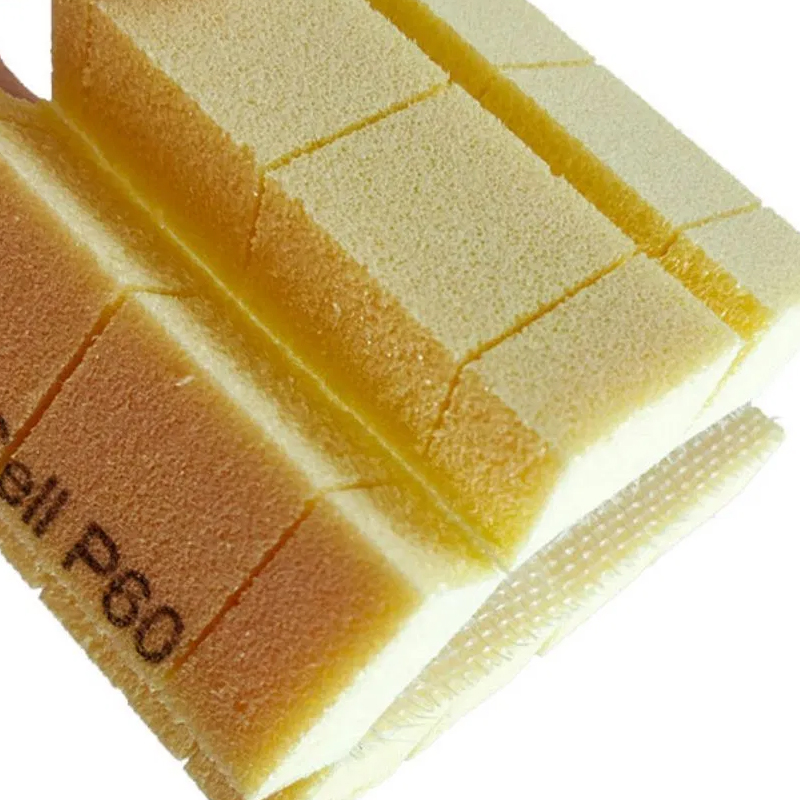
1. Density Range Classification of PVC Foam Core Material
Density is the single most influential parameter affecting all mechanical characteristics of PVC foam. Most commercial grades span the following density categories:
| Category | Nominal Density (kg/m³) | Typical Applications |
|---|---|---|
| Ultra-Low Density | 50–60 | Non-structural fairings, interior panels, ultra-light components |
| Low Density | 60–80 | Marine interior panels, lightweight composite skins |
| Medium Density | 80–130 | Hulls, decks, wind blades shear webs, general-purpose structures |
| High Density | 130–200 | Load-bearing inserts, fastening zones, structural supports |
| Ultra-High Density | 200–250+ | Highly loaded regions, mechanical fastening areas |
Density–Performance Trend
As density increases:
- Compressive strength rises almost linearly
- Shear strength and modulus increase substantially
- Impact toughness generally improves
- Resin uptake declines
- Weight naturally increases
Thus, selecting the correct density is a balance between mechanical performance requirements and mass constraints.
2. Compressive Strength and Modulus of PVC Foam Core Material
Compressive strength determines the foam’s ability to resist crushing loads—critical in sandwich structures where skins transfer loads through the core.
2.1 Compressive Strength Fundamentals
PVC foam is designed to withstand:
- Local indentation
- Panel buckling resistance
- Concentrated loads from hardware
- Long-term fatigue compression in dynamic applications
The compressive stress–strain curve for PVC foam typically exhibits:
- An initial linear elastic region
- A plateau region (cell collapse)
- A densification stage
Cross-linked PVC foams exhibit a longer linear region and a higher plateau stress.
2.2 Sample Compressive Strength Data
The following table provides representative engineering values for typical closed-cell PVC foam (cross-linked grade):
| Density (kg/m³) | Compressive Strength (MPa) | Compressive Modulus (MPa) |
|---|---|---|
| 60 | 0.50 – 0.70 | 30 – 45 |
| 80 | 0.80 – 1.10 | 55 – 75 |
| 100 | 1.00 – 1.40 | 80 – 110 |
| 130 | 1.60 – 2.10 | 120 – 180 |
| 200 | 3.50 – 5.00 | 200 – 300 |
Interpretation
- Increasing density yields exponentially higher modulus, not merely linear improvement.
- Foam between 80–130 kg/m³ is ideal for general structural panels.
- 200+ kg/m³ grades are used in areas requiring bolt-through inserts or high point-load resistance.
3. Shear Strength and Shear Modulus: Key Parameters for Sandwich Structures
Shear strength defines how well the core transfers load between composite skins, making it a critical parameter for:
- Wind turbine blade webs
- Boat hulls and decks
- Architectural cladding panels
- High-stress structural components
3.1 Importance of Shear in Composite Engineering
Shear failure of the core often determines the ultimate load capacity of sandwich structures. PVC foam generally shows ductile shear failure, which is advantageous because it provides energy absorption and progressive collapse instead of sudden, catastrophic failure.
3.2 Representative Shear Data
Below is a comparison of typical shear properties for commercial PVC foam cores:
| Density (kg/m³) | Shear Strength (MPa) | Shear Modulus (MPa) |
|---|---|---|
| 60 | 0.40 – 0.55 | 12 – 18 |
| 80 | 0.60 – 0.80 | 20 – 30 |
| 100 | 0.75 – 1.10 | 30 – 45 |
| 130 | 1.10 – 1.60 | 45 – 65 |
| 200 | 2.50 – 3.80 | 75 – 120 |
Shear Strength Trends
- Strength increases non-linearly with density.
- Cross-linked grades provide higher modulus and greater fatigue resistance.
- Shear modulus strongly influences panel bending stiffness and deflection behavior.
4. Tensile Strength, Flexural Properties, and Toughness Behavior
PVC foam cores also exhibit measurable tensile properties, although these are typically lower than compression and shear values due to the foam’s cellular nature.
4.1 Typical Tensile Properties
| Density (kg/m³) | Tensile Strength (MPa) | Tensile Modulus (MPa) |
|---|---|---|
| 80 | 0.90 – 1.20 | 80 – 100 |
| 100 | 1.20 – 1.60 | 100 – 140 |
| 130 | 1.60 – 2.20 | 140 – 190 |
Tensile behavior is crucial for:
- Biaxially loaded sandwich structures
- Edge-loaded regions
- Thin, high-curvature laminates
4.2 Flexural Performance
Flexural tests are typically applied to foam-only samples or composite-laminated panels. PVC foam exhibits:
- Moderate stiffness
- Good energy absorption
- Progressive cell collapse
These characteristics make it superior to brittle cores such as SAN or PMI in impact resistance.
5. Effect of Crosslinking on Mechanical Performance
PVC foam can be manufactured as either:
- Non-cross-linked (NC)
- Cross-linked (CXL)
Cross-linked PVC is preferred for high-load structures because it offers:
| Property | Non-Cross-Linked PVC | Cross-Linked PVC |
|---|---|---|
| Compressive Strength | Medium | High |
| Shear Strength | Medium | High |
| Heat Distortion Temp | Lower | Higher |
| Fatigue Performance | Good | Excellent |
| Toughness | Higher ductility | Higher stiffness |
| Typical Cost | Lower | Higher |
Cross-linked grades provide far superior temperature stability, essential for vacuum infusion and high-temperature curing systems.
6. Structure–Property Relationships
The unique mechanical behavior of PVC foam arises from:
6.1 Closed-Cell Architecture
- Prevents water ingress
- Provides high compressive strength
- Ensures dimensional stability
- Improves fatigue life
6.2 Cell Size and Uniformity
Smaller, consistent cells result in:
- Higher shear modulus
- Lower resin uptake
- Improved durability
6.3 Wall Thickness and Polymer Distribution
Thicker cell walls increase:
- Compressive modulus
- Impact resistance
- Long-term creep performance
7. Comparison With Alternate Structural Core Materials
To contextualize PVC’s performance, the table below compares shear strength at a similar density (~100 kg/m³) with other common foam cores:
| Material | Shear Strength (MPa) | Shear Modulus (MPa) | Comments |
|---|---|---|---|
| PVC Foam | 0.75 – 1.10 | 30 – 45 | Balanced performance; widely used |
| PET Foam | 0.60 – 0.90 | 25 – 40 | Lower cost, lower toughness |
| SAN Foam | 1.10 – 1.40 | 40 – 55 | Brittle; higher performance |
| PMI Foam | 1.80 – 2.40 | 65 – 90 | High cost; excellent modulus |
| Balsa Wood | 3.00 – 4.50 | 100 – 200 | High stiffness; moisture sensitive |
PVC foam’s appeal lies in its balanced mechanical properties, cost efficiency, and processing versatility.
8. Mechanical Performance in Real Engineering Applications
8.1 Marine Structures
- Sustained hydrostatic loads
- Shear-dominated hull reinforcement
- Local compression near hardware
PVC foam provides the optimal combination of buoyancy, closed-cell water resistance, and fatigue stability.
8.2 Wind Turbine Blades
- High shear modulus in shear webs
- Robustness under cyclic loads
- Low resin uptake (weight reduction)
Medium-density cross-linked PVC is widely used in leading edge and spar zones.
8.3 Aerospace and Transportation
- Lightweight interior panels
- Energy-absorbing zones
- High stiffness-to-weight structures
9. Summary and Engineering Selection Guidelines
When selecting PVC foam core material, engineers should evaluate:
1. Density
Match density to:
- Required stiffness
- Allowable mass
- Expected impact loading
2. Mechanical Targets
Define:
- Minimum compressive and shear strength
- Required shear modulus
- Temperature resistance (cross-linked if needed)
3. Processing Method
PVC performs well in:
- Vacuum infusion
- RTM
- Prepreg autoclave (cross-linked preferred)
- Hand lay-up
4. Environmental Constraints
Closed-cell PVC resists:
- Water absorption
- Hydrolysis
- Salt spray
- UV exposure (with surface coating)
Conclusion
PVC foam core material exhibits a versatile range of mechanical properties controlled primarily by density, manufacturing method, and crosslinking chemistry. Its compressive strength, shear performance, and stiffness make it one of the most reliable structural core options in composite engineering. Unlike other cores, PVC offers a balanced triad of:
- Mechanical strength
- Toughness and durability
- Cost efficiency
Supported by decades of industrial optimization, PVC foam remains a cornerstone material in marine, wind energy, aerospace, transportation, and industrial composite applications. Its consistent performance and wide processing compatibility ensure its continued dominance in high-performance sandwich structures.
