
In today’s competitive swimming pool market, product appearance has become almost as important as functionality. Customers no longer want only a durable pool—they also want stylish, customizable, and premium-looking outdoor products that match their homes, gardens, hotels, or resorts. This shift has created strong demand for decorative exterior panel systems, especially replaceable pool surround panels.
For manufacturers and pool sellers, choosing the right material for these decorative panels is critical. Traditional materials such as aluminum sheets and ACP panels often come with higher costs, heavier weight, and more difficult installation. As a result, PVC Foam Sheet has emerged as one of the most efficient and cost-effective alternatives.
Also known as PVC Celuka Board, Rigid PVC Foam Board, Expanded PVC Sheet, and Lightweight PVC Panel, this material offers an excellent balance of strength, weather resistance, printability, and affordability.
This article explains why PVC Foam Sheet is becoming the preferred material for custom pool panel applications and how it creates business value for pool manufacturers worldwide.
What Is PVC Foam Sheet?
PVC Foam Sheet is a rigid expanded polyvinyl chloride board manufactured through a foaming extrusion process. It combines a lightweight internal cellular structure with a durable outer surface, making it ideal for decorative and structural light-duty applications.
Depending on production technology, it may also be marketed as:
- PVC Celuka Board – Dense smooth skin surface with rigid core
- Rigid PVC Foam Board – Strong and stable foam board panel
- Expanded PVC Sheet – Lightweight expanded cellular PVC board
- Lightweight PVC Panel – General commercial name for low-weight rigid sheet
Because of its versatility, PVC Foam Sheet is widely used in construction, furniture, signage, marine interiors, and now increasingly in swimming pool exterior panel systems.
Why Pool Manufacturers Need Customizable Exterior Panels
Modern buyers expect products with personalization options. This trend applies strongly to pools, spas, and outdoor leisure products.
Instead of selling only one standard pool appearance, manufacturers can offer multiple decorative finishes such as:
- Wood grain patterns
- Stone texture designs
- Marble effect surfaces
- Solid modern colors
- Resort-style tropical graphics
- Custom logo branding
- Fully custom printed artwork
By using interchangeable surrounding panels, a single pool structure can be transformed into multiple product styles.
This creates major business advantages:
1. Higher Selling Price
Customized pools command premium pricing compared with standard models.
2. Better Product Differentiation
Unique panel finishes help dealers stand out from competitors.
3. Lower Inventory Complexity
One base pool design can support many visual styles.
4. Easier Seasonal Updates
Panel designs can be refreshed without redesigning the pool structure.
This is exactly where PVC Foam Sheet becomes highly valuable.
Why PVC Foam Sheet Is Better Than Aluminum or ACP Panels
Many manufacturers initially consider metal sheets or ACP panels. However, these materials often create practical problems.
Aluminum Sheets
Common disadvantages include:
- Higher raw material cost
- Heavier than PVC alternatives
- More expensive machining and bending
- Possible denting during transport
- Complex finishing processes
ACP Panels (Aluminum Composite Panels)
Challenges may include:
- Higher cost than PVC sheet solutions
- Edge finishing complexity
- Delamination risk in harsh environments
- More difficult recycling processes
PVC Foam Sheet Advantages
Compared with metal alternatives, PVC Foam Sheet offers:
- Lower total project cost
- Much lighter weight
- Easier cutting and shaping
- Waterproof performance
- Excellent printability
- Fast installation
- Corrosion resistance
- Attractive surface finishes
For decorative pool surrounds, these benefits make it one of the smartest material choices.
Lightweight PVC Panel: Lower Freight and Easier Installation
Weight matters significantly in pool panel systems.
Heavy panels increase:
- Shipping expenses
- Manual handling labor
- Installation difficulty
- Risk of transport damage
A Lightweight PVC Panel dramatically reduces these issues.
Because of its foamed internal structure, PVC Foam Sheet can maintain rigidity while remaining easy to move and install. This is especially important for:
- DIY pool systems
- Modular pool kits
- Retail pool dealers
- Export shipping containers
- Temporary seasonal pools
Lower logistics cost directly improves profit margins.
Waterproof and Ideal for Humid Pool Environments
Swimming pools create constant exposure to:
- Water splashes
- High humidity
- Outdoor temperature changes
- Cleaning chemicals
- Chlorinated environments
Unlike some wood-based materials, Rigid PVC Foam Board does not absorb moisture easily, swell, rot, or rust.
This makes it highly suitable for:
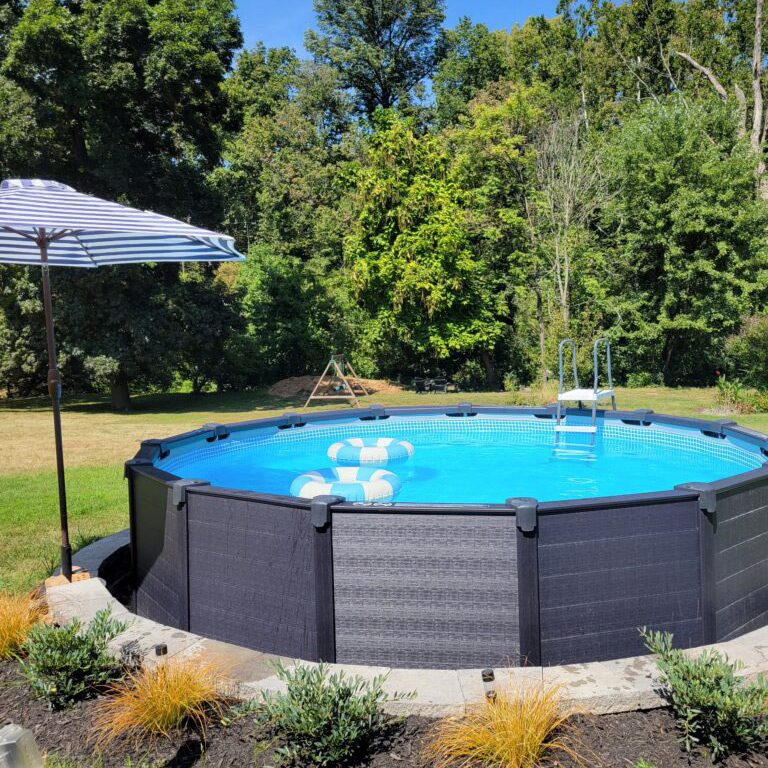
- Pool exterior skirts
- Spa cabinet panels
- Hot tub side cladding
- Outdoor decorative barriers
- Wet area wall coverings
Manufacturers looking for reliable moisture-resistant materials often choose PVC Celuka Board for this reason.
Excellent Surface for Decorative Printing
One of the strongest advantages of Expanded PVC Sheet is its printable surface.
The material can support:
- UV digital printing
- Screen printing
- Lamination films
- Vinyl wraps
- Decorative foils
This allows pool sellers to offer many premium designs without changing core engineering.
Popular panel styles include:
Wood Look Pool Panels
Creates a warm natural outdoor aesthetic without real wood maintenance.
Marble Look Panels
Premium luxury appearance for villas and resorts.
Stone Texture Panels
Modern architectural look for commercial pools.
Custom Brand Graphics
Perfect for hotels, rental properties, and branded leisure spaces.
With PVC Foam Sheet, aesthetics become scalable and affordable.
Easy Fabrication for Pool Panel Production
Manufacturers value materials that simplify production.
PVC Celuka Board can be processed using common woodworking or plastic fabrication equipment.
Typical operations include:
- Saw cutting
- CNC routing
- Drilling
- Edge trimming
- Slotting
- Adhesive bonding
- Mechanical fastening
- Thermoforming (certain grades)
This means factories can produce custom panel sizes quickly with low tooling cost.
For pool brands offering made-to-order dimensions, this flexibility is highly valuable.
Recommended Specifications for Pool Panel Use
Depending on project requirements, common options include:
Thickness
- 5mm for decorative lightweight covers
- 8mm for stronger panel systems
- 10mm for premium rigid surrounds
- 15mm+ for reinforced designs
Surface Options
- Matte white
- Gloss finish
- Laminated wood grain
- Printed marble pattern
- Custom colors
Standard Sizes
- 1220 x 2440 mm
- 1560 x 3050 mm
- Custom cut-to-size panels
The right specification depends on installation method, frame support, and climate exposure.
