
Introduction
In modern architecture, transportation, marine engineering, and industrial manufacturing, lightweight metal composite materials are becoming increasingly important. Among them, Aluminum Honeycomb Panels and Aluminum Foam Panels are two of the most discussed high-performance materials in the global market.
Although both materials are lightweight aluminum-based solutions, their internal structures, mechanical properties, manufacturing technologies, and application scenarios are completely different.
For architects, contractors, distributors, industrial designers, and OEM manufacturers, understanding the differences between aluminum honeycomb panels and aluminum foam panels is critical for selecting the right material for specific engineering projects.
This article provides a comprehensive comparison between these two advanced aluminum materials from the perspectives of structure, performance, applications, cost, acoustic behavior, fire resistance, and future market trends.
What Is an Aluminum Honeycomb Panel?
An Aluminum Honeycomb Panel is a lightweight sandwich composite panel consisting of:
- Aluminum face sheets
- Aluminum honeycomb core
- High-strength adhesive bonding system
The hexagonal honeycomb core mimics the natural honeycomb structure found in nature, offering exceptional strength-to-weight ratio and structural rigidity.
The panel works based on sandwich panel engineering principles:
- Face sheets resist tension and compression
- Honeycomb core resists shear forces
- Increased panel thickness improves bending stiffness dramatically
Because of this structure, aluminum honeycomb panels are widely used in:
- Curtain walls
- Ceiling systems
- Transportation interiors
- Marine applications
- Clean rooms
- Furniture panels
- Elevator decoration
What Is an Aluminum Foam Panel?
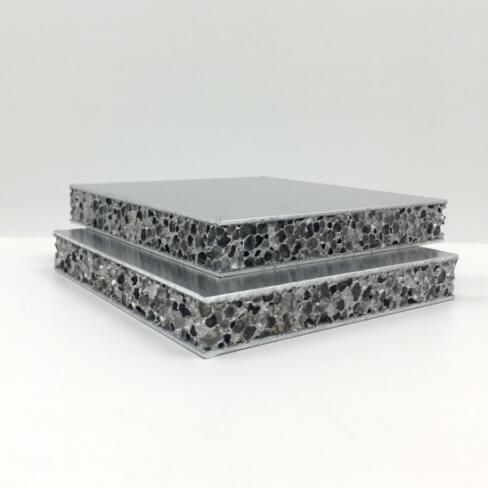
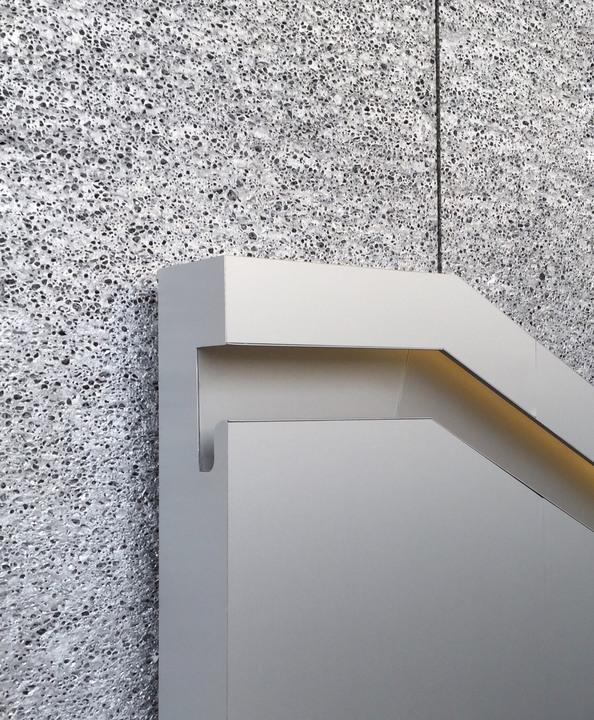
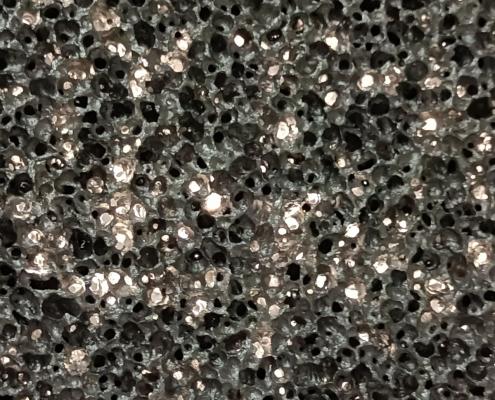
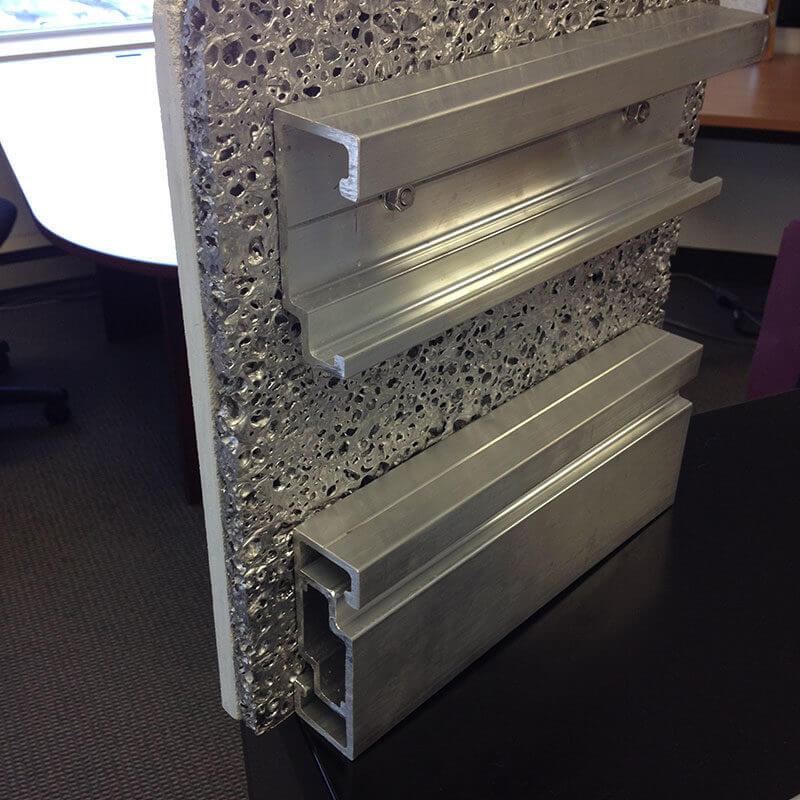
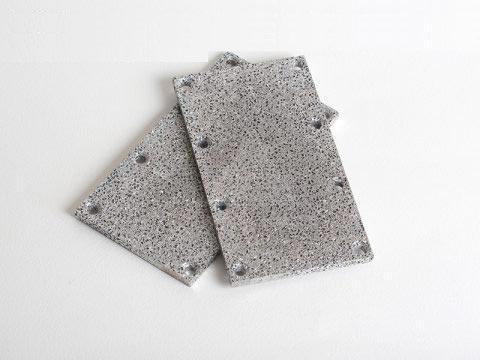
An Aluminum Foam Panel is a porous metal material containing thousands of air-filled cells distributed throughout the aluminum matrix.
It can be classified into:
- Open-cell aluminum foam
- Closed-cell aluminum foam
Unlike honeycomb panels, aluminum foam panels are not sandwich structures. Instead, they are monolithic porous metals designed primarily for:
- Energy absorption
- Acoustic control
- Thermal insulation
- Impact resistance
- Explosion protection
The unique porous appearance also creates a futuristic industrial aesthetic that is increasingly popular in modern architecture.
Structural Difference Between Aluminum Honeycomb and Aluminum Foam
Aluminum Honeycomb Panel Structure
D∝Et3D \propto Et^3D∝Et3
The bending stiffness of a sandwich panel increases exponentially as the thickness increases.
This is why aluminum honeycomb panels can achieve:
- Ultra-lightweight construction
- High flatness
- Excellent rigidity
- Large-span applications
Even with very low material consumption.
Aluminum Foam Panel Structure
E=12mv2E = \frac{1}{2}mv^2E=21mv2
Aluminum foam panels absorb impact energy through controlled collapse of internal pores.
This makes them ideal for:
- Shock absorption
- Noise reduction
- Blast resistance
- Vibration damping
Their performance is closer to functional engineering materials rather than traditional decorative panels.
Performance Comparison
| Property | Aluminum Honeycomb Panel | Aluminum Foam Panel |
|---|---|---|
| Structure | Sandwich composite | Porous metal |
| Weight | Extremely lightweight | Lightweight |
| Rigidity | Very high | Moderate |
| Flatness | Excellent | Rougher surface |
| Bending strength | Excellent | Moderate |
| Impact absorption | Moderate | Excellent |
| Sound absorption | Medium | Very high |
| Thermal insulation | Good | Excellent |
| Fire resistance | A-class | A-class |
| Decorative appearance | Smooth modern finish | Industrial porous texture |
| Machining | Easy | More difficult |
| Cost | Lower | Higher |
| Market maturity | Mature | Emerging |
Acoustic Performance Comparison
Aluminum Honeycomb Panels
Standard aluminum honeycomb panels are not naturally high-performance acoustic materials.
However, perforated honeycomb panels combined with:
- Acoustic fabric
- Rock wool
- Nonwoven backing
can achieve excellent sound absorption performance.
These systems are commonly used in:
- Airports
- Metro stations
- Office ceilings
- Auditoriums
Aluminum Foam Panels
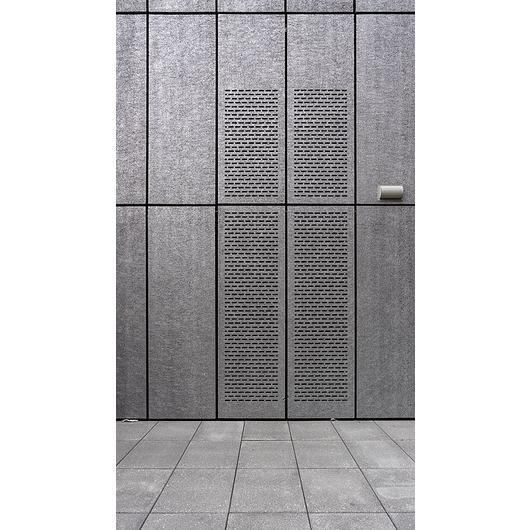
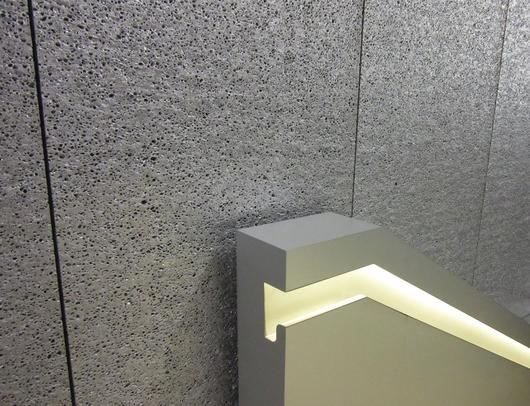
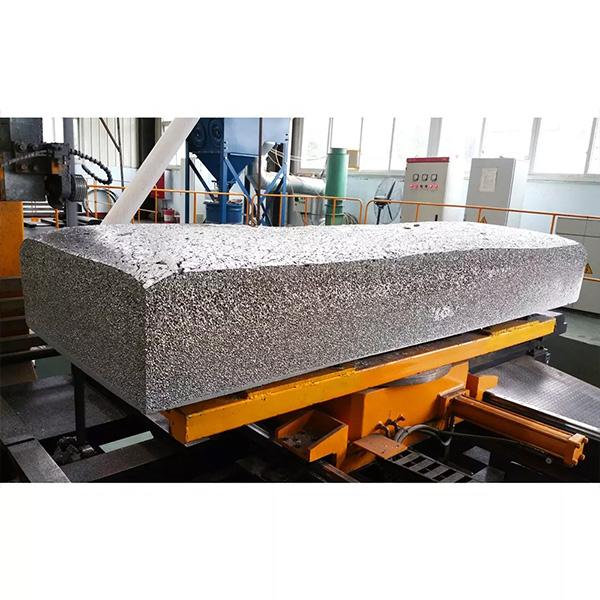
Aluminum foam naturally provides superior acoustic performance due to its porous structure.
Open-cell aluminum foam especially performs well in:
- Mid-frequency absorption
- Reverberation reduction
- Industrial noise control
Applications include:
- Tunnels
- Machinery rooms
- Rail transit
- Concert halls
- Data centers
Fire Resistance and Safety
Both materials are non-combustible aluminum-based products and can meet strict fire regulations.
However:
Aluminum Honeycomb Panels
Fire resistance depends on:
- Core material
- Adhesive system
- Surface coating
High-end products may achieve:
- A2 fire rating
- Marine fire standards
- EN13501 certification
Aluminum Foam Panels
Aluminum foam contains no combustible organic core, making it naturally suitable for:
- High-temperature environments
- Explosion-proof structures
- Industrial safety engineering
This gives foam aluminum an advantage in extreme safety applications.
Cost Comparison
Aluminum Honeycomb Panel Cost
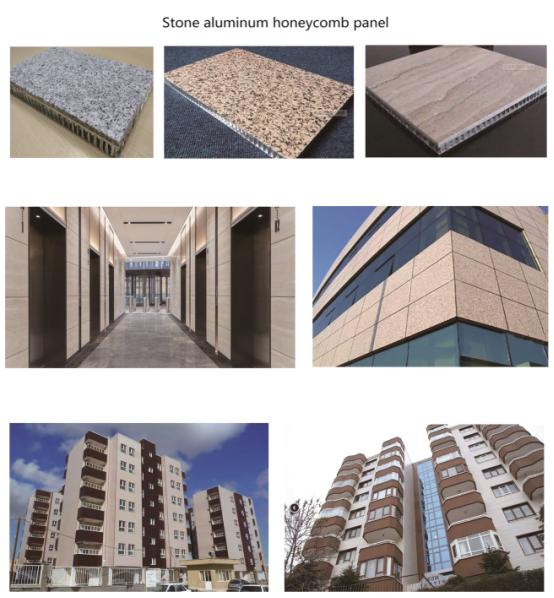
Aluminum honeycomb panels benefit from:
- Mature manufacturing technology
- Automated production lines
- Stable raw material supply chains
Typical price range:
- Standard architectural panels:
- USD 8–25/m²
- PVDF coated premium panels:
- USD 30–80/m²
China currently dominates global honeycomb panel production capacity.
Aluminum Foam Panel Cost
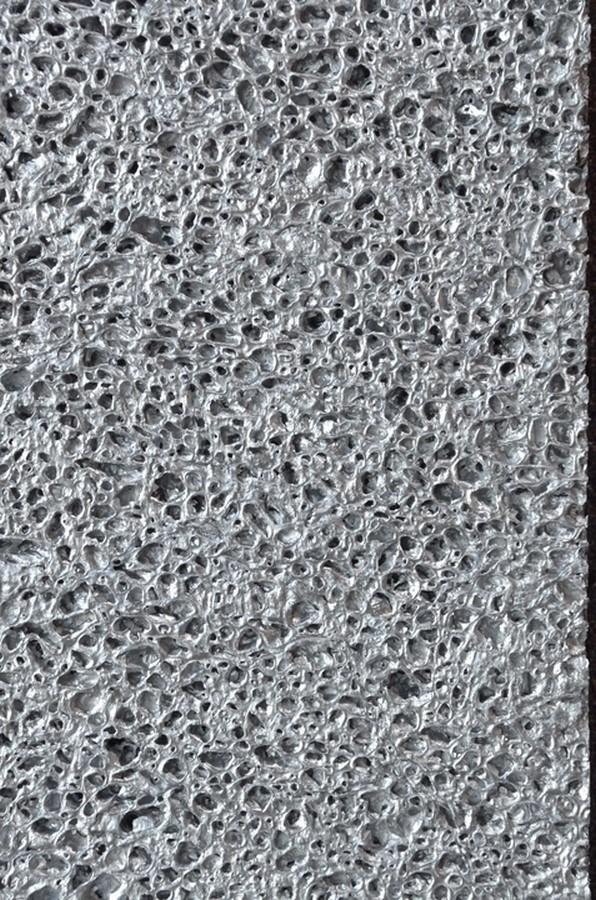
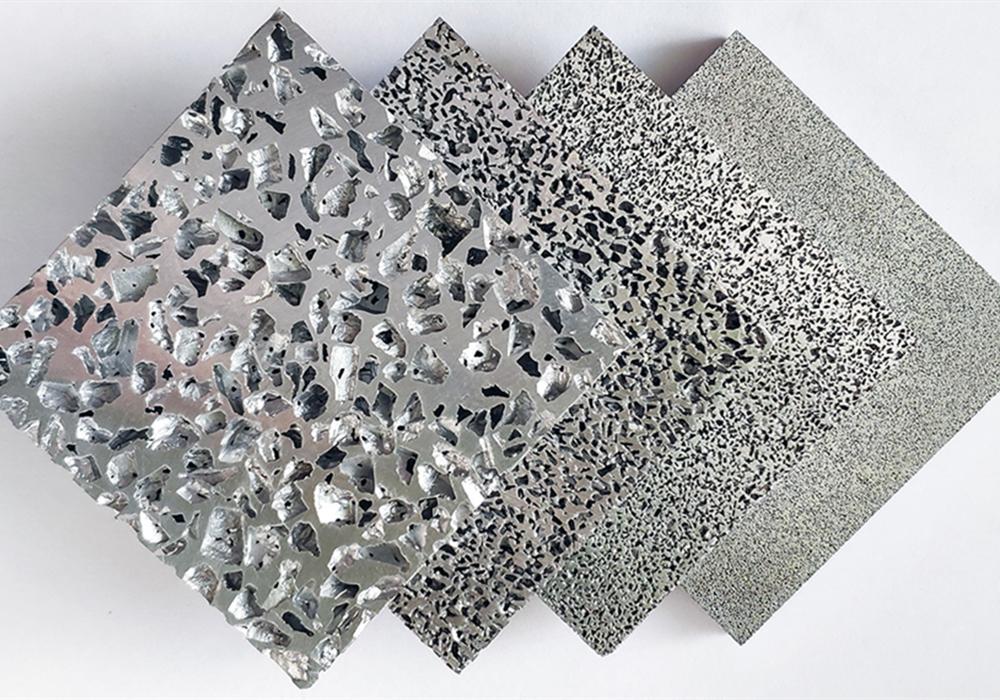
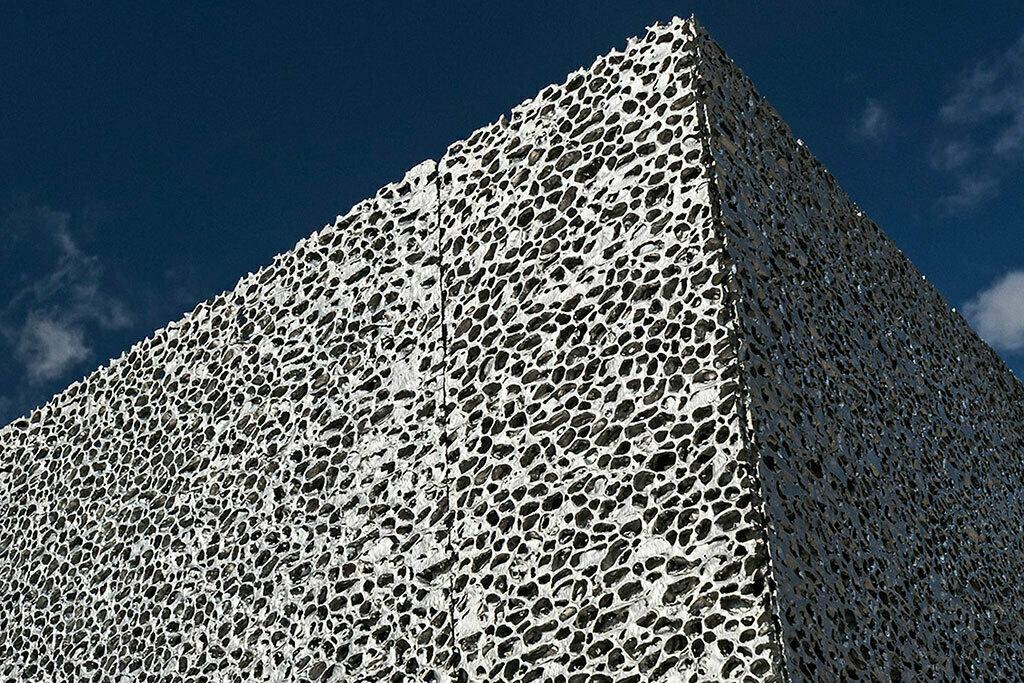
Aluminum foam manufacturing is more complex because it involves:
- Powder metallurgy
- Melt foaming
- Gas injection control
- Pore stability management
As a result:
- Production yield is lower
- Processing cost is higher
- Global suppliers are limited
Typical price range:
- USD 80–300/m²
- Specialty products may cost even more
Application Areas
Applications of Aluminum Honeycomb Panels
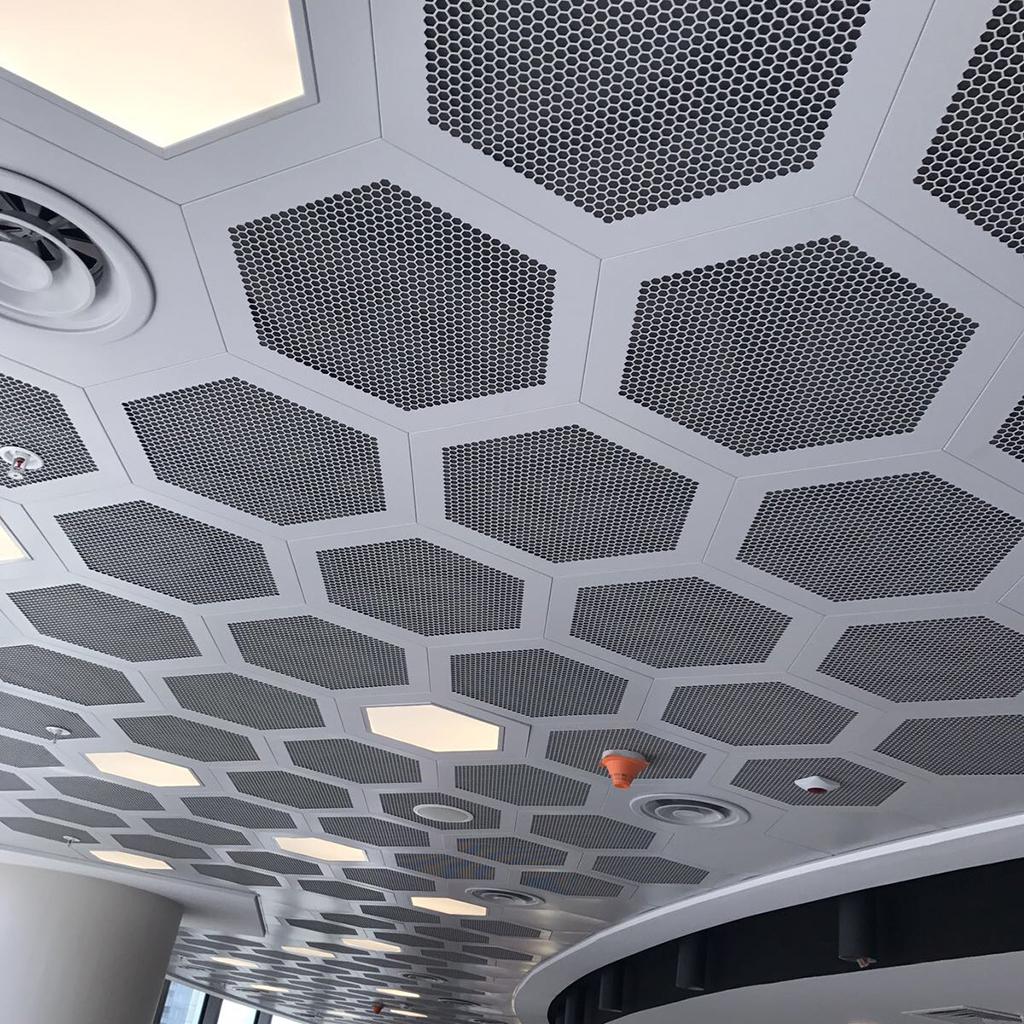
Main applications include:
- Architectural curtain walls
- Interior wall cladding
- Ceilings
- Marine interiors
- Rail transportation
- Furniture panels
- Clean room systems
- Cabinet doors
Their biggest advantages are:
- Lightweight
- High rigidity
- Excellent flatness
- Large panel size capability
Applications of Aluminum Foam Panels
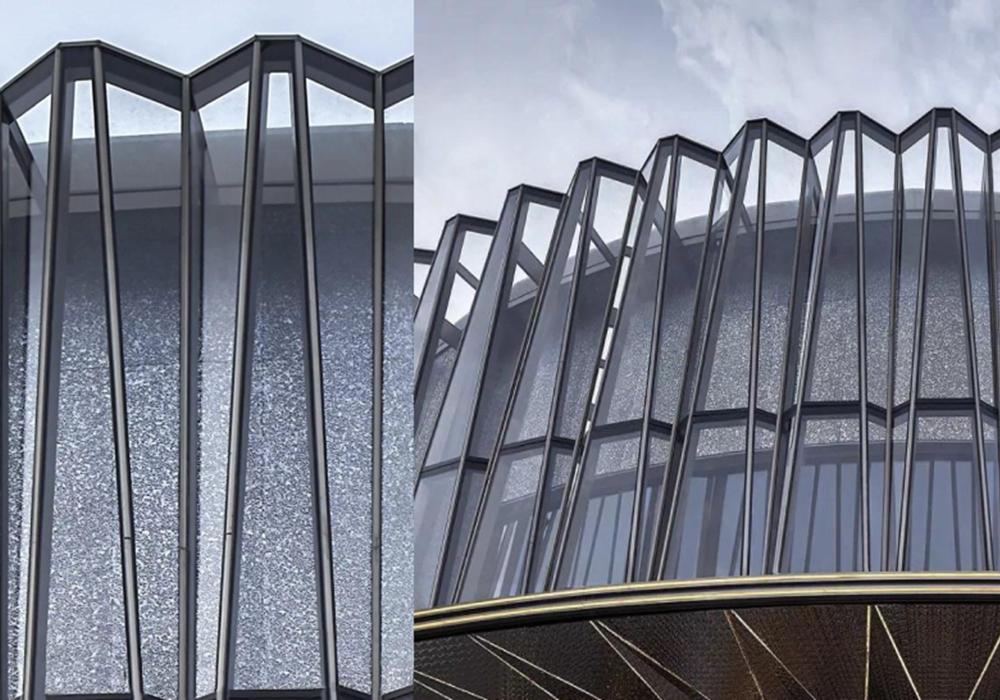
Main applications include:
- Acoustic walls
- Sound barriers
- Anti-explosion systems
- Military facilities
- Industrial noise control
- High-end architectural decoration
- Art installations
- Vibration damping systems
Aluminum foam is increasingly viewed as a next-generation functional architectural material.
Which Material Is Better?
The answer depends entirely on the project requirements.
Choose Aluminum Honeycomb Panels If You Need:
- Lightweight structural panels
- Large decorative surfaces
- High rigidity
- Flat architectural finishes
- Cost-effective façade systems
- Mature engineering solutions
Choose Aluminum Foam Panels If You Need:
- Acoustic absorption
- Energy absorption
- Shock resistance
- Explosion protection
- Industrial aesthetics
- High-performance functional materials
Future Market Trends
Aluminum Honeycomb Panel Market
The aluminum honeycomb industry is already highly mature.
Future growth areas include:
- Fireproof systems
- Curved honeycomb panels
- Stone honeycomb composites
- SPC honeycomb panels
- Photovoltaic integrated panels
- Antibacterial panels
Competition is strong, so product differentiation is becoming increasingly important.
Aluminum Foam Panel Market
Aluminum foam remains a blue-ocean market with high technical barriers.
Future growth drivers include:
- Electric vehicles
- High-speed rail
- Architectural acoustics
- AI data center noise reduction
- Military engineering
- Sustainable buildings
As demand for lightweight functional materials increases, aluminum foam panels are expected to gain significant market attention.
Conclusion
Although Aluminum Honeycomb Panels and Aluminum Foam Panels are both lightweight aluminum materials, they serve completely different engineering purposes.
Aluminum honeycomb panels focus on:
- Structural efficiency
- Architectural decoration
- Lightweight rigidity
Aluminum foam panels focus on:
- Functional performance
- Acoustic control
- Energy absorption
- Safety engineering
For construction companies, architects, distributors, and OEM manufacturers, understanding these differences is essential for selecting the most suitable advanced aluminum material for future projects.
