
Introduction
With the rapid growth of urbanization, industrialization, and transportation infrastructure, environmental noise pollution has become a major global concern. Excessive noise negatively affects human health, work efficiency, and overall living quality. As a result, the demand for high-performance acoustic materials has increased significantly across industries such as architecture, rail transportation, automotive engineering, aerospace, and industrial manufacturing.
Among advanced sound-absorbing materials, aluminum foam has attracted considerable attention due to its unique combination of lightweight structure, non-combustibility, corrosion resistance, mechanical strength, and acoustic performance. Compared with traditional acoustic materials such as mineral wool, polyurethane foam, or fiberglass, aluminum foam offers superior durability and fire resistance while maintaining excellent sound absorption capabilities.
The acoustic performance of aluminum foam is closely related to its internal porous structure. In particular, pore size and porosity are two of the most critical parameters affecting sound wave propagation, airflow resistance, and acoustic energy dissipation. Optimizing these structural characteristics is essential for designing high-efficiency aluminum foam acoustic systems.
This article explores how pore size and porosity influence the sound absorption characteristics of aluminum foam materials and discusses current research trends, engineering challenges, and future application opportunities.
Overview of Aluminum Foam Materials
Aluminum foam is a porous metallic material containing a large number of gas-filled cells distributed throughout an aluminum matrix. Depending on the structure of the pores, aluminum foam can generally be classified into:
- Open-cell aluminum foam
- Closed-cell aluminum foam
For acoustic applications, open-cell aluminum foam is considered more effective because interconnected pores allow sound waves and air to penetrate deeply into the material.
The main characteristics of aluminum foam include:
- Low density
- High porosity
- Lightweight structure
- Excellent fire resistance
- Good corrosion resistance
- High specific stiffness
- Recyclability
These properties make aluminum foam an attractive solution for modern architectural and industrial acoustic systems.
Sound Absorption Mechanism of Aluminum Foam
The sound absorption behavior of aluminum foam mainly depends on the interaction between sound waves and the internal pore structure.
When sound waves enter the porous material, acoustic energy is gradually dissipated through several mechanisms:
Viscous Friction
Air particles oscillating within narrow pores experience friction against the pore walls. This friction converts sound energy into heat energy.
Thermal Dissipation
Compression and expansion of air inside the pores generate local temperature changes. Heat transfer between air and the aluminum surface contributes to acoustic energy loss.
Multiple Reflection and Scattering
The irregular three-dimensional pore network causes repeated reflections and scattering of sound waves, increasing the propagation path and enhancing energy attenuation.
The sound absorption coefficient can be expressed as:
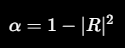
Where:
- α is the sound absorption coefficient
- R is the reflection coefficient
A higher sound absorption coefficient indicates better acoustic performance.
Influence of Porosity on Sound Absorption
Definition of Porosity
Porosity refers to the percentage of void space within the aluminum foam structure.
It is commonly expressed as:
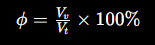
Where:
- φ is porosity
- Vv is void volume
- Vt is total volume
Typical aluminum foam materials used in acoustic applications have porosity values ranging from 70% to 95%.
High Porosity and Acoustic Performance
Higher porosity generally improves sound absorption because:
- More open space allows deeper sound penetration
- Reduced reflection occurs at the material surface
- Larger internal surface area increases frictional losses
High-porosity aluminum foam is particularly effective at absorbing mid- and high-frequency sound waves.
However, excessively high porosity may create several problems:
- Reduced structural strength
- Lower airflow resistance
- Insufficient acoustic damping
Therefore, there is an optimal porosity range for achieving balanced acoustic and mechanical performance.
Low Porosity Structures
Lower porosity materials contain fewer voids and more solid aluminum.
These structures typically exhibit:
- Higher mechanical strength
- Increased stiffness
- Reduced acoustic penetration
Although low-porosity foam may perform poorly at high frequencies, it can sometimes improve low-frequency reflection and structural damping performance.
As a result, selecting appropriate porosity depends on the target acoustic frequency range and engineering application.
Influence of Pore Size on Sound Absorption
Importance of Pore Diameter
Pore size significantly influences airflow behavior, sound wave penetration, and frictional energy loss.
The acoustic response of aluminum foam changes considerably depending on whether the pores are small, medium, or large.
Small Pore Structures
Small pore diameters create narrow airflow channels.
This leads to:
- Increased airflow resistance
- Stronger viscous friction
- Better high-frequency absorption
Smaller pores also increase the contact area between air and pore walls, improving thermal dissipation.
However, if pores become excessively small, airflow may be restricted too much, reducing deep sound penetration and limiting broadband acoustic performance.
Large Pore Structures
Large pores allow sound waves to penetrate deeper into the material.
Advantages include:
- Improved mid-frequency absorption
- Lower airflow resistance
- Better acoustic transmission into internal layers
However, very large pores may reduce frictional energy dissipation and decrease high-frequency absorption efficiency.
Therefore, large-pore aluminum foam alone may not provide optimal broadband sound absorption.
Relationship Between Pore Size and Frequency Response
Different pore sizes influence different sound frequency ranges.
Generally:
| Pore Size | Acoustic Effect |
|---|---|
| Small pores | Better high-frequency absorption |
| Medium pores | Balanced broadband absorption |
| Large pores | Better mid-frequency penetration |
This relationship explains why many researchers focus on multi-scale pore structures rather than uniform pore distributions.
Gradient Pore Structures
One of the most advanced research directions in aluminum foam acoustics involves gradient pore structures.
Instead of using uniform pore sizes throughout the material, gradient structures combine multiple pore diameters in different layers.
For example:
- Large pores on the outer surface improve sound penetration
- Smaller pores in deeper regions increase viscous dissipation
This design provides broader frequency absorption capability.
Gradient structures can significantly improve overall acoustic performance while maintaining lightweight properties.
Airflow Resistivity and Acoustic Optimization
Airflow resistivity is another critical factor linking pore structure to sound absorption.
Airflow resistivity represents the resistance encountered by air moving through the porous material.
An optimized airflow resistance is essential because:
- Very low resistance allows sound waves to pass through with minimal dissipation
- Very high resistance reflects sound waves before they penetrate deeply
Proper combinations of pore size and porosity help achieve ideal airflow resistivity for specific acoustic applications.
Thickness and Back Cavity Effects
The acoustic performance of aluminum foam is also strongly affected by panel thickness and cavity design.
Thicker panels generally improve low-frequency sound absorption because sound waves travel longer distances within the porous structure.
The relationship between thickness and resonant frequency can be approximated as:

Where:
- f represents resonant frequency
- d represents material thickness
Adding an air cavity behind the foam panel further enhances low-frequency absorption by creating additional resonance effects.
This principle is widely applied in:
- Architectural acoustic walls
- Railway noise barriers
- Industrial soundproof systems
Manufacturing Methods and Pore Control
The acoustic performance of aluminum foam depends heavily on manufacturing technology because production methods directly influence pore morphology.
Melt Foaming
Melt foaming is one of the most common industrial production methods.
Advantages include:
- Large-scale manufacturing
- Relatively low cost
- High production efficiency
However, controlling pore uniformity can be difficult.
Powder Metallurgy
Powder metallurgy offers:
- Better pore precision
- More uniform cell distribution
- Improved structural consistency
This method is commonly used for high-performance acoustic materials.
Replication Techniques
Replication methods create highly interconnected open-cell structures with excellent acoustic characteristics.
These methods provide:
- Precise pore geometry
- High porosity control
- Superior airflow management
However, production costs remain relatively high.
Applications of Acoustic Aluminum Foam
Optimized aluminum foam materials are increasingly used in various industries.
Architectural Acoustics
Applications include:
- Concert halls
- Museums
- Commercial buildings
- Office interiors
- Acoustic ceilings
The material combines sound absorption with decorative metallic aesthetics.
Transportation Systems
Aluminum foam is widely studied for:
- Metro tunnel noise reduction
- Railway sound barriers
- Airport acoustic panels
- Automotive cabin noise control
Its fire resistance offers major advantages over polymer-based materials.
Industrial Noise Reduction
Industrial facilities often require durable acoustic systems resistant to:
- High temperatures
- Corrosion
- Mechanical damage
Aluminum foam performs well in:
- Generator rooms
- Power plants
- Heavy manufacturing facilities
- Compressor stations
Challenges and Future Research
Despite significant progress, several challenges remain.
Cost Reduction
Production cost remains one of the largest barriers to widespread commercialization.
Researchers are working to improve manufacturing efficiency and reduce material waste.
Low-Frequency Absorption
Although aluminum foam performs well at mid and high frequencies, low-frequency noise control remains difficult.
Future solutions may include:
- Hybrid composite systems
- Resonant cavity designs
- Multi-layer structures
- Smart acoustic materials
Advanced Functional Materials
Future research increasingly focuses on combining aluminum foam with:
- Honeycomb structures
- Graphene coatings
- Aerogels
- Nanomaterials
These advanced systems may offer superior acoustic, thermal, and mechanical performance simultaneously.
Conclusion
Pore size and porosity play fundamental roles in determining the sound absorption characteristics of aluminum foam materials. By carefully optimizing these structural parameters, researchers can significantly improve acoustic performance across different frequency ranges.
High porosity generally enhances sound penetration and energy dissipation, while pore size strongly influences airflow resistance and frequency response behavior. Advanced gradient pore structures offer particularly promising opportunities for broadband acoustic absorption.
As manufacturing technologies continue to evolve, aluminum foam is expected to become an increasingly important material for architectural acoustics, transportation infrastructure, industrial noise reduction, and advanced engineering systems.
Its combination of lightweight construction, fire resistance, durability, recyclability, and acoustic functionality positions aluminum foam as one of the most promising next-generation sound absorption materials for modern sustainable engineering applications.
