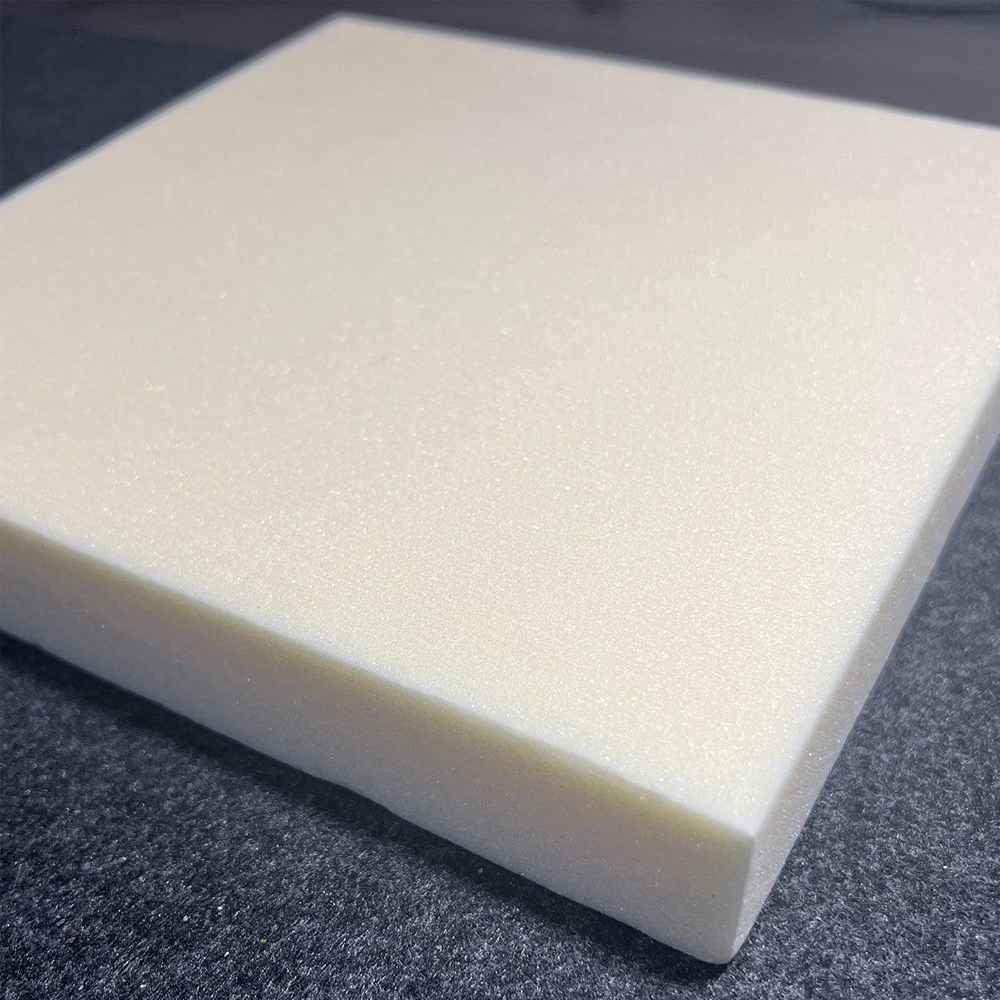
PET Foam Core and PVC Foam Core are two important categories of composite core materials used in structural sandwich panels. Although both are closed-cell polymeric foams and can be used in applications such as marine structures, wind turbine components, transportation panels, construction systems, and industrial composites, they are not technically identical and should not automatically be treated as interchangeable.
PVC Foam Core has a long history in structural composite applications. It is available in multiple density grades and can provide a useful combination of compressive strength, shear strength, dimensional stability, chemical resistance, and processing flexibility. PVC foam is particularly common in marine and wind-energy structures because it can be machined, shaped, perforated, and bonded relatively efficiently.
PET Foam Core has attracted increasing interest because of its mechanical performance and potential sustainability advantages. PET-based core materials can incorporate recycled PET feedstock, depending on the manufacturer’s formulation and production process. This makes PET attractive for projects where recycled content, material circularity, or environmental reporting is important.
However, material selection should never be based on polymer name alone. Two composite core materials with the same nominal density can have significantly different mechanical properties. Published technical data, for example, show representative PET and PVC foam cores with different compressive and shear properties even at similar densities.
Representative Comparison of PET and PVC Foam Core
| Parameter | PET Foam Core | PVC Foam Core |
|---|---|---|
| Typical density range | Approximately 60–250+ kg/m³ | Approximately 50–250+ kg/m³ |
| Closed-cell structure | Common | Common |
| Compressive performance | Density-dependent | Density-dependent |
| Shear performance | Good to high depending on grade | Good to high depending on grade |
| Moisture resistance | Generally good | Generally good |
| Fatigue suitability | Good for structural grades | Good for structural grades |
| Recycled-content potential | Strong advantage | Depends on formulation |
| CNC machining | Good | Good |
| Vacuum infusion compatibility | Application dependent | Widely used |
| Marine applications | Suitable grades available | Widely established |
| Wind energy | Suitable grades available | Widely established |
| Sustainability positioning | Often attractive | Depends on product system |
A published experimental comparison used a PET foam core with a density of 65 kg/m³ and a PVC foam core with a density of 60 kg/m³. Their reported compressive and shear properties were not identical, illustrating why density alone is insufficient for material substitution.
For procurement teams, replacing PVC with PET should therefore be treated as an engineering material substitution rather than a simple purchasing substitution. The buyer should compare density, compressive strength, compressive modulus, shear strength, shear modulus, fatigue performance, water absorption, thermal stability, fire performance, bonding behavior, and processing compatibility.
The final decision should also consider supply stability, price, sheet dimensions, thickness tolerance, available densities, certification, and annual production capacity.
In practical terms, PET and PVC can both be excellent composite core materials, but the correct choice depends on the final sandwich structure and manufacturing process. A well-engineered PET solution may offer an excellent balance of performance, weight, and sustainability, while PVC may remain preferable for applications requiring established processing methods and extensive field experience.