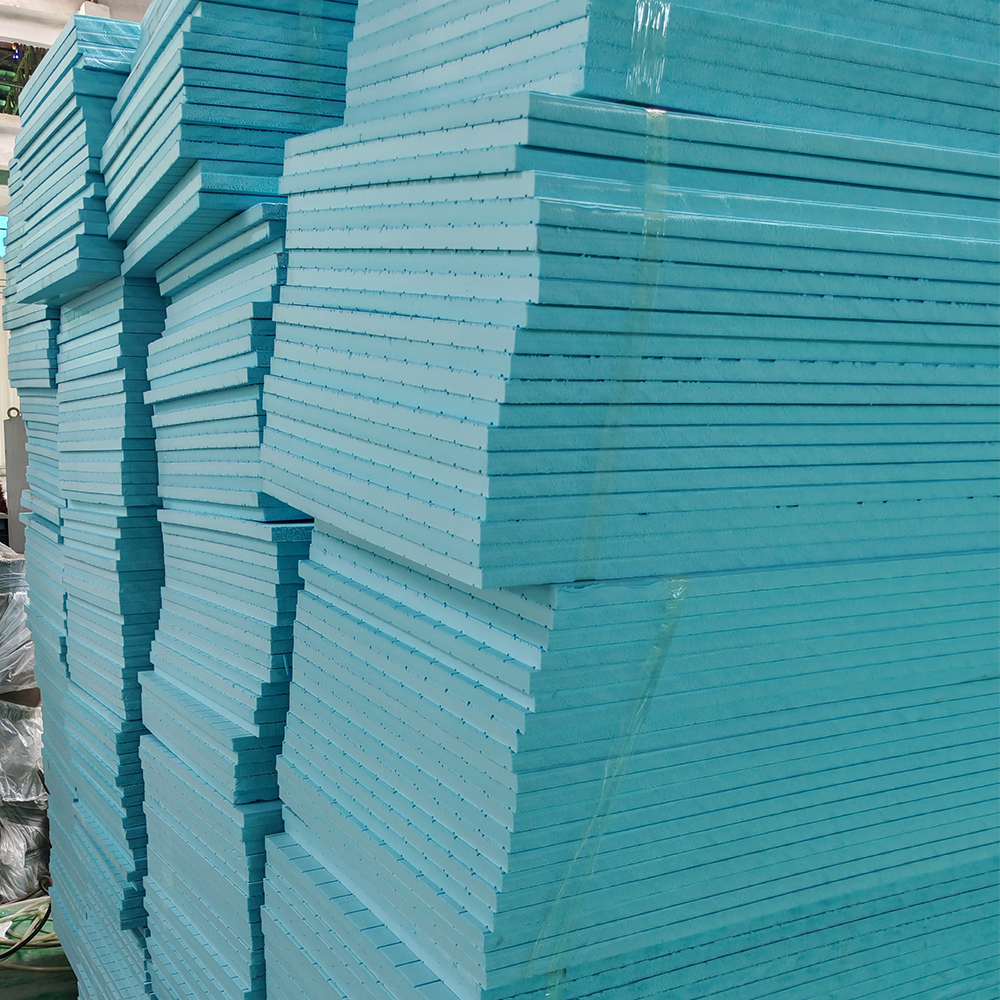
Black XPS foam sheet is a rigid extruded polystyrene foam product manufactured through an extrusion foaming process. Compared with conventional light-colored XPS products, black XPS foam sheet is primarily differentiated by its appearance, formulation, and application requirements. The black color itself does not automatically mean that the product has higher insulation performance. For professional procurement, buyers should evaluate the actual thermal conductivity, density, compressive strength, water absorption, dimensional stability, thickness tolerance, and fire performance provided by the manufacturer.
In Middle Eastern markets such as Saudi Arabia, the United Arab Emirates, Qatar, Kuwait, Oman, and Bahrain, insulation materials are frequently exposed to demanding environmental conditions. High ambient temperatures, strong solar radiation, dust, and, in coastal areas, elevated humidity and salt exposure can influence the performance requirements of building envelope materials. For this reason, selecting a black XPS foam sheet should be based on the complete insulation system rather than color alone.
The major structural advantage of XPS is its closed-cell foam structure. During manufacturing, polystyrene resin and other required additives are processed through an extruder and expanded into a continuous rigid foam board. The resulting structure provides low water absorption, relatively high compressive strength, and stable thermal insulation performance when the product is properly manufactured and installed.
Black XPS foam sheets can be considered for construction insulation, composite panel manufacturing, floor insulation, roof insulation, specialty fabrication, model making, and other applications where a rigid lightweight foam sheet is required. In composite structures, the foam can also function as a core material between different face materials. The final mechanical performance of such a sandwich structure depends on the foam core, skin material, adhesive system, bonding process, and panel design.
For Middle East projects, buyers should pay particular attention to thickness. A 10 mm sheet may be appropriate for a thin insulation or composite layer, while 25 mm, 30 mm, 40 mm, 50 mm, or 100 mm XPS boards can provide substantially different thermal resistance and structural characteristics. The correct thickness should be determined according to the building design and required thermal performance rather than selecting the thickest available board.
When purchasing black XPS foam sheet from an international manufacturer, professional buyers should request a technical datasheet and confirm density, thermal conductivity, compressive strength, water absorption, thickness, dimensions, surface condition, and packaging. For large projects in Saudi Arabia or the UAE, it is also important to confirm container loading efficiency and protection against deformation during long-distance transportation.
In short, black XPS foam sheet should be treated as an engineered rigid foam material rather than simply a black-colored foam board. Its suitability for a Middle Eastern application depends on measurable physical properties, manufacturing consistency, system design, and installation conditions.