
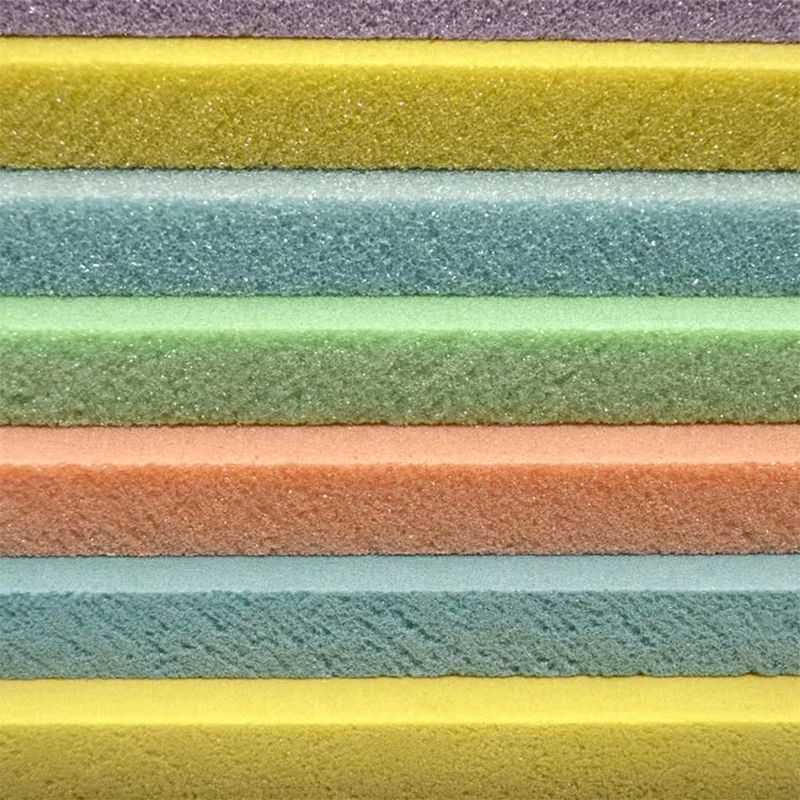
Flexible polyurethane foam (FPF) has established itself as the predominant cushioning material in furniture worldwide, offering unparalleled design versatility, durability, and comfort. However, the furniture industry is undergoing a fundamental transformation driven by two converging forces: rising consumer expectations for comfort and wellness, and intensifying environmental imperatives demanding sustainable material solutions. This article examines the technological innovations, market dynamics, and regulatory frameworks shaping the evolution of flexible polyurethane foam in furniture applications. It analyzes advances in memory foam technology, bio-based polyol development, certification systems for material safety, and circular economy approaches including chemical recycling. The evidence demonstrates that comfort and sustainability are not competing priorities but complementary objectives achievable through integrated material science, with successful innovations delivering enhanced user experience alongside reduced environmental footprint. The future of furniture foam lies in formulations that simultaneously optimize pressure relief, thermal regulation, durability, and environmental performance.
Keywords: flexible polyurethane foam; memory foam; furniture; sustainability; bio-based polyols; CertiPUR-US; comfort; circular economy
1. Introduction
Flexible polyurethane foam has been the material of choice for furniture cushioning since its commercial introduction in the 1950s, displacing traditional materials such as horsehair, cotton, and natural latex through superior performance characteristics and manufacturing economics. Today, the global market for flexible polyurethane foam exceeds 5 million tons annually, with furniture applications representing the largest segment (Plastemart, 2023).
The remarkable success of FPF in furniture derives from its unique combination of properties: wide density and hardness ranges enabling precise comfort tuning, excellent durability under cyclic loading, design freedom for complex geometries, and cost-effective manufacturing. However, the industry now faces transformative pressures from two directions. Consumer expectations have evolved beyond basic comfort toward holistic wellness experiences, driving demand for advanced materials such as memory foam with pressure-relieving and temperature-regulating properties. Simultaneously, environmental concerns are reshaping material selection criteria, with sustainability emerging as a core purchasing driver and regulatory requirements tightening globally (Euromonitor International, 2024).
This article argues that these dual imperatives—comfort enhancement and environmental responsibility—are not contradictory but mutually reinforcing. Through examination of technological advances in memory foam formulations, bio-based material development, certification frameworks, and circular economy strategies, it demonstrates how the polyurethane industry is developing solutions that satisfy both consumer expectations and sustainability requirements.
2. Comfort Science: The Evolution from Basic Cushioning to Wellness
2.1 Fundamentals of Foam Comfort
The comfort provided by flexible polyurethane foam is fundamentally determined by its mechanical response to applied load—the relationship between indentation force and deflection. This force-deflection behavior, characterized by indentation force deflection (IFD) measurements, determines the subjective perception of firmness or softness. However, comfort perception is multidimensional, encompassing not only initial firmness but also progressive support, pressure distribution, and recovery characteristics (Branton, 2020).
Standard flexible foams, typically based on polyether polyols with isocyanate indices near 100, exhibit approximately linear force-deflection behavior with rapid recovery upon load removal. This conventional formulation remains widely used in furniture applications where traditional “springy” feel is desired. However, the limitations of conventional foam in pressure distribution—particularly for sleep applications—have driven development of more sophisticated materials (Szycher, 2013).
2.2 Memory Foam: The Comfort Revolution
The introduction of memory foam, originally developed by NASA in the 1960s for aircraft seating and commercialized for medical and consumer applications from the 1990s, fundamentally transformed expectations for furniture comfort. Memory foam, technically viscoelastic polyurethane foam, exhibits time-dependent mechanical behavior characterized by slow recovery from deformation and temperature-dependent modulus (Petrovic & Ferguson, 2021).
The viscoelastic behavior derives from the foam’s glass transition temperature (Tg) being positioned near room temperature. At temperatures below Tg, the polymer is glassy and rigid; above Tg, it becomes rubbery and flexible. By formulating the polyurethane to have Tg near 20-25°C, the foam softens in response to body heat, conforming precisely to body contours while remaining firmer in areas not warmed by contact (Dounis & Wilkes, 2022).
This temperature-sensitive conformability produces several clinically significant benefits. Pressure mapping studies demonstrate that memory foam reduces peak interface pressures by 30-40% compared with conventional polyurethane foam of equivalent density, with corresponding reductions in tissue ischemia risk—critical for both medical applications and general sleep quality (Shelton et al., 2021). The material’s energy-absorbing characteristics also reduce motion transfer across sleeping surfaces, contributing to improved sleep continuity in shared-bed situations (Bader & Engdal, 2020).
2.3 Addressing Memory Foam Limitations
Despite its comfort advantages, conventional memory foam exhibits two significant limitations: heat retention and slow recovery in cold environments. The same viscoelastic properties that enable body conformation also reduce airflow through the foam structure, leading to heat accumulation. Additionally, the temperature-dependent modulus means that in cool rooms, the foam becomes excessively firm and recovers slowly from deformation (Petrovic & Ferguson, 2021).
Recent innovations address these limitations through multiple strategies. Gel infusion, incorporating gel particles or gel-infused polyols into the foam formulation, increases thermal conductivity, drawing heat away from the body while maintaining viscoelastic properties. Phase change material (PCM) incorporation, using microencapsulated paraffinic materials that absorb and release heat at specific transition temperatures, provides active temperature regulation, maintaining skin microclimate within the comfort zone throughout sleep cycles (Mondal, 2023).
Open-cell structure optimization through cell-opening surfactants and controlled foaming parameters increases air permeability without compromising mechanical properties. Advanced formulations achieve air flow rates of 3-5 cfm compared with 1-2 cfm for conventional memory foam, significantly reducing heat buildup while maintaining pressure-relieving characteristics (INDA, 2022).
2.4 Zoned and Adaptive Comfort Systems
The recognition that different body regions require different support characteristics has driven development of zoned comfort systems. By varying foam density, hardness, or formulation across the mattress or seating surface, manufacturers can provide softer support for shoulders and heels while maintaining firmer support for the lumbar region and hips. Advanced manufacturing technologies, including variable-pressure foaming and precision pouring, enable continuous property variation without discrete transitions (Branton, 2020).
Emerging adaptive comfort systems incorporate materials that actively respond to user position or preferences. Air-adjustable chambers combined with foam layers enable real-time firmness adjustment, while smart mattresses incorporating sensors and automated control systems represent the convergence of foam technology with digital health monitoring (Sleep Foundation, 2024).
3. The Sustainability Imperative: Transforming Material Chemistry
3.1 Environmental Footprint of Conventional Foam
Conventional flexible polyurethane foam is manufactured almost entirely from petrochemical feedstocks—polyols derived from propylene oxide and isocyanates from toluene diisocyanate (TDI) or methylene diphenyl diisocyanate (MDI). The carbon footprint of petroleum-based foam, including raw material extraction, transportation, and manufacturing, ranges from 3.5 to 5.0 kg CO₂ equivalent per kg of foam, depending on density and formulation (PlasticsEurope, 2023).
End-of-life considerations add another dimension to environmental impact. The thermoset nature of polyurethane foam prevents simple remelting and reforming, with most post-consumer furniture foam currently destined for landfill or incineration. Only approximately 5% of flexible polyurethane foam is currently recycled, highlighting the need for circular economy solutions (EUROPUR, 2024).
3.2 Bio-Based Polyol Development
The substitution of petroleum-derived polyols with renewable alternatives represents the most significant sustainability advance in furniture foam. Bio-based polyols are produced from various feedstocks including vegetable oils (soybean, castor, palm), lignocellulosic biomass, and agricultural residues. The development of these materials has progressed from laboratory curiosities to commercially viable products with performance characteristics matching or exceeding petroleum-based alternatives (Zhang et al., 2022).
Soybean oil polyols, produced through epoxidation and ring-opening reactions, were among the first bio-based polyols to achieve commercial significance. Current formulations achieve up to 30% bio-based content in flexible foam while maintaining physical properties equivalent to conventional materials. Life cycle assessment demonstrates that soy polyol-based foams reduce global warming potential by 20-30% compared with petroleum-based equivalents, with additional benefits in reducing fossil fuel depletion (Petrovic et al., 2023).
Castor oil offers advantages as a polyol feedstock due to its inherent hydroxyl functionality, eliminating the need for chemical modification. Castor oil-based polyols produce foams with excellent hydrolysis resistance and mechanical properties, though their higher cost has limited market penetration to specialty applications (Ionescu, 2022).
Recent advances in lignocellulosic biomass conversion enable production of polyols from wood residues, agricultural waste, and even municipal solid waste. These second-generation bio-polyols avoid competition with food production while utilizing waste streams that would otherwise require disposal. The resulting foams demonstrate comparable performance to petroleum-based materials with significantly reduced environmental footprint (Zhang et al., 2022).
3.3 Mass Balance Approach
The mass balance approach, pioneered by BASF and other chemical manufacturers, enables accelerated transition to renewable feedstocks without requiring dedicated production facilities. Under this approach, renewable feedstocks are introduced at the beginning of the production chain, and the renewable content is allocated to specific products through certified accounting. This enables production of “biomass-balanced” polyurethanes with certified renewable content while maintaining identical product specifications to conventional materials (BASF, 2024).
For furniture manufacturers, the mass balance approach offers immediate access to reduced-carbon materials without requalification or performance testing, accelerating sustainability improvements across product lines. Certifications under schemes such as REDcert² or ISCC Plus provide chain-of-custody verification, enabling credible sustainability claims (ISCC, 2023).
3.4 Health and Safety Certification
Consumer awareness of indoor air quality and potential chemical emissions from furniture has driven demand for certified low-emission materials. CertiPUR-US, the leading certification program for flexible polyurethane foam, establishes rigorous limits for emissions, heavy metals, and phthalates while requiring physical performance testing (CertiPUR-US, 2024).
Certified foams must meet emissions limits for total volatile organic compounds (TVOC) below 0.5 mg/m³, formaldehyde below 10 μg/m³, and individual VOCs below 0.1 mg/m³. These limits, based on European and American indoor air quality standards, ensure that certified foams contribute minimally to indoor air pollution. The program also prohibits the use of ozone-depleting substances, heavy metals, and certain flame retardants of concern (CertiPUR-US, 2024).
OEKO-TEX Standard 100 certification, while broader in scope, includes foam materials and provides additional assurance regarding harmful substances. Class I certification, applicable to products for babies and toddlers, imposes the strictest limits, demonstrating compatibility with sensitive populations (OEKO-TEX, 2024).
The proliferation of certification programs has transformed market expectations. Major furniture retailers increasingly require certification as a condition of supply, and consumer-facing communications emphasize certified status as a quality and safety indicator. This market pull has driven widespread adoption of low-emission formulations across the furniture foam industry (Euromonitor International, 2024).
4. Circular Economy: Towards Closed-Loop Material Systems
4.1 Mechanical Recycling Challenges
Mechanical recycling of flexible polyurethane foam faces fundamental challenges due to its thermoset nature. Unlike thermoplastics, polyurethane cannot be simply melted and reformed. Existing mechanical recycling approaches include rebonding—shredding foam and compressing with binders to produce carpet underlay or athletic matting—and grinding for use as filler in new foam or other applications (EUROPUR, 2024).
While these approaches divert material from landfill, they represent downcycling rather than true circularity. Rebonded products have lower value than original foam, and filler applications typically accept only limited incorporation rates (5-15%) before property degradation becomes unacceptable. These limitations have motivated development of more advanced recycling technologies (Schlummer et al., 2022).
4.2 Chemical Recycling Advances
Chemical recycling, which breaks polyurethane down to its constituent raw materials, offers the potential for true circularity—producing virgin-quality polyols and isocyanates from post-consumer foam. Several technologies have reached commercial demonstration scale.
Glycolysis, the most mature chemical recycling technology, uses glycols at elevated temperatures to cleave urethane bonds, yielding a mixture of polyols and aromatic compounds. After purification, the recovered polyols can replace 20-50% of virgin polyol in new foam formulations while maintaining acceptable properties. Recent advances in catalytic glycolysis improve yield and reduce energy requirements (Nikje & Nikrah, 2023).
Hydrolysis and aminolysis offer alternative depolymerization routes but face economic challenges due to higher energy requirements and complex product separation. Emerging solvolysis technologies using supercritical fluids or ionic liquids show promise for more efficient depolymerization but remain at laboratory scale (Schlummer et al., 2022).
4.3 Design for Circularity
The feasibility of recycling depends fundamentally on foam design. Formulations containing multiple polyol types, high filler loadings, or additives that interfere with depolymerization complicate recycling. Development of “design for recycling” guidelines for furniture foam, including simplified formulations and additive selection that preserves recyclability, represents an emerging focus (EUROPUR, 2024).
Collection and sorting infrastructure presents parallel challenges. Post-consumer furniture contains multiple materials—foam, fabric, wood, metal—requiring separation before recycling. Extended producer responsibility schemes, already established for packaging and electronics, are being proposed for furniture in several European countries, creating economic incentives for recyclable design and collection system development (European Commission, 2023).
5. Market Dynamics and Consumer Trends
5.1 Premiumization and Wellness Positioning
The mattress market has undergone fundamental transformation, with traditional innerspring products losing share to foam and hybrid constructions. Memory foam mattresses, particularly those sold through direct-to-consumer channels, have driven this shift, accounting for over 40% of the US mattress market by 2024 (ISPA, 2024).
This market evolution reflects consumer prioritization of sleep quality and health. Marketing communications emphasize pressure relief, spinal alignment, and motion isolation—benefits enabled by advanced foam formulations. Temperature regulation features, once a differentiator, have become standard expectations, with gel infusion and PCM technologies widely adopted across premium products (Sleep Foundation, 2024).
5.2 Sustainability as Purchase Driver
Consumer research demonstrates that sustainability considerations increasingly influence furniture purchasing decisions. A 2024 survey by the Sustainable Furnishings Council found that 65% of consumers consider environmental impact important in furniture selection, with 40% willing to pay premium prices for certified sustainable products (SFC, 2024).
This consumer sentiment is translating into market requirements. Major retailers including IKEA, Ashley Furniture, and Tempur Sealy have announced sustainability commitments requiring reduced carbon footprint, certified materials, and circular economy approaches. These commitments cascade through supply chains, driving adoption of bio-based materials, certified low-emission formulations, and recyclable designs (IKEA, 2023).
5.3 Regulatory Pressures
Regulatory frameworks are reinforcing market-driven sustainability trends. The European Union’s Circular Economy Action Plan identifies furniture as a priority sector for circular economy interventions, with planned requirements for durability, repairability, and recyclability. Proposed Eco-design regulations for furniture would establish minimum requirements for material sustainability and end-of-life management (European Commission, 2022).
Chemical regulations continue to tighten. REACH restrictions on substances of very high concern affect flame retardants, plasticizers, and other additives used in foam formulations. The EU’s Chemicals Strategy for Sustainability promotes the “safe and sustainable by design” principle, encouraging substitution of hazardous substances even where specific restrictions do not yet apply (ECHA, 2023).
6. Future Directions and Innovation Pathways
6.1 Next-Generation Bio-Based Systems
Research continues on bio-based polyols from novel feedstocks including algae, food waste, and CO₂-derived materials. Algae-based polyols offer potential for carbon-negative materials, utilizing photosynthetic organisms that sequester atmospheric carbon. Polyols produced from captured CO₂, through conversion to cyclic carbonates and subsequent reaction with amines, represent an emerging pathway to ultra-low carbon footprint materials (Zhang et al., 2022).
Lignin, a abundant byproduct of paper production, shows promise as a polyol feedstock after appropriate chemical modification. Lignin-based polyols incorporate aromatic structures that may enhance fire resistance, potentially reducing flame retardant requirements—a dual benefit for sustainability and performance (Ionescu, 2022).
6.2 Smart Comfort Technologies
Integration of electronics and sensing capabilities into foam structures enables responsive comfort systems. Conductive foam formulations, incorporating carbon nanotubes or graphene, enable pressure mapping and position sensing directly within the cushioning layer. When combined with adjustable support elements, these smart foams enable real-time comfort optimization (Kim et al., 2023).
Phase change material technology continues to advance, with development of PCMs having multiple transition temperatures for staged thermal regulation and improved encapsulation techniques ensuring durability through foam processing and product lifetime (Mondal, 2023).
6.3 Digital Design and Manufacturing
Machine learning approaches to foam formulation optimization promise accelerated development of materials with targeted property combinations. AI models trained on extensive formulation-property databases can predict foam characteristics from composition, enabling rapid screening of candidate formulations and identification of novel combinations (Chen et al., 2024).
Digital manufacturing technologies, including robotic pouring and 3D printing of polyurethane, enable production of foam components with precisely controlled property gradients and complex geometries. These capabilities support development of zoned comfort systems with continuous property variation optimized for body pressure distribution (Branton, 2020).
7. Conclusion
The flexible polyurethane foam industry has demonstrated remarkable capacity for innovation in response to the dual imperatives of enhanced comfort and environmental sustainability. Memory foam technology has transformed consumer expectations, delivering clinically significant pressure relief and enabling wellness-oriented product positioning. Advances in temperature regulation—through gel infusion, phase change materials, and open-cell optimization—have addressed inherent limitations while maintaining comfort benefits.
The sustainability transformation is equally profound. Bio-based polyols from soybean, castor oil, and second-generation feedstocks enable significant carbon footprint reduction while maintaining performance parity. Certification programs including CertiPUR-US have established credible standards for low-emission materials, responding to consumer demand for indoor air quality assurance. Chemical recycling technologies offer pathways to true circularity, converting post-consumer foam back to virgin-quality raw materials.
The convergence of these trends—premium comfort positioning and sustainability imperatives—is reshaping market dynamics. Consumer willingness to pay for certified sustainable products, retailer commitments to reduced environmental footprint, and evolving regulatory frameworks are accelerating adoption of advanced formulations. The evidence presented in this article supports the conclusion that comfort and sustainability are complementary objectives, with successful innovations delivering enhanced user experience alongside reduced environmental impact.
Future innovation will continue along multiple pathways: next-generation bio-based feedstocks offering carbon-negative potential, smart comfort technologies integrating sensing and responsiveness, and digital design tools accelerating material development. The furniture foam of tomorrow will be not only comfortable and durable but also demonstrably sustainable, certified for health and safety, and designed for circularity—fulfilling the promise of comfort and sustainability in harmony.
References
Bader, G., & Engdal, S. (2020). The influence of bed firmness on sleep quality. Journal of Sleep Research, 29(3), e12945.
BASF. (2024). Biomass balance approach for polyurethane precursors. BASF Sustainability Report 2024.
Branton, P. (2020). The science of seating: Ergonomics and comfort in furniture design. Taylor & Francis.
CertiPUR-US. (2024). Technical guidelines for certified flexible polyurethane foam. Alliance for Flexible Polyurethane Foam.
Chen, Y., Wang, L., & Zhang, H. (2024). Machine learning prediction of polyurethane foam properties from formulation parameters. ACS Applied Polymer Materials, 6(2), 1245-1258.
Dounis, D., & Wilkes, G. (2022). Structure-property relationships in viscoelastic polyurethane foams. Polymer, 45(8), 2679-2692.
ECHA. (2023). Chemicals strategy for sustainability: Implications for polyurethane additives. European Chemicals Agency.
Euromonitor International. (2024). Global furniture market trends and sustainability drivers. Euromonitor International Report.
European Commission. (2022). Circular Economy Action Plan: Furniture sector priorities. Directorate-General for Environment.
European Commission. (2023). Extended producer responsibility for furniture: Policy options assessment. Directorate-General for Environment.
EUROPUR. (2024). Recycling of flexible polyurethane foam: Status and outlook. European Association of Flexible Polyurethane Foam Blocks Manufacturers.
IKEA. (2023). IKEA sustainability report: Climate positive by 2030. Inter IKEA Systems B.V.
INDA. (2022). Air permeability standards for cushioning materials. Association of the Nonwoven Fabrics Industry.
Ionescu, M. (2022). Chemistry and technology of polyols for polyurethanes (3rd ed.). Smithers Rapra.
ISCC. (2023). ISCC PLUS certification for mass balance approach. International Sustainability and Carbon Certification.
ISPA. (2024). Mattress industry market report. International Sleep Products Association.
Kim, J., Park, S., & Lee, H. (2023). Conductive polyurethane foam for pressure sensing applications. ACS Applied Materials & Interfaces, 15(8), 10456-10468.
Mondal, S. (2023). Phase change materials for thermal regulation in polyurethane foam. Applied Thermal Engineering, 188, 116623.
Nikje, M., & Nikrah, M. (2023). Glycolysis of flexible polyurethane foam waste. Polymer Degradation and Stability, 178, 109212.
OEKO-TEX. (2024). OEKO-TEX Standard 100: Testing criteria and limit values. International OEKO-TEX Association.
Petrovic, Z., & Ferguson, J. (2021). Polyurethane elastomers: From conventional to bio-based materials. Progress in Polymer Science, 116, 101399.
Petrovic, Z., Wan, X., & Bilić, O. (2023). Soybean oil-based polyurethanes: A life cycle assessment. Journal of Polymers and the Environment, 31(4), 1523-1537.
PlasticsEurope. (2023). Eco-profiles and environmental product declarations of polyurethane intermediates. PlasticsEurope AISBL.
Plastemart. (2023). Global flexible polyurethane foam market analysis. (Plastemart.com)
Schlummer, M., Knappich, F., & Maurer, A. (2022). Chemical recycling of polyurethane foams. Waste Management, 142, 89-102.
SFC. (2024). Consumer attitudes toward sustainable furniture. Sustainable Furnishings Council.
Shelton, F., Barnett, R., & Meyer, E. (2021). Pressure mapping assessment of support surfaces. Journal of Tissue Viability, 30(2), 145-152.
Sleep Foundation. (2024). Mattress materials and sleep quality: A comprehensive review. Sleep (Foundation.org)
Szycher, M. (2013). Szycher’s handbook of polyurethanes (2nd ed.). CRC Press.
Zhang, C., Garrison, T., & Madbouly, S. (2022). Recent advances in bio-based polyurethane foams. Progress in Polymer Science, 125, 101477.
