
Acoustic honeycomb panels have become an increasingly important solution in modern architecture, transportation, industrial engineering, and interior design. Their popularity comes from a rare combination of properties: lightweight construction, structural rigidity, sound absorption potential, thermal efficiency, and aesthetic flexibility. Among the many available configurations, two of the most widely discussed options are acoustic honeycomb panels with aluminum core and acoustic honeycomb panels with paper core.
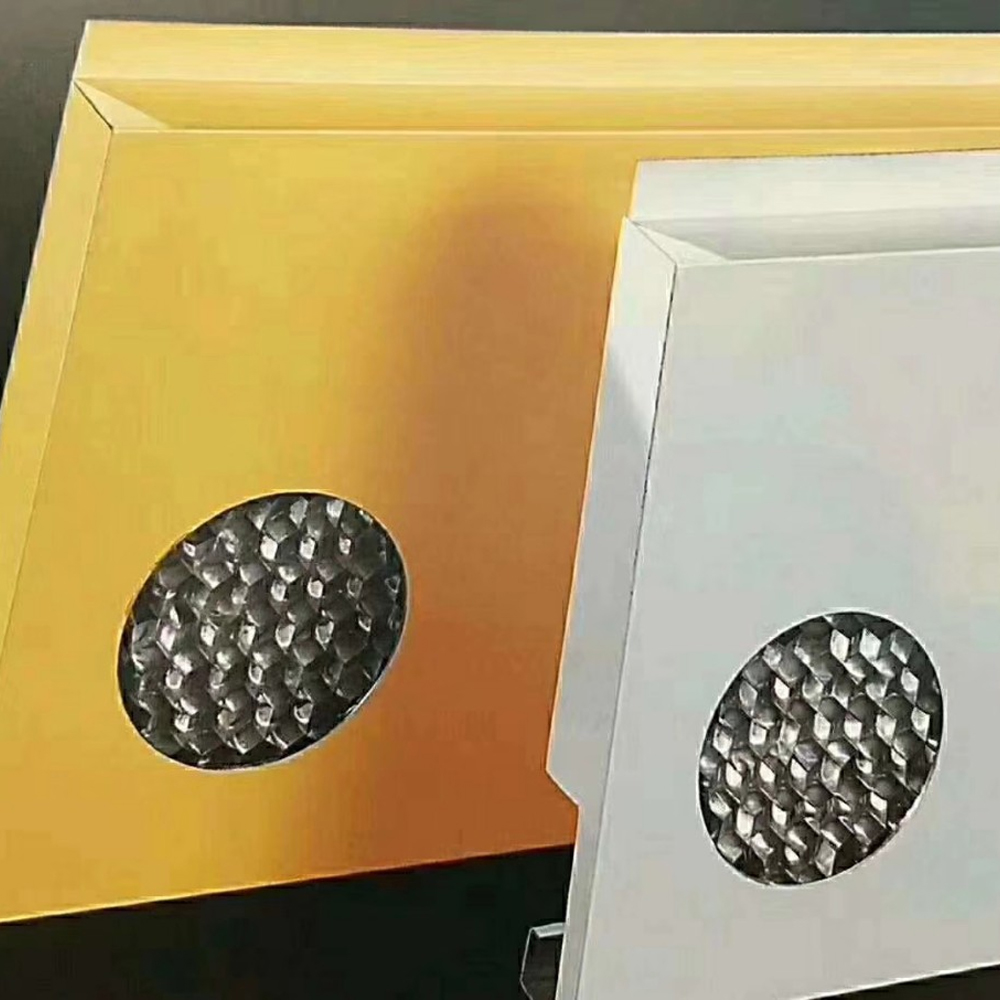
Although both utilize the same honeycomb geometry principle, the core material significantly influences mechanical performance, acoustic behavior, durability, sustainability, and lifecycle cost. For architects, engineers, procurement specialists, and panel fabricators, understanding the distinction between these two systems is essential for correct material selection.
This article provides a technical comparison of acoustic honeycomb panels with aluminum core vs paper core, examining their structure, acoustic mechanisms, physical properties, manufacturing processes, and ideal applications.
1. Understanding Acoustic Honeycomb Panels
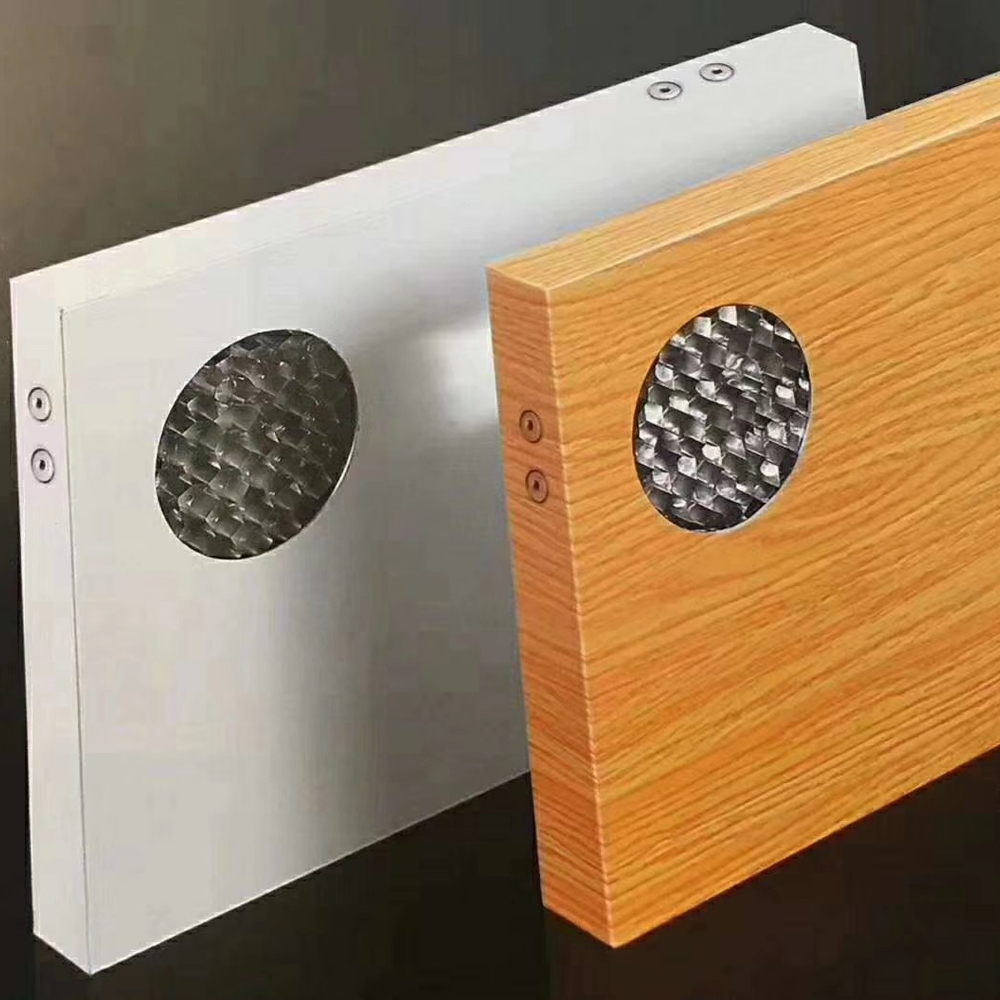
Acoustic honeycomb panels are composite sandwich structures consisting of three main components:
- Face sheets – often aluminum, steel, HPL, plywood, or decorative laminate
- Honeycomb core – aluminum honeycomb or paper honeycomb
- Perforated or acoustic surface layer – allows sound waves to enter the internal cavity
The honeycomb geometry creates multiple enclosed or semi-open cells, improving stiffness while minimizing weight. In acoustic designs, perforations and cavity resonance enable sound attenuation, especially in mid- to high-frequency ranges.
The choice of core material determines how the panel behaves under load, in humid conditions, under fire exposure, and over long-term service cycles.
2. Material Overview: Aluminum Core vs Paper Core
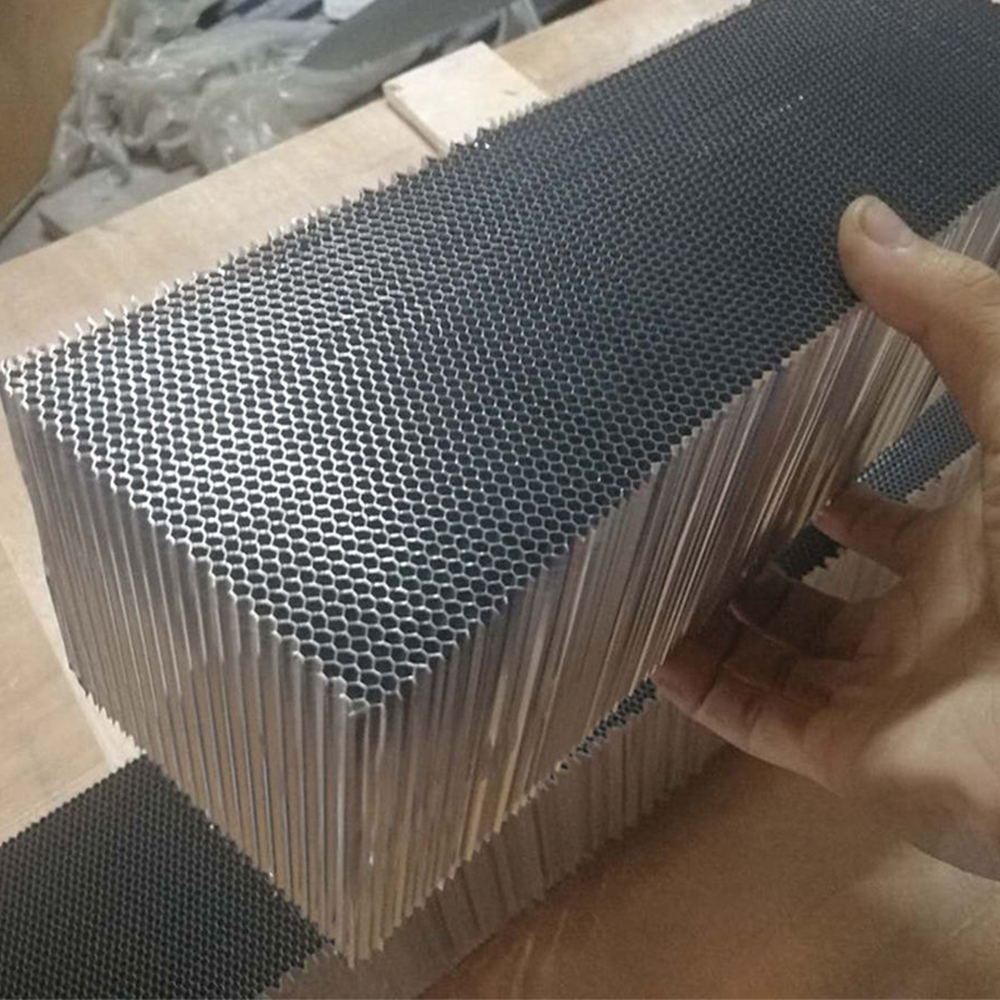
Aluminum Honeycomb Core
Aluminum honeycomb is typically manufactured from thin aluminum foil bonded and expanded into hexagonal cells. Common alloys include 3003 and 5052 series aluminum.
Key characteristics:
- High strength-to-weight ratio
- Excellent dimensional stability
- Corrosion resistance
- Non-combustible behavior
- Long service life
- Suitable for demanding structural environments
Paper Honeycomb Core
Paper honeycomb is made from recycled kraft paper or specialty treated paper bonded into hexagonal cells. It is widely used in lightweight furniture, doors, packaging, and interior partition systems.
Key characteristics:
- Low density
- Cost-effective
- Renewable raw materials
- Easy fabrication
- Good compressive support for non-structural use
- Best suited for dry interior environments
3. Structural Performance Comparison
One of the most critical factors in the comparison of acoustic honeycomb panels with aluminum core vs paper core is mechanical performance.
| Property | Aluminum Core | Paper Core |
|---|---|---|
| Compressive Strength | High | Moderate |
| Shear Strength | High | Low to Moderate |
| Impact Resistance | Excellent | Limited |
| Dimensional Stability | Excellent | Moderate |
| Load Span Capability | Long Span | Short Span |
| Fatigue Resistance | High | Low |
Analysis
Aluminum core panels outperform paper core systems where structural rigidity is required. Ceiling baffles, façade liners, transport flooring, and machine enclosures often require panels that resist vibration and deformation. Aluminum is superior in these conditions.
Paper core panels are more suitable when the panel mainly acts as a decorative or space-dividing element rather than a load-bearing component.
4. Acoustic Performance Comparison
Sound control depends on multiple variables:
- Perforation diameter and open area ratio
- Facing sheet thickness
- Core depth
- Back cavity design
- Absorptive fleece or mineral wool inserts
- Mounting method
Because of this, core material alone does not fully determine acoustic performance. However, it strongly affects resonance behavior and damping.
Aluminum Core Acoustic Behavior
Aluminum cells provide:
- Stable cavity geometry
- Consistent airflow channels
- High-frequency reflection with controlled resonance
- Excellent repeatability in engineered acoustic systems
Often used in:
- Metro stations
- Airports
- Auditoriums
- Industrial noise barriers
Paper Core Acoustic Behavior
Paper core offers:
- Slight natural damping due to fibrous structure
- Softer acoustic reflection profile
- Good speech-frequency absorption in lightweight interiors
Often used in:
- Offices
- Conference rooms
- Furniture panels
- Temporary exhibition walls
Summary
For precision-engineered acoustic environments, aluminum core generally provides more predictable performance. For light commercial interiors, paper core can be sufficient and economical.
5. Fire Resistance and Safety
Fire behavior is a decisive factor in commercial buildings and public infrastructure.
| Fire Property | Aluminum Core | Paper Core |
|---|---|---|
| Combustibility | Non-combustible metal | Combustible unless treated |
| Smoke Generation | Very low | Possible |
| Flame Spread | Minimal | Higher |
| Code Compliance | Easier for public projects | Limited by regulations |
Expert View
Aluminum core acoustic panels are widely preferred for airports, tunnels, hospitals, schools, and high-rise buildings because they more easily satisfy fire safety codes.
Paper core panels can be treated with flame retardants, but such treatments may increase cost and may not match metal-core fire performance.
6. Moisture Resistance and Environmental Stability
Humidity often destroys lightweight panels over time.
Aluminum Core Panels
- Excellent resistance to moisture
- No swelling
- No mold growth in core itself
- Suitable for semi-outdoor or humid interiors
Paper Core Panels
- Sensitive to prolonged moisture exposure
- Possible swelling or delamination
- Reduced compressive strength when wet
- Requires sealing and dry indoor use
This is one of the clearest distinctions in the comparison of acoustic honeycomb panels with aluminum core vs paper core.
For kitchens, washrooms, marine interiors, coastal projects, or tropical climates, aluminum core is strongly recommended.
7. Weight Comparison
Both systems are lightweight compared with solid boards.
| Core Type | Relative Weight |
|---|---|
| Paper Core | Lightest |
| Aluminum Core | Slightly Heavier |
Paper core often has lower density, making it ideal when ultra-lightweight handling is needed, such as modular furniture or exhibition systems.
However, aluminum offers much higher strength per unit weight, giving better engineering efficiency.
8. Sustainability and Environmental Impact
Sustainability assessment should consider raw materials, recyclability, durability, and lifecycle.
Paper Core Advantages
- Renewable fiber sources
- Recycled paper content possible
- Lower embodied energy in some cases
- Biodegradable under certain waste streams
Aluminum Core Advantages
- Fully recyclable metal
- Long service life reduces replacement frequency
- Closed-loop scrap recovery possible
- High residual material value
Lifecycle Perspective
Short-term disposable applications may favor paper core. Long-term durable installations often favor aluminum because of lower replacement frequency.
9. Manufacturing and Fabrication
Aluminum Core Acoustic Panels
Require:
- Precision bonding
- CNC cutting
- Perforation systems
- Edge sealing
- Metal finishing (PVDF, powder coating, anodizing)
Paper Core Acoustic Panels
Require:
- Lamination presses
- Woodworking tools
- Veneer or laminate finishing
- Easier on-site trimming
Paper core panels are easier for furniture workshops, while aluminum systems fit industrial panel manufacturers.
10. Cost Comparison
Budget decisions often drive procurement.
| Cost Factor | Aluminum Core | Paper Core |
|---|---|---|
| Initial Material Cost | Higher | Lower |
| Installation Cost | Moderate | Low |
| Maintenance Cost | Low | Moderate |
| Replacement Frequency | Low | Higher |
| Total Lifecycle Cost | Competitive | Variable |
Paper core usually wins on purchase price. Aluminum often wins over the full lifecycle in demanding projects.
11. Best Application Scenarios
Choose Aluminum Core Acoustic Panels For:
- Airports
- Rail transit stations
- Industrial enclosures
- Exterior soffits
- Hospitals
- Schools
- High humidity areas
- Fire-rated public buildings
Choose Paper Core Acoustic Panels For:
- Office partitions
- Furniture panels
- Interior doors
- Temporary displays
- Dry commercial interiors
- Budget-sensitive acoustic upgrades
12. Expert Recommendation
From a materials engineering perspective, selecting between these systems should depend on service environment, required acoustic rating, fire code, expected lifespan, and maintenance tolerance.
If performance reliability is the priority, aluminum core is usually the superior solution. If low cost, lightweight handling, and indoor decorative use dominate the project requirements, paper core remains a practical choice.
13. Final Conclusion
The full comparison of acoustic honeycomb panels with aluminum core vs paper core shows that both materials have valid use cases, but they serve different engineering priorities.
- Aluminum core panels excel in strength, durability, fire safety, moisture resistance, and long-term acoustic consistency.
- Paper core panels offer lower cost, lighter weight, easier fabrication, and environmental advantages for dry indoor use.
There is no universally “better” option—only the correct material for a specific application. For architects and manufacturers seeking premium, code-compliant, high-performance acoustic panel systems, aluminum honeycomb remains the benchmark. For economical interior solutions with moderate acoustic needs, paper honeycomb continues to provide strong commercial value.
