
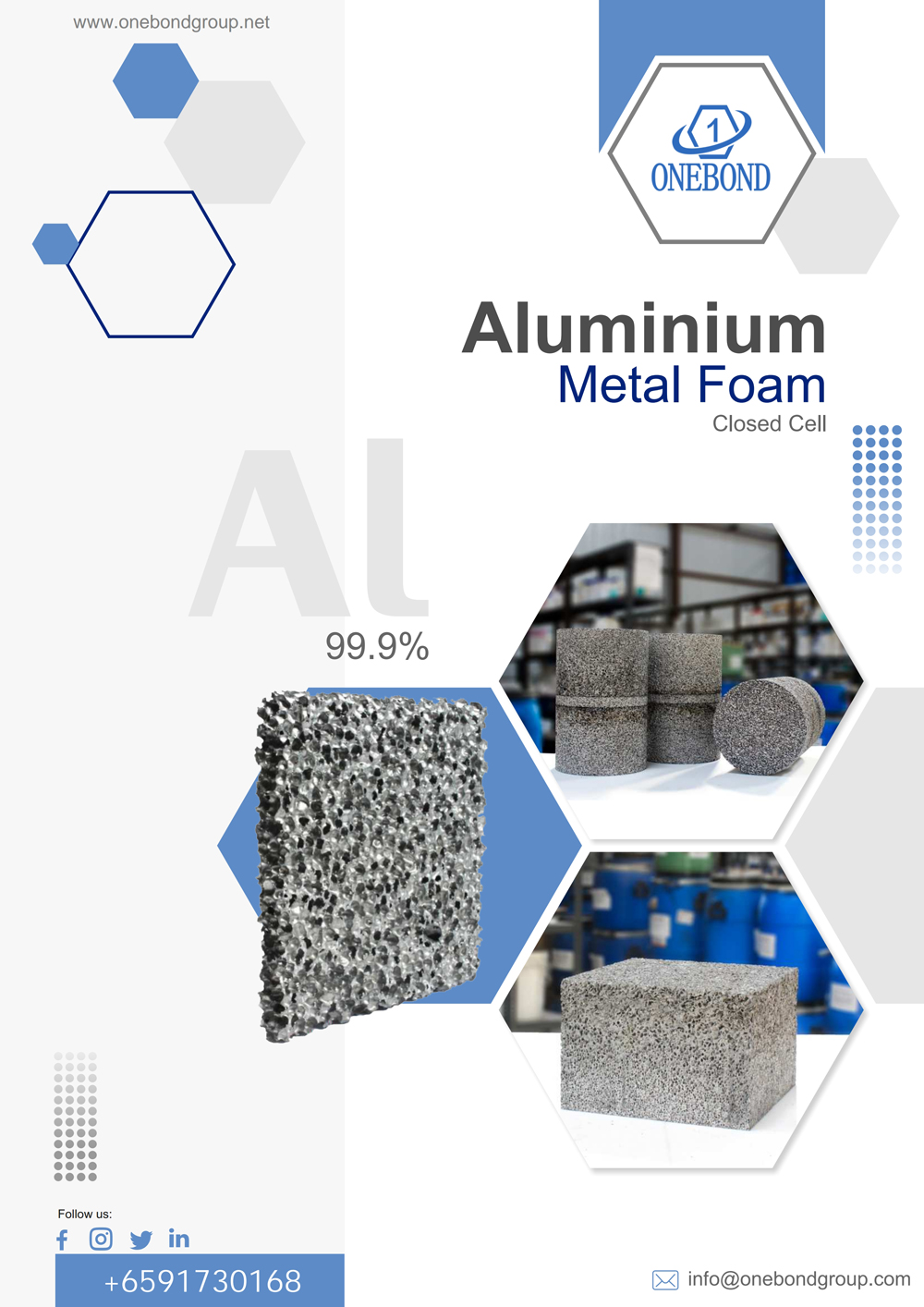
Aluminum Foam is an advanced cellular metallic material characterized by a unique combination of ultra-lightweight structure and exceptional mechanical performance. Produced through a specialized foaming process, this material features a highly porous, closed-cell or open-cell architecture that integrates the inherent properties of aluminum with the functional benefits of a foam structure. It is engineered for applications where weight reduction, energy absorption, and multifunctional performance are critical.
Key Features
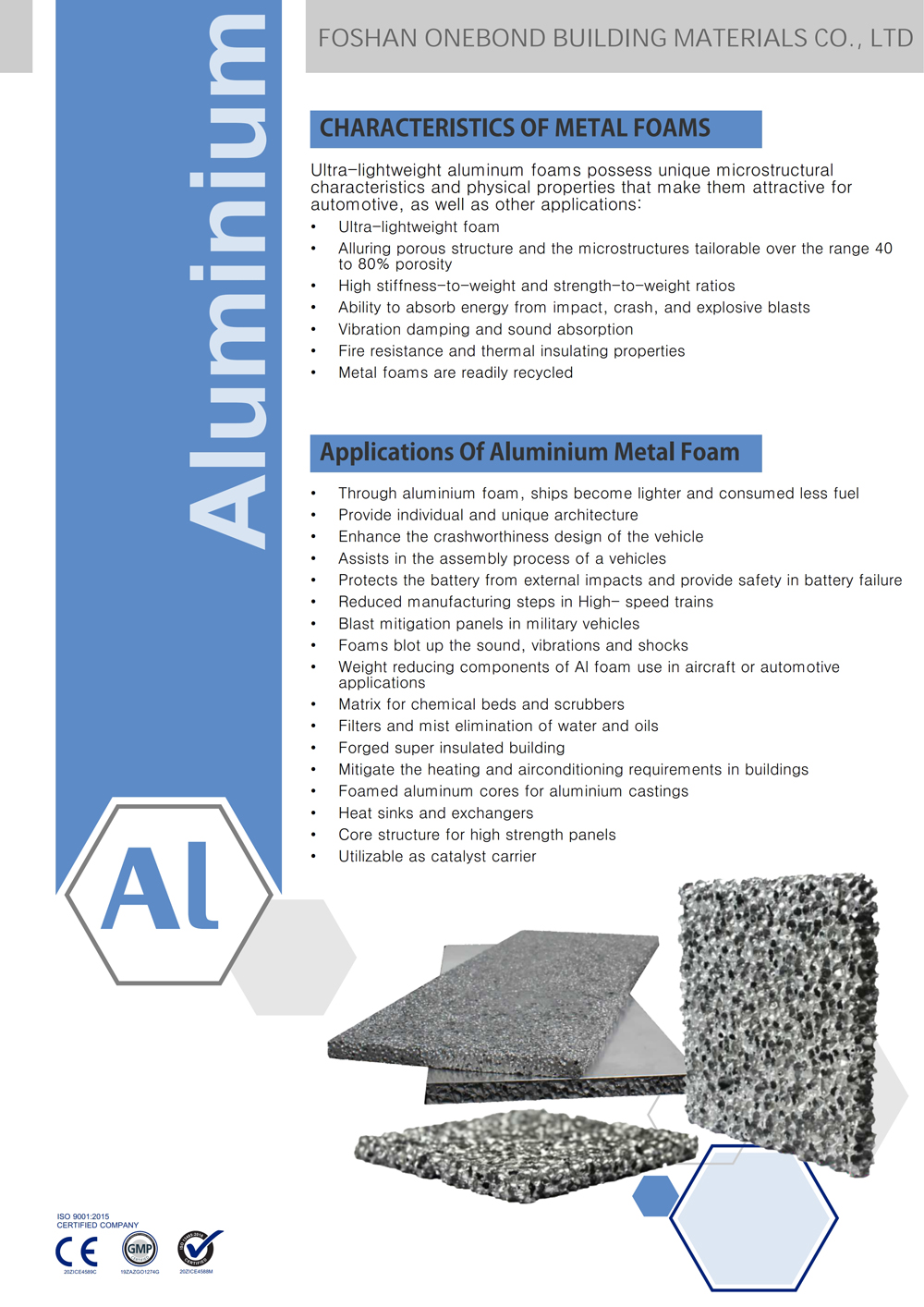
- Ultra-Lightweight: With a density ranging from 0.2 to 0.8 g/cm³, aluminum foam achieves weight savings of up to 80% compared to solid aluminum, making it an ideal choice for lightweight construction.
- Exceptional Energy Absorption: The cellular structure deforms plastically under compressive loads, delivering outstanding impact and crash energy absorption with a long, flat stress plateau.
- High Specific Stiffness and Strength: Offers a superior stiffness-to-weight and strength-to-weight ratio, enabling structurally efficient designs in sandwich panels and load-bearing components.
- Thermal and Acoustic Insulation: The porous architecture provides effective thermal management and sound damping, suitable for both insulation and noise reduction applications.
- Fire and Heat Resistance: Inherently non-combustible and capable of withstanding elevated temperatures, with a melting point above 600°C, outperforming polymer-based foams in fire-critical environments.
- Electromagnetic Shielding: Provides excellent EMI/RFI shielding effectiveness, making it valuable for electronic enclosures and sensitive equipment protection.
- Recyclability: Fully recyclable and environmentally sustainable, aligning with circular economy principles and green manufacturing standards.
- Functional Versatility: Available in closed-cell (for flotation, structural, and sealing applications) and open-cell (for filtration, heat exchange, and catalytic substrates) configurations.
Technical Specifications
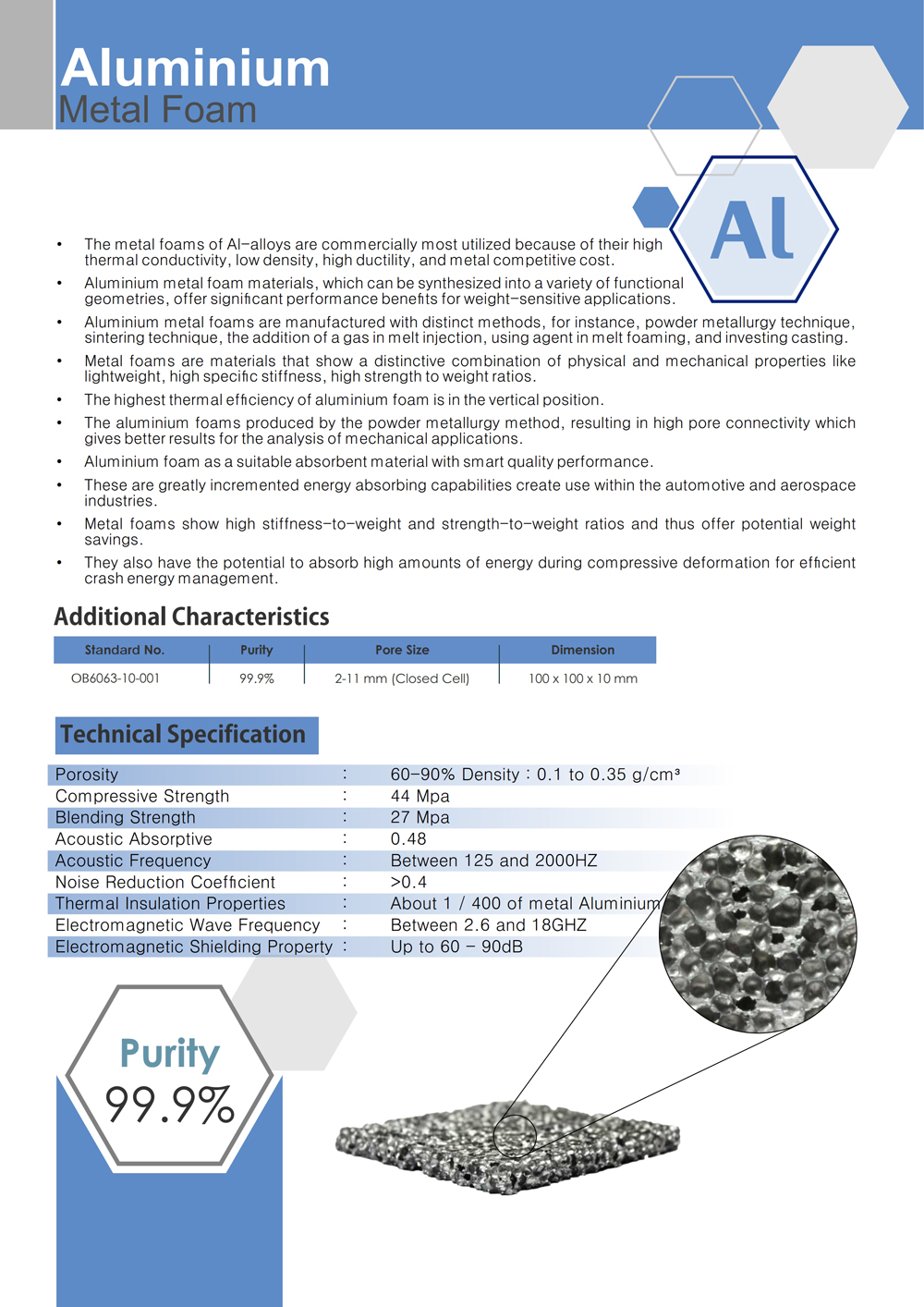
- Base Material: Aluminum alloy (typically AlSi10, AlCu5, or pure aluminum grades)
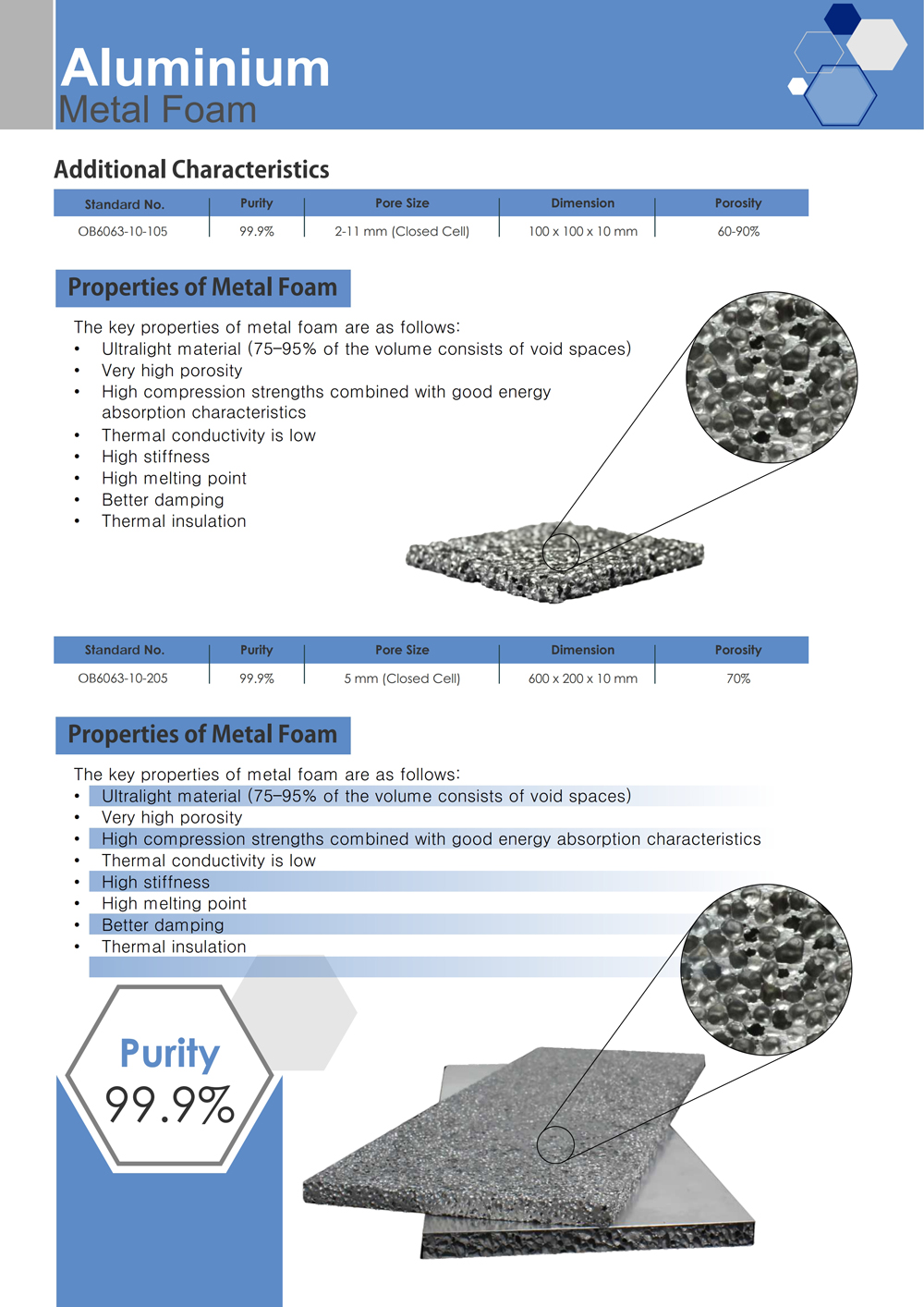
- Porosity: 60% – 95% (tailored to application requirements)
- Cell Size: 1 mm – 25 mm (adjustable via manufacturing process parameters)
- Density Range: 0.2 – 0.8 g/cm³
- Compressive Strength: 2 – 25 MPa (depending on density and alloy)
- Plateau Stress: 1.5 – 20 MPa
- Thermal Conductivity: 3 – 15 W/m·K (at room temperature)
- Maximum Service Temperature: Up to 400°C (continuous); 600°C+ (short-term peak)
- Standard Dimensions: Panels up to 2000 mm × 1000 mm × 100 mm; custom sizes and near-net-shape parts available upon request
- Surface Finish: As-foamed skin, machined surface, or bonded with metallic/non-metallic face sheets
Applications
- Automotive & Transportation: Crash absorbers, side impact beams, lightweight floor panels, sound-damping partitions, and electric vehicle battery pack protection.
- Aerospace & Defense: Sandwich panel cores for fuselage and interior structures, impact-resistant enclosures, blast mitigation shields, and lightweight armor components.
- Construction & Architecture: Facade panels, suspended ceilings, fire doors, and decorative elements with combined structural and acoustic functionality.
- Industrial Machinery: Machine tool bases and frames requiring high damping capacity, vibration isolation pads, and protective guards.
- Marine & Offshore: Buoyancy modules, floating platforms, and lightweight structural elements resistant to corrosion.
- Electronics & Telecommunications: EMI shielding cabinets, server racks, and heat sink substrates with integrated thermal management.
- Medical & Scientific Equipment: X-ray tables, imaging device components requiring high stiffness and low mass, and vibration-damped precision platforms.
Processing & Fabrication
Aluminum foam can be fabricated using several established methods, including melt-based direct foaming (using blowing agents such as titanium hydride), powder metallurgy (precursor foaming), and investment casting for open-cell structures. The material can be machined, cut, drilled, bonded, bolted, and welded, offering compatibility with conventional manufacturing workflows. It also serves as an ideal core material for adhesive-bonded or brazed sandwich panels with aluminum, steel, or composite face sheets.
Handling & Safety
Aluminum foam is non-toxic, non-flammable, and safe to handle under standard industrial conditions. Standard personal protective equipment (gloves, safety glasses) is recommended during cutting and machining due to sharp edges on exposed cells. No special storage conditions are required; the material is resistant to moisture, UV radiation, and most environmental degradation factors.
Quality Assurance
Our aluminum foam products are manufactured under certified quality management systems (ISO 9001) with rigorous in-process and final inspection protocols. Key parameters including density distribution, cell structure uniformity, compressive response, and dimensional accuracy are verified on a batch-by-basis to ensure consistent performance and reliability.
Customization & Technical Support
We offer comprehensive customization services, including tailored alloy selection, adjustable density and cell morphology, near-net-shape foaming, and integration with metallic or composite face sheets. Our engineering team provides full technical support from material selection and design optimization to prototyping and production scale-up.
