

Introduction: The Invisible Core Behind Modern Aircraft
When people admire a modern aircraft—whether it is an Airbus A350 cruising at 35,000 feet or China’s COMAC C919 entering commercial service—they usually focus on engines, avionics, or aerodynamics. Rarely do they consider the core materials hidden inside composite structures, materials that quietly determine strength, weight, fatigue life, and safety.
Among these materials, PMI foam (Polymethacrylimide Foam) has emerged as a strategic core material across the global aerospace industry. From European giants like Airbus, to American OEMs, to fast-growing manufacturers such as COMAC, PMI foam has become synonymous with high-performance sandwich structures.
This article explores why PMI foam has become the aerospace industry’s material of choice, how it compares to alternative foam cores, and why its role will only expand as aircraft become lighter, stronger, and more sustainable.
What Is PMI Foam? A Technical Overview
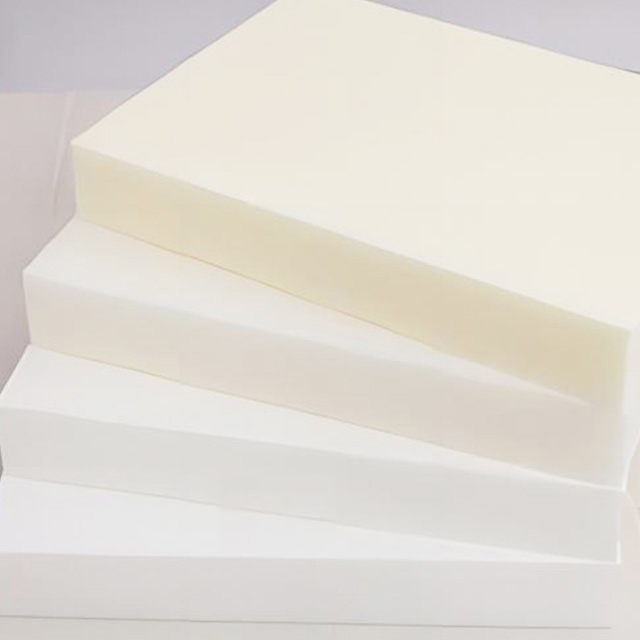
PMI foam is a closed-cell, rigid thermoset foam made from polymethacrylimide resin. Unlike thermoplastic foams, PMI foam forms a highly cross-linked molecular structure during polymerization, resulting in exceptional thermal and mechanical stability.
Key Characteristics of PMI Foam
- Density range: Typically 30–200 kg/m³
- Operating temperature: Up to 180–220°C (depending on grade)
- Closed-cell structure: Excellent resistance to resin absorption
- Isotropic properties: Consistent performance in all directions
- Thermoset behavior: No melting under high temperature
These properties allow PMI foam to survive autoclave curing, high-temperature prepreg processing, and long-term cyclic loads—conditions that many other foam cores simply cannot withstand.
PMI Foam and Sandwich Structures in Aerospace
The Role of Sandwich Construction
Modern aircraft rely heavily on sandwich composite structures, which consist of:
- Face sheets: Carbon fiber reinforced polymer (CFRP), glass fiber, or hybrid composites
- Core material: Foam or honeycomb (PMI, Nomex, aluminum, etc.)
The core material is not merely a filler. It:
- Transfers shear loads
- Stabilizes thin composite skins
- Increases bending stiffness dramatically
- Reduces overall structural weight
In aerospace applications, where every kilogram saved can translate into millions of dollars in fuel savings, the core material is critically important.
Why PMI Foam Excels in Aerospace Applications
1. Outstanding Strength-to-Weight Ratio
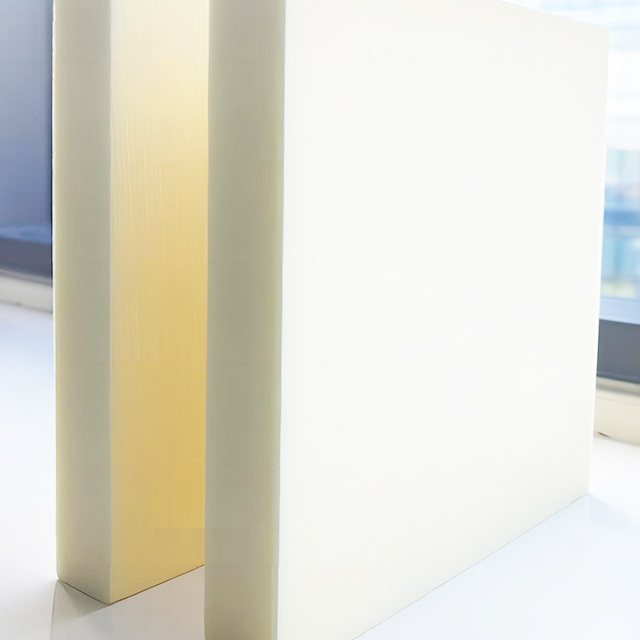
PMI foam offers an exceptional specific strength and stiffness, meaning it delivers high mechanical performance at low density. Compared with PVC or PET foam, PMI maintains higher compressive and shear strength at equivalent or lower weights.
This is particularly valuable in:
- Wing skins
- Control surfaces
- Fairings
- Radomes
- Interior structural panels
Reducing weight without sacrificing safety is one of the core reasons PMI foam is favored by aerospace engineers.
2. High Thermal Resistance for Autoclave Processing
Aerospace composites are often manufactured using high-temperature prepreg systems, cured in autoclaves at temperatures exceeding 120–180°C.
Many foam cores fail under these conditions due to:
- Softening
- Shrinkage
- Loss of mechanical properties
PMI foam, however, retains dimensional stability and mechanical integrity throughout the curing process. This makes it compatible with:
- Carbon/epoxy prepregs
- BMI resin systems
- High-performance aerospace adhesives
This compatibility is a decisive advantage over PET, PU, or standard PVC foams.
3. Excellent Fatigue and Creep Resistance
Aircraft structures are subjected to millions of load cycles during their service life. PMI foam exhibits:
- Low creep deformation under sustained load
- High fatigue endurance
- Stable long-term mechanical behavior
These characteristics are essential for components such as:
- Wing trailing edges
- Flaps and ailerons
- Floor panels and secondary load-bearing structures
PMI foam ensures predictable performance over decades of service.
4. Superior Resin Compatibility and Low Resin Uptake
Thanks to its fine, closed-cell morphology, PMI foam absorbs significantly less resin during lamination. This leads to:
- Better weight control
- More consistent mechanical properties
- Improved surface quality
In aerospace manufacturing, where weight tolerance margins are extremely tight, this property alone makes PMI foam highly attractive.
From Airbus to COMAC: Global Adoption of PMI Foam
Airbus: Setting the Benchmark
Airbus was among the earliest large-scale adopters of PMI foam in aerospace sandwich structures. PMI foam has been used extensively in:
- A320 family components
- A330/A340 interior and secondary structures
- A350 XWB composite assemblies
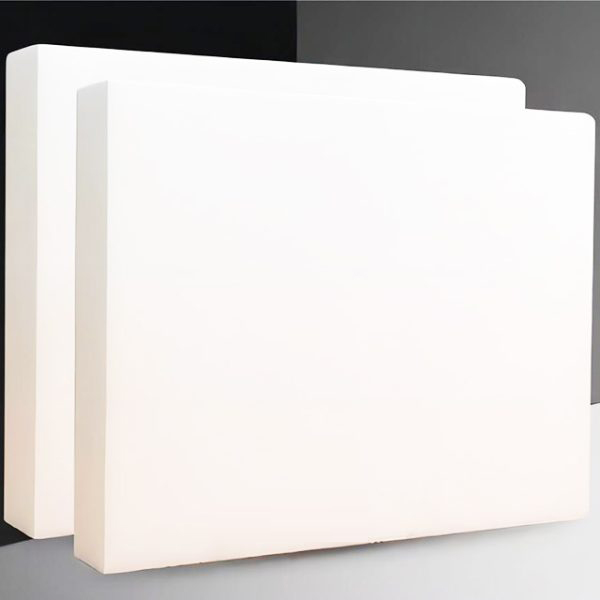
Airbus values PMI foam for its repeatability, certification pedigree, and performance reliability, especially in composite wings and fuselage substructures.
Boeing and the Wider Aerospace Ecosystem
While Boeing traditionally relied more on honeycomb cores, PMI foam has increasingly found applications in:
- Secondary composite structures
- Complex-geometry parts where honeycomb is impractical
- Areas requiring thick cores or multi-axis machining
As composite design evolves, PMI foam’s machinability and isotropic behavior give it a growing role.
COMAC: Accelerating Adoption in China’s Aerospace Industry
China’s aerospace ambitions, led by COMAC (Commercial Aircraft Corporation of China), have significantly increased demand for high-performance structural core materials.
Programs such as the C919 and future wide-body aircraft increasingly incorporate:
- Carbon fiber sandwich panels
- Lightweight interior and fairing structures
- Advanced composite control surfaces
PMI foam aligns perfectly with COMAC’s goals of:
- Weight reduction
- International certification compliance
- Long service life and safety
As China localizes its aerospace supply chain, PMI foam has become a strategic material of interest.
PMI Foam vs Other Core Materials in Aerospace
PMI Foam vs Nomex Honeycomb
| Aspect | PMI Foam | Nomex Honeycomb |
|---|---|---|
| Geometry | Isotropic | Anisotropic |
| Machinability | Excellent | Limited |
| Moisture Resistance | High | Moderate |
| Thickness Flexibility | High | Limited |
| Damage Tolerance | High | Lower |
While honeycomb excels in ultra-light applications, PMI foam dominates in complex shapes, thicker cores, and damage-tolerant designs.
PMI Foam vs PVC Foam
PVC foam is widely used in marine and wind energy, but in aerospace it falls short due to:
- Lower temperature resistance
- Reduced fatigue performance
- Inferior long-term creep behavior
PMI foam clearly outperforms PVC foam in aerospace-critical environments.
PMI Foam vs PET Foam
PET foam offers sustainability benefits, but its thermal and mechanical limits restrict it mainly to:
- Rail
- Automotive
- Wind energy
For high-temperature aerospace composites, PMI foam remains superior.
Applications of PMI Foam in Aircraft
PMI foam is used across both structural and semi-structural aerospace components, including:
- Wing panels and trailing edges
- Engine nacelles and acoustic panels
- Radomes and antenna covers
- Fairings and access panels
- Interior floor panels and partitions
- UAV and aerospace drone structures
Its versatility allows engineers to standardize materials across multiple platforms.
PMI Foam and Aerospace Certification
One of PMI foam’s greatest strengths is its certification readiness. Aerospace-grade PMI foams are supported by:
- Extensive material data sheets
- Fatigue and fire performance testing
- Traceability and batch control
- Compliance with aerospace quality systems (AS9100, etc.)
This reduces certification risk for OEMs and Tier-1 suppliers, accelerating program timelines.
Sustainability and the Future of PMI Foam
While PMI foam is a thermoset material, innovation is underway in:
- Process efficiency improvements
- Reduced waste machining strategies
- Hybrid structures combining PMI foam with recyclable composites
As aerospace moves toward lighter, more efficient aircraft, the role of PMI foam will expand, particularly in:
- Next-generation narrow-body aircraft
- Advanced air mobility (AAM) and eVTOL platforms
- High-performance UAVs
Conclusion: A Core Material That Defines Modern Aerospace
From Airbus to COMAC, PMI foam has earned its position as the aerospace industry’s core material of choice. Its unmatched combination of light weight, thermal stability, mechanical strength, and long-term reliability makes it indispensable in modern composite aircraft design.
As aerospace structures become more complex and performance demands continue to rise, PMI foam will remain not just a material option—but a strategic enabler of next-generation flight.
In the unseen layers beneath carbon fiber skins, PMI foam is quietly shaping the future of aviation.
