
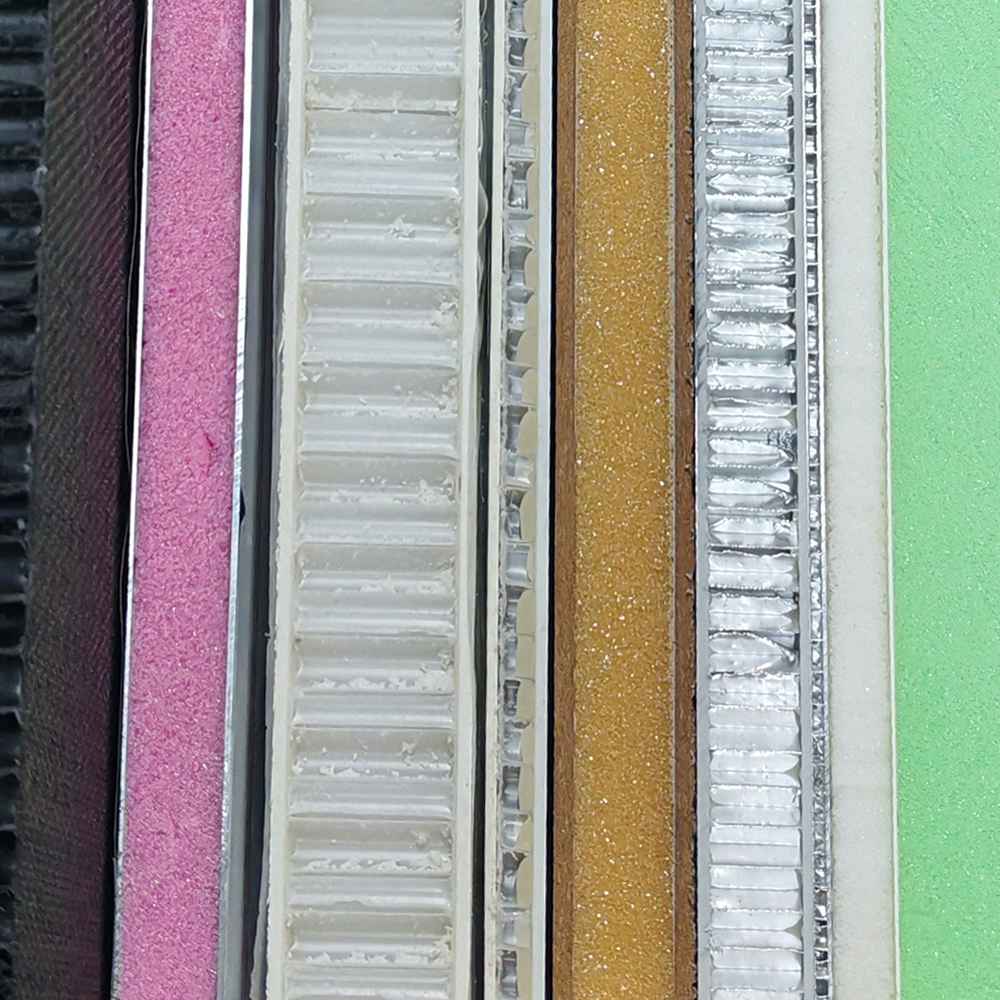
PP Honeycomb Core Bonding with FRP Fiberglass Skins: Adhesives, Surface Treatment and Lamination Process PP honeycomb core is widely considered for lightweight FRP composite sandwich panels used in transportation, truck bodies, RVs, marine interiors and industrial applications. However, bonding polypropylene honeycomb core with FRP fiberglass skins can present a technical challenge. Unlike some conventional foam…
PP Honeycomb Core Bonding with FRP Fiberglass Skins: Adhesives, Surface Treatment and Lamination Process
PP honeycomb core is widely considered for lightweight FRP composite sandwich panels used in transportation, truck bodies, RVs, marine interiors and industrial applications.
However, bonding polypropylene honeycomb core with FRP fiberglass skins can present a technical challenge. Unlike some conventional foam core materials, polypropylene has a relatively low surface energy and a chemically non-polar surface. This makes it difficult for many conventional adhesives and resin systems to achieve reliable direct adhesion.
For composite panel manufacturers, successful bonding requires more than selecting an adhesive. The PP core surface, facing configuration, fiberglass skin resin, adhesive chemistry, lamination pressure and curing conditions must work together.
This guide explains the main bonding challenges and practical manufacturing considerations when producing PP honeycomb FRP sandwich panels.
1. Why Is PP Honeycomb Core Difficult to Bond with FRP Skins?
Polypropylene is a thermoplastic polymer with good moisture resistance, chemical resistance and lightweight characteristics.
However, its molecular structure creates a relatively low-energy surface. Many conventional adhesives do not readily wet untreated PP, which can result in weak adhesion or premature delamination.
In FRP sandwich panel manufacturing, this issue becomes particularly important because the core must remain securely connected to the fiberglass skins during handling and service.
Common bonding problems include:
- Poor adhesive wetting on untreated PP surfaces
- Incomplete contact between adhesive and core
- Localized debonding
- Skin-to-core delamination
- Inconsistent bond strength across the panel
- Adhesive failure under moisture, temperature or mechanical loading
A key distinction is that bonding to the PP core is not the same as bonding to a nonwoven facing attached to the core.
When nonwoven faced PP honeycomb is used, the adhesive may bond to the facing material rather than directly to polypropylene. The attachment between the nonwoven layer and PP core must also be reliable.
Therefore, manufacturers should evaluate the complete bonding system instead of assuming that a conventional FRP resin will bond directly to every PP honeycomb product.
2. Understanding the PP Honeycomb and FRP Sandwich Panel Structure
A typical FRP and PP honeycomb sandwich panel consists of three main structural components:
- Upper FRP fiberglass skin
- PP honeycomb core
- Lower FRP fiberglass skin
Depending on the product design, adhesive layers, nonwoven facings, primers or other interface materials may also be included.
2.1 FRP Fiberglass Skins
FRP stands for Fiber Reinforced Plastic. Fiberglass is commonly used as the reinforcement material, while the matrix resin may be polyester, vinyl ester, epoxy or another compatible resin system.
FRP skins provide the external surfaces of the sandwich panel and carry much of the tensile and compressive stress during bending.
The required skin thickness, glass fiber reinforcement, resin formulation and surface finish depend on the intended application.
2.2 PP Honeycomb Core
The PP honeycomb core provides the internal cellular structure.
Its main functions include:
- Maintaining separation between the two skins
- Transferring shear loads
- Supporting the facing materials
- Contributing to panel stiffness
- Reducing structural weight compared with certain solid constructions
Core thickness, cell size, density and cell geometry influence the final panel properties.
2.3 Bonding Interface
The bonding interface transfers loads between the FRP skins and the PP honeycomb core.
This interface is a critical part of the sandwich construction. Even when the core and FRP skins individually have suitable properties, poor adhesion can reduce the performance of the complete panel.
A reliable sandwich panel therefore requires compatibility between all materials at the interface.
3. Bare PP Honeycomb Core vs Nonwoven Faced PP Honeycomb Core
One of the most important decisions in PP honeycomb FRP panel manufacturing is whether to use bare PP honeycomb core or nonwoven faced PP honeycomb core.
These two configurations offer different bonding possibilities.
3.1 Bare PP Honeycomb Core
Bare PP honeycomb core exposes the polypropylene cellular structure without an additional facing layer.
Advantages include:
- Direct access to the original core structure
- Flexible customization of core configurations
- Potential suitability for specialized bonding processes
- No additional nonwoven facing material
However, the low surface energy of polypropylene creates bonding challenges.
Manufacturers may need a suitable surface treatment, specialized adhesive or a validated bonding process.
Adhesive distribution is also important because the actual contact area between a bare honeycomb structure and a facing material can be limited.
3.2 Nonwoven Faced PP Honeycomb Core
Nonwoven faced PP honeycomb core includes a nonwoven material attached to one or both sides of the honeycomb structure.
The facing provides a more continuous surface for subsequent composite panel manufacturing.
Potential advantages include:
- More uniform adhesive application
- Improved contact with selected FRP skin systems
- A more convenient surface for lamination
- Potential reduction in the difficulty of bonding directly to exposed PP
The nonwoven material may be polyester, polypropylene or another material, depending on the product design.
Its composition, basis weight, porosity and attachment method can influence bonding performance.
Importantly, nonwoven facing does not automatically guarantee strong adhesion.
There are two separate interfaces to evaluate:
Interface 1: PP Honeycomb Core to Nonwoven Facing
The nonwoven layer must remain securely attached to the PP core.
Interface 2: Nonwoven Facing to FRP Skin
The selected resin or adhesive must be compatible with the nonwoven material and the FRP skin.
If either interface is weak, the complete sandwich panel may experience delamination.
3.3 Comparison Table
| Factor | Bare PP Honeycomb Core | Nonwoven Faced PP Honeycomb Core |
|---|---|---|
| Surface configuration | Exposed PP honeycomb | Nonwoven facing on one or both sides |
| Direct PP bonding | Requires careful evaluation | Adhesive may bond to the facing instead |
| Adhesive application | Depends on cell structure and contact area | Can provide a more continuous bonding surface |
| Surface treatment | May be required | Depends on facing material and interface design |
| Manufacturing complexity | Depends on bonding system | May simplify certain lamination processes |
| Additional material | No nonwoven layer | Includes facing material |
| Quality control | PP-to-skin or treated-interface bonding | Both core-to-facing and facing-to-skin bonding |
For many FRP panel manufacturers, nonwoven faced PP honeycomb is worth evaluating because it provides an alternative bonding interface. However, its suitability must be demonstrated through representative panel trials.
4. PP Surface Treatment Methods for Better Adhesion
Surface treatment is one method used to improve polypropylene bondability.
The objective is to modify the surface so that the adhesive can wet it more effectively and form a more reliable interface.
Common surface treatment methods include plasma treatment, corona treatment and flame treatment.
4.1 Plasma Treatment
Plasma treatment uses an energized gas to modify the surface of a material.
For polypropylene, plasma treatment can introduce polar chemical groups and improve surface wettability.
Potential benefits include:
- Increased surface energy
- Improved adhesive wetting
- Better compatibility with selected adhesive systems
- More consistent bonding when properly controlled
Plasma treatment can be applied using atmospheric-pressure or low-pressure systems, depending on the equipment and production requirements.
Important process variables include:
- Gas composition
- Treatment power
- Exposure time
- Distance from the treatment source
- Treatment uniformity
- Time between treatment and bonding
Plasma treatment parameters must be developed for the actual PP honeycomb product. Results from a flat PP sheet should not automatically be assumed to apply to a complex honeycomb structure.
4.2 Corona Treatment
Corona treatment uses electrical discharge to modify the surface of polymer materials.
It is commonly used in industrial surface activation processes.
Potential benefits include:
- Improved surface wettability
- Continuous processing capability
- Suitability for selected sheet and web configurations
However, treatment effectiveness depends on equipment design, exposure conditions and surface accessibility.
The geometry of the honeycomb structure may influence how uniformly the treatment reaches the intended bonding surfaces.
4.3 Flame Treatment
Flame treatment uses controlled exposure to a flame to oxidize the polymer surface.
This can increase surface wettability and improve bonding with suitable adhesives.
Important considerations include:
- Flame intensity
- Treatment distance
- Conveyor speed
- Exposure uniformity
- Risk of overheating or deformation
Excessive treatment can damage the PP material or produce inconsistent results.
Flame treatment should only be performed using suitable industrial equipment and a validated operating procedure.
4.4 Mechanical Abrasion
Mechanical abrasion can remove certain surface contaminants and change surface roughness.
However, sanding or abrasion alone does not necessarily overcome the chemical limitations associated with untreated PP.
It should not be treated as a guaranteed substitute for surface activation.
4.5 Choosing a Surface Treatment Method
| Treatment Method | Main Function | Important Considerations |
|---|---|---|
| Plasma | Surface activation and improved wettability | Gas, power, exposure time and treatment uniformity |
| Corona | Electrical discharge surface activation | Geometry and treatment coverage |
| Flame | Surface oxidation | Heat control and material deformation |
| Mechanical abrasion | Surface cleaning and roughness modification | Does not necessarily provide sufficient chemical activation |
The best method depends on the PP honeycomb configuration, adhesive chemistry, production volume and equipment capability.
Surface treatment should be verified using appropriate surface-energy or wettability checks and actual bond testing.
5. How to Choose the Right Adhesive for PP Honeycomb FRP Panels
Adhesive selection is one of the most important steps in manufacturing PP honeycomb sandwich panels.
There is no universal adhesive that works equally well with every PP honeycomb core, FRP skin and manufacturing process.
The adhesive must be compatible with the actual surfaces being bonded.
5.1 Structural Acrylic Adhesives
Certain structural acrylic adhesives are specifically formulated to bond low-surface-energy plastics, including some polypropylene grades.
Potential advantages include:
- Adhesion to selected untreated or minimally treated polyolefin surfaces
- Compatibility with certain dissimilar material combinations
- Availability in structural bonding formulations
However, not every acrylic adhesive is suitable for every PP honeycomb panel.
Manufacturers must confirm that the selected product is approved for the specific PP grade, FRP surface, service environment and required performance.
5.2 Polyurethane Adhesives
Polyurethane adhesives are used in various composite and sandwich panel bonding applications.
Depending on their formulation, they may offer flexibility, impact resistance and compatibility with selected polymer and composite surfaces.
However, standard polyurethane adhesive products should not be assumed to bond reliably to untreated polypropylene.
A suitable formulation, surface treatment or intermediate facing may be required.
5.3 Epoxy Adhesives
Epoxy adhesives are widely used in structural composite bonding.
They can provide high mechanical performance when used with compatible substrates and correctly controlled curing conditions.
However, conventional epoxy systems do not automatically provide reliable adhesion to untreated PP.
The bonding surface must be prepared or an appropriate intermediate bonding system must be used.
5.4 Polyester and Vinyl Ester Resin Systems
Polyester and vinyl ester resins are commonly used in fiberglass composite manufacturing.
They can be used to manufacture FRP skins and may form part of the bonding system in selected sandwich panel processes.
However, the fact that a resin is suitable for manufacturing an FRP skin does not mean that it will automatically bond to bare PP honeycomb.
The resin-to-core interface must be evaluated separately.
5.5 Adhesive Selection Table
| Adhesive or Resin Family | Typical Role | PP Bonding Consideration |
|---|---|---|
| Structural acrylic | Structural bonding of selected plastics and composites | Some formulations are designed for low-surface-energy plastics |
| Polyurethane | Flexible or structural bonding, depending on formulation | Requires product-specific PP compatibility confirmation |
| Epoxy | Structural composite bonding | Often requires PP surface treatment or an intermediate interface |
| Polyester resin | FRP skin production and selected composite bonding systems | Direct bonding to untreated PP should not be assumed |
| Vinyl ester resin | FRP skin and composite manufacturing | Requires validation of the PP interface |
5.6 What Should Buyers Ask Adhesive Suppliers?
Before selecting an adhesive, manufacturers should confirm:
- Is the adhesive suitable for polypropylene?
- Does it require plasma, corona or flame treatment?
- Is it compatible with the FRP skin resin?
- What is the recommended bond-line thickness?
- What is the mixing ratio, if applicable?
- What is the open time and working time?
- What are the curing temperature and duration?
- What are the service temperature and environmental limits?
- Is the product suitable for the intended production process?
- Are relevant technical data sheets and test results available?
The exact adhesive product should be selected with the adhesive manufacturer’s technical guidance and verified using production-representative samples.
6. PP Honeycomb Core Lamination Process with FRP Fiberglass Skins
The lamination process can vary according to the core configuration, facing material, adhesive system and production equipment.
The following is a general manufacturing workflow. Actual process parameters must be established through trials and the adhesive manufacturer’s instructions.
Step 1: Prepare the Materials
Prepare the PP honeycomb core, FRP skins, adhesive and any required facing materials.
Inspect the core for:
- Damaged cells
- Uneven thickness
- Surface contamination
- Dimensional variation
- Inconsistent facing attachment
Inspect the FRP skins for surface defects, contamination, warping and dimensional accuracy.
All materials should be suitable for the selected bonding process.
Step 2: Prepare the Bonding Surfaces
Clean the surfaces using methods compatible with the materials.
For bare PP honeycomb, apply the validated surface treatment if required.
For nonwoven faced PP honeycomb, inspect the facing for damage, wrinkles, loose areas and contamination.
The FRP bonding surface should also be prepared according to the resin and adhesive supplier’s recommendations.
Avoid using cleaning chemicals that may damage the core, facing or resin surface.
Step 3: Apply the Adhesive
Apply the selected adhesive or resin system using a controlled method.
Possible methods include:
- Roller coating
- Manual application
- Metered dispensing
- Spray application, where approved for the product
- Film adhesive placement
The application method depends on the adhesive viscosity, facing configuration, panel size and production equipment.
For bare honeycomb, the adhesive must make effective contact with the intended bonding areas.
For nonwoven faced core, the adhesive can be applied to the facing surface when the adhesive system is designed for that interface.
Step 4: Position the PP Honeycomb Core
Place the core between the two FRP skins.
Maintain the required alignment and ensure that the core is positioned consistently.
For large panels, positioning fixtures or alignment systems can help reduce dimensional variation.
Special attention should be given to:
- Panel edges
- Core joints
- Cutouts
- Insert locations
- Reinforced areas
- Local load-bearing zones
Step 5: Apply Controlled Pressure
Apply uniform consolidation pressure using a suitable production method.
Possible methods include:
- Flat press lamination
- Vacuum bagging
- Vacuum-assisted bonding
- Other validated composite panel lamination processes
The applied pressure must be sufficient to establish contact without crushing or deforming the honeycomb core.
Excessive pressure may damage the cellular structure or cause adhesive starvation.
Uneven pressure may result in local bonding defects.
For vacuum processing, the core’s geometry and permeability must be considered. Open-cell pathways, sealing arrangements and resin-flow control may require special design.
Step 6: Cure the Adhesive
Allow the adhesive or resin system to cure under the specified conditions.
Curing parameters depend on the adhesive formulation and the complete panel construction.
Important factors include:
- Temperature
- Cure duration
- Pressure
- Humidity, where relevant
- Adhesive mixing accuracy
- Panel thickness
- Heat distribution
Avoid using a generic curing temperature or time for all adhesive systems.
The manufacturer’s technical data sheet should determine the initial process window, followed by validation using actual production samples.
Step 7: Remove the Panel and Inspect
After sufficient curing, remove the panel from the press or fixture.
Inspect the finished panel for:
- Surface flatness
- Edge bonding
- Delamination
- Local deformation
- Resin or adhesive distribution defects
- Dimensional accuracy
Representative samples should undergo mechanical bonding tests before the process is approved for production.
7. Common Bonding Problems and How to Prevent Them
Bonding defects can result from material incompatibility, poor surface preparation, incorrect adhesive application or inadequate process control.
| Common Problem | Possible Cause | Recommended Control |
|---|---|---|
| Adhesive does not wet PP | Low surface energy | Evaluate suitable surface activation or low-surface-energy adhesive |
| Skin-to-core delamination | Weak interface or incomplete bonding | Validate adhesive compatibility and bond strength |
| Nonwoven separation | Weak core-to-facing attachment | Test the facing-to-core interface separately |
| Uneven bonding | Inconsistent adhesive application or pressure | Improve coating and pressure uniformity |
| Honeycomb deformation | Excessive consolidation pressure or heat | Establish safe pressure and temperature limits |
| Excessive adhesive weight | Over-application or poor process control | Optimize adhesive quantity through trials |
| Resin entering the core | Open pathways or unsuitable resin-flow control | Evaluate facing, barrier layers and process design |
| Panel warping | Uneven cure, temperature or pressure | Control curing and panel support conditions |
A finished panel that looks visually acceptable may still contain weak internal bonding areas.
For this reason, visual inspection should be combined with appropriate destructive and non-destructive evaluation methods where applicable.
8. How to Test Bonding Quality in PP Honeycomb FRP Panels
Bonding quality should be verified at both the material-interface level and the complete panel level.
8.1 Flatwise Tensile Testing
Flatwise tensile testing evaluates the resistance of a sandwich construction to tensile loading perpendicular to its faces.
It can help assess the integrity of the bonded sandwich structure.
Failure location should be recorded because a core failure and an adhesive-interface failure indicate different problems.
8.2 Core Shear Testing
Core shear testing evaluates the ability of the core and its associated interfaces to transfer shear loads.
This is particularly important for panels exposed to bending and structural loading.
8.3 Peel or Interface Bond Testing
A suitable peel or interface test may be used to evaluate the adhesion between the facing and core.
The test method should be selected according to the actual material construction.
For nonwoven faced PP honeycomb, testing should distinguish between:
- PP core-to-nonwoven separation
- Nonwoven-to-FRP separation
8.4 Environmental Conditioning
For panels used in demanding environments, bonding performance should also be evaluated after relevant conditioning.
Possible conditions include:
- Water exposure
- Temperature cycling
- Elevated temperature
- Humidity exposure
- Chemical exposure, where relevant
8.5 Suggested Quality Control Table
| Inspection Item | Purpose |
|---|---|
| Core thickness | Verify dimensional consistency |
| Cell structure | Check cellular uniformity |
| Facing attachment | Evaluate nonwoven-to-core integrity |
| Adhesive distribution | Check for incomplete or excessive application |
| Flatwise tensile | Evaluate sandwich interface integrity |
| Core shear | Evaluate shear performance |
| Panel flexural testing | Assess complete panel behavior |
| Environmental conditioning | Evaluate durability under relevant exposure |
ASTM C297/C297M may be relevant for flatwise tensile testing of sandwich constructions, while ASTM C273/C273M and ASTM C393/C393M address core shear and sandwich beam flexural testing respectively.
The exact test method should be confirmed against the specimen construction and current standard requirements.
9. How to Improve Production Efficiency and Bonding Consistency
For composite panel factories, bonding quality must be repeatable across production batches.
A reliable manufacturing process should control materials, equipment and operating conditions rather than relying only on operator experience.
Recommended practices include:
Standardize incoming material inspection. Check PP honeycomb thickness, cell geometry, facing quality and FRP skin condition.
Control surface preparation. Define treatment settings, inspection methods and the maximum permitted delay before bonding.
Use approved adhesive specifications. Maintain records of product identification, batch number, shelf life, mixing ratio and curing requirements.
Control adhesive application. Monitor application quantity and coverage.
Maintain uniform pressure. Ensure that the complete panel receives appropriate consolidation.
Monitor curing conditions. Record temperature, time and other relevant process variables.
Retain production samples. Keep representative specimens for periodic bonding and mechanical testing.
Document failures. Record failure modes and corrective actions to improve process consistency.
These measures can help reduce delamination, material waste and quality variation.
10. Applications of PP Honeycomb FRP Sandwich Panels
PP honeycomb FRP sandwich panels can be considered for several lightweight composite applications.
Truck Body and Trailer Panels
Truck body manufacturers use sandwich panel structures to balance weight, rigidity and durability.
PP honeycomb core can be considered for FRP-faced truck body panels when the complete structure meets compression, shear, impact and bonding requirements.
RV and Caravan Panels
PP honeycomb FRP panels may be used in selected RV wall, roof, floor and interior structures.
The panel design should account for moisture exposure, temperature changes, mechanical loading and attachment details.
Marine Interior Panels
Lightweight composite panels can be useful in selected marine interior applications.
Material selection must consider moisture, fire and smoke requirements, bonding durability and applicable marine regulations.
Industrial Composite Panels
PP honeycomb FRP panels may also be considered for lightweight equipment covers, partitions, protective structures and other industrial products.
The appropriate panel configuration depends on the actual service environment and performance requirements.
11. How to Choose the Right PP Honeycomb Core for FRP Panel Manufacturing
Before purchasing PP honeycomb core for FRP panel production, manufacturers should define their panel construction and bonding requirements.
| Purchasing Parameter | Information to Confirm |
|---|---|
| Core type | Bare or nonwoven faced PP honeycomb |
| Core thickness | Required finished core thickness |
| Cell size | Target honeycomb aperture |
| Density | Target density or areal weight |
| Sheet dimensions | Required length and width |
| Facing material | Polyester nonwoven, PP nonwoven or another facing |
| FRP skin | Fiberglass reinforcement and resin system |
| Adhesive system | Approved adhesive or resin formulation |
| Manufacturing method | Press lamination, vacuum bagging or other process |
| Mechanical requirements | Compression, shear, flexural and bonding targets |
| Application | Truck body, RV, marine or industrial panels |
| Order quantity | Sample, trial production or mass production |
The most important purchasing point is to confirm that the supplied core configuration is compatible with the buyer’s actual FRP skin and lamination process.
12. Why Choose ONEBOND PP Honeycomb Core?
ONEBOND focuses on composite core materials and lightweight sandwich panel solutions for industrial applications.
Our PP honeycomb core product range includes different configurations for composite panel manufacturing.
Available product options can be discussed according to project requirements:
- Bare PP Honeycomb Core
- Nonwoven Faced PP Honeycomb Core
- Customized PP Honeycomb Sheets
- PP Honeycomb Core for FRP Composite Panels
- PP Honeycomb Core for Truck Body Panels
For FRP panel manufacturers, selecting the appropriate core configuration is an important part of establishing a reliable production process.
ONEBOND can discuss core thickness, cell size, density or areal weight, sheet dimensions and facing requirements according to the intended application.
Final bonding performance should be verified using the customer’s actual FRP skin, adhesive system and lamination conditions.
13. Request PP Honeycomb Core for Your FRP Panel Project
Are you manufacturing fiberglass sandwich panels for truck bodies, RVs, marine interiors or industrial applications?
ONEBOND can discuss customized PP honeycomb core solutions according to your panel design and manufacturing requirements.
To help us understand your project, please provide:
- Application
- Required core thickness
- Target cell size
- Target density or areal weight
- Bare or nonwoven faced core
- FRP skin type
- Resin or adhesive system
- Panel dimensions
- Estimated order quantity
Contact ONEBOND to discuss your PP honeycomb core requirements and request product information.
Frequently Asked Questions
1. Can PP honeycomb core be bonded directly to FRP fiberglass skins?
It can be bonded using a validated bonding system, but untreated polypropylene has low surface energy. Suitable surface treatment, specialized adhesive or an intermediate facing may be required.
2. Why is polypropylene difficult to bond with epoxy resin?
Polypropylene has a non-polar, low-surface-energy surface that can prevent conventional epoxy adhesives from wetting and bonding effectively without suitable preparation.
3. Is nonwoven faced PP honeycomb better for FRP panels?
Nonwoven faced PP honeycomb can provide a more continuous bonding surface for selected lamination processes. However, both the nonwoven-to-core and FRP-to-facing interfaces must be validated.
4. Which surface treatment is suitable for PP honeycomb core?
Plasma, corona and flame treatment are possible surface activation methods. The appropriate method depends on the core geometry, equipment and adhesive system.
5. Can polyester resin bond PP honeycomb core?
Direct bonding with conventional polyester resin should not be assumed to be reliable. The exact PP surface, resin formulation and bonding process must be tested.
6. What adhesive is suitable for PP honeycomb FRP panels?
Certain structural acrylic, polyurethane and epoxy systems may be suitable depending on their formulation and surface preparation requirements. Product-specific compatibility must be confirmed with the adhesive manufacturer.
7. What causes delamination in PP honeycomb FRP panels?
Possible causes include poor surface preparation, incompatible adhesive, weak nonwoven attachment, uneven adhesive application, excessive pressure and inadequate curing.
8. How can manufacturers test PP honeycomb FRP panel bonding quality?
Suitable evaluation may include flatwise tensile testing, core shear testing, interface testing and environmental conditioning of representative panel samples.
9. Does nonwoven facing eliminate the need for PP surface treatment?
Not necessarily. The facing attachment method and the facing-to-core interface must be evaluated. Some products may require additional treatment or a specific bonding system.
10. What information is needed to order PP honeycomb core for FRP panels?
Buyers should provide core thickness, cell size, density or areal weight, sheet dimensions, facing configuration, FRP skin type, application and estimated order quantity.
