
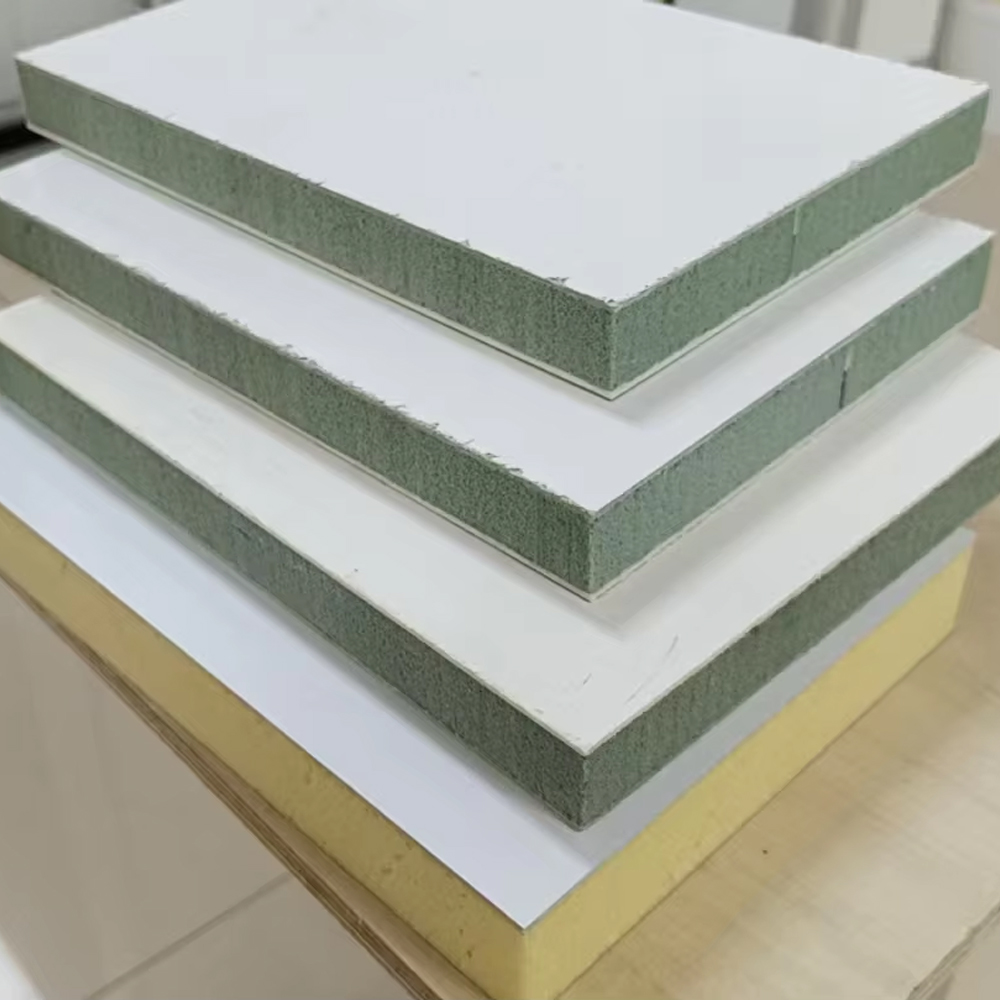
Introduction: Why Foam Core Density Matters in Purchasing Decisions
For composite panel manufacturers, engineers, and international procurement managers, Foam Core density is one of the most important parameters when selecting core materials. Many buyers focus primarily on material type, such as PVC Foam Core, PET Foam Core, XPS Foam Core, or PU Foam Core. However, density selection often determines whether a composite panel can achieve the required balance between strength, weight, cost, and durability.
In sandwich panel structures, the foam core is responsible for transferring loads between the surface skins and maintaining structural stability. A wrong density selection may lead to:
- Insufficient mechanical strength
- Excessive material cost
- Increased product weight
- Processing problems
- Reduced service life
For example, a marine panel, wind turbine blade component, and building insulation board may all use foam core materials, but their density requirements can be completely different.
This article explains how foam core density affects mechanical performance, weight reduction, cost control, and application selection, helping global buyers make more accurate procurement decisions.
1. What Does Foam Core Density Mean?
Foam Core density refers to the weight of foam material per unit volume, usually expressed as:
kg/m³ (kilograms per cubic meter)
For example:
- 60 kg/m³ Foam Core means one cubic meter of material weighs approximately 60 kilograms.
- 200 kg/m³ Foam Core means one cubic meter of material weighs approximately 200 kilograms.
Density reflects the amount of polymer material contained in the foam structure.
Generally:
Higher density = more material content = higher mechanical strength
However:
Higher density does not always mean better performance.
The correct density depends on the final application requirements.
A lightweight wall panel may require 60 kg/m³ foam core, while a structural marine panel may require 100-200 kg/m³ foam core.
2. How Density Affects Foam Core Mechanical Strength
Mechanical performance is one of the most important factors considered by composite material buyers.
Key properties include:
- Compression strength
- Shear strength
- Tensile strength
- Impact resistance
- Fatigue performance
Compression Strength and Density Relationship
Compression strength describes how much pressure the foam core can withstand before permanent deformation occurs.
Generally:
Higher density foam core provides:
- Higher compression resistance
- Better load support
- Improved structural stability
For example:
Low Density Foam Core
Typical range:
30-60 kg/m³
Advantages:
- Lightweight
- Lower cost
- Good insulation
Applications:
- Building insulation panels
- Non-structural sandwich panels
Limitations:
- Lower load-bearing capacity
Medium Density Foam Core
Typical range:
80-120 kg/m³
Advantages:
- Balanced strength and weight
- Good structural performance
- Suitable for many composite applications
Applications:
- Transportation panels
- Marine interiors
- Industrial composite panels
High Density Foam Core
Typical range:
150-250 kg/m³
Advantages:
- Maximum mechanical performance
- Higher impact resistance
- Better fatigue durability
Applications:
- Boat hulls
- Wind turbine blades
- Heavy-duty composite structures
3. Density Influence on Sandwich Panel Stiffness
A common misunderstanding among buyers is that the foam core itself carries all structural loads.
In reality, the sandwich structure works as a complete system:
- Face sheets carry tensile and compressive forces
- Foam core transfers shear forces and separates the skins
The foam core thickness and density determine the panel stiffness.
A higher-density foam core can improve:
- Panel rigidity
- Resistance to bending
- Structural stability
However, increasing density is not always the most efficient solution.
Sometimes increasing core thickness can achieve better stiffness improvement with lower weight increase.
Professional engineers usually optimize:
- Core density
- Core thickness
- Skin material
together.
4. Density Comparison of Common Foam Core Materials
| Foam Core Material | Typical Density Range | Main Advantage |
|---|---|---|
| PVC Foam Core | 45-250 kg/m³ | High structural performance |
| PET Foam Core | 60-250 kg/m³ | Sustainable lightweight structure |
| XPS Foam Core | 30-50 kg/m³ | Thermal insulation |
| PU Foam Core | 30-100 kg/m³ | Excellent insulation efficiency |
| PMI Foam Core | 50-200 kg/m³ | High-performance engineering |
5. How Density Affects Weight Reduction
Weight reduction is one of the biggest reasons industries use foam core sandwich structures.
Applications include:
- Marine vessels
- Electric vehicles
- Rail transportation
- Wind energy equipment
- Aerospace components
Lower Density Advantages
Low-density foam cores provide:
- Reduced overall weight
- Easier transportation
- Lower energy consumption
For example:
A lightweight transportation panel using PET Foam Core can reduce vehicle weight while maintaining sufficient mechanical strength.
Higher Density Advantages
High-density foam cores provide:
- Higher strength
- Better impact resistance
- Longer service life
For demanding applications, a small weight increase may be acceptable because it improves reliability.
6. Density Selection by Application
Marine Industry
Marine structures require:
- High impact resistance
- Water resistance
- Fatigue durability
Recommended density:
80-200 kg/m³
Typical materials:
- PVC Foam Core
- PET Foam Core
Applications:
- Yacht hulls
- Boat decks
- Ship interior panels
Higher density is usually selected for areas exposed to higher loads.
Wind Turbine Industry
Wind turbine blades require:
- Lightweight design
- High fatigue resistance
- Long operating life
Recommended density:
60-200 kg/m³
Typical materials:
- PET Foam Core
- PVC Foam Core
- PMI Foam Core
Density selection depends on blade position and structural requirements.
Transportation Industry
Applications:
- Truck body panels
- RV panels
- Railway interiors
Recommended density:
60-150 kg/m³
Priority:
- Weight reduction
- Cost efficiency
- Production speed
PET Foam Core is increasingly used due to its balance between performance and sustainability.
Construction Industry
Applications:
- Wall panels
- Roof panels
- Insulation boards
Recommended density:
30-80 kg/m³
Priority:
- Thermal insulation
- Moisture resistance
- Cost control
Common materials:
- XPS Foam Core
- PU Foam Core
7. How Density Influences Material Cost
Density directly affects raw material consumption.
Higher density means:
- More polymer content
- Higher production cost
- Higher transportation weight
However, the cheapest foam core is not always the most economical choice.
A low-density core may cause:
- Structural failure
- Additional reinforcement requirements
- Higher maintenance cost
A high-quality procurement decision should consider:
Initial Material Cost
Processing Cost
Product Lifetime Cost
8. Common Mistakes Buyers Make When Selecting Density
Mistake 1: Choosing the Lowest Density to Reduce Cost
Some buyers select low-density foam core because of lower purchasing prices.
Potential problems:
- Insufficient strength
- Panel deformation
- Reduced durability
Mistake 2: Choosing Excessively High Density
Higher density does not always improve product value.
Problems:
- Increased weight
- Higher transportation cost
- Higher material consumption
Mistake 3: Ignoring Core Thickness
Density cannot be considered separately.
A 50mm low-density foam core may perform differently from a 20mm high-density foam core.
Engineers should evaluate:
- Density
- Thickness
- Skin materials
- Loading conditions
together.
9. Procurement Recommendations for Foam Core Buyers
When sourcing foam core materials, buyers should provide suppliers with detailed requirements:
Technical Requirements
Confirm:
- Density range
- Thickness tolerance
- Compression strength
- Shear strength
- Thermal conductivity
- Water absorption
Application Information
Share:
- Final product type
- Operating environment
- Expected service life
- Manufacturing method
A professional supplier can recommend the appropriate density grade based on actual requirements.
10. How to Choose the Right Foam Core Density
A simple selection guideline:
Choose Low Density Foam Core When:
- Weight reduction is the priority
- Structural loads are limited
- Insulation performance is important
Examples:
- Building insulation panels
- Interior panels
Choose Medium Density Foam Core When:
- Balance between strength and cost is required
Examples:
- Transportation panels
- Industrial composites
Choose High Density Foam Core When:
- Maximum structural performance is required
Examples:
- Marine structures
- Wind turbine blades
- Heavy-duty composite applications
