
The term “extruded foam” is often used interchangeably with Extruded Polystyrene (XPS), and for good reason: the extrusion process is what defines its superior set of properties. As a category, extruded foam represents a class of rigid, closed-cell insulation materials prized for their strength, moisture resistance, and thermal efficiency. This article serves as a deep dive into the world of extruded foam, explaining its manufacturing process, comparing it to other foam plastics, and highlighting its vast and varied applications across the construction industry and beyond.
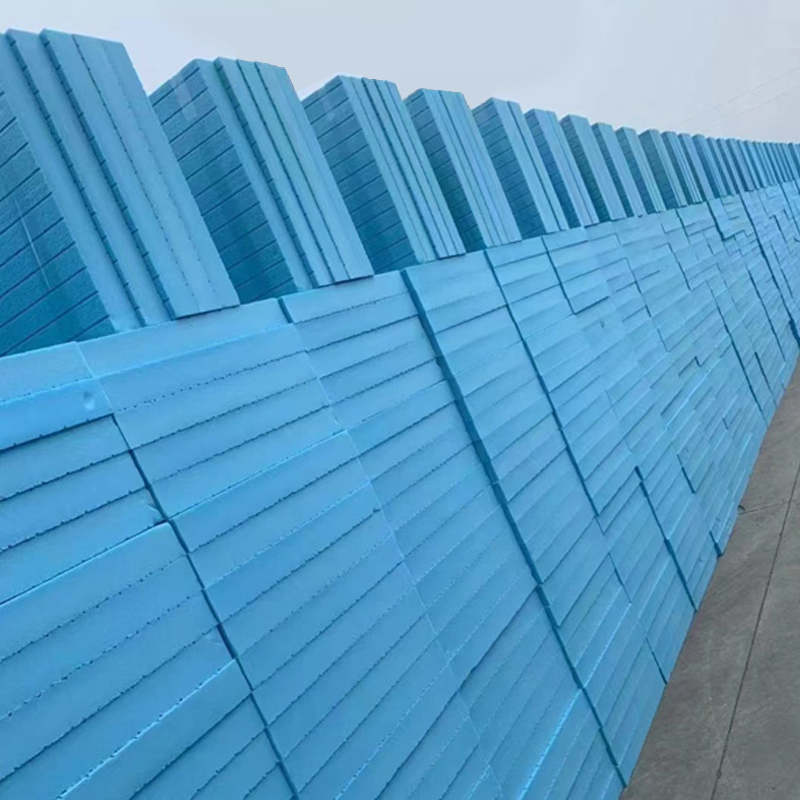
The Extrusion Process: Engineering Performance from the Ground Up
To understand why extruded foam performs as it does, one must start with its creation. The extrusion process involves melting polystyrene resin with additives and a blowing agent under high heat and pressure. This viscous mixture is then forced through a precision die. As it exits the die into atmospheric pressure, the blowing agent causes the material to expand into a foam, which is immediately shaped and cooled into a rigid board. This controlled, continuous process results in a material with:
- A Homogeneous Closed-Cell Structure: Unlike beads-fused materials, the cell structure is uniform and continuous, with each cell wall sealed against its neighbors. This is the root of its low water absorption and high strength.
- Smooth, Integral Skins: The contact with the die and cooling rollers creates a tough, continuous skin on the top and bottom surfaces, adding to its durability and moisture barrier properties.
- Consistent Density and R-Value: The process allows for precise control, ensuring every batch of extruded foam meets strict specifications for thermal and mechanical performance.
Extruded Foam vs. Other Foam Plastic Insulations
It’s crucial to distinguish extruded foam from its common counterparts:
- Expanded Polystyrene (EPS): Often called “beadboard,” EPS is created by expanding beads of polystyrene in a mold using steam. The beads fuse together, but tiny inter-bead voids exist, making it more permeable to air and water. EPS has lower compressive strength and a lower R-value per inch compared to extruded foam.
- Polyisocyanurate (Polyiso): Polyiso is a thermoset plastic foam, typically laminated between facers. While it can have a high initial R-value, it is susceptible to thermal drift (R-value degradation over time) and the facers can be damaged by moisture. Extruded foam provides a more stable, moisture-resistant R-value.
The key differentiator is that extruded foam’s performance—especially its strength and moisture resistance—is intrinsic to its entire matrix, not dependent on facers or vulnerable to the same degree of long-term R-value drift.
Broad Spectrum of Applications in Construction
The unique properties of extruded foam unlock applications across the entire building envelope:
- Building Foundations: Its premier use. Extruded foam is installed on the exterior of basement walls, under footings, and around perimeters to insulate and protect from ground moisture and frost heave.
- Exterior Wall Sheathing: As continuous exterior insulation, it wraps the building, breaking thermal bridges and elevating the entire wall assembly’s effective R-value.
- Roofing Systems: Used in both compact roofs (insulation below membrane) and inverted roof systems (insulation above membrane), its durability and water resistance are critical.
- Floor Systems: Installed under concrete slabs (on-grade and below-grade) or over unventilated crawl spaces, it separates living spaces from cold, damp ground.
- Specialty Architectural Shapes: The extrusion process can produce more than just boards. It can create tongue-and-groove edges for tighter seals, tapered boards for roof drainage, and custom shapes for complex architectural details.
Applications Beyond Building Construction
The utility of extruded foam extends far beyond traditional construction:
- Civil Engineering and Infrastructure: Its high compressive strength makes it ideal for insulating roadway subgrades, railway beds, and airport runways to prevent frost damage and ground heave.
- Cold Storage and HVAC: Used to insulate cold storage facilities, refrigerated trucks, and ductwork due to its consistent thermal performance and ability to withstand condensation.
- Geotechnical Projects: Used as lightweight fill behind retaining walls or over unstable soils to reduce settlement and lateral pressure.
- Arts and Crafts: Its easy cutability and smooth surface make it a popular material for model-making, signage, and set design.
Conclusion: A Material Defined by Its Process
Extruded foam is a testament to how manufacturing ingenuity creates a material with exceptional and reliable properties. The extrusion process engineers a product that is strong, resistant to water, and thermally efficient—a combination not found in other foam insulations. Whether you are an architect detailing a high-performance building foundation, a civil engineer designing a frost-protected roadway, or a contractor seeking a dependable insulation board, understanding the core advantages of extruded foam is essential. Its versatility and proven track record make it a fundamental material for creating durable, energy-efficient, and resilient structures in the 21st century.
