
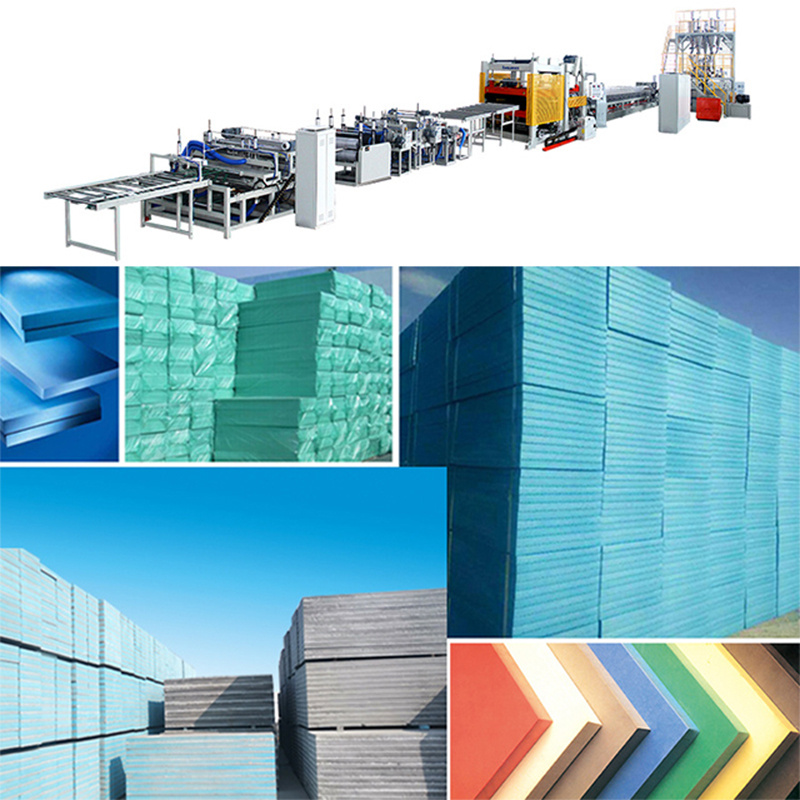
As the global construction industry moves toward energy-efficient and environmentally responsible solutions, XPS (Extruded Polystyrene) Foam Core has become one of the most widely used core materials in modern building applications. From insulated wall systems and roofing panels to prefabricated structures and composite sandwich panels, XPS foam plays a critical role in improving thermal performance, reducing energy consumption, and extending the service life of buildings.
Behind every high-quality XPS foam core product is a factory equipped with advanced manufacturing technology, strict quality control systems, and large-scale production capabilities. For architects, contractors, distributors, and OEM manufacturers, understanding a supplier’s manufacturing strength is essential when selecting a long-term partner.
This article explores the latest innovations in XPS foam core manufacturing technology and explains how modern factories are driving the future of sustainable building materials while delivering reliable production capacity for global markets.
The Growing Demand for XPS Foam Core in Construction
Energy efficiency regulations are becoming increasingly stringent across North America, Europe, Asia, and the Middle East. As a result, builders are seeking insulation materials that offer:
- Low thermal conductivity
- High compressive strength
- Excellent moisture resistance
- Long service life
- Lightweight construction
- Environmental sustainability
XPS foam core meets these requirements and is widely used in:
- Exterior wall insulation systems
- Roof insulation panels
- Cold storage facilities
- Modular buildings
- Composite sandwich panels
- Transportation and RV applications
- Industrial insulation systems
As market demand continues to grow, manufacturers must invest in advanced production technologies to ensure consistent quality and large-scale supply capabilities.
Advanced XPS Foam Core Manufacturing Technology
The quality of XPS foam core largely depends on the production process. Modern factories utilize highly automated extrusion systems that ensure precise control over every manufacturing stage.
High-Precision Extrusion Technology
Extrusion is the heart of XPS foam production.
The process begins by melting premium polystyrene resin under controlled temperatures. Special additives and environmentally friendly foaming agents are then introduced to create a uniform closed-cell structure.
Modern extrusion lines feature:
- Computer-controlled temperature regulation
- Automated pressure monitoring
- Precision mixing systems
- Real-time process adjustments
- Intelligent density control
These technologies ensure consistent product performance across every production batch.
Benefits include:
- Uniform density distribution
- Improved dimensional stability
- Enhanced thermal insulation performance
- Reduced material waste
- Higher production efficiency
For construction projects requiring reliable insulation materials, manufacturing precision directly impacts product quality.
Closed-Cell Structure Optimization
One of the most important technological advancements in XPS foam manufacturing is cell structure optimization.
High-quality XPS foam typically features a closed-cell rate exceeding 95%.
This advanced cellular structure provides:
- Superior thermal insulation
- Extremely low water absorption
- High compressive strength
- Long-term durability
Modern factories use sophisticated foaming technology to control cell size and distribution, ensuring optimal performance throughout the product’s lifecycle.
The result is a lightweight yet durable core material capable of performing in demanding environmental conditions.
Automated Thickness and Density Control
Consistency is essential for large construction projects.
Advanced XPS foam factories use automated calibration systems that continuously monitor:
- Board thickness
- Width dimensions
- Density levels
- Surface flatness
- Edge accuracy
Real-time monitoring enables immediate adjustments during production, minimizing deviations and ensuring that every sheet meets customer specifications.
Available thickness options commonly range from:
- 5 mm
- 10 mm
- 20 mm
- 30 mm
- 50 mm
- 80 mm
- 100 mm
- 120 mm and above
Customized dimensions can be produced according to project requirements.
Sustainable Manufacturing Practices
Environmental responsibility has become a key factor in construction material production.
Leading XPS foam manufacturers are implementing technologies that reduce environmental impact while maintaining high product performance.
Eco-Friendly Foaming Agents
Traditional foaming technologies often relied on substances with higher environmental impact.
Modern factories have transitioned to environmentally friendly foaming agents that help:
- Reduce greenhouse gas emissions
- Improve energy efficiency
- Comply with international environmental regulations
- Support sustainable building certifications
This transition enables XPS foam products to contribute to green construction initiatives worldwide.
Material Recycling Systems
Innovative factories are incorporating recycling systems into their production lines.
Production scrap generated during trimming and cutting can be:
- Collected
- Processed
- Reintroduced into manufacturing
Benefits include:
- Lower raw material consumption
- Reduced production waste
- Improved resource efficiency
- Lower environmental footprint
Sustainable manufacturing practices not only benefit the environment but also improve overall production economics.
Energy-Efficient Production Facilities
Modern XPS foam factories invest heavily in energy-saving technologies.
Examples include:
- Intelligent power management systems
- High-efficiency motors
- Automated process optimization
- Heat recovery systems
- Smart factory monitoring platforms
These technologies help reduce operational costs while supporting environmental sustainability goals.
Production Capacity: A Key Competitive Advantage
For distributors, contractors, and OEM buyers, production capacity is often as important as product quality.
A factory may produce excellent products, but without sufficient capacity, delivery schedules can become unreliable.
Large-Scale Production Lines
Modern XPS foam manufacturers operate multiple high-speed extrusion lines capable of producing large volumes continuously.
A well-equipped factory may feature:
- Multiple automated production lines
- 24-hour continuous operation capability
- High-volume output systems
- Flexible production scheduling
This enables manufacturers to support both small custom orders and large infrastructure projects.
Stable Monthly Output
Large production capacity provides several benefits to buyers:
Faster Delivery Times
Higher output allows factories to:
- Shorten lead times
- Maintain inventory levels
- Respond quickly to urgent orders
Supply Chain Reliability
Consistent production reduces risks associated with:
- Material shortages
- Project delays
- Seasonal demand fluctuations
Scalability
As customer demand grows, manufacturers with strong production capabilities can easily scale production without compromising quality.
This is particularly important for distributors serving multiple regional markets.
OEM and Customized Manufacturing Support
Many construction material brands require customized XPS foam solutions.
Advanced factories can provide:
- Custom thicknesses
- Customized densities
- Special compressive strength grades
- Flame-retardant formulations
- Surface treatments
- Private label production
Large-scale production systems allow manufacturers to accommodate customization while maintaining high output efficiency.
Quality Control Throughout Production
Production capacity alone is not enough.
Reliable manufacturers combine high output with rigorous quality assurance systems.
Raw Material Inspection
Every batch begins with strict raw material verification.
Quality control teams inspect:
- Polystyrene resin quality
- Additive consistency
- Foaming agent performance
- Supplier traceability documentation
This foundation ensures stable product performance.
In-Process Testing
During manufacturing, key performance indicators are continuously monitored, including:
- Density
- Compressive strength
- Thickness tolerance
- Thermal conductivity
- Surface appearance
Automated testing equipment provides real-time feedback to production operators.
Finished Product Verification
Before shipment, products undergo comprehensive testing to ensure compliance with customer requirements and international standards.
Testing may include:
- Compression testing
- Water absorption testing
- Thermal conductivity measurement
- Dimensional stability testing
- Fire performance evaluation
This multi-stage quality control system guarantees consistent product reliability.
Supporting Sustainable Building Projects Worldwide
Modern construction increasingly emphasizes sustainability, energy efficiency, and long-term performance.
XPS foam core contributes to these goals by:
- Reducing building energy consumption
- Improving thermal efficiency
- Extending building lifespan
- Lowering maintenance requirements
- Supporting green building certification programs
Manufacturers with advanced technology and strong production capabilities are helping developers achieve higher performance standards across residential, commercial, and industrial construction projects.
Why Buyers Choose High-Capacity XPS Foam Core Factories
When selecting an XPS foam core supplier, buyers increasingly prioritize factories that offer:
- Advanced manufacturing technology
- Large-scale production capacity
- Consistent product quality
- Fast delivery performance
- Custom manufacturing capabilities
- International certification support
- Professional technical assistance
A factory with strong production capabilities can provide long-term supply security while supporting business growth and project success.
Conclusion
The future of sustainable construction depends on innovative materials and reliable manufacturing partners. Modern XPS Foam Core factories are combining advanced extrusion technology, intelligent automation, environmentally responsible production methods, and large-scale manufacturing capacity to meet the growing global demand for high-performance insulation materials.
For buyers seeking dependable supply, consistent quality, and scalable production, choosing a manufacturer with advanced technology and substantial production capacity is a strategic investment. A factory capable of producing high volumes while maintaining strict quality standards not only ensures timely delivery but also strengthens confidence in every project, making XPS foam core an increasingly valuable solution for sustainable building applications worldwide.
