
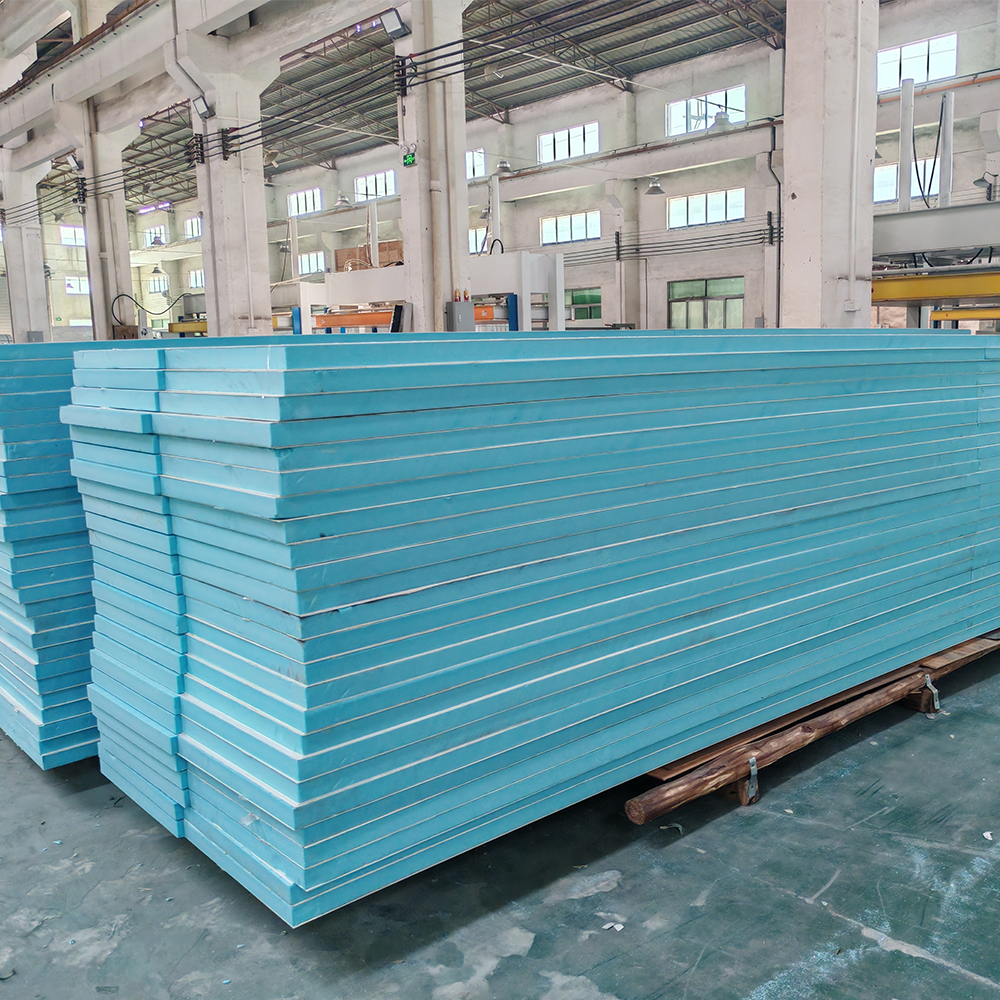
Introduction: Choosing the Right Foam Core for Construction and Industrial Projects
In modern construction and industrial manufacturing, lightweight composite materials are increasingly replacing traditional heavy materials. Among these solutions, XPS Foam Core and PET Foam Core have become two important options for manufacturers, engineers, and procurement teams.
Although both materials feature a closed-cell foam structure and provide lightweight advantages, they are designed for different application requirements.
For purchasing managers, selecting between XPS Foam Core and PET Foam Core requires more than comparing material prices. The decision should consider:
- Structural performance
- Thermal insulation requirements
- Moisture resistance
- Processing methods
- Service life
- Total project cost
XPS Foam Core is widely recognized for its excellent insulation properties and cost efficiency, while PET Foam Core is increasingly preferred for structural composite applications due to its strength, sustainability, and recyclability.
This article provides a detailed comparison to help global buyers select the most suitable foam core material for construction and industrial applications.
1. Understanding XPS Foam Core and PET Foam Core
XPS Foam Core: High-Efficiency Insulation Material
XPS Foam Core, also known as Extruded Polystyrene Foam Core, is manufactured through an extrusion process that creates a uniform closed-cell structure.
The closed-cell structure provides excellent resistance against:
- Moisture penetration
- Thermal transfer
- Compression deformation
XPS Foam Core has become a popular material in construction because it delivers reliable insulation performance at a competitive cost.
Main Advantages of XPS Foam Core:
- Excellent thermal insulation
- Low water absorption
- Lightweight
- Easy cutting and installation
- Stable dimensional performance
- Cost-effective solution
Typical Applications:
- Exterior wall insulation systems
- Roof insulation boards
- Floor insulation
- Tile backer boards
- Prefabricated buildings
- Sandwich wall panels
For construction projects where energy efficiency is the primary goal, XPS Foam Core is often one of the preferred choices.
PET Foam Core: Lightweight Structural Composite Material
PET Foam Core is a structural foam material produced from polyethylene terephthalate polymer.
Unlike XPS Foam Core, PET Foam Core is mainly designed for applications requiring mechanical strength and composite performance.
It provides an excellent balance between:
- Lightweight design
- Structural reinforcement
- Sustainability
- Manufacturing efficiency
Main Advantages of PET Foam Core:
- High strength-to-weight ratio
- Good compression performance
- Excellent chemical resistance
- Recyclable material source
- Good temperature resistance
- Compatible with composite manufacturing processes
Typical Applications:
- Composite sandwich panels
- Transportation structures
- Wind energy components
- Industrial equipment panels
- Lightweight building structures
For industrial applications requiring both strength and weight reduction, PET Foam Core provides significant advantages.
2. Mechanical Performance Comparison
For industrial buyers, mechanical properties are critical when selecting foam core materials.
| Property | XPS Foam Core | PET Foam Core |
|---|---|---|
| Density Range | 30-50 kg/m³ | 60-250 kg/m³ |
| Compression Strength | Medium | High |
| Shear Strength | Medium | Good-Excellent |
| Structural Capability | Limited | Excellent |
| Water Resistance | Excellent | Excellent |
| Thermal Insulation | Excellent | Good |
| Impact Resistance | Medium | Good |
| Sustainability | Medium | Excellent |
| Cost Level | Low | Medium |
3. Structural Performance: Which Material Is Stronger?
XPS Foam Core Performance
XPS Foam Core provides good compression resistance compared with many traditional insulation materials.
However, its primary design purpose is:
Thermal insulation, not structural reinforcement.
It performs well in applications such as:
- Wall insulation panels
- Floor insulation systems
- Roof boards
But for high-load composite structures, XPS Foam Core may not provide sufficient mechanical strength.
PET Foam Core Performance
PET Foam Core is specifically developed for structural composite applications.
It provides:
- Higher compression strength
- Better shear performance
- Improved fatigue resistance
It is suitable for:
- Sandwich panels
- Composite walls
- Industrial structures
When the panel needs to carry mechanical loads, PET Foam Core generally provides better performance.
4. Thermal Insulation Performance Comparison
Thermal insulation is one of the biggest advantages of XPS Foam Core.
XPS Foam Core
Advantages:
- Very low thermal conductivity
- Excellent insulation stability
- Good moisture resistance
Suitable for:
- Energy-efficient buildings
- Cold environments
- Exterior insulation systems
PET Foam Core
PET Foam Core provides moderate insulation performance but is mainly selected for structural reasons.
Its priority is:
- Strength
- Lightweight design
- Sustainability
rather than maximum insulation.
5. Moisture Resistance and Durability
Moisture resistance is important for both construction and industrial applications.
XPS Foam Core
The closed-cell structure provides:
- Very low water absorption
- Good freeze-thaw resistance
- Long-term insulation stability
This makes XPS ideal for:
- Underground insulation
- Roof applications
- Wet environments
PET Foam Core
PET Foam Core also provides excellent moisture resistance.
Advantages:
- Stable mechanical performance
- Resistance to environmental aging
- Suitable for outdoor composite applications
For industrial structures exposed to mechanical loads and environmental changes, PET Foam Core provides better structural durability.
6. Processing and Manufacturing Considerations
XPS Foam Core Processing
Advantages:
- Easy cutting
- Simple installation
- Good dimensional stability
Common processing:
- Cutting
- Adhesive bonding
- Lamination
Suitable for:
- Construction installation systems
PET Foam Core Processing
PET Foam Core supports advanced composite manufacturing:
- Vacuum infusion
- Resin infusion
- CNC machining
- Adhesive bonding
- Composite lamination
It is widely used by manufacturers producing engineered composite panels.
7. Cost Analysis: XPS vs PET Foam Core
XPS Foam Core Cost Advantage
XPS is generally more economical because:
- Lower raw material cost
- Mature production technology
- Large market availability
Best suited for:
- Large-scale construction insulation projects
- Cost-sensitive applications
PET Foam Core Value Advantage
Although PET Foam Core usually has a higher initial price, it provides additional value:
- Higher mechanical performance
- Longer service life
- Better sustainability
- Reduced structural weight
For industrial projects, the total lifecycle cost may be more competitive.
8. Application Comparison
Construction Insulation Projects
Recommended:
XPS Foam Core
Reasons:
- Excellent thermal performance
- Lower project cost
- Easy installation
Applications:
- Roof insulation
- Wall insulation
- Floor systems
Composite Building Panels
Recommended:
PET Foam Core
Reasons:
- Higher strength
- Better structural capability
- Lightweight design
Applications:
- Prefabricated buildings
- Modular structures
- Decorative composite panels
Transportation Applications
Recommended:
PET Foam Core
Reasons:
- Weight reduction
- Mechanical strength
- Impact resistance
Applications:
- Truck panels
- RV structures
- Railway interiors
Industrial Equipment Panels
Recommended:
PET Foam Core
Reasons:
- Structural reinforcement
- Good processing compatibility
- Long-term durability
9. Procurement Checklist for Buyers
Before selecting XPS Foam Core or PET Foam Core, purchasing teams should evaluate:
1. Project Requirements
Determine:
- Is insulation the main requirement?
- Is structural strength required?
- What environmental conditions exist?
2. Technical Specifications
Confirm:
- Density
- Thickness
- Compression strength
- Thermal conductivity
- Water absorption
3. Supplier Capability
A reliable supplier should provide:
- Stable production capacity
- Customized thickness and density
- Quality inspection reports
- Technical support
10. Final Recommendation: XPS Foam Core or PET Foam Core?
The choice between XPS Foam Core and PET Foam Core depends on the project objective.
Choose XPS Foam Core When:
✔ Thermal insulation is the primary goal
✔ Cost efficiency is important
✔ Structural loads are limited
Best applications:
- Building insulation
- Roof systems
- Floor insulation
Choose PET Foam Core When:
✔ Structural performance is required
✔ Lightweight design is important
✔ Sustainable materials are preferred
Best applications:
- Composite sandwich panels
- Transportation structures
- Industrial applications
Conclusion
XPS Foam Core and PET Foam Core are both valuable foam core materials, but they serve different market needs.
XPS Foam Core is an excellent choice for thermal insulation-focused construction applications, offering reliable insulation performance, moisture resistance, and cost advantages.
PET Foam Core is better suited for structural composite and industrial applications, providing higher mechanical performance, lightweight advantages, and sustainability benefits.
For professional buyers, the correct material selection should always start with application requirements rather than price comparison.
By evaluating strength, insulation needs, environmental conditions, and lifecycle cost, procurement teams can choose the foam core solution that delivers the best performance and long-term value for their projects.
