
Introduction: Choosing the Right Core Material for Composite Structures
In modern lightweight composite manufacturing, core materials play a critical role in determining product performance, weight, durability, and cost efficiency.
For engineers and procurement managers, two major categories of core materials dominate the market:
- Foam Core Materials
- Honeycomb Core Materials
Foam Core includes:
- PVC Foam Core
- PET Foam Core
- XPS Foam Core
- PU Foam Core
- PMI Foam Core
Honeycomb Core includes:
- Aluminum Honeycomb Core
- PP Honeycomb Core
- Aramid Honeycomb Core
Both technologies are widely used in:
- Aerospace
- Marine
- Transportation
- Construction
- Industrial composite panels
However, they serve different application requirements.
For purchasing teams, the key question is not:
“Which material is stronger?”
The real question is:
“Which core material provides the best value based on performance, cost, processing, and application needs?”
This article provides a buyer-focused comparison between Foam Core and Honeycomb Core to help global customers make better procurement decisions.
1. Understanding Foam Core and Honeycomb Core Structures
Foam Core Structure
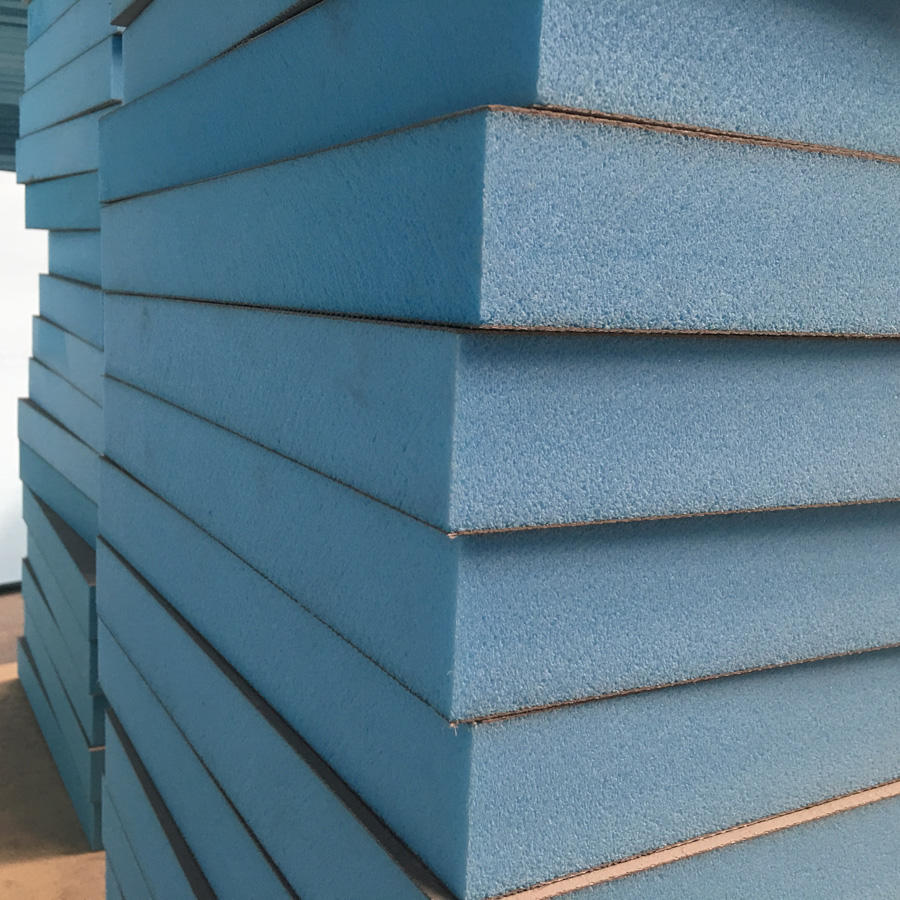
Foam Core is a lightweight closed-cell polymer material.
The internal structure consists of millions of small cells filled with gas, creating a lightweight but stable material.
Common Foam Core materials:
- PVC Foam Core
- PET Foam Core
- XPS Foam Core
- PU Foam Core
- PMI Foam Core
Main characteristics:
- Lightweight
- Good insulation
- Easy processing
- Good moisture resistance
- Excellent bonding performance
Honeycomb Core Structure
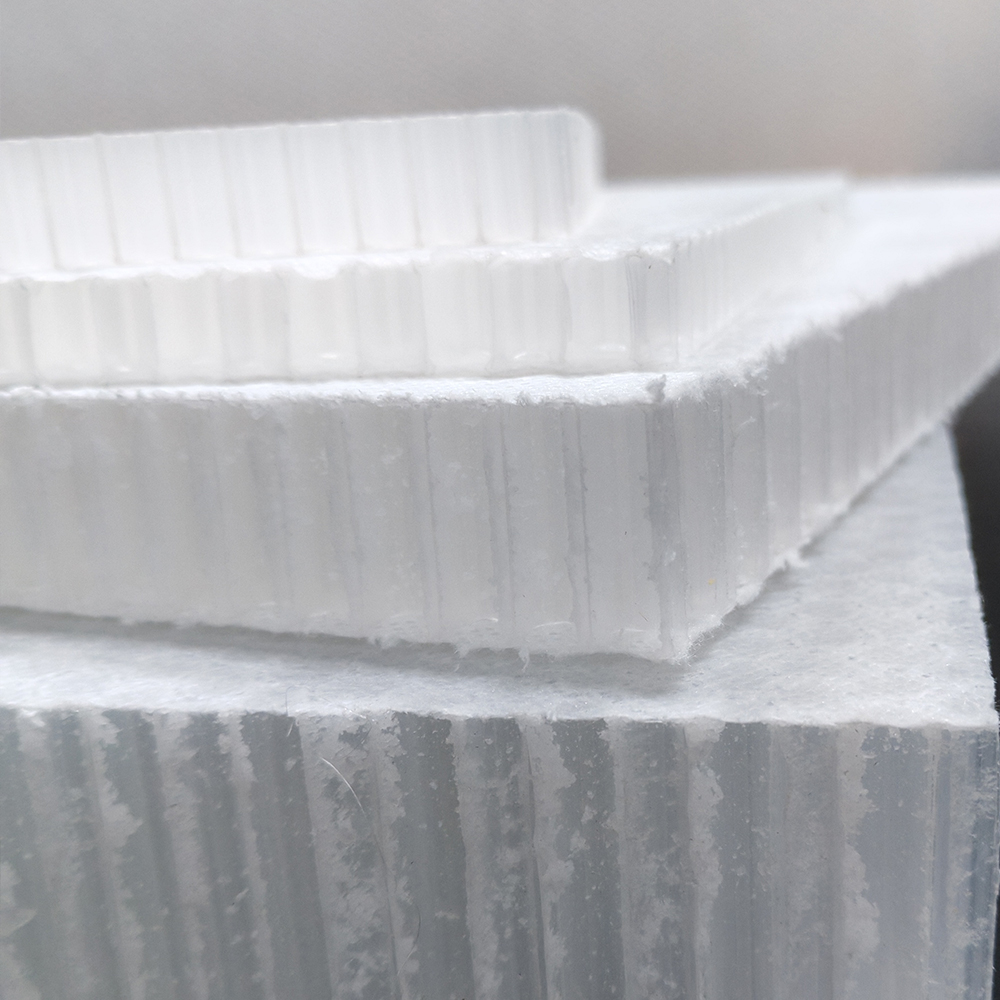
Honeycomb Core uses a hexagonal cell structure inspired by natural honeycomb designs.
The structure provides:
- High stiffness
- Excellent strength-to-weight ratio
- Superior flat-panel performance
Common Honeycomb Core materials:
- Aluminum Honeycomb Core
- PP Honeycomb Core
- Aramid Honeycomb Core
Main characteristics:
- Extremely lightweight
- High rigidity
- Excellent compression performance
- Suitable for large flat structures
2. Mechanical Performance Comparison
Mechanical properties are one of the most important factors for composite buyers.
| Property | Foam Core | Honeycomb Core |
|---|---|---|
| Strength-to-Weight Ratio | Excellent | Excellent |
| Compression Strength | Good-Excellent | Excellent |
| Shear Strength | Good-Excellent | Excellent |
| Impact Resistance | Excellent | Medium-Good |
| Fatigue Resistance | Excellent | Good |
| Surface Stiffness | Good | Excellent |
| Damage Tolerance | Excellent | Medium |
3. Strength-to-Weight Ratio Analysis
Both Foam Core and Honeycomb Core are designed for lightweight structures.
However, their advantages are different.
Honeycomb Core Advantage
Honeycomb structures provide extremely high stiffness because of their geometric design.
Advantages:
- High bending stiffness
- Excellent rigidity
- Very low weight
Typical applications:
- Aircraft interior panels
- High-end transportation panels
- Large architectural panels
For applications where maximum stiffness with minimum weight is required, Honeycomb Core has significant advantages.
Foam Core Advantage
Foam Core provides a more balanced performance.
Advantages:
- Good strength
- Better impact resistance
- Easier processing
- Better damage tolerance
For applications exposed to vibration, impact, or complex loading conditions, Foam Core often provides better overall reliability.
4. Impact Resistance Comparison
Impact performance is an important consideration for marine, transportation, and industrial applications.
Foam Core Performance
Foam Core absorbs impact energy through cell deformation.
Advantages:
- Better impact absorption
- Reduced crack propagation
- Improved damage tolerance
Suitable for:
- Boat hulls
- Vehicle panels
- Industrial equipment
Honeycomb Core Performance
Honeycomb Core provides excellent stiffness but can be more sensitive to impact damage.
Potential issues:
- Cell crushing
- Local deformation
- Difficult repair
For applications with frequent impact risks, Foam Core may provide better long-term value.
5. Water Resistance and Environmental Performance
Foam Core
Many Foam Core materials feature closed-cell structures.
Advantages:
- Low water absorption
- Excellent moisture resistance
- Stable performance in humid environments
Especially:
PVC Foam Core
Widely used in marine applications because of:
- Water resistance
- Fatigue performance
- Long service life
PET Foam Core
Advantages:
- Sustainable
- Moisture resistant
- Stable mechanical properties
Honeycomb Core
Performance depends on material type.
Aluminum Honeycomb Core
Advantages:
- Excellent strength
- Corrosion-resistant grades available
Limitations:
- Requires careful sealing
- Water trapped inside cells can affect performance
PP Honeycomb Core
Advantages:
- Excellent moisture resistance
- Lightweight
- Chemical resistance
Suitable for:
- Automotive panels
- Interior structures
6. Thermal Insulation Performance Comparison
Thermal performance is one area where Foam Core has a clear advantage.
Foam Core
Materials such as:
- XPS Foam Core
- PU Foam Core
- PET Foam Core
provide excellent insulation.
Applications:
- Building panels
- Cold storage systems
- Energy-efficient structures
Honeycomb Core
Honeycomb materials generally have lower insulation performance because the structure allows more heat transfer.
They are mainly selected for:
- Structural reinforcement
- Lightweight engineering
rather than insulation.
7. Manufacturing and Processing Comparison
Foam Core Processing Advantages
Foam Core is relatively easy to process.
Common methods:
- CNC cutting
- Sanding
- Bonding
- Lamination
- Vacuum infusion
Benefits:
- Lower processing difficulty
- Lower production cost
- Easier customization
Honeycomb Core Processing Challenges
Honeycomb Core requires more specialized processing.
Challenges include:
- Edge sealing
- Bonding control
- Surface preparation
For complex-shaped products, Foam Core is often easier to manufacture.
8. Cost Comparison: Initial Price vs Total Value
Foam Core Cost Advantages
Foam Core generally provides:
- Lower processing cost
- Easier manufacturing
- Lower production risk
Suitable for:
- Medium and large-volume production
Honeycomb Core Cost Considerations
Honeycomb Core may have higher total costs due to:
- Complex processing
- Specialized adhesives
- Higher manufacturing requirements
However, for applications requiring extreme stiffness, the additional cost may be justified.
9. Application Comparison
Marine Industry
Recommended:
Foam Core
Especially:
- PVC Foam Core
- PET Foam Core
Reasons:
- Water resistance
- Impact resistance
- Fatigue durability
Applications:
- Yacht hulls
- Boat decks
- Marine panels
Aerospace Industry
Recommended:
Honeycomb Core
Reasons:
- Maximum stiffness
- Ultra-lightweight design
Applications:
- Aircraft interiors
- Aerospace structures
Transportation Industry
Recommended:
Both Materials
Foam Core:
- Truck panels
- RV structures
- Composite body panels
Honeycomb Core:
- Railway panels
- Lightweight vehicle structures
Construction Industry
Recommended:
Foam Core
Especially:
- XPS Foam Core
- PET Foam Core
Reasons:
- Insulation performance
- Moisture resistance
- Cost efficiency
10. Procurement Decision Guide: Which One Should Buyers Choose?
Choose Foam Core When:
✔ Impact resistance is important
✔ Moisture resistance is required
✔ Thermal insulation matters
✔ Processing simplicity is needed
✔ Cost control is important
Recommended:
- Marine
- Construction
- Transportation
- Industrial panels
Choose Honeycomb Core When:
✔ Maximum stiffness is required
✔ Ultra-lightweight structure is the priority
✔ Flat panel performance is critical
Recommended:
- Aerospace
- High-end transportation
- Advanced engineering structures
11. Questions Buyers Should Ask Suppliers
Before purchasing, buyers should evaluate:
Material Performance
Ask for:
- Density data
- Compression strength
- Shear strength
- Thermal conductivity
- Water absorption
Manufacturing Capability
Confirm:
- Custom thickness
- Sheet size availability
- Processing support
- Quality control system
Application Experience
A professional supplier should understand:
- Composite design requirements
- Manufacturing processes
- Industry standards
Conclusion: Foam Core or Honeycomb Core — Which Provides Better Value?
Foam Core and Honeycomb Core are both advanced lightweight materials, but they provide value in different ways.
Foam Core provides better overall versatility, offering:
- Good mechanical performance
- Excellent impact resistance
- Better moisture protection
- Easier processing
- Better cost efficiency
It is suitable for:
- Marine structures
- Industrial composite panels
- Transportation applications
- Construction systems
Honeycomb Core provides exceptional stiffness-to-weight performance, making it ideal for:
- Aerospace structures
- High-performance lightweight panels
- Advanced engineering applications
For most industrial buyers, the best choice depends on balancing:
- Performance requirements
- Manufacturing process
- Environmental conditions
- Budget considerations
A successful procurement strategy does not focus on selecting the strongest material—it focuses on selecting the core material that delivers the highest overall value throughout the product lifecycle.
