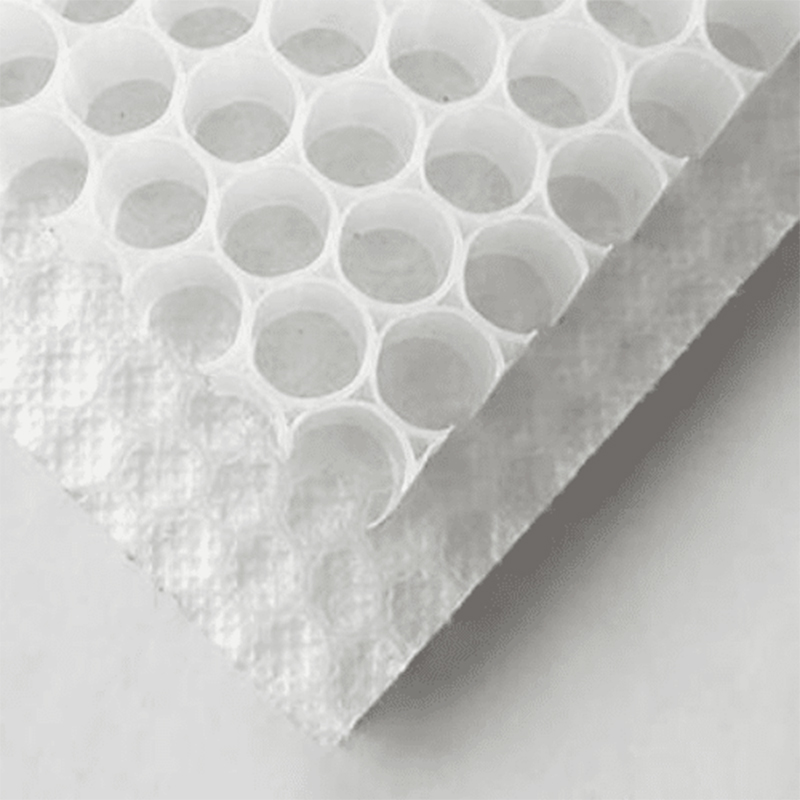
Composite core materials are lightweight structural materials positioned between two relatively strong outer skins in a sandwich structure. Their primary purpose is not simply to increase the thickness of a panel, but to improve the overall bending stiffness, structural stability, strength-to-weight ratio, and load-bearing efficiency of the finished composite structure. In a typical sandwich panel, the outer skins carry most of the tensile and compressive loads, while the core transfers shear loads and keeps the skins separated. This structural configuration allows engineers to achieve significantly higher stiffness without using a large quantity of heavy solid material.
Common composite core materials include PVC Foam Core, PET Foam Core, PMI Foam Core, XPS Foam Core, PU Foam Core, PP Honeycomb Core, Aluminum Honeycomb Core, Aramid Honeycomb Core, and Balsa Core. Each material has a different combination of density, compressive strength, shear strength, shear modulus, thermal resistance, moisture resistance, fatigue performance, and processing characteristics.
The importance of composite core materials becomes particularly clear in applications where weight reduction is critical. In marine structures, reducing structural weight can improve fuel efficiency and payload capacity. In wind turbine blades, lower weight reduces the loads imposed on the entire turbine system. In transportation applications, lightweight sandwich panels can reduce vehicle weight while maintaining structural stiffness. In construction, composite sandwich panels can combine structural performance with thermal insulation and architectural requirements.
However, there is no universally “best” composite core material. Material selection should be based on the actual engineering requirements. A low-density PET or PVC foam may be suitable for one application, while a higher-density foam or aluminum honeycomb may be more appropriate for another. Procurement teams should therefore avoid selecting materials based solely on price per kilogram or price per square meter.
A professional evaluation should consider density, thickness, compressive strength, shear strength, fatigue resistance, water absorption, fire performance, operating temperature, manufacturing process, dimensional tolerance, bonding compatibility, and expected service life.
For buyers, the most important principle is to evaluate composite core materials as part of the complete sandwich structure rather than as an isolated raw material. The final performance depends on the interaction between the core, skins, adhesive system, manufacturing process, and service environment. A properly selected core can significantly reduce structural weight while improving stiffness, durability, and overall project economics.