Marine and boat construction places demanding requirements on composite core materials because structural components may be exposed to moisture, salt water, temperature fluctuations, vibration, impact, and repeated cyclic loading for many years. Selecting a suitable core therefore requires much more than comparing basic density and price.
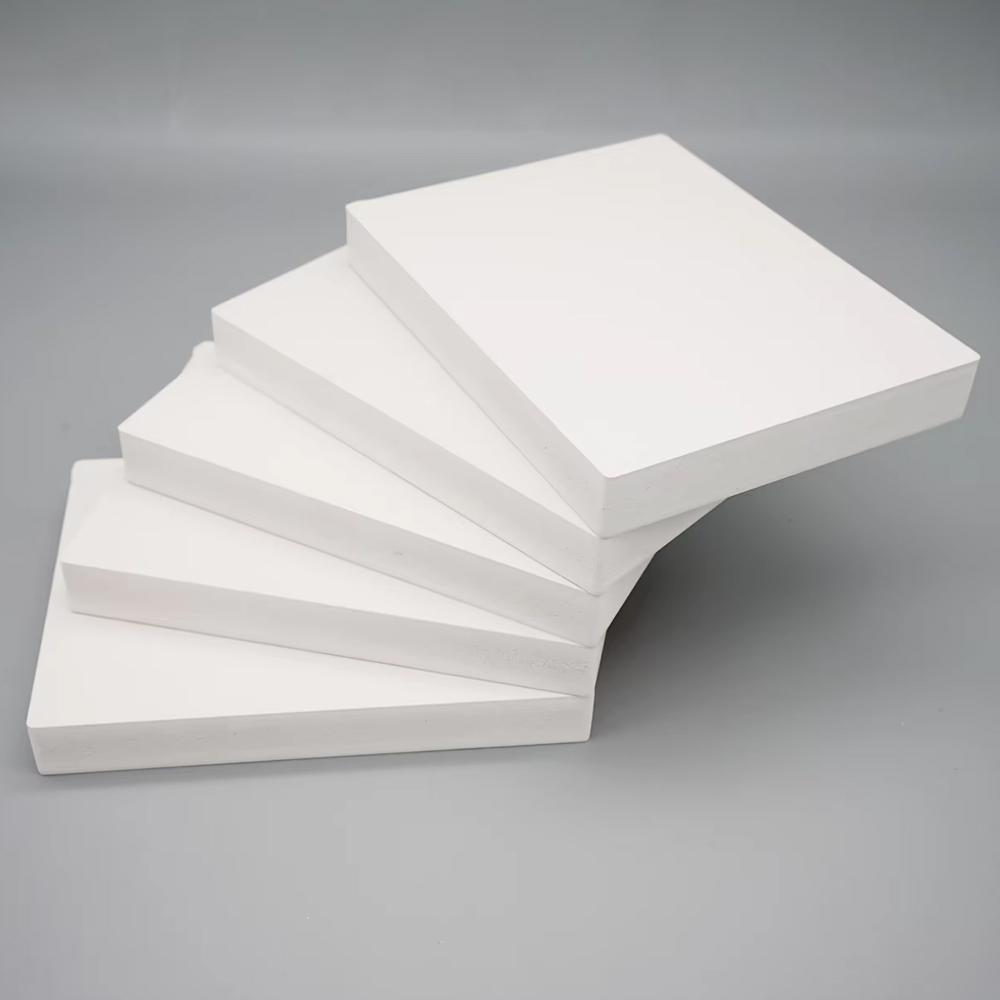
PVC Foam Core is widely used in marine sandwich structures because it can provide a useful combination of low weight, compressive strength, shear performance, dimensional stability, and relatively low water absorption. Different density grades can be selected for different areas of a boat or yacht. Lower-density material may be used in lightly loaded areas, while higher-density core can be used around structural reinforcement zones.
PET Foam Core is also becoming increasingly attractive for marine and composite applications. It can provide good structural efficiency and is particularly interesting for projects that place greater emphasis on recycled content and sustainability. However, the suitability of PET versus PVC should be confirmed through application-specific mechanical and environmental testing.
For marine structures, water absorption is one of the most important considerations. Buyers should not rely solely on marketing claims such as “waterproof” or “water resistant.” They should request actual water absorption data, test conditions, and long-term environmental performance.
Local load areas require special attention. Engine mounts, seat mounts, deck hardware, hinges, equipment bases, and fastener locations can create concentrated loads that ordinary low-density composite core materials may not withstand. These locations may require high-density foam, solid inserts, structural blocks, or other reinforcement systems.
Fatigue performance is also critical. Boats and marine structures experience repeated wave-induced loads, vibration, and cyclic bending. Therefore, shear fatigue performance and skin-to-core bonding quality should be evaluated for demanding applications.
Fire performance can also become important for commercial vessels, passenger vessels, and enclosed marine spaces. Depending on the project, specific marine certification or classification requirements may apply.
From a procurement perspective, buyers should request technical data covering density, compressive strength, shear strength, shear modulus, water absorption, fatigue performance, temperature resistance, fire characteristics, dimensional tolerances, and bonding compatibility.
The most suitable composite core materials for marine applications are therefore not simply the lowest-cost materials. They should provide a balanced combination of low weight, structural performance, moisture resistance, fatigue durability, processing compatibility, and long-term reliability under marine operating conditions.