
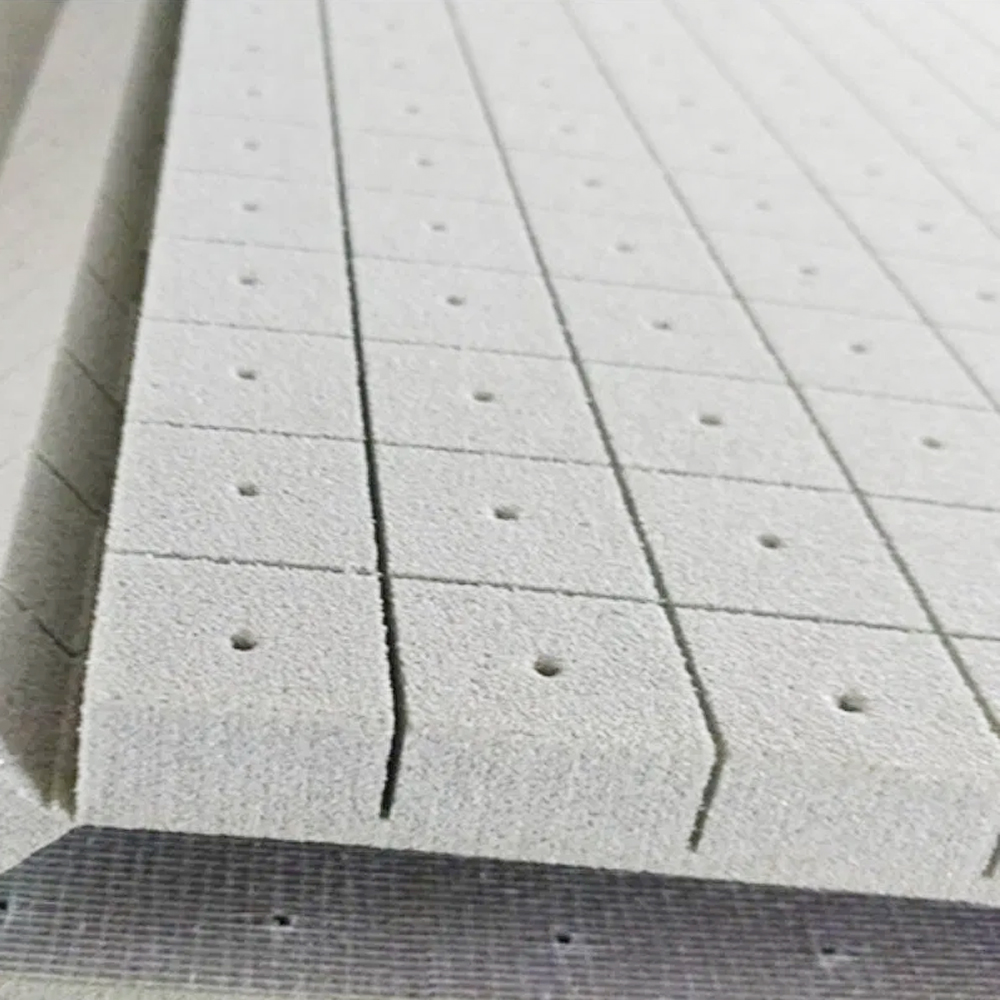
Certification requirements for composite core materials depend heavily on the final application, destination market, and regulatory environment. A core material used in a decorative interior panel may have very different certification requirements from a core used in a ship, aircraft, railway vehicle, wind turbine, or building façade.
One of the first documents buyers should request is a detailed Technical Data Sheet (TDS). This should contain material type, density, thickness, mechanical properties, thermal characteristics, water absorption, and other relevant specifications.
A Material Safety Data Sheet (SDS/MSDS) may also be required, particularly for materials containing chemicals, additives, adhesives, or processing substances.
For projects involving fire regulations, buyers should request relevant fire-test reports. It is important to distinguish between a material that has been tested and a product that has actually achieved a specific certification or classification.
Typical Documents for Composite Core Materials
| Document | Purpose |
| Technical Data Sheet | Defines material properties |
| SDS/MSDS | Safety and handling information |
| COA | Confirms batch-level properties |
| Fire Test Report | Demonstrates fire performance |
| Third-Party Test Report | Independent performance verification |
| Certificate of Conformity | Confirms specified compliance |
| Quality Certificate | Supports supplier quality system |
| Traceability Record | Links material to production batch |
| Environmental Documentation | Supports sustainability claims |
| Marine/Aviation Certification | Application-specific approval |
For marine projects, buyers may require certification from a recognized marine classification organization or compliance with applicable marine regulations. Transportation projects may require fire, smoke, and toxicity testing. Construction projects may require fire classification, thermal performance, or environmental documentation.
Another important issue is test configuration. A certificate for one density or thickness should not automatically be assumed to cover all versions of the product. For example, fire performance can change when core thickness, skin material, adhesive, coating, or panel construction changes.
Therefore, procurement teams should check whether the certification specifically applies to the exact composite core materials being purchased.
Buyers should also verify the laboratory and testing standard. A supplier’s statement that a material is “tested according to international standards” is not sufficient. The documentation should identify the standard, test method, sample configuration, laboratory, date, and product identification.
For international procurement, documentation should ideally be available in English and should clearly correspond to the commercial product code.
In high-value projects, certification should be included in the RFQ before suppliers submit quotations. This prevents a situation where the selected supplier offers an attractive price but cannot provide the documentation required for final project approval.
Ultimately, certification is not a substitute for engineering performance. The best procurement strategy is to combine verified technical data, relevant certification, production quality, and application-specific testing.
For composite core materials used in safety-critical applications, buyers should consider certification and traceability to be part of the product specification rather than optional paperwork.
