
When selecting materials for lightweight composite structures, strength-to-weight performance is often more important than absolute strength. Engineers and procurement teams need a panel that can carry the required load without adding unnecessary mass.
This makes the comparison between Aluminum Honeycomb versus Foam Sandwich Panels particularly important for marine structures, transportation equipment, architectural panels, wind-energy components and other lightweight composite applications.
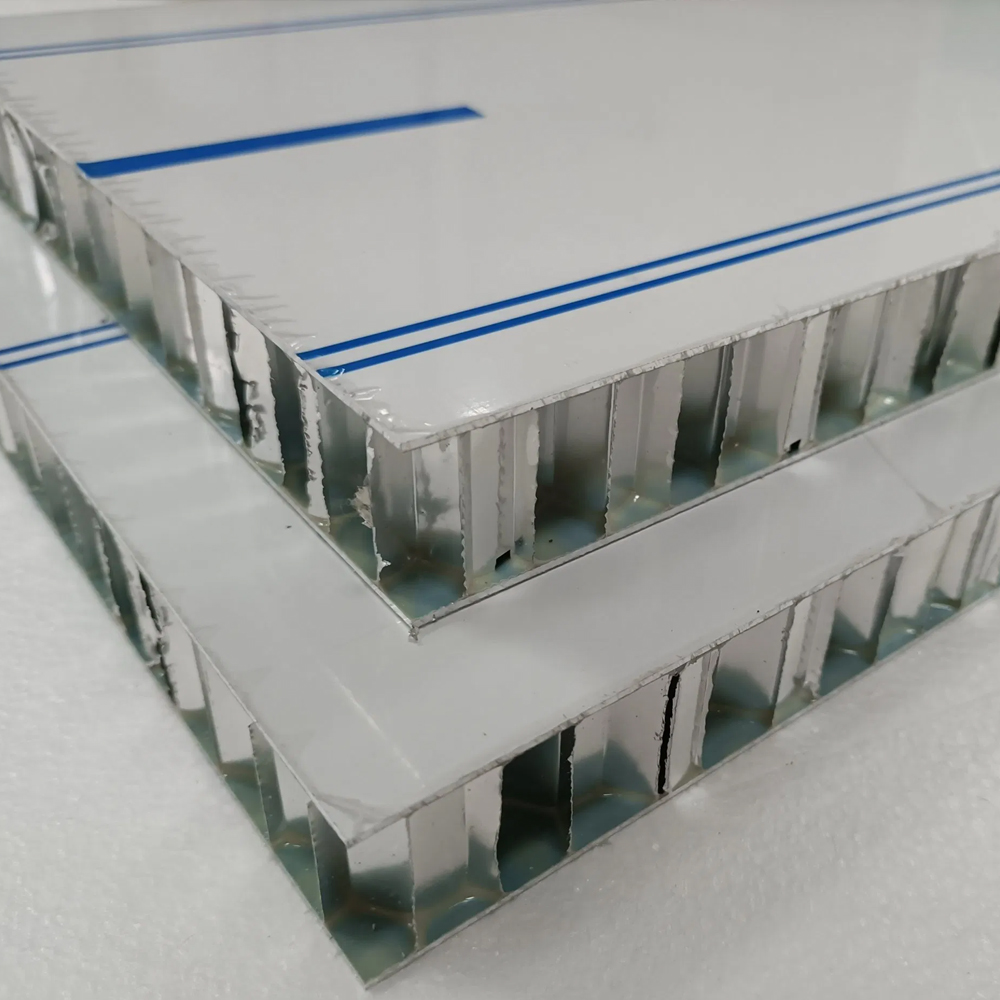
Aluminum honeycomb and structural foam both provide a lightweight core between two face sheets, but they achieve their performance through fundamentally different material structures. Aluminum honeycomb relies on thin metallic cell walls, while foam cores use a cellular polymer structure.
The following comparison focuses on measurable engineering data and practical procurement considerations.
1. What Does Strength-to-Weight Performance Mean?
Strength-to-weight performance describes how much structural capability a material can provide relative to its mass.
For sandwich panels, several properties should be evaluated together:
- Core density
- Compression strength
- Shear strength
- Shear modulus
- Bending stiffness
- Impact resistance
- Fatigue performance
- Panel weight
- Face-sheet thickness
- Core thickness
A material with a higher compression strength is not necessarily the best choice if its density is also significantly higher.
Likewise, the lowest-density material is not automatically the best solution because insufficient core strength can lead to crushing, excessive deflection or premature failure.
For this reason, professional material selection should compare performance per unit weight, rather than focusing on a single mechanical parameter.
2. Typical Density Comparison
Core density has a direct influence on the final weight of a sandwich panel.
Typical commercial density ranges include:
| Core Material | Typical Density Range |
|---|---|
| Aluminum Honeycomb | 30–160+ kg/m³ |
| PVC Foam Core | 60–250+ kg/m³ |
| PET Foam Core | 60–250+ kg/m³ |
| PMI Foam Core | 50–200+ kg/m³ |
| XPS Foam Core | 25–50 kg/m³ |
| PU Foam Core | 30–200+ kg/m³ |
These ranges are broad because manufacturers offer different grades for structural, insulation and specialty applications.
A low-density aluminum honeycomb can therefore be considerably lighter than a high-density structural foam.
However, density should always be evaluated together with mechanical properties.
3. Core Weight Example
A simple comparison can help demonstrate the difference.
Consider a 1 m² panel with a 20 mm core.
| Core Material | Density | Core Thickness | Approx. Core Weight |
| Aluminum Honeycomb | 40 kg/m³ | 20 mm | 0.8 kg/m² |
| Aluminum Honeycomb | 60 kg/m³ | 20 mm | 1.2 kg/m² |
| Aluminum Honeycomb | 80 kg/m³ | 20 mm | 1.6 kg/m² |
| PVC Foam | 80 kg/m³ | 20 mm | 1.6 kg/m² |
| PVC Foam | 100 kg/m³ | 20 mm | 2.0 kg/m² |
| PET Foam | 100 kg/m³ | 20 mm | 2.0 kg/m² |
| PET Foam | 150 kg/m³ | 20 mm | 3.0 kg/m² |
| XPS Foam | 35 kg/m³ | 20 mm | 0.7 kg/m² |
These figures represent core weight only.
The finished panel will also contain:
- Face sheets
- Adhesive
- Coatings
- Edge reinforcements
- Inserts
- Fasteners
- Local structural reinforcements
Consequently, the final panel weight can differ substantially from the core weight.
4. Compression Strength Comparison
Compression strength determines how well a core can resist localized loading and crushing.
Typical representative values are shown below:
| Core Material | Density | Approx. Compression Strength |
| Aluminum Honeycomb | 40–60 kg/m³ | 0.5–2 MPa |
| Aluminum Honeycomb | 60–100 kg/m³ | 1–4 MPa |
| Aluminum Honeycomb | 100–160+ kg/m³ | 2–8+ MPa |
| PVC Foam | 60–100 kg/m³ | 0.5–3 MPa |
| PVC Foam | 100–200 kg/m³ | 1–6 MPa |
| PVC Foam | 200–250+ kg/m³ | 4–8+ MPa |
| PET Foam | 100–200 kg/m³ | 1–7 MPa |
| PMI Foam | 80–200 kg/m³ | 2–15+ MPa |
| XPS Foam | 25–50 kg/m³ | 0.2–1.0 MPa |
The actual value depends heavily on the product grade and test standard.
For example, a high-density PMI foam can achieve very high compression performance while maintaining relatively low density.
A low-density XPS foam, by comparison, provides excellent weight reduction but is normally selected for insulation and lower-load applications rather than highly loaded structural components.
5. Shear Strength Is Critical
Compression strength is only one part of sandwich-panel performance.
The core also has to transfer shear forces between the face sheets.
This is particularly important when the panel is subjected to bending.
Typical core shear strength ranges may look like:
| Core Type | Approx. Shear Strength Range |
| Low-density Aluminum Honeycomb | ~0.3–1.5 MPa |
| Medium-density Aluminum Honeycomb | ~0.8–3 MPa |
| High-density Aluminum Honeycomb | ~2–5+ MPa |
| PVC Foam | ~0.5–3 MPa |
| PET Foam | ~0.5–4 MPa |
| PMI Foam | ~1–6+ MPa |
| XPS Foam | ~0.2–0.8 MPa |
These are representative values and should be verified against the manufacturer’s datasheet.
A panel with high compression strength but insufficient shear strength may still fail under bending.
For structural procurement, compression strength and shear strength should therefore be evaluated together.
6. Why Core Thickness Matters
Core thickness is another major factor in sandwich-panel design.
Typical commercial configurations include:
| Application | Common Core Thickness |
| Interior decorative panels | 5–15 mm |
| Wall panels | 10–30 mm |
| Ceiling panels | 10–30 mm |
| Transportation panels | 15–40 mm |
| Marine structural panels | 20–60 mm |
| Flooring systems | 20–80 mm |
| Large structural components | 40–150+ mm |
Increasing core thickness can significantly improve panel stiffness while adding relatively little mass compared with increasing the thickness of the face sheets.
This is one of the fundamental advantages of sandwich construction.
For example, a 40 mm foam core can provide substantially greater structural separation between the skins than a 10 mm core.
However, thicker cores may increase:
- Edge-treatment requirements
- Manufacturing complexity
- Material consumption
- Shipping volume
- Insert requirements
Therefore, core thickness should be optimized rather than simply maximized.
7. Aluminum Honeycomb: Strength-to-Weight Advantages
Aluminum honeycomb is particularly strong in applications where low mass and high stiffness are critical.
Its major advantages include:
Low Density
Commercial aluminum honeycomb can be produced in very low-density grades, including approximately 30–60 kg/m³.
High Stiffness
The cellular geometry efficiently separates the face sheets, creating a lightweight structural panel.
Metallic Core
Aluminum is inherently non-combustible and maintains useful structural characteristics over a relatively broad temperature range.
Dimensional Stability
Aluminum honeycomb can provide good dimensional stability for large-format panels.
Energy Absorption
The cellular structure can progressively collapse under suitable impact conditions, making honeycomb useful in energy-absorbing structures.
Typical applications include:
- Aerospace interiors
- Marine interiors
- High-speed transportation
- Rail vehicles
- Architectural panels
- Lightweight flooring
- Doors
- Partitions
- Ceiling systems
8. Foam Core: Strength-to-Weight Advantages
Structural foam provides a different combination of properties.
Modern PVC, PET and PMI foams can achieve relatively high mechanical performance at low densities.
Foam cores are particularly attractive when a project requires:
- Complex shapes
- CNC machining
- Easy contouring
- Composite resin compatibility
- Thermal insulation
- Moisture resistance
- Good impact absorption
- Simple insert installation
For example, structural PET foam is increasingly attractive for composite applications because it combines low weight with good mechanical performance and can be integrated into large composite structures.
PVC foam is widely used in:
- Marine composites
- Wind turbine structures
- Transportation panels
- Building panels
- Industrial composite structures
9. Strength-to-Weight Comparison by Material
A practical screening comparison is shown below:
| Performance Category | Aluminum Honeycomb | PVC Foam | PET Foam | PMI Foam | XPS Foam |
| Lightweight performance | ★★★★★ | ★★★★ | ★★★★ | ★★★★★ | ★★★★★ |
| Compression strength | ★★★★–★★★★★ | ★★★–★★★★★ | ★★★–★★★★ | ★★★★★ | ★★ |
| Shear strength | ★★★★–★★★★★ | ★★★–★★★★ | ★★★–★★★★ | ★★★★★ | ★★ |
| Structural stiffness | ★★★★★ | ★★★★ | ★★★★ | ★★★★★ | ★★–★★★ |
| Thermal insulation | ★★ | ★★★★ | ★★★★ | ★★★★ | ★★★★★ |
| Machinability | ★★★ | ★★★★★ | ★★★★★ | ★★★★★ | ★★★★★ |
| Impact absorption | ★★★★ | ★★★★ | ★★★★★ | ★★★★ | ★★★ |
| Fire performance | ★★★★★ | ★★★–★★★★ | ★★★–★★★★ | ★★★–★★★★ | ★★–★★★ |
| Composite processing | ★★★ | ★★★★★ | ★★★★★ | ★★★★★ | ★★★★ |
The ratings are intended for preliminary material screening only.
10. Face Sheets Can Change the Result
One of the most important considerations in sandwich-panel engineering is that the core is only one component.
A panel can use:
- Aluminum skins
- Fiberglass skins
- Carbon fiber skins
- Stainless steel skins
- Composite laminates
- Aluminum composite skins
The face-sheet material can have a major influence on:
- Bending strength
- Panel stiffness
- Impact resistance
- Weight
- Corrosion resistance
- Fire performance
- Cost
For example, an aluminum honeycomb core combined with thin aluminum skins creates a very different structure from the same core combined with carbon-fiber skins.
Similarly, a PET foam core with fiberglass skins can provide an excellent lightweight composite structure for marine and wind-energy applications.
Therefore, buyers should compare complete panel constructions, not isolated core materials.
11. Strength-to-Weight Performance in Marine Applications
Marine applications are an excellent example of why material selection requires multiple parameters.
A marine panel may need:
- Low weight
- High stiffness
- Water resistance
- Impact resistance
- Fatigue resistance
- Fire performance
- Good bonding
- Easy machining
Both aluminum honeycomb and structural foam can satisfy these requirements.
Aluminum Honeycomb
Often suitable for:
- Interior walls
- Doors
- Ceilings
- Furniture
- Flooring
- Lightweight partitions
Foam Core
Often suitable for:
- Hull structures
- Deck panels
- Superstructures
- Composite bulkheads
- Curved components
- Large structural composite parts
The final choice should be based on the vessel design, laminate system and certification requirements.
12. Strength-to-Weight Performance in Transportation
Weight reduction is especially valuable in transportation because lower vehicle mass can contribute to:
- Lower energy consumption
- Higher payload
- Better acceleration
- Lower operating costs
- Improved handling
Potential applications include:
- Truck bodies
- Trailers
- RVs
- Rail vehicles
- Bus interiors
- Special-purpose vehicles
For insulated transportation panels, foam may provide an additional advantage because the same core can provide both structural support and thermal insulation.
For lightweight interior panels where thermal insulation is less important, aluminum honeycomb may provide excellent stiffness with low mass.
13. Manufacturing Efficiency
Material performance is not the only factor influencing the final product.
Manufacturing efficiency can significantly affect the total cost.
| Manufacturing Factor | Aluminum Honeycomb | Foam Core |
| Cutting | Good | Excellent |
| CNC machining | Good | Excellent |
| Complex contouring | Good | Excellent |
| Drilling | Good | Excellent |
| Bonding | Excellent | Excellent |
| Edge finishing | Moderate | Easy |
| Insert installation | Moderate | Easy |
| Prototype development | Good | Excellent |
| Complex composite shapes | Moderate | Excellent |
Foam cores generally provide greater flexibility when manufacturers need to produce customized composite shapes.
Aluminum honeycomb can be highly efficient for standardized large-format panels.
14. Cost Versus Performance
A common procurement mistake is choosing a core based only on purchase price.
A better comparison considers:
| Cost Factor | Key Question |
| Core price | What is the cost per m²? |
| Core density | How much material is required? |
| Panel thickness | What thickness is required to achieve the target stiffness? |
| Face-sheet cost | What skins are required? |
| Processing | How difficult is machining? |
| Edge treatment | What additional processing is necessary? |
| Inserts | Are local reinforcements required? |
| Installation | Does the panel reduce installation labor? |
| Maintenance | How does the material perform over its service life? |
| Thermal requirements | Is additional insulation required? |
A material with a higher price per kilogram can still produce a lower-cost finished panel if it allows the manufacturer to reduce panel weight, thickness or processing requirements.
15. Which Material Provides the Best Strength-to-Weight Performance?
The answer depends on the application.
Aluminum Honeycomb is generally preferred when:
- Minimum structural weight is critical
- High bending stiffness is required
- Large flat panels are required
- Non-combustible core performance is important
- Dimensional stability is important
- Metallic construction is preferred
PVC Foam is generally preferred when:
- Structural composite manufacturing is required
- Good mechanical performance is needed
- Complex shapes are involved
- Marine applications are involved
- Easy machining is important
PET Foam is generally preferred when:
- Lightweight structural composites are required
- Recyclability is a consideration
- Good impact resistance is required
- Large composite structures are being manufactured
PMI Foam is generally preferred when:
- Very high structural performance is required
- High temperature resistance is important
- Aerospace or high-performance applications are involved
XPS Foam is generally preferred when:
- Thermal insulation is the primary objective
- Low density is important
- Building applications are involved
- The mechanical loading is relatively moderate
16. Procurement Checklist
Before selecting a core material, procurement teams should request the following information from suppliers:
| Parameter | Recommended Requirement |
| Core density | Exact value and tolerance |
| Core thickness | Exact thickness and tolerance |
| Compression strength | Test value + standard |
| Shear strength | Test value + standard |
| Shear modulus | Test value + standard |
| Thermal conductivity | Test value + standard |
| Water absorption | Test value |
| Fire classification | Certified test result |
| Operating temperature | Manufacturer specification |
| Dimensional tolerance | Production specification |
| Face-sheet compatibility | Approved materials |
| Adhesive compatibility | Recommended adhesive |
| Production capacity | Monthly/annual capacity |
| Quality certification | ISO or application-specific certification |
A qualified supplier should be able to provide a technical datasheet and, where required, independent laboratory test reports.
17. Final Comparison
The following table summarizes the main decision factors:
| Selection Factor | Aluminum Honeycomb | Foam Sandwich Panels |
| Weight reduction | Excellent | Very good |
| Structural stiffness | Excellent | Very good–excellent |
| Compression strength | Very good–excellent | Good–excellent |
| Shear performance | Very good–excellent | Good–excellent |
| Thermal insulation | Limited | Excellent |
| Moisture resistance | Very good | Very good–excellent |
| Fire performance | Excellent core | Material-dependent |
| Impact performance | Very good | Very good–excellent |
| CNC machining | Good | Excellent |
| Complex geometry | Good | Excellent |
| Marine applications | Excellent | Excellent |
| Transportation | Excellent | Excellent |
| Wind-energy composites | Good | Excellent |
| Architectural panels | Excellent | Good |
| Procurement flexibility | Good | Excellent |
Conclusion
The comparison of Aluminum Honeycomb versus Foam Sandwich Panels shows that both technologies can deliver excellent strength-to-weight performance, but they are optimized for different engineering requirements.
Aluminum honeycomb is particularly strong as a solution for lightweight, stiff and dimensionally stable structural panels. Its low-density cellular structure makes it highly attractive for architectural, transportation, marine and high-performance applications.
Foam sandwich panels provide a broader range of material choices. PVC, PET, PMI, PU and XPS foams can be selected according to different combinations of mechanical strength, thermal insulation, impact resistance, manufacturability and cost.
For procurement teams, the most important lesson is that core density should never be used as the only selection criterion.
A proper comparison should evaluate:
Density + Compression Strength + Shear Strength + Core Thickness + Panel Weight + Thermal Performance + Fire Performance + Manufacturing Requirements + Total Cost.
When these parameters are evaluated together, buyers can identify whether aluminum honeycomb, PVC foam, PET foam, PMI foam or another structural core provides the most appropriate balance between weight, strength, durability and cost for their specific project.
