
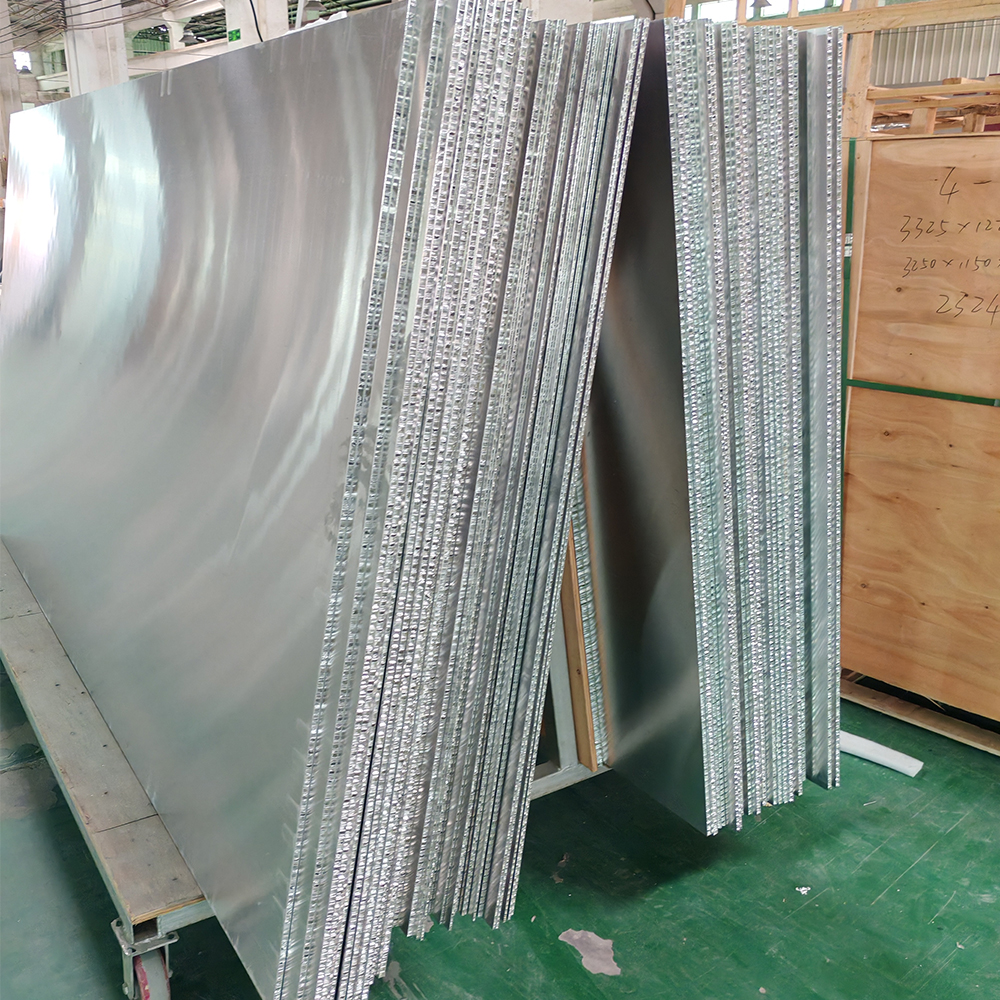
When a building needs a clean, modern exterior without adding unnecessary weight to the structure, wall cladding sheets aluminum composite panel are often one of the materials worth considering. They combine aluminum skins with a lightweight core, creating a panel that is relatively light, rigid, easy to fabricate and available in a wide range of colors and surface finishes.
But choosing an aluminum composite panel for wall cladding is not simply about picking a color from a catalog. The panel thickness, aluminum skin thickness, core material, coating system, dimensions and installation method all have a direct impact on the final performance of the facade.
For architects, contractors, distributors and building-material buyers, understanding these details makes it much easier to specify the right product.
What Are Wall Cladding Sheets Aluminum Composite Panel?
Wall cladding sheets aluminum composite panel are flat composite sheets mainly used to create decorative and protective wall surfaces.
A typical aluminum composite panel consists of two aluminum skins bonded to a central core.
The basic structure looks like this:
Protective coating → Aluminum skin → Core → Aluminum skin → Back coating
The aluminum skins provide the surface appearance and much of the panel’s rigidity, while the core helps reduce weight and contributes to the overall structural behavior.
Common overall thicknesses include:
- 3 mm
- 4 mm
- 5 mm
- Custom thicknesses for specific applications
For exterior building facades, 4 mm aluminum composite panels are widely used because they offer a practical balance between weight, rigidity, fabrication and cost.
Typical specifications can look like this:
| Parameter | Typical Specification |
|---|---|
| Panel thickness | 3–5 mm |
| Common exterior thickness | 4 mm |
| Aluminum skin thickness | 0.20–0.50 mm |
| Panel width | 1000–1600 mm |
| Panel length | 2000–6000 mm |
| Approx. weight | 5.5–8.0 kg/m² |
| Common aluminum alloys | 3003 / 3005 |
| Surface coating | PE / PVDF / FEVE |
| Surface options | Solid / Metallic / Wood / Stone |
| Core options | PE / FR / Mineral-filled |
These figures are typical industry ranges. Actual specifications should always be confirmed according to the manufacturer and project requirements.
Why Are Aluminum Composite Panels Popular for Wall Cladding?
There is a simple reason: they solve several problems at the same time.
Traditional wall materials can be heavy, difficult to process or expensive to install. Aluminum composite panels provide a relatively lightweight alternative while still creating a rigid, continuous architectural surface.
For example, a typical 4 mm panel may weigh around 5.5–8 kg/m², depending on the aluminum skin and core construction.
This makes handling easier compared with many solid facade materials.
Installers can cut, route, bend and fabricate ACP sheets into different shapes without requiring extremely heavy equipment.
That flexibility is particularly useful when a building has:
- Curved facade elements
- Columns
- Canopies
- Window surrounds
- Signage areas
- Decorative strips
- Different facade levels
In other words, the material is not limited to simple rectangular wall surfaces.
Panel Thickness and Aluminum Skin Thickness
When comparing wall cladding sheets, don’t make the mistake of looking only at total thickness.
Two panels can both be advertised as 4 mm aluminum composite panels, yet have very different performance.
Consider these examples:
Panel A
4 mm total thickness
0.21 mm aluminum skin
Panel B
4 mm total thickness
0.50 mm aluminum skin
Both are technically 4 mm panels, but their resistance to handling damage, fabrication stresses and surface deformation can be different.
For exterior wall applications, buyers often specify aluminum skin thicknesses in the range of approximately 0.30–0.50 mm, particularly for more demanding facade applications.
The correct specification depends on:
- Panel size
- Support spacing
- Wind load
- Installation system
- Building height
- Impact risk
- Required appearance
For interior decorative applications, thinner aluminum skins may be sufficient.
Core Material Is Equally Important
The core is hidden inside the panel, so it is easy to ignore.
That would be a mistake.
The core affects:
- Fire performance
- Weight
- Rigidity
- Thermal behavior
- Acoustic performance
- Cost
- Fabrication characteristics
Standard polymer cores can provide lightweight construction and economical pricing.
However, projects with higher fire-safety requirements may require FR or mineral-filled cores.
For high-rise buildings, public buildings and other regulated applications, the required fire classification should be identified before purchasing the panel.
Rather than asking whether a panel is simply “fireproof,” buyers should ask for the exact fire classification, test method and test report applicable to the intended market.
Exterior Wall Cladding Requires a Good Coating
The surface coating is the first line of defense against the outdoor environment.
Exterior walls are exposed to:
- Sunlight
- UV radiation
- Rain
- Humidity
- Temperature changes
- Dust
- Pollution
- Salt in coastal areas
A good coating system helps maintain both the appearance and performance of the aluminum surface.
PE Coating
PE coatings are commonly used for general architectural applications.
They are economical and available in many colors.
For interior applications or less demanding environments, PE-coated panels can be a practical choice.
PVDF Coating
PVDF is widely selected for higher-performance exterior facades.
It offers good resistance to UV exposure and weathering and is available in many architectural colors.
For commercial buildings where long-term appearance is important, PVDF is often worth considering.
FEVE Coating
FEVE coatings are another premium option.
They can provide excellent gloss, color depth and outdoor weather resistance.
They are particularly attractive for projects that want a more distinctive architectural finish.
Surface Finishes Give Architects More Design Freedom
One of the biggest advantages of aluminum composite panels is the variety of surface finishes.
A single product category can imitate many different materials.
Common options include:
Solid Colors
White, black, gray, blue, green and other standard colors are widely used.
Solid colors are particularly popular for commercial buildings and modern minimalist architecture.
Metallic Finishes
Metallic silver, champagne, bronze and other effects can create a more premium appearance.
These are often used around entrances, curtain-wall elements and decorative facade sections.
Wood Grain
Wood-effect aluminum composite panels provide the visual warmth of timber without requiring natural wood maintenance.
They are commonly used for:
- Residential facades
- Commercial buildings
- Balconies
- Interior walls
- Ceiling applications
Stone and Marble Effects
Stone-look ACP panels can provide a decorative appearance while keeping the weight significantly lower than natural stone cladding.
This can be useful when designers want a stone-inspired facade without installing heavy stone panels.
Aluminum Composite Panels for Exterior Walls
For exterior applications, the entire facade system needs to be considered.
The panel is only one component.
A typical system may include:
Building wall → Anchors → Aluminum brackets → Subframe → Panel fixing → Sealant / joints
The supporting subframe needs to be properly aligned before the panels are installed.
A small error in the subframe can become very visible when large, flat panels are installed.
For example, if a 3 m long panel is installed over an uneven support structure, the finished surface may show visible waviness or inconsistent joints.
That is why installation accuracy matters almost as much as panel quality.
Wind Load Should Be Considered Before Panel Selection
Exterior walls are exposed to wind pressure and suction.
Suppose a building has a design wind pressure of 2.0 kPa.
That corresponds to:
2.0 kN/m² = 2000 N/m²
This is approximately equivalent to 204 kgf/m² under simplified conversion.
However, this does not mean a 4 mm panel automatically has a “204 kg/m² capacity.”
Wind performance depends on the complete system, including:
- Panel dimensions
- Support spacing
- Fastener type
- Panel stiffness
- Subframe design
- Building height
- Corner-zone wind pressure
- Connection strength
For larger buildings, the facade system should therefore be engineered rather than selected purely from a product catalog.
Thermal Movement Is Another Important Factor
Aluminum expands when heated and contracts when cooled.
The linear thermal expansion coefficient of aluminum is approximately:
23 × 10⁻⁶ /°C
Consider a 3 m aluminum component experiencing a 60°C temperature difference.
The theoretical dimensional change is:
3 × 23 × 10⁻⁶ × 60 ≈ 4.14 mm
That’s more than 4 mm.
On a large facade, this movement becomes significant.
The installation system therefore needs suitable joints and fixing details that allow thermal movement.
If panels are fixed too rigidly, thermal stress can contribute to:
- Buckling
- Panel distortion
- Fastener stress
- Sealant failure
- Joint deformation
Recommended Joint Design
Panel joints are not simply decorative lines.
They also accommodate movement and help control water penetration.
Depending on the facade system, joint widths may commonly fall around 8–20 mm, although the exact value should be determined by the system design.
The joint needs to consider:
- Thermal movement
- Panel dimensions
- Sealant requirements
- Drainage
- Architectural appearance
- Installation tolerances
A narrow joint may look attractive, but if it does not provide sufficient movement capability, it can create problems later.
How Are Aluminum Composite Wall Cladding Sheets Fabricated?
ACP is relatively easy to fabricate, which is one of its biggest advantages.
Common fabrication operations include:
- Cutting
- CNC routing
- Grooving
- Folding
- Bending
- Drilling
- Riveting
- Fastening
For cassette-type systems, the panel edges can be routed and folded to form a tray.
A typical routing operation removes part of the core while preserving the aluminum skin needed for folding.
The exact routing depth and tool geometry depend on the panel construction.
Poor routing can damage the aluminum skin or create an inaccurate fold, so fabrication should be performed using suitable tools and controlled production parameters.
Applications of Aluminum Composite Wall Cladding Sheets
These panels are used across a wide range of architectural projects.
Commercial Buildings
Shopping centers, office buildings and retail stores often use ACP for large facade areas.
The wide color selection makes it possible to create branded exterior designs.
Residential Buildings
ACP can be used for balconies, entrance areas, decorative facade sections and modern exterior wall designs.
Hotels
Hotels often combine metallic, wood-grain and stone-effect panels to create a premium visual identity.
Industrial Buildings
Factories and commercial facilities can use ACP for office areas, entrance structures and architectural facade upgrades.
Transportation Facilities
Stations, terminals and other transportation buildings can benefit from lightweight panels that can be fabricated into large architectural elements.
Interior Applications
Although this article focuses on exterior wall cladding, aluminum composite panels are also widely used for interior walls, ceilings, columns and decorative structures.
How to Choose the Right Wall Cladding Sheets
If you are sourcing aluminum composite panels for a project, start with the application rather than the price.
A useful specification may include:
Panel thickness: 4 mm
Aluminum skin: 0.30–0.50 mm
Aluminum alloy: 3003 / 3005
Core: FR or mineral-filled where required
Coating: PVDF / FEVE for demanding exterior applications
Panel width: 1220 / 1500 mm or project-specific
Length: Up to 6000 mm depending on manufacturing capability
Color: RAL or custom color
Surface: Solid / Metallic / Wood / Stone
Fire requirement: Project-specific classification
Application: Exterior wall facade
Installation: Cassette / tray / mechanical fixing system
This level of detail gives manufacturers enough information to recommend an appropriate configuration.
Aluminum Composite Panel vs. Solid Aluminum Sheet
The choice between ACP and solid aluminum sheet depends on the project.
| Feature | Aluminum Composite Panel | Solid Aluminum Sheet |
|---|---|---|
| Weight | Low | Higher as thickness increases |
| Rigidity-to-weight ratio | Good | Depends heavily on thickness |
| Fabrication | Easy | Easy but may require heavier material |
| Surface options | Extensive | Extensive |
| Large flat panels | Suitable | Suitable |
| Cost efficiency | Often favorable | Can be higher |
| Core options | Multiple | No core |
| Fire design | Depends on core | Depends mainly on metal system |
ACP is particularly attractive when low weight, large-format fabrication and surface design flexibility are priorities.
Final Considerations
Choosing wall cladding sheets aluminum composite panel is really about choosing a complete facade solution.
A good panel specification should consider more than just the words “4 mm ACP.”
Look at the aluminum skin thickness, core material, coating system, panel dimensions, fire performance, wind-load requirements, thermal movement and installation method.
For many exterior projects, a 4 mm panel with a 0.30–0.50 mm aluminum skin, a suitable exterior-grade coating and an appropriately engineered fixing system can provide a strong balance between appearance, durability and installation efficiency.
The most important point is to match the panel to the building rather than trying to make one specification work everywhere.
A low-rise retail building, a high-rise facade and a coastal commercial project all face different environmental and structural conditions.
When the panel, coating and installation system are properly matched to those conditions, aluminum composite wall cladding can provide a clean architectural finish with relatively low weight, flexible fabrication and efficient installation—exactly the combination many modern building projects are looking for.
