
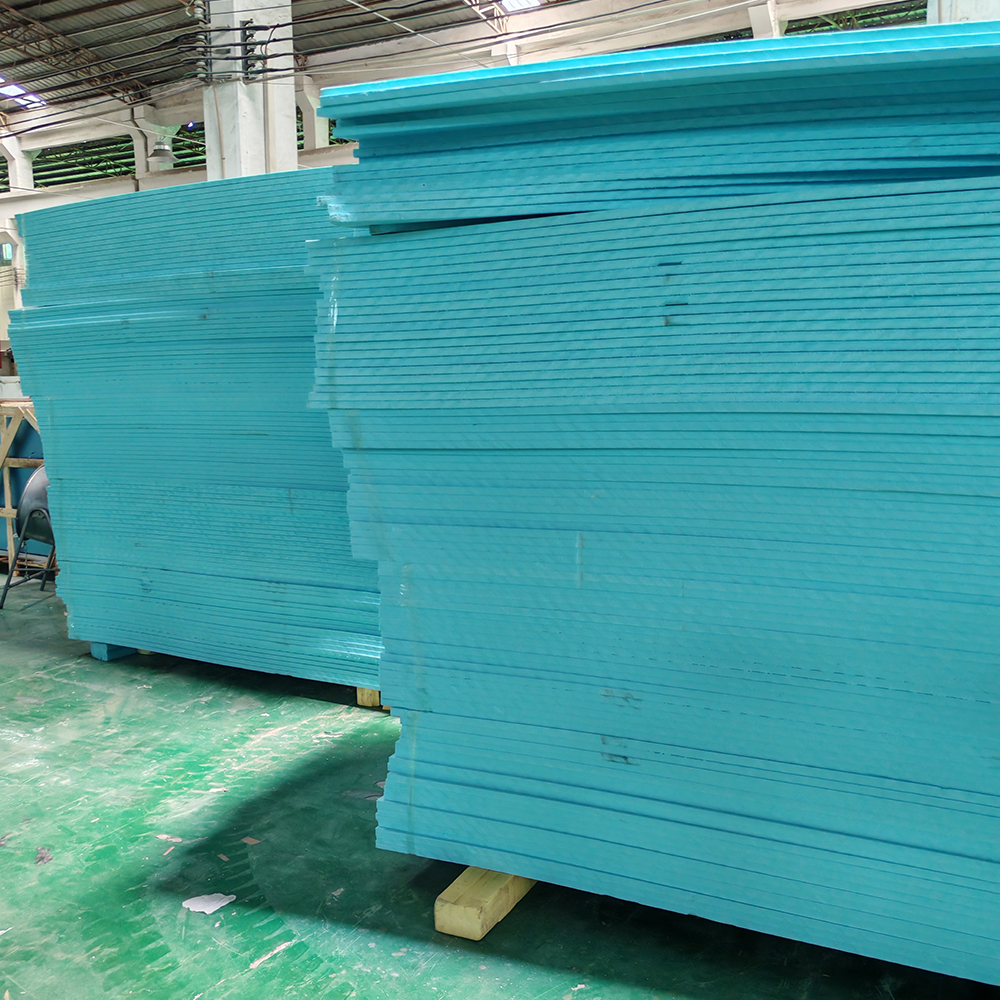
XPS foam board is a rigid extruded polystyrene insulation board designed primarily for thermal insulation and applications requiring a lightweight material with good compressive performance and low water absorption. The term XPS foam board is widely used by construction contractors, insulation distributors, composite panel manufacturers, and building-material buyers when referring to rigid extruded polystyrene boards.
One of the most important features of XPS foam board is its closed-cell structure. Unlike many fibrous insulation products, XPS consists predominantly of small closed cells formed during extrusion foaming. This structure contributes to its low water absorption and provides a combination of thermal insulation and mechanical strength. Because of this, XPS is commonly considered for walls, roofs, floors, foundations, and other areas where rigid insulation is preferred.
In the Middle East, XPS foam board is particularly relevant to projects in hot and arid environments. Saudi Arabia, UAE, Qatar, Kuwait, Oman, and Bahrain experience high outdoor temperatures for substantial periods of the year, creating significant cooling requirements for residential, commercial, industrial, and infrastructure buildings. Properly designed insulation can reduce heat transfer through the building envelope and help maintain a more stable indoor environment.
However, buyers should not select XPS foam board based only on the word “insulation.” The most important technical parameters include thermal conductivity, thickness, density, compressive strength, water absorption, dimensional stability, surface characteristics, and fire performance. These parameters should be evaluated according to the building system and local project requirements.
Thickness is one of the easiest specifications to understand but is frequently misunderstood. XPS foam board can be produced in various thicknesses, including 10 mm, 25 mm, 30 mm, 40 mm, 50 mm, and 100 mm. A thicker board generally provides greater thermal resistance, but the optimal thickness depends on the target U-value or thermal resistance of the building envelope, available installation space, construction details, and applicable regulations.
Density is also important, particularly for load-bearing applications. Higher-density XPS boards can provide increased compressive strength, which may be advantageous under floors, foundations, parking areas, inverted roof systems, or other applications exposed to mechanical loads. For wall insulation where mechanical loading is limited, selecting an excessively high-density product may unnecessarily increase material cost.
Another consideration is surface finish. Standard XPS boards may have relatively smooth surfaces, while some applications require textured, grooved, or specially processed surfaces to improve bonding or accommodate a particular installation system. Edge configurations can also include square edges or interlocking designs such as shiplap profiles.
For B2B procurement, the buyer should request a complete technical specification instead of purchasing according to a generic XPS foam board description. A professional quotation should clearly identify dimensions, thickness, density, thermal conductivity, compressive strength, water absorption, fire performance, packaging, quantity, and delivery terms.
For projects in the UAE and Saudi Arabia, transportation and storage should also be considered. XPS boards should be properly packaged and protected from prolonged direct exposure to unsuitable environmental conditions and incompatible chemicals. Installation should follow the recommendations of the insulation manufacturer and the overall building-system supplier.
In conclusion, XPS foam board is a versatile rigid insulation material, but there is no single specification that fits every project. The correct product should be selected by matching measurable material properties with the thermal, structural, environmental, and installation requirements of the specific Middle Eastern project.
