
Introduction
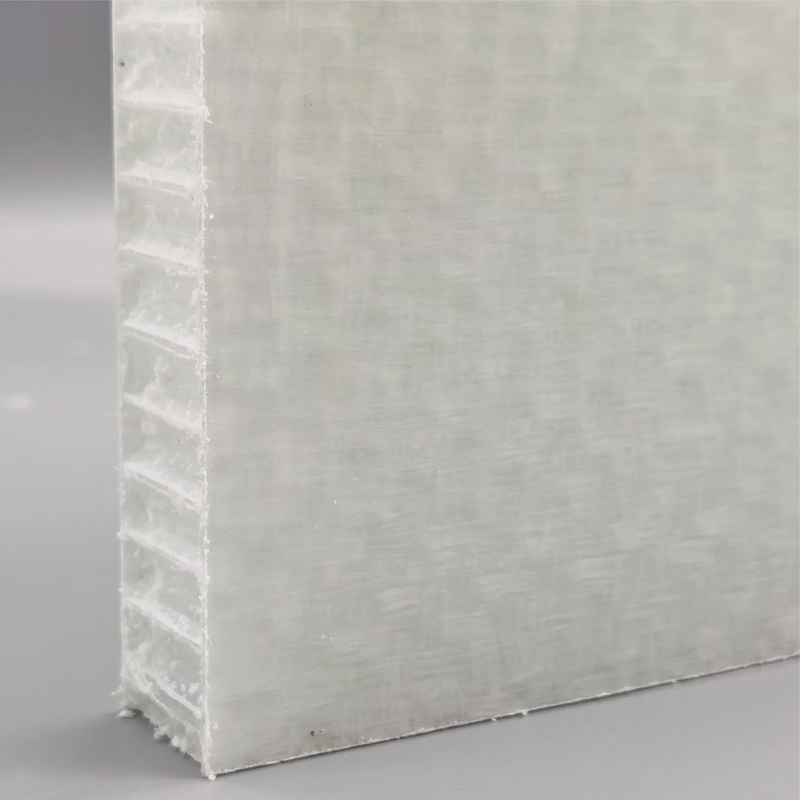
PP honeycomb core is a lightweight cellular material widely used in sandwich panels for transportation, marine, construction, furniture, packaging, and industrial applications.
Its lightweight structure is only one part of the story.
The final performance of a PP honeycomb panel depends on a complete manufacturing chain that begins with polymer selection and continues through processing, cellular forming, cooling, cutting, face-sheet selection, bonding, finishing, and quality testing.
The complete process can be simplified as:
Raw Material → PP Honeycomb Machinery → Cellular Core → Face Sheet → Bonding → Finished Composite Panel → Quality Testing
Every stage can influence the final product.
For example:
- The polymer formulation affects processing and mechanical behavior.
- Extrusion stability affects wall thickness.
- Forming conditions affect cell geometry.
- Cooling affects flatness.
- Core density affects weight and mechanical performance.
- Face-sheet selection affects surface strength and stiffness.
- Bonding determines how efficiently loads transfer between skin and core.
- Quality testing confirms whether the finished panel meets its intended specifications.
This article provides a complete overview of the PP honeycomb manufacturing process and explains how each stage contributes to finished composite panel performance.
1. What Is a PP Honeycomb Core?
A PP honeycomb core is a cellular structural material manufactured primarily from polypropylene.
Instead of using solid polymer throughout the entire volume, the material is formed into repeated cells.
This creates a structure with:
- Low density
- High structural efficiency
- Good compression resistance
- Useful shear performance
- Impact absorption capability
- Moisture resistance
- Good processing flexibility
The cellular structure also creates a relatively thick core without requiring the same quantity of polymer as a solid sheet.
This is particularly valuable in sandwich construction.
A typical sandwich panel consists of:
Face Sheet + PP Honeycomb Core + Face Sheet
The face sheets carry much of the tensile and compressive bending stress, while the honeycomb core maintains separation between the skins and transfers shear forces.
2. Raw Material: Polypropylene and Formulation
The manufacturing process begins with polypropylene raw material.
Depending on the intended application and processing method, the formulation may contain:
- Virgin PP
- Recycled PP
- Impact modifiers
- Stabilizers
- Pigments
- Processing additives
- Flame-retardant additives where required
- Other application-specific modifiers
The exact formulation depends on the desired balance between processing behavior and final properties.
Important considerations include:
- Melt flow behavior
- Mechanical performance
- Temperature resistance
- Impact behavior
- Environmental exposure
- Color requirements
- Recycling requirements
For manufacturers, raw-material consistency is particularly important.
A significant variation in polymer characteristics can affect extrusion stability and consequently influence the geometry of the honeycomb structure.
3. Virgin PP vs Recycled PP
One advantage of polypropylene is its thermoplastic nature.
PP can be reprocessed, creating opportunities to incorporate recycled material into some products.
However, recycled PP should not automatically be considered equivalent to virgin PP.
Potential differences may occur in:
- Molecular weight
- Contamination level
- Melt flow behavior
- Mechanical properties
- Color consistency
- Thermal stability
Therefore, manufacturers using recycled PP should establish suitable incoming-material controls.
A practical approach is to define a controlled material specification rather than simply specifying a percentage of recycled content.
For example:
Recycled Content + Melt Flow Range + Contamination Control + Mechanical Validation
This creates a more reliable production system.
4. Material Preparation
Before extrusion, raw materials may need to be:
- Stored under controlled conditions
- Mixed according to formulation
- Dosed accurately
- Filtered where required
- Combined with additives
- Prepared for continuous feeding
Automated feeding systems can improve material consistency by controlling the ratio of different components.
For large-scale production, consistent feeding is important because fluctuations in feed rate can eventually appear as extrusion-output variations.
The principle is simple:
Stable Feeding → Stable Extrusion → Stable Forming
5. PP Honeycomb Machinery
The production line used to manufacture the cellular core is one of the most important factors affecting final product quality.
A PP honeycomb production system may include several functional sections:
- Material feeding
- Extrusion
- Sheet or profile formation
- Cellular forming
- Cooling
- Stabilization
- Cutting
- Surface treatment where required
- Inspection
- Stacking and packaging
The exact configuration depends on the manufacturing technology and target product.
The important point is that the equipment must maintain stable processing conditions throughout continuous production.
6. Extrusion and Plasticization
During extrusion, PP is heated and transformed into a molten state.
The extrusion system must control parameters such as:
- Temperature
- Pressure
- Screw speed
- Material feed rate
- Melt flow
- Die conditions
The objective is to create a stable and uniform polymer output.
If extrusion output fluctuates, downstream cellular forming may become unstable.
Potential consequences include:
- Uneven wall thickness
- Density variation
- Cell deformation
- Dimensional instability
Therefore, extrusion stability is the foundation of reliable PP honeycomb production.
7. Cellular Forming
After extrusion, the polymer is transformed into the desired cellular structure.
This is the stage where the flat or semi-formed PP material becomes a honeycomb architecture.
Important variables may include:
- Forming temperature
- Forming pressure
- Forming speed
- Tool geometry
- Material temperature
- Tension
- Cooling conditions
The objective is to create consistent cells across the entire production width.
The cellular geometry determines many of the core’s characteristics.
8. Cell Geometry
Cell geometry influences:
- Density
- Compression performance
- Shear performance
- Surface support
- Weight
- Material consumption
A smaller cell generally creates more cell walls per unit area, while a larger cell can reduce material consumption.
However, cell size cannot be optimized independently.
It must be considered together with:
- Wall thickness
- Core density
- Core thickness
- Face-sheet thickness
- Application load
For example, a furniture panel may prioritize low weight and surface quality, while a transportation floor may require greater compression resistance.
9. Wall Thickness Control
Wall thickness is one of the most important manufacturing parameters.
If the cell walls are too thin, local strength may decrease.
If they are too thick, the core becomes unnecessarily heavy.
The ideal condition is controlled wall thickness appropriate to the target density and cell structure.
Potential causes of wall-thickness variation include:
- Unstable extrusion
- Uneven material distribution
- Temperature variation
- Forming instability
- Line-speed fluctuation
- Cooling differences
Therefore, wall-thickness consistency is an important indicator of production-line quality.
10. Core Density
Density determines how much PP material is contained in a given volume.
A higher-density honeycomb generally contains more polymer and can provide greater compression and shear capability.
A lower-density core provides greater weight reduction.
The basic engineering trade-off is:
Higher Density → More Material → Higher Weight → Potentially Higher Mechanical Capacity
versus:
Lower Density → Less Material → Lower Weight → Potentially Lower Mechanical Capacity
The correct density depends on the application.
A high-load floor panel and a lightweight decorative partition should not necessarily use the same core density.
11. Core Thickness
Core thickness is another major structural parameter.
Increasing core thickness increases the distance between the face sheets in a sandwich structure.
This can substantially improve bending stiffness.
For this reason, a designer can often achieve a useful stiffness-to-weight balance by combining:
Thicker Lightweight Core + Relatively Thin Face Sheets
rather than simply increasing the thickness of a solid board.
Core thickness should be selected according to:
- Span
- Load
- Deflection requirements
- Core shear performance
- Face-sheet properties
- Connection design
12. Cooling and Flatness
After forming, the PP honeycomb structure must be cooled and stabilized.
Cooling has a direct influence on:
- Flatness
- Thickness
- Dimensional stability
- Internal stress
- Warpage
Polypropylene contracts as it cools.
Uneven cooling can therefore create dimensional differences across the product.
This can become particularly problematic when the core is later bonded to rigid face sheets.
Poor flatness may lead to:
- Uneven adhesive distribution
- Local gaps
- Surface deformation
- Inconsistent panel thickness
- Reduced bonding efficiency
Therefore, cooling is a structural-quality process, not simply a temperature-control step.
13. Cutting and Dimensional Control
After stabilization, the honeycomb core is cut to the required dimensions.
Important parameters include:
- Length
- Width
- Thickness
- Edge straightness
- Squareness
- Cutting tolerance
Accurate cutting becomes increasingly important when the core is used in automated sandwich-panel production.
Dimensional errors can increase:
- Assembly time
- Material waste
- Edge gaps
- Bonding problems
For high-volume production, automated cutting and stacking can improve repeatability.
14. Surface Treatment and Bonding Compatibility
Polypropylene has relatively low surface energy, so bonding can require special consideration.
Depending on the panel structure, manufacturers may use:
- Corona treatment
- Plasma treatment
- Primers
- Specialized adhesives
- Thermal bonding
- Mechanical integration
The correct approach depends on the selected face sheet and adhesive system.
Surface treatment should therefore be considered part of the overall sandwich-panel manufacturing process.
15. Selecting the Face Sheet
The face sheet converts the PP honeycomb core into a complete sandwich structure.
Possible materials include:
Aluminum
Suitable where the panel requires:
- High surface stiffness
- Good dimensional stability
- Metallic appearance
- Impact resistance
Typical applications include transportation, marine, doors, industrial panels, and architectural structures.
FRP
Useful where:
- Corrosion resistance is important
- Low weight is required
- Environmental durability is needed
Typical applications include marine, transportation, construction, and industrial panels.
PP
Useful where:
- Moisture resistance is important
- Thermoplastic compatibility is preferred
- Material recycling is being considered
Decorative Materials
Furniture and interior applications may use:
- Laminates
- Decorative sheets
- Wood-look surfaces
- Coated materials
- Other architectural finishes
The face sheet should always be selected together with the core.
16. Bonding the Face Sheet to the Core
Bonding creates the structural connection between the PP honeycomb core and face sheets.
A reliable bonding system should provide:
- Uniform coverage
- Adequate adhesion
- Consistent pressure
- Controlled curing or cooling
- Low void content
- Good dimensional stability
The bonding process must transfer loads efficiently between the skin and the core.
Poor bonding can cause:
- Delamination
- Local separation
- Reduced bending stiffness
- Reduced shear performance
- Surface deformation
Therefore, the quality of the finished sandwich panel depends heavily on interface quality.
17. Sandwich Panel Construction
After bonding, the structure can be considered a complete sandwich panel.
Its basic mechanical function can be divided into three parts.
Top Face Sheet
Primarily carries tensile or compressive bending stress depending on loading direction.
PP Honeycomb Core
Maintains the separation between skins and carries significant shear load.
Bottom Face Sheet
Carries the opposite bending stress.
This structural arrangement is what allows sandwich panels to achieve high stiffness without filling the entire thickness with solid material.
18. How the Manufacturing Process Affects Final Performance
The complete relationship can be summarized as:
| Manufacturing Stage | Main Quality Parameter | Final Performance Influence |
|---|---|---|
| Raw Material | PP consistency | Processing stability |
| Feeding | Material ratio | Density and formulation |
| Extrusion | Melt stability | Wall thickness |
| Forming | Cell geometry | Mechanical performance |
| Cooling | Flatness | Bonding and dimensional stability |
| Cutting | Dimensions | Assembly accuracy |
| Surface Treatment | Surface energy | Bonding quality |
| Lamination | Adhesive distribution | Structural integrity |
| Pressing/Curing | Pressure and temperature | Interface strength |
| Final Inspection | Mechanical properties | Product reliability |
This demonstrates why finished-panel quality cannot be controlled at only the final inspection stage.
Quality must be built into the process.
19. Quality Testing of PP Honeycomb Core
Before the core is released for sandwich-panel production, manufacturers may evaluate:
- Density
- Thickness
- Cell size
- Wall thickness
- Flatness
- Dimensional accuracy
- Visual appearance
- Compression behavior
- Shear behavior where required
The exact testing program should depend on the product specification and application.
For structural applications, mechanical testing is particularly important.
20. Finished Composite Panel Testing
After the face sheets are bonded, additional testing may be required.
Typical evaluation areas include:
Bending
Measures the ability of the panel to resist bending loads.
Compression
Important for:
- Floors
- Shelves
- Furniture
- Structural panels
Shear
Important because the honeycomb core transfers shear between face sheets.
Impact
Important for:
- Transportation
- Marine
- Furniture
- Industrial applications
Bonding Strength
Evaluates the integrity of the core-to-skin interface.
Dimensional Stability
Important for large panels and precision applications.
The finished sandwich panel should be tested as a complete system rather than assuming that individual material specifications automatically predict panel performance.
21. Quality Control From Raw Material to Finished Panel
A professional manufacturing system can establish quality control at multiple levels.
Stage 1: Raw Material Inspection
Check:
- PP grade
- Material consistency
- Recycled content where applicable
- Additives
- Contamination
Stage 2: Process Monitoring
Monitor:
- Temperature
- Pressure
- Feed rate
- Line speed
- Cooling conditions
Stage 3: Core Inspection
Measure:
- Density
- Cell size
- Thickness
- Wall thickness
- Flatness
Stage 4: Bonding Inspection
Check:
- Surface preparation
- Adhesive distribution
- Bonding pressure
- Bonding temperature
- Interface quality
Stage 5: Finished Panel Testing
Evaluate:
- Dimensions
- Appearance
- Bending
- Compression
- Shear
- Impact
- Bonding
This multi-stage system helps reduce the risk of defects being discovered only after final assembly.
22. Common Manufacturing Defects
Several defects can occur during PP honeycomb production.
| Defect | Possible Manufacturing Cause | Potential Result |
|---|---|---|
| Uneven cell size | Forming instability | Variable mechanical properties |
| Wall-thickness variation | Extrusion instability | Local weak points |
| Density variation | Uneven material distribution | Inconsistent performance |
| Warpage | Uneven cooling | Poor lamination |
| Cracks | Excessive forming stress | Reduced durability |
| Dimensional deviation | Cutting instability | Assembly problems |
| Poor bonding | Inadequate surface treatment | Delamination |
| Voids | Uneven adhesive application | Reduced interface strength |
| Surface deformation | Core or lamination problems | Poor appearance |
The best production strategy is therefore defect prevention through process control.
23. Production Stability and Yield
A production line should not be evaluated only by maximum output.
Two important indicators are:
Production Yield
and
Stable Operating Speed
Yield can be expressed as:
[
Yield = \frac{Qualified\ Product}{Total\ Production} \times 100%
]
For example, if a line produces 10,000 kg of material and 9,600 kg passes the required inspection:
[
Yield = 96%
]
A high nominal production speed with a low yield may not provide better manufacturing economics than a slightly slower line with stable quality.
Therefore, overseas buyers should evaluate:
- Stable production speed
- Qualified-product output
- Startup waste
- Changeover waste
- Scrap rate
- Downtime
- Energy consumption
- Maintenance requirements
24. The Role of PP Honeycomb Machinery in Quality Consistency
Modern PP honeycomb machinery should ideally provide control over the parameters that have the greatest influence on product quality.
These may include:
- Extrusion temperature
- Melt pressure
- Material feed rate
- Forming conditions
- Cell dimensions
- Cooling conditions
- Line speed
- Cutting dimensions
Automation can reduce operator-dependent variation.
For manufacturers producing different grades of PP honeycomb core, recipe-based process control can also help reproduce the same specifications between production batches.
25. Application-Specific Manufacturing
The manufacturing process should be adapted to the final application.
Transportation
Priority may include:
- Low weight
- Impact resistance
- Compression performance
- Dimensional stability
Construction
Priority may include:
- Panel stiffness
- Moisture resistance
- Fire-performance requirements
- Surface durability
Marine
Priority may include:
- Low weight
- Moisture resistance
- Corrosion resistance
- Bonding durability
Furniture
Priority may include:
- Low weight
- Flatness
- Surface appearance
- Hardware integration
- Edge reinforcement
Therefore, one PP honeycomb production line may need sufficient flexibility to produce multiple specifications.
26. From PP Honeycomb Core to PP Honeycomb Panel
The manufacturing chain can now be summarized as:
1. Polymer Selection
↓
2. Material Preparation
↓
3. Extrusion
↓
4. Cellular Forming
↓
5. Cooling and Stabilization
↓
6. Core Inspection
↓
7. Face-Sheet Selection
↓
8. Surface Treatment
↓
9. Adhesive Application
↓
10. Lamination
↓
11. Pressing/Curing
↓
12. Cutting and Finishing
↓
13. Final Inspection
↓
14. Finished PP Honeycomb Panel
Each stage contributes to the final structural performance.
27. How Buyers Should Evaluate a PP Honeycomb Manufacturer
For an international buyer, evaluating only the product catalog is not enough.
A more complete supplier evaluation should cover four areas.
Material Capability
Can the manufacturer control:
- PP formulation
- Density
- Cell size
- Wall thickness
- Core thickness?
Equipment Capability
Does the manufacturer have stable:
- Extrusion
- Forming
- Cooling
- Cutting
- Lamination
- Inspection systems?
Quality Capability
Can the manufacturer provide:
- Material specifications
- Production tolerances
- Test reports
- Batch traceability
- Mechanical test data?
Customization Capability
Can the supplier produce:
- Different cell sizes?
- Different densities?
- Different thicknesses?
- Different widths?
- Different face-sheet combinations?
This is particularly important for OEM and project-based customers.
28. PP Honeycomb Manufacturing and Long-Term Product Performance
A good PP honeycomb panel should not only perform well immediately after production.
It should also maintain its dimensional and structural characteristics during its intended service life.
Long-term performance can be influenced by:
- Temperature
- Moisture
- UV exposure
- Chemical exposure
- Repeated loading
- Impact
- Adhesive durability
- Face-sheet compatibility
Therefore, material selection and manufacturing conditions should be matched to the expected service environment.
For demanding applications, manufacturers may need application-specific environmental and durability testing.
29. Why the Complete Manufacturing Chain Matters
A lightweight core with excellent theoretical properties can still produce a poor finished panel if:
- Cell geometry is inconsistent
- Density varies significantly
- The core is warped
- The face sheet is poorly selected
- Surface treatment is inadequate
- Adhesive coverage is inconsistent
- Pressing conditions are unstable
Conversely, a properly engineered PP honeycomb structure can provide an effective combination of:
- Low weight
- Structural stiffness
- Compression performance
- Shear resistance
- Impact absorption
- Moisture resistance
- Material efficiency
The performance comes from the complete system, not from one individual parameter.
30. Conclusion
PP honeycomb manufacturing is a multi-stage engineering process rather than a simple plastic-forming operation.
The complete chain begins with controlled polypropylene raw material and continues through:
Raw Material → Material Preparation → Extrusion → Cellular Forming → Cooling → Core Inspection → Face Sheet → Surface Treatment → Bonding → Lamination → Finished Panel → Quality Testing
At every stage, manufacturing decisions influence the final product.
PP honeycomb machinery controls much of the core geometry and production consistency.
Cell size and wall thickness influence density and mechanical performance.
Core thickness contributes strongly to sandwich-panel bending stiffness.
Face sheets provide much of the surface strength and protect the core.
Bonding transfers loads between the core and skins.
Quality testing verifies whether the complete panel satisfies its intended requirements.
For manufacturers, this means that PP honeycomb quality should be managed as an integrated production system.
For international buyers, it means that supplier evaluation should go beyond price and nominal specifications. Equipment capability, process stability, material consistency, bonding technology, testing capability, production yield, and customization capacity all deserve consideration.
Ultimately, the value of a PP honeycomb panel comes from its ability to combine low weight with useful structural performance.
Achieving that combination consistently requires the right material, the right cellular design, the right machinery, the right face sheet, the right bonding process, and disciplined quality control.
That is what transforms polypropylene from a basic thermoplastic material into a reliable lightweight structural core for advanced sandwich-panel applications.
