
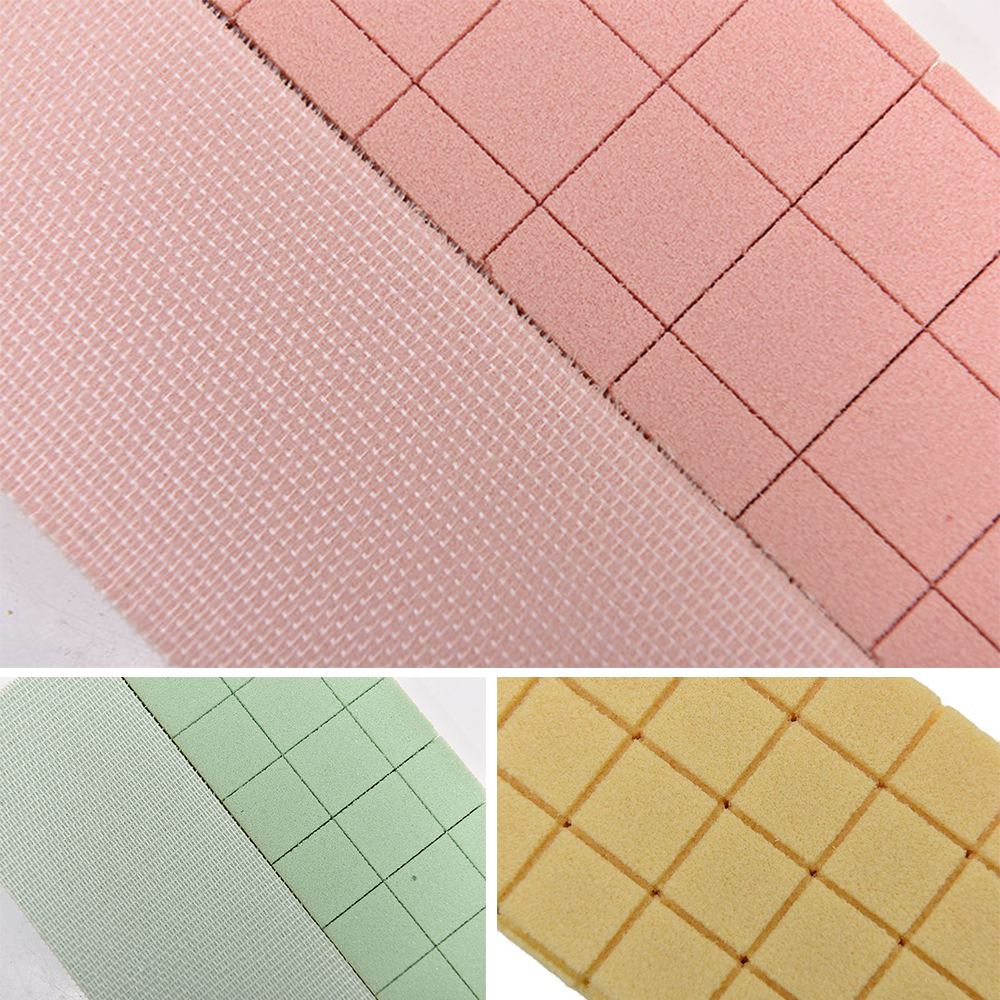
PVC Foam Core is an important structural core material used in sandwich composite structures for marine, boat building, wind turbine blades, transportation, construction, and industrial applications.
From a materials engineering perspective, PVC Foam Core should not be considered simply as a lightweight foam board. Its actual performance is determined by the interaction between PVC polymer formulation, foam cell morphology, density, thickness, surface condition, bonding performance, and manufacturing consistency.
The fundamental relationship can be expressed as:
PVC Polymer → Foam Processing → Cell Structure → Density → Mechanical Properties → Composite Structure → Final Performance
Understanding this relationship is important for composite engineers, manufacturers, and purchasing teams because two PVC Foam Core products with the same nominal density may not necessarily provide identical performance.
1. What Is PVC Foam Core?
PVC Foam Core is a cellular structural material based on polyvinyl chloride (PVC). It is commonly produced as a closed-cell foam and used as the lightweight core in sandwich composite structures.
Unlike solid PVC sheet, PVC Foam Core contains a large number of gas-filled cells. These cells significantly reduce the material’s density while maintaining useful mechanical properties.
Typical applications include:
- Marine sandwich panels
- Boat hulls
- Yacht decks
- Wind turbine blades
- Transportation panels
- Industrial composite structures
- Building sandwich panels
- Architectural composite panels
- FRP and GFRP structures
- Vacuum-infused composite components
The material can be supplied in different densities and thicknesses depending on the structural requirement.
A typical PVC Foam Core specification may include:
| Property | Typical Consideration |
|---|---|
| Material | PVC structural foam |
| Cell structure | Closed cell |
| Density | Different grades for different structural requirements |
| Thickness | Selected according to structural design |
| Surface | Plain, treated or machined |
| Compression strength | Important for local and through-thickness loads |
| Shear strength | Important for sandwich structures |
| Shear modulus | Important for structural stiffness |
| Water absorption | Important for marine applications |
| Bonding | Important for composite skins |
| Processing | Hand lay-up, vacuum bagging, infusion and bonding |
The important point is that density is only one part of the material specification.
2. Why PVC Polymer Structure Matters
PVC, or polyvinyl chloride, is a thermoplastic polymer with a molecular structure that can be engineered for different applications through formulation and processing.
For structural foam applications, the polymer system must be capable of forming stable cell walls during the foaming process.
The solid polymer forms the framework surrounding the gas-filled cells.
Therefore, the final foam can be understood as two interconnected components:
Solid Polymer Framework + Gas-Filled Cellular Structure
The polymer provides the fundamental material properties, while the cellular structure determines how those properties are translated into lightweight structural performance.
This distinction is important.
A solid PVC sheet may have relatively high material strength, but it would also be considerably heavier than a properly engineered PVC Foam Core.
The purpose of structural foam is therefore not to maximize the amount of polymer.
The objective is to use the minimum amount of solid material required to create an efficient load-bearing cellular structure.
This is one of the fundamental principles behind lightweight sandwich construction.
3. Understanding PVC Foam Cell Morphology
The internal cell structure is one of the most important characteristics of PVC Foam Core.
A typical closed-cell PVC foam contains thousands or millions of small cells within the material.
Each cell consists of:
- Cell walls
- Cell faces
- Polymer ligaments
- Gas-filled internal volume
The mechanical performance of the foam depends heavily on how these elements are distributed.
Important morphological factors include:
- Cell size
- Cell shape
- Cell-wall thickness
- Cell distribution
- Cell uniformity
- Cell orientation
- Cell-wall continuity
- Local defects
- Density distribution
This explains why two products with the same average density can behave differently.
For example:
PVC Foam Core A
- 80 kg/m³ average density
- Uniform cells
- Consistent cell walls
- Low density variation
PVC Foam Core B
- 80 kg/m³ average density
- Uneven cell distribution
- Larger local cells
- Greater density variation
Although both materials are labeled 80 kg/m³ PVC Foam Core, their mechanical consistency and processing behavior may be different.
For structural composite manufacturing, this difference can become important.
4. Why Closed-Cell Structure Is Important
Closed-cell construction is one of the major advantages of structural PVC Foam Core.
In a closed-cell structure, individual cells are largely separated by polymer walls.
This provides several useful characteristics.
Moisture Resistance
The closed-cell structure reduces the pathways through which water can penetrate the material.
This is especially important for:
- Boats
- Yachts
- Marine panels
- Exterior composite structures
- Transportation components
However, closed-cell does not mean that the finished product is completely immune to moisture.
Water can still enter through:
- Cut edges
- Machined grooves
- Perforations
- Cracks
- Joints
- Damaged surfaces
- Poorly sealed interfaces
Therefore, the complete composite structure must be designed to control moisture exposure.
Dimensional Stability
A stable cellular structure helps maintain the core’s dimensions during composite processing and service.
This is important during:
- Vacuum bagging
- Resin infusion
- Adhesive bonding
- Pressing
- Lamination
- Cutting
- CNC machining
Dimensional instability can result in uneven laminate thickness or poor contact between the core and face sheets.
5. How Density Influences PVC Foam Core Performance
Density is one of the most important parameters when selecting PVC Foam Core.
In general:
Higher Density → More Solid Polymer → Stronger Cell Network → Higher Mechanical Performance
Increasing density generally improves properties such as:
- Compressive strength
- Compressive modulus
- Shear strength
- Shear modulus
- Tensile strength
- Local load resistance
However, increasing density also increases:
- Weight
- Material consumption
- Cost
Therefore, selecting the highest-density PVC Foam Core is not necessarily the best engineering solution.
The correct approach is:
Select the lowest practical density that satisfies the structural requirements.
This is particularly important in applications where weight directly affects performance.
For example, reducing structural weight is highly valuable in:
- Wind turbine blades
- Boats
- Yachts
- Rail vehicles
- Automotive structures
- Aerospace components
6. Typical PVC Foam Core Density Selection
Different applications require different density ranges.
A simplified engineering classification can be used as follows:
| Density Range | General Characteristics | Typical Applications |
|---|---|---|
| 45–60 kg/m³ | Lightweight | Weight-sensitive composite structures |
| 60–80 kg/m³ | Lightweight structural | Marine and general sandwich panels |
| 80–100 kg/m³ | Medium structural | Marine, transportation and industrial |
| 100–130 kg/m³ | Higher structural performance | Higher-load composite structures |
| 130–200 kg/m³ | High density | High-load structural components |
| 200–300 kg/m³ | Very high density | Local load and specialized structures |
These ranges are general engineering guidelines rather than universal specifications.
Actual material selection should be based on the manufacturer’s technical data and the requirements of the finished composite structure.
7. Compression Behavior of PVC Foam Core
Compression strength is an important property because sandwich structures often experience through-thickness loading.
When compressive force is applied to PVC Foam Core, the cells begin to deform.
The process can generally be described as:
Elastic Deformation → Cell-Wall Deformation → Buckling → Progressive Collapse → Compaction
At low stress levels, the cell walls deform elastically.
As the load increases, cell walls begin to buckle or deform permanently.
At even higher compression, the cellular structure progressively collapses.
Eventually, the foam becomes highly compacted and its mechanical response changes.
This behavior explains why density and cell morphology are so important.
A well-controlled cell structure can distribute loads more uniformly, while defects or unusually large cells can create local weak areas.
8. Compression Strength Is Not the Same as Overall Panel Strength
This is an important distinction for composite engineers and purchasing teams.
Consider a typical sandwich structure:
FRP Skin + PVC Foam Core + FRP Skin
The finished structure does not behave like the PVC Foam Core alone.
The face sheets carry a significant portion of the tensile and compressive bending loads.
The core maintains separation between the face sheets and carries shear loads.
Therefore, the overall performance depends on:
- Face-sheet thickness
- Fiber type
- Fiber orientation
- Resin system
- Core density
- Core thickness
- Adhesive
- Interface quality
- Panel geometry
- Manufacturing process
This is why a PVC Foam Core with excellent laboratory properties can still produce a poor sandwich panel if the bonding or laminate design is inadequate.
9. Shear Performance Is Critical in Sandwich Structures
For many sandwich structures, core shear strength and core shear modulus are particularly important.
When a sandwich panel bends, the upper and lower skins experience different stresses.
The core helps maintain the distance between these skins and transfers shear forces through the thickness.
If the core has insufficient shear performance, several failure modes can occur:
- Core shear failure
- Core crushing
- Skin-core debonding
- Excessive deflection
- Delamination
- Local instability
Therefore, when purchasing PVC Foam Core, buyers should not ask only:
“What is the density?”
They should also request:
- Compressive strength
- Compressive modulus
- Shear strength
- Shear modulus
- Tensile strength
- Tensile modulus
These values provide a much better picture of the material’s structural capability.
10. PVC Foam Core Density vs Thickness
Density and thickness should be considered together.
A common misconception is:
Higher density always produces a better sandwich panel.
That is not necessarily true.
For many sandwich structures, increasing the core thickness can substantially improve bending stiffness because it increases the separation between the two face sheets.
Conceptually:
Greater Core Thickness → Greater Skin Separation → Higher Bending Stiffness
This creates two different engineering strategies.
Strategy A: Increase Core Density
Useful when the structure requires:
- Higher compression strength
- Higher shear strength
- Higher bearing capacity
- Higher local load resistance
Strategy B: Increase Core Thickness
Useful when the primary requirement is:
- Higher bending stiffness
- Lower structural weight
- Greater skin separation
- Better stiffness-to-weight efficiency
The best design may combine both strategies.
This is why PVC Foam Core should be selected according to the entire structural design rather than one isolated specification.
11. Surface Quality and Bonding Performance
The internal properties of PVC Foam Core are important, but the surface is equally important for composite manufacturing.
The core must bond effectively with materials such as:
- Fiberglass
- FRP
- GFRP
- CFRP
- Epoxy
- Polyester
- Vinyl ester
- Polyurethane adhesives
Poor bonding can result in:
- Delamination
- Interface voids
- Local debonding
- Resin-rich areas
- Reduced load transfer
- Premature structural failure
For this reason, professional PVC Foam Core production should control:
Surface Flatness + Surface Cleanliness + Surface Treatment + Dimensional Accuracy
A good core material should also be compatible with the customer’s selected manufacturing process.
12. PVC Foam Core for Vacuum Infusion
Vacuum infusion is widely used for manufacturing large composite structures.
A typical process may include:
Dry Fiber → PVC Foam Core → Vacuum Bagging → Resin Infusion → Curing → Finished Sandwich Structure
During this process, resin flow becomes an important consideration.
PVC Foam Core can be processed with:
- Grooves
- Channels
- Perforations
- Kerfs
- Custom machining
These features can help facilitate resin distribution depending on the specific infusion design.
However, excessive machining can reduce local core integrity.
Therefore, there is an engineering balance between:
Resin Flow Efficiency ↔ Core Structural Integrity
For large marine and wind-energy components, this balance can have a significant effect on final production efficiency and structural performance.
13. PVC Foam Core for Marine and Boat Building
Marine applications are one of the most established markets for PVC Foam Core.
Typical applications include:
- Boat hulls
- Yacht hulls
- Decks
- Bulkheads
- Cabin structures
- Superstructures
- Interior panels
- Marine sandwich panels
Marine structures need to balance:
- Low weight
- Strength
- Stiffness
- Water resistance
- Impact resistance
- Fatigue resistance
- Long-term durability
Different parts of a vessel may require different core specifications.
For example, a lightweight interior panel may require a different density from a heavily loaded deck or hull section.
Therefore, a professional marine composite manufacturer may require several PVC Foam Core grades within the same project.
14. PVC Foam Core for Wind Turbine Blades
Wind turbine blades create a particularly demanding composite application.
The blade must achieve a combination of:
- Low weight
- High stiffness
- High fatigue resistance
- Structural durability
- Consistent manufacturing quality
PVC Foam Core can be used in sandwich sections of composite blade structures.
In this application, the core contributes to structural thickness while minimizing unnecessary weight.
Important properties include:
- Shear strength
- Shear modulus
- Compression strength
- Fatigue resistance
- Resin compatibility
- Bonding performance
- Dimensional consistency
For wind turbine blade manufacturers, a higher-density core is not automatically the best option.
The core must be optimized for the specific structural region and loading conditions.
15. PVC Foam Core for Industrial and Transportation Applications
PVC Foam Core can also be used in transportation and industrial composite structures.
Potential applications include:
- Railway panels
- Automotive components
- Vehicle interiors
- Industrial enclosures
- Lightweight structural panels
- Equipment panels
- Composite flooring
- Transportation sandwich panels
These applications often require a balance between:
Weight + Strength + Stiffness + Durability + Manufacturing Efficiency
For large-scale production, consistency becomes particularly important.
A small variation in density or thickness may have a limited effect on one small component but become significant when thousands of panels are manufactured.
16. PVC Foam Core for Construction Applications
In construction and architectural composites, PVC Foam Core can be incorporated into lightweight sandwich structures.
Applications may include:
- Wall panels
- Roof panels
- Interior panels
- Exterior panels
- Partition systems
- Architectural components
- Lightweight construction panels
The selection criteria may differ from marine or wind applications.
For construction panels, buyers may place greater emphasis on:
- Dimensional stability
- Fire performance
- Thermal insulation
- Moisture resistance
- Surface bonding
- Panel stiffness
- Long-term durability
The final construction system should always be evaluated as a complete assembly rather than judging the core material in isolation.
17. Manufacturing Quality Determines Consistency
From a manufacturer’s perspective, producing PVC Foam Core is not simply a matter of achieving a target density.
Production quality should control the entire process:
Raw Material → Formulation → Foaming → Cell Formation → Density → Thickness → Cooling → Cutting → Surface → Inspection → Packaging
Important quality-control items include:
Density Uniformity
The actual density should remain consistent across the sheet.
Thickness Tolerance
Large variations can create problems during composite lamination.
Cell Uniformity
Cell structure should remain stable and consistent.
Surface Flatness
Uneven surfaces can create bonding and laminate-thickness problems.
Edge Quality
Poorly cut edges can complicate panel assembly.
Dimensional Accuracy
Consistent dimensions are particularly important for automated composite manufacturing.
For large-volume B2B procurement, manufacturing consistency can be just as important as peak laboratory performance.
18. What Should Buyers Ask a PVC Foam Core Manufacturer?
Professional procurement should go beyond asking for price and density.
A useful technical purchasing checklist includes:
| Parameter | Procurement Requirement |
|---|---|
| Material | PVC Structural Foam |
| Density | Nominal value and tolerance |
| Thickness | Standard or custom |
| Sheet Size | Standard or custom |
| Cell Structure | Closed-cell consistency |
| Compressive Strength | Tested value |
| Compressive Modulus | Tested value |
| Shear Strength | Tested value |
| Shear Modulus | Tested value |
| Tensile Strength | Tested value |
| Water Absorption | Tested value |
| Temperature Resistance | Service range |
| Surface | Plain or treated |
| Machining | Cutting, grooving, perforation |
| Resin Compatibility | Epoxy, polyester, vinyl ester, etc. |
| Manufacturing | Vacuum infusion, bonding, lamination |
| Customization | Density, thickness, size and machining |
For international B2B purchasing, buyers should also confirm:
- Quality inspection procedures
- Batch consistency
- Packaging
- Export packing
- Technical documentation
- Sample availability
- Custom development capability
19. Why Custom PVC Foam Core Can Be More Valuable Than Standard Foam
Composite structures are rarely identical.
A boat manufacturer, wind turbine manufacturer, construction-panel producer and industrial composite factory may all require PVC Foam Core, but their requirements can be very different.
One customer may need:
60kg/m³ + 20mm thickness
Another may require:
100kg/m³ + 30mm thickness
A wind blade manufacturer may need:
Specific density + specific thickness + grooving + customized dimensions
Therefore, customization can include:
- Density
- Thickness
- Length
- Width
- Sheet size
- Surface treatment
- Grooving
- Perforation
- Cutting
- CNC machining
- Packaging
For a PVC Foam Core manufacturer, the ability to customize the core around the customer’s composite manufacturing process can create more value than simply offering a large catalog of standard sheets.
20. PVC Foam Core Should Be Evaluated as a Complete Material System
The most important lesson is that PVC Foam Core performance is not controlled by one parameter.
It is the result of a chain:
Polymer Formulation
↓
Foaming Process
↓
Cell Morphology
↓
Density
↓
Core Thickness
↓
Mechanical Properties
↓
Surface and Bonding
↓
Composite Manufacturing
↓
Finished Sandwich Structure
This explains why material selection should involve more than comparing prices between suppliers.
Two products with the same density may have different:
- Cell structures
- Mechanical properties
- Dimensional tolerances
- Surface conditions
- Resin compatibility
- Manufacturing consistency
For professional buyers, the correct comparison should therefore be based on a complete technical specification.
Conclusion
PVC Foam Core is much more than a lightweight plastic material.
Its performance comes from the interaction between PVC polymer structure, cellular morphology, density, thickness, mechanical properties, surface condition and manufacturing quality.
The most important principles can be summarized as follows:
- Polymer formulation establishes the material foundation.
- Cell morphology determines how the material responds to load.
- Density strongly influences strength and stiffness.
- Higher density does not automatically mean better overall performance.
- Core thickness is critical to sandwich-panel stiffness.
- Shear properties are particularly important in structural sandwich applications.
- Surface quality directly affects bonding and composite performance.
- Vacuum infusion requires a balance between resin flow and core integrity.
- Marine, wind, transportation and construction applications require different material-selection strategies.
- Manufacturing consistency is essential for reliable B2B composite production.
- Custom density, thickness, dimensions and machining can improve application efficiency.
From a PVC materials-engineering perspective, the best PVC Foam Core is not simply the strongest or the cheapest material. It is the material whose polymer structure, cell morphology, density, thickness and processing characteristics are correctly matched to the requirements of the final composite structure.
For manufacturers and procurement teams, this is the key difference between purchasing a generic foam board and selecting a professional structural PVC Foam Core material.
