
Introduction
Selecting the correct PVC Foam Core density is one of the most important decisions in sandwich composite engineering.
A common purchasing approach is simple:
Higher density means higher strength, so choose the highest density available.
This approach is often incorrect.
In a sandwich composite, the core is not designed to carry every load by itself. The face sheets, adhesive interface and PVC Foam Core work together as one structural system. Increasing core density can improve compression and shear properties, but it also increases weight and material cost. In many applications, increasing core thickness can provide a better stiffness-to-weight solution than simply increasing density.
For this reason, engineers and procurement teams should evaluate:
- PVC Foam Core density
- Core thickness
- Core shear strength
- Core shear modulus
- Compressive strength
- Compressive modulus
- Core-to-skin bonding
- Water resistance
- Temperature resistance
- Fatigue performance
- Resin compatibility
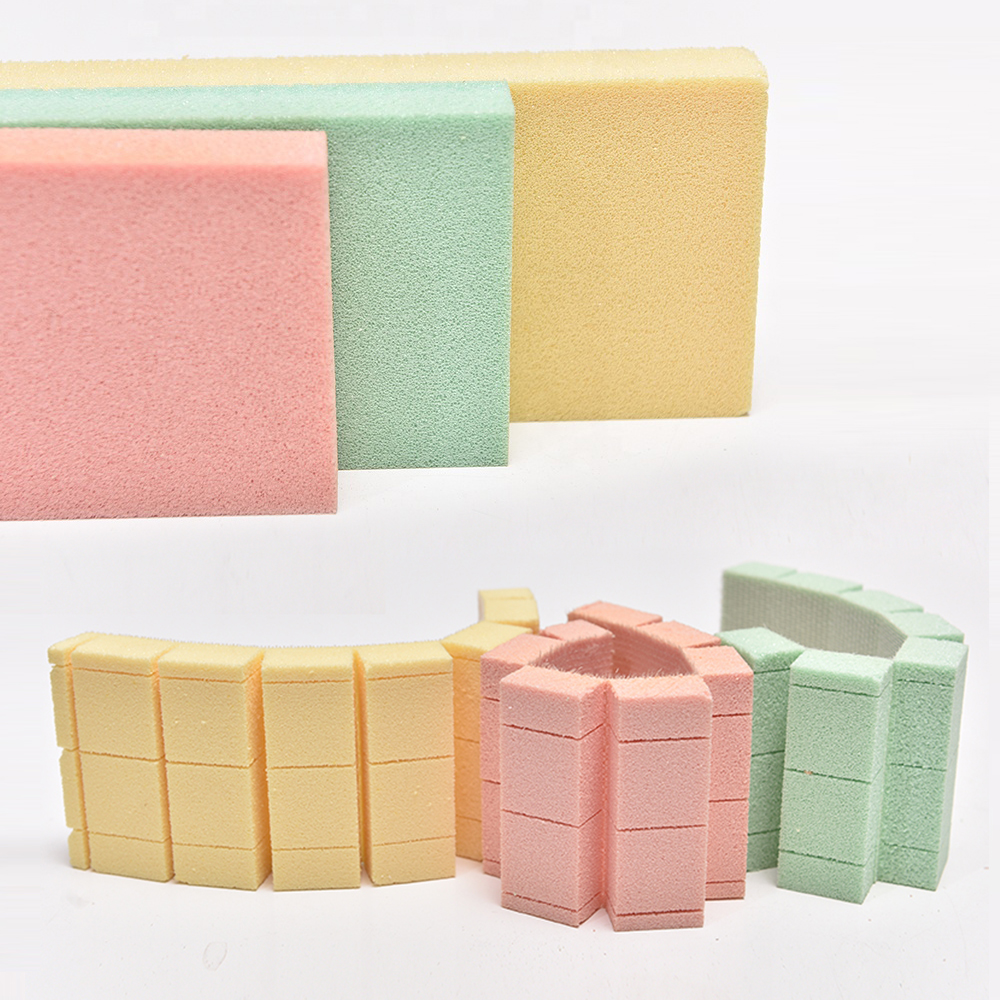
- Manufacturing process
- Final panel dimensions
- Required safety factor
- Total composite weight
- Material cost
The correct selection process is therefore:
Application → Load Case → Structural Requirement → Core Thickness → Density → Manufacturing Process → Testing → Procurement Specification
This article explains how to apply this process to marine structures, wind turbine components, transportation panels and other structural composite applications.
1. What Does PVC Foam Core Density Actually Mean?
PVC Foam Core density is normally expressed in:
kg/m³
For example:
- 60 kg/m³
- 80 kg/m³
- 100 kg/m³
- 130 kg/m³
- 150 kg/m³
- 200 kg/m³
Density represents the mass of material contained within a given volume. However, density alone does not completely describe structural performance.
Two PVC Foam Core materials with the same nominal density may perform differently because of differences in:
- PVC formulation
- Cell size
- Cell wall thickness
- Cell orientation
- Cell uniformity
- Foaming process
- Cooling process
- Density distribution
- Surface treatment
- Manufacturing tolerances
Therefore, procurement should never specify only:
“100 kg/m³ PVC Foam Core.”
A better technical specification is:
“100 kg/m³ nominal-density closed-cell PVC Foam Core with specified compressive strength, shear strength, shear modulus, thickness tolerance, density tolerance and surface condition.”
This distinction becomes particularly important for structural composite applications.
2. Typical PVC Foam Core Density Selection Range
The following table provides a practical engineering framework.
These values are selection categories rather than universal material specifications. Actual mechanical properties must be confirmed from the manufacturer’s technical data and project-specific testing.
| PVC Foam Core Density | General Category | Typical Engineering Direction | Typical Applications |
|---|---|---|---|
| 45–60 kg/m³ | Ultra-light / lightweight | Weight reduction | Interior panels, lightweight structures |
| 60–80 kg/m³ | Lightweight structural | Good weight/performance balance | Marine panels, transportation |
| 80–100 kg/m³ | Medium structural | Higher shear and compression | Marine hulls, decks, structural panels |
| 100–130 kg/m³ | Higher structural | Increased load capability | Wind components, structural floors |
| 130–150 kg/m³ | High-density structural | Higher local load resistance | Heavy-duty composite structures |
| 150–200 kg/m³ | Very high density | High compression/shear demand | Industrial and heavily loaded panels |
| 200–300 kg/m³ | Specialized high density | Localized or demanding structures | Inserts, high-load zones, engineering components |
The important point is that density should follow the load requirement.
It should not be selected simply because a higher number looks more impressive on a product datasheet.
3. Density Does Not Equal Panel Strength
This is one of the most important concepts in sandwich construction.
A typical sandwich panel can be represented as:
FRP Skin + PVC Foam Core + FRP Skin
The face sheets primarily resist:
- Tensile stress
- Compressive stress
- Bending stress
The core primarily contributes to:
- Shear resistance
- Face-sheet separation
- Panel stiffness
- Compression support
- Local load distribution
- Buckling resistance
The relationship can be simplified as:
Face Sheet Strength + Core Shear Performance + Bonding Quality + Core Thickness = Sandwich Panel Performance
Therefore, selecting a 200 kg/m³ core does not automatically make a panel twice as strong as a 100 kg/m³ core.
The entire sandwich structure must be considered.
4. Core Thickness Can Be More Important Than Density
For many sandwich structures, increasing core thickness increases the distance between the face sheets.
This significantly increases bending stiffness.
For example, consider two conceptual panels:
Panel A
- PVC Foam Core: 80 kg/m³
- Core thickness: 20 mm
- Fiberglass skins: 2 mm each
Panel B
- PVC Foam Core: 80 kg/m³
- Core thickness: 40 mm
- Fiberglass skins: 2 mm each
Panel B does not have a higher-density core, but the increased core thickness can provide a substantial improvement in bending stiffness because the face sheets are positioned farther apart.
This leads to an important engineering rule:
Before increasing PVC Foam Core density, evaluate whether increasing core thickness can achieve the required stiffness with lower weight.
5. Density vs Thickness Selection Matrix
A simplified engineering decision matrix can be useful during preliminary design.
| Application Requirement | Recommended Direction |
|---|---|
| Minimum weight | Lower density + optimized thickness |
| Moderate structural load | 60–80 kg/m³ |
| General structural sandwich | 80–100 kg/m³ |
| Higher shear demand | 100–130 kg/m³ |
| High local compression | 130–200 kg/m³ |
| Heavy point loading | High-density core or local insert |
| Large panel span | Increase thickness before automatically increasing density |
| Marine hull | Density + thickness + skin laminate must be evaluated together |
| Wind blade structure | Shear performance + fatigue + thickness + bonding |
| Vehicle flooring | Compression + impact + local load resistance |
| Wall/roof panel | Stiffness + insulation + fire/moisture requirements |
This is a preliminary selection matrix, not a substitute for structural calculations.
6. Key Mechanical Parameters for PVC Foam Core
A professional procurement specification should include more than density.
6.1 Density
Density affects:
- Weight
- Compression strength
- Shear strength
- Shear modulus
- Material cost
- Machining behavior
However, density must always be evaluated together with the actual mechanical properties.
6.2 Compressive Strength
Compressive strength describes the resistance of the PVC Foam Core to compression.
It becomes particularly important in:
- Deck panels
- Floors
- Vehicle flooring
- Equipment platforms
- Local load areas
- Areas beneath fasteners
- Areas beneath supports
A low-density core may be perfectly suitable for a large lightweight panel but unsuitable beneath concentrated loads.
6.3 Shear Strength
Shear strength is one of the most important properties in sandwich construction.
When the panel bends, the core experiences shear deformation.
For example:
Top Skin → Compression
PVC Foam Core → Shear
Bottom Skin → Tension
If core shear strength is insufficient, the panel can fail through:
- Core shear
- Core cracking
- Core crushing
- Skin-core debonding
- Excessive deformation
ASTM C273/C273M is specifically used to determine shear properties of sandwich core materials, including shear strength and shear modulus. ASTM identifies these core shear properties as fundamental inputs for sandwich panel design and material specifications.
7. Shear Modulus Is Not the Same as Shear Strength
These two parameters are frequently confused.
Shear Strength
Describes how much shear stress the core can withstand before failure.
Shear Modulus
Describes the stiffness of the core under shear deformation.
A material may have acceptable shear strength but insufficient shear stiffness for a particular panel.
For a long-span sandwich panel, excessive deformation can become a design problem before catastrophic core failure occurs.
Therefore, engineers should request both:
- Core shear strength
- Core shear modulus
rather than only one value.
8. Recommended PVC Foam Core Technical Data Sheet
For B2B procurement, a technical datasheet should ideally include the following.
| Parameter | Recommended Specification |
|---|---|
| Material | PVC Foam Core |
| Structure | Closed-cell foam |
| Nominal Density | kg/m³ |
| Density Tolerance | Project-specific |
| Thickness | mm |
| Thickness Tolerance | mm |
| Sheet Size | Customized |
| Compressive Strength | MPa |
| Compressive Modulus | MPa |
| Shear Strength | MPa |
| Shear Modulus | MPa |
| Tensile Strength | MPa |
| Water Absorption | % |
| Thermal Stability | Project-specific |
| Surface Condition | Smooth / treated / perforated / grooved |
| Resin Compatibility | Epoxy / Polyester / Vinyl Ester |
| Processing | Cutting / CNC / Grooving / Contouring |
| Bonding | Adhesive / Co-cure / Lamination |
| Application | Marine / Wind / Transportation / Construction |
| Test Standard | ASTM / ISO / Customer Standard |
This type of datasheet is much more useful for engineers than a simple product catalog.
9. ASTM Test Standards for PVC Foam Core and Sandwich Structures
Different tests answer different engineering questions.
| Test Standard | Main Property | Engineering Purpose |
|---|---|---|
| ASTM C273/C273M | Core shear properties | Shear strength and shear modulus |
| ASTM C393/C393M | Sandwich core shear | Core shear and core-to-facing behavior |
| ASTM C365/C365M | Flatwise compression | Core compression behavior |
| ASTM D7249/D7249M | Facesheet properties | Sandwich facesheet strength and stiffness |
| ASTM D7250/D7250M | Sandwich stiffness | Flexural and shear stiffness calculations |
| ASTM D1621 | Compression behavior of rigid cellular plastics | General rigid foam compression testing |
| ASTM D1622 | Density of rigid cellular plastics | Density determination |
| ASTM D6772/D6772M | Dimensional stability | Dimensional stability of sandwich core materials |
ASTM’s composite standards list specifically includes C273/C273M, C393/C393M, C365/C365M, D7249/D7249M and D7250/D7250M as relevant sandwich-construction methods.
ASTM C393/C393M can be used to obtain core shear strength, core-to-facing shear strength and sandwich beam stiffness, making it particularly useful when evaluating the complete bonded sandwich rather than bare core material.
ASTM D7249/D7249M focuses on facesheet properties through long-beam flexure and can also generate load-deflection information useful for evaluating sandwich flexural and shear behavior.
Important Procurement Note
A supplier saying:
“Tested according to ASTM”
is not enough.
The buyer should ask:
- Which ASTM standard?
- Which revision?
- Which property was tested?
- What was the test specimen?
- What was the density?
- What was the conditioning environment?
- Was the test performed on bare core or complete sandwich?
- What was the failure mode?
A test standard without the corresponding test result is not a complete engineering qualification.
10. How to Select Density for Marine Applications
Marine composite structures are one of the most important applications for PVC Foam Core.
Typical applications include:
- Boat hulls
- Yacht hulls
- Decks
- Bulkheads
- Cabin structures
- Superstructures
- Interior panels
- Hatches
- Engine-room structures
- Lightweight flooring
Marine engineering normally requires a balance between:
Low Weight + High Stiffness + Water Resistance + Fatigue Resistance + Bonding Reliability
Marine Density Selection Example
Consider a conceptual yacht deck panel.
Required characteristics:
- Large unsupported span
- Repeated foot traffic
- Local point loading
- Moisture exposure
- Low structural weight
- Fiberglass skins
- Vacuum infusion manufacturing
A reasonable preliminary comparison could be:
| Option | Density | Core Thickness | Primary Advantage |
|---|---|---|---|
| A | 60 kg/m³ | 30 mm | Lowest weight |
| B | 80 kg/m³ | 30 mm | Better structural balance |
| C | 100 kg/m³ | 25 mm | Higher compression/shear |
| D | 130 kg/m³ | 20 mm | Higher local load capability |
The procurement team should not automatically select Option D.
Instead, compare:
- Total panel weight
- Required deflection
- Core shear stress
- Core compression
- Local point loading
- Skin thickness
- Bonding
- Cost
- Manufacturing yield
A properly designed 80 kg/m³ or 100 kg/m³ core may outperform a poorly designed high-density panel in weight efficiency.
11. Marine Engineering Case Study: Yacht Deck
Project Concept
A yacht manufacturer is developing a lightweight deck panel.
Initial structure:
Fiberglass Skin / PVC Foam Core / Fiberglass Skin
Design requirements:
- Lightweight construction
- High bending stiffness
- Foot traffic
- Periodic point loads
- Moisture exposure
- Vacuum infusion
Initial Material Candidates
| Property | Option A | Option B | Option C |
|---|---|---|---|
| Density | 60 kg/m³ | 80 kg/m³ | 100 kg/m³ |
| Thickness | 30 mm | 30 mm | 25 mm |
| Weight | Low | Moderate | Higher |
| Compression | Lower | Medium | Higher |
| Shear | Lower | Medium | Higher |
| Cost | Lower | Medium | Higher |
| Recommended Starting Point | △ | ✓ | ✓ |
The engineering team should then fabricate representative sandwich coupons and test the complete structure.
This is important because the final performance depends not only on the core but also on:
- Fiberglass type
- Resin system
- Fiber orientation
- Skin thickness
- Adhesive
- Core preparation
- Vacuum pressure
- Resin infusion
- Cure cycle
- Bonding quality
12. PVC Foam Core Selection for Wind Turbine Applications
Wind turbine blades place very different demands on core materials.
A wind blade can experience:
- Repeated cyclic loading
- Bending
- Torsion
- Shear
- Compression
- Temperature variation
- Long service life
- Manufacturing-induced stresses
Therefore, simply selecting a high-density PVC Foam Core is not enough.
Important properties include:
- Shear strength
- Shear modulus
- Compression strength
- Compression modulus
- Fatigue behavior
- Resin compatibility
- Bonding performance
- Dimensional stability
- Density consistency
- Thickness consistency
For wind applications, fatigue performance and manufacturing consistency can be as important as static strength.
13. Wind Turbine Engineering Case Study
Consider a simplified wind blade spar or sandwich section.
Candidate Materials
| Candidate | Density | Core Thickness | Main Advantage |
|---|---|---|---|
| A | 60 kg/m³ | 30 mm | Weight reduction |
| B | 80 kg/m³ | 30 mm | Balanced performance |
| C | 100 kg/m³ | 25 mm | Higher structural capability |
| D | 130 kg/m³ | 20 mm | High shear/compression capability |
The first engineering question should not be:
Which one has the highest density?
The correct question is:
Which configuration meets the required fatigue, shear, compression, stiffness and manufacturing requirements at the lowest acceptable structural weight?
For a wind turbine component, the supplier should provide:
- Density
- Thickness
- Shear strength
- Shear modulus
- Compression strength
- Compression modulus
- Density tolerance
- Thickness tolerance
- Resin compatibility
- Surface treatment
- Batch consistency
- Processing recommendations
14. Transportation and Industrial Composite Applications
PVC Foam Core is also suitable for lightweight:
- Railway panels
- Automotive panels
- Bus structures
- Truck bodies
- Vehicle floors
- Industrial enclosures
- Equipment covers
- Lightweight partitions
- Composite doors
Transportation applications frequently combine:
Low Weight + Stiffness + Impact Resistance + Compression Resistance + Manufacturing Efficiency
For flooring applications, compression becomes especially important.
For wall panels, bending stiffness may dominate.
For doors, local compression and fastener zones may become critical.
Therefore, the correct density can change even when the same PVC Foam Core product is used.
15. Local Loads Require Special Attention
A major mistake in sandwich panel design is selecting a core based only on distributed load.
Imagine a panel supporting:
- A person’s foot
- A machine leg
- A seat mounting point
- A bolt
- A hinge
- A bracket
The actual load may be concentrated over a very small area.
This can cause:
- Core crushing
- Skin indentation
- Delamination
- Fastener pull-through
- Local buckling
In these areas, increasing overall core density may not be the most efficient solution.
Instead, engineers can consider:
- Local high-density PVC Foam Core
- Reinforcement inserts
- Solid laminate zones
- High-density core blocks
- Plywood/composite inserts
- Aluminum inserts
- Local skin reinforcement
This is usually more weight-efficient than manufacturing the entire panel from very high-density core.
16. Density Zoning in Composite Structures
Advanced sandwich structures often use different core densities in different areas.
For example:
Main panel
80 kg/m³ PVC Foam Core
High-load region
130 kg/m³ PVC Foam Core
Fastener zone
150–200 kg/m³ insert
Edge region
Higher-density reinforcement
This approach allows engineers to place material where it is actually needed.
It can reduce:
- Total weight
- Material cost
- Unnecessary structural mass
while maintaining:
- Local load resistance
- Fastener performance
- Panel stiffness
- Structural reliability
17. Vacuum Infusion Changes the Selection Process
PVC Foam Core used for vacuum infusion should not be selected solely by density.
The manufacturing process must also be considered.
A typical process is:
Core Cutting → Surface Preparation → Dry Fiber Layup → Core Placement → Vacuum Bagging → Resin Infusion → Cure → Demolding
Important factors include:
- Resin flow
- Core permeability
- Grooving
- Scoring
- Perforation
- Resin channels
- Surface treatment
- Resin compatibility
- Vacuum stability
For complex components, a lower-density core with optimized resin-flow treatment may provide better manufacturing efficiency than a high-density core that is difficult to impregnate.
18. Core Machining and Surface Treatment
PVC Foam Core may require:
- CNC cutting
- Contour cutting
- Grooving
- Scoring
- Perforation
- Edge machining
- Chamfering
- Surface treatment
The buyer should specify these requirements before ordering.
For example:
80 kg/m³ PVC Foam Core, 30 mm thickness, CNC contour cut, resin-flow grooves, vacuum infusion grade, customized dimensions.
This is much more useful than:
PVC Foam Core 80 kg/m³.
19. Density Tolerance Matters
Nominal density is not enough.
Consider two suppliers:
Supplier A
Nominal density: 80 kg/m³
Actual batch:
78–82 kg/m³
Supplier B
Nominal density: 80 kg/m³
Actual batch:
68–92 kg/m³
Both may advertise:
80 kg/m³ PVC Foam Core.
But their manufacturing consistency is completely different.
Density uniformity influences:
- Weight
- Mechanical properties
- Machining
- Resin uptake
- Panel thickness
- Structural consistency
For demanding projects, buyers should request:
- Nominal density
- Density tolerance
- Batch test data
- Sampling method
- Inspection frequency
20. Thickness Tolerance Is Equally Important
Suppose the design requires:
30 mm PVC Foam Core
The actual material could vary significantly if thickness tolerance is poorly controlled.
Thickness affects:
- Panel geometry
- Overall stiffness
- Resin consumption
- Skin separation
- Dimensional accuracy
- Assembly
- CNC machining
For large composite panels, thickness uniformity can directly influence final panel flatness.
Therefore, a professional purchase specification should include both:
Density Tolerance + Thickness Tolerance
21. A Practical Density Selection Algorithm
A simple engineering workflow can be used.
Step 1 — Define Application
Is the core being used for:
- Marine?
- Wind?
- Transportation?
- Construction?
- Industrial equipment?
Step 2 — Define Load Type
Determine whether the panel experiences:
- Bending
- Shear
- Compression
- Point loading
- Impact
- Fatigue
- Torsion
Step 3 — Define Environmental Conditions
Consider:
- Water
- Humidity
- Temperature
- Chemicals
- UV exposure
- Freeze-thaw
- Marine environment
Step 4 — Select Preliminary Thickness
Evaluate whether increasing thickness can improve stiffness more efficiently than increasing density.
Step 5 — Select Density
Use the lowest practical density that meets:
- Shear
- Compression
- Stiffness
- Fatigue
- Local load requirements
Step 6 — Verify Manufacturing
Check:
- Vacuum infusion
- Adhesive bonding
- CNC machining
- Resin compatibility
- Surface preparation
Step 7 — Test the Complete Sandwich
Do not qualify only the bare core when the final application depends on the complete sandwich.
Step 8 — Freeze the Procurement Specification
Specify:
- Material
- Density
- Thickness
- Tolerance
- Size
- Mechanical properties
- Test methods
- Surface
- Processing
- Packaging
- Documentation
22. Procurement Decision Matrix
For an overseas buyer, the following matrix can be used to compare suppliers.
| Evaluation Item | Weight in Decision | Supplier A | Supplier B | Supplier C |
|---|---|---|---|---|
| Density consistency | High | |||
| Thickness tolerance | High | |||
| Compression strength | High | |||
| Shear strength | Very High | |||
| Shear modulus | Very High | |||
| Water resistance | Medium/High | |||
| Resin compatibility | High | |||
| Surface quality | Medium | |||
| CNC processing | Medium | |||
| Custom size | High | |||
| Custom density | High | |||
| Technical documentation | High | |||
| Sample support | High | |||
| Batch traceability | High | |||
| Export packaging | Medium | |||
| Production capacity | High | |||
| Lead time | Medium/High | |||
| Total landed cost | High |
The cheapest supplier is not necessarily the lowest-cost supplier.
A supplier with inconsistent density may create:
- More rejects
- More machining waste
- More resin consumption
- More bonding problems
- More production downtime
- More structural testing
- More warranty risk
Therefore:
Procurement cost should be evaluated as total cost of ownership, not only price per cubic meter.
23. What Should Buyers Ask a PVC Foam Core Manufacturer?
Before placing a production order, ask the manufacturer for the following.
Material Information
- What is the nominal density?
- What is the density tolerance?
- What PVC formulation is used?
- Is the core closed-cell?
- What is the typical cell structure?
- Is density uniform throughout the sheet?
Mechanical Data
- What is the compressive strength?
- What is the compressive modulus?
- What is the shear strength?
- What is the shear modulus?
- What is the tensile strength?
- What is the water absorption?
Manufacturing Information
- What thicknesses are available?
- What thickness tolerances can be controlled?
- What sheet sizes are available?
- Can the core be CNC machined?
- Can grooves or perforations be added?
- Can contour cutting be customized?
Composite Compatibility
- Is it compatible with epoxy?
- Is it compatible with polyester?
- Is it compatible with vinyl ester?
- Is it suitable for vacuum infusion?
- Is surface treatment available?
- Can resin-flow channels be added?
Quality Control
- What test standards are used?
- Are batch test reports available?
- Is density tested for every batch?
- Is thickness inspected?
- Is production traceability available?
- Can samples be provided before mass production?
24. Red Flags When Comparing Suppliers
Procurement teams should be cautious when a supplier provides only marketing statements such as:
High Strength
Lightweight
Marine Grade
Premium PVC Foam Core
High Density
These descriptions are not sufficient for engineering approval.
A professional supplier should be able to provide measurable parameters.
For example:
Weak specification:
High-strength 80 kg/m³ PVC Foam Core.
Better specification:
80 kg/m³ nominal-density PVC Foam Core, 30 mm thickness, specified compression and shear properties, controlled density and thickness tolerance, suitable for vacuum infusion and fiberglass composite manufacturing.
The second specification gives an engineering team something that can actually be evaluated.
25. Real-World Engineering Scenario: Why the Highest Density May Lose
Consider a marine panel where three materials are available.
| Parameter | Material A | Material B | Material C |
|---|---|---|---|
| Density | 60 kg/m³ | 80 kg/m³ | 130 kg/m³ |
| Thickness | 40 mm | 30 mm | 20 mm |
| Weight | Very Low | Low | High |
| Shear Performance | Low | Medium | High |
| Stiffness Potential | High | High | Medium |
| Local Compression | Low | Medium | High |
| Cost | Low | Medium | High |
Material C has the highest density.
However, it has the thinnest core.
Material A has the lowest density but the thickest core.
Material B may provide the best overall compromise.
This demonstrates why:
Density × Thickness × Skin Design
must be evaluated as a system.
26. Recommended Density Strategy by Application
| Application | Starting Density Range | Main Selection Criteria |
|---|---|---|
| Yacht Interior | 45–80 kg/m³ | Weight, dimensional stability |
| Yacht Deck | 80–130 kg/m³ | Compression, shear, stiffness |
| Boat Hull | 60–100 kg/m³ | Weight, shear, fatigue, bonding |
| Marine Bulkhead | 60–100 kg/m³ | Stiffness, weight, moisture |
| Wind Blade | 80–150+ kg/m³ | Shear, fatigue, compression |
| Vehicle Interior | 60–100 kg/m³ | Weight, stiffness, processing |
| Vehicle Floor | 100–200 kg/m³ | Compression, impact, local load |
| Industrial Panel | 80–150 kg/m³ | Structural load, durability |
| Heavy-Duty Floor | 130–200+ kg/m³ | Compression and point loading |
| Lightweight Building Panel | 60–100 kg/m³ | Weight, stiffness, insulation |
These are preliminary ranges for material selection discussions. Final density should be confirmed through structural analysis and testing.
27. The Most Important Procurement Principle
For most projects, the buyer should not ask:
“What is your strongest PVC Foam Core?”
Instead, ask:
“Which PVC Foam Core density and thickness combination gives the required structural performance at the lowest acceptable weight and total cost?”
That question changes the entire procurement process.
It encourages the manufacturer to provide:
- Engineering support
- Multiple density options
- Thickness recommendations
- Test data
- Sample panels
- Custom machining
- Application-specific solutions
This is particularly important for marine and wind-energy projects where weight has a direct impact on overall system performance.
28. Recommended Specification Template
For an RFQ, the following format is more effective than a generic product name:
PVC Foam Core RFQ Specification
Material: PVC Foam Core
Application: Marine / Wind / Transportation / Structural Composite
Density: ___ kg/m³
Density Tolerance: ___
Thickness: ___ mm
Thickness Tolerance: ___
Sheet Size: ___ mm × ___ mm
Compression Strength: ≥ ___ MPa
Compression Modulus: ≥ ___ MPa
Shear Strength: ≥ ___ MPa
Shear Modulus: ≥ ___ MPa
Water Absorption: ≤ ___ %
Resin System: Epoxy / Polyester / Vinyl Ester
Manufacturing Process: Hand Lay-Up / Vacuum Infusion / RTM / Bonding
Surface: Standard / Treated / Grooved / Perforated
Machining: CNC / Contour / Custom
Test Standard: ASTM / ISO / Customer Standard
Inspection: Pre-shipment / Third-party / Customer inspection
Packaging: Export seaworthy packaging
Documentation: Technical Data Sheet + Test Report + Packing List + Certificate of Conformity
This structure makes supplier comparison much easier.
29. Final Engineering Decision Tree
A practical PVC Foam Core selection process can be summarized as follows:
If weight is the primary concern:
Start with:
Lower Density + Greater Thickness
Then verify shear and compression requirements.
If shear loading is high:
Prioritize:
Shear Strength + Shear Modulus
Do not select by density alone.
If point loading is high:
Consider:
Higher Density Local Zones + Inserts
rather than increasing density across the entire panel.
If the panel span is large:
Consider:
Increasing Core Thickness
before automatically increasing density.
If the structure is exposed to water:
Evaluate:
Closed-Cell Structure + Water Absorption + Edge Sealing + Bonding
If vacuum infusion is used:
Evaluate:
Resin Flow + Grooving + Perforation + Surface Treatment + Resin Compatibility
If fatigue is critical:
Evaluate:
Shear Fatigue + Compression Fatigue + Bonding + Manufacturing Consistency
If procurement risk is high:
Prioritize:
Batch Consistency + Test Documentation + Traceability + Sample Validation + Supplier Manufacturing Capability
Conclusion
Selecting the right PVC Foam Core density is not a simple matter of choosing the highest available kg/m³ value.
The correct engineering approach is to evaluate the complete sandwich structure:
PVC Foam Core Density → Core Thickness → Shear Performance → Compression Performance → Face Sheets → Bonding → Environmental Conditions → Manufacturing Process → Final Structural Requirement
For marine structures, the priority is often a balance between weight, stiffness, shear performance and moisture resistance.
For wind turbine components, shear performance, fatigue resistance, dimensional consistency and bonding reliability become increasingly important.
For transportation and industrial panels, compression, impact, point loading and weight efficiency may dominate the material selection process.
For procurement teams, the most reliable strategy is to move from a product-based specification to a performance-based specification.
Instead of buying:
“80 kg/m³ PVC Foam Core”
the buyer should define:
Density + Thickness + Mechanical Properties + Tolerances + Processing Requirements + Test Standards + Application
This approach makes supplier comparison more objective and reduces the risk of selecting a material that looks attractive on paper but fails to deliver consistent performance in the finished composite structure.
The best PVC Foam Core is therefore not necessarily the lightest, strongest or cheapest material.
It is the material that provides the required structural performance, manufacturing reliability and service-life performance at the most efficient total system weight and cost.
For manufacturers supplying customized PVC Foam Core, the ability to provide different densities, thicknesses, sheet sizes, surface treatments, CNC machining, grooves and application-specific technical data can become a major advantage in international B2B procurement.
