
ent material architectures.
PVC Foam Core
PVC Foam Core is a rigid polymeric cellular material, commonly manufactured as a closed-cell structural foam.
Typical characteristics include:
- Low density
- Closed-cell structure
- Good moisture resistance
- Good dimensional stability
- Good shear performance
- Good compression performance
- Good fatigue resistance
- Good compatibility with composite manufacturing
- Easy CNC machining
- Good suitability for vacuum infusion
Typical applications include:
- Marine
- Wind energy
- Transportation
- Industrial composites
- Structural panels
PET Foam Core
PET Foam Core is a thermoplastic structural foam based on polyethylene terephthalate.
Important characteristics include:
- Recyclability potential
- Good specific mechanical properties
- Good temperature resistance relative to many low-density foams
- Good fatigue behavior
- Good chemical stability
- Compatibility with many composite manufacturing processes
PET has become increasingly important in lightweight composite structures where sustainability and recycled-content strategies are relevant.
Balsa Wood Core
Balsa is a natural cellular wood material.
Its cellular structure provides:
- High stiffness-to-weight potential
- Good compressive performance
- Good shear performance
- High structural efficiency
- Natural renewable-material characteristics
However, because balsa is a natural material, its properties can be more dependent on:
- Grain direction
- Wood density
- Moisture
- Growth characteristics
- Piece selection
- Manufacturing quality
- Core assembly
Balsa remains particularly relevant to marine and wind-energy composite structures.
2. Basic Material Comparison
A useful preliminary comparison is shown below.
| Property | PVC Foam Core | PET Foam Core | Balsa Wood Core |
|---|---|---|---|
| Material Type | Synthetic polymer foam | Thermoplastic polymer foam | Natural wood |
| Cell Structure | Closed-cell | Closed-cell | Natural cellular structure |
| Density Range | Low to high | Low to medium/high | Broad range |
| Moisture Resistance | Very Good | Very Good | Requires greater moisture control |
| Density Uniformity | High when well manufactured | High when well manufactured | More variable |
| Dimensional Stability | Very Good | Very Good | Depends on moisture/environment |
| Shear Performance | Good to Very Good | Good to Very Good | Very Good |
| Compression Performance | Good | Good to Very Good | Very Good |
| Fatigue Potential | Very Good | Very Good | Application dependent |
| CNC Machining | Excellent | Excellent | Good |
| Vacuum Infusion | Excellent | Excellent | Excellent with proper preparation |
| Resin Compatibility | Broad | Broad | Broad with proper sealing |
| Sustainability Consideration | Depends on formulation/recycling | Strong potential advantage | Renewable material |
| Manufacturing Consistency | High | High | More variable |
| Typical Cost Position | Medium | Medium | Medium to High |
| Typical Applications | Marine, wind, industrial | Marine, transport, industrial | Marine, wind |
This table should be treated as a preliminary engineering comparison rather than a universal ranking.
3. Density Comparison
Density is usually the first parameter considered by engineers.
Typical commercial structural-core categories may look like this:
| Core Material | Example Density Categories |
|---|---|
| PVC Foam Core | 45, 60, 80, 100, 130, 150, 200 kg/m³ |
| PET Foam Core | 60, 80, 100, 130, 150, 200 kg/m³ |
| Balsa | Approximately 100–300+ kg/m³ depending on grade and construction |
However, density cannot be compared independently.
For example:
80 kg/m³ PVC
cannot simply be declared better or worse than:
100 kg/m³ PET
or:
150 kg/m³ Balsa
because the actual engineering comparison must include:
- Shear strength
- Shear modulus
- Compression strength
- Compression modulus
- Thickness
- Moisture condition
- Temperature
- Facesheet system
- Bonding
- Loading direction
4. Why Density Alone Is a Poor Selection Criterion
Consider three conceptual cores:
| Material | Density | Core Thickness | Intended Objective |
|---|---|---|---|
| PVC | 80 kg/m³ | 30 mm | Lightweight structural panel |
| PET | 100 kg/m³ | 30 mm | Structural and sustainability balance |
| Balsa | 150 kg/m³ | 20 mm | High local stiffness/compression |
The balsa core has the highest density.
But it may not produce the highest total panel weight if its required thickness is lower.
Conversely, a lower-density PVC core can provide a better overall weight solution when its thickness is increased.
Therefore, engineers should compare:
Mass per Unit Area + Structural Performance
rather than simply:
Density
5. The Most Important Mechanical Properties
When comparing PVC, PET and Balsa, at least six mechanical parameters should be considered.
5.1 Density
Controls:
- Weight
- Material consumption
- Cost
- General strength level
5.2 Compressive Strength
Important for:
- Floors
- Decks
- Supports
- Point loads
- Inserts
- Fastener areas
5.3 Compressive Modulus
Important when deformation under load must be controlled.
5.4 Shear Strength
Critical for sandwich panel structural capacity.
5.5 Shear Modulus
Controls the resistance of the core to shear deformation.
5.6 Fatigue Performance
Important for:
- Boats
- Wind turbine blades
- Vehicles
- Transportation structures
- Repeatedly loaded panels
6. Typical Engineering Comparison Matrix
The following is a useful preliminary comparison.
| Parameter | PVC Foam | PET Foam | Balsa |
|---|---|---|---|
| Low Weight | Excellent | Excellent | Good |
| Shear Strength | Good–Excellent | Good–Excellent | Excellent |
| Shear Modulus | Good | Good–Very Good | Very Good–Excellent |
| Compression | Good–Excellent | Good–Excellent | Excellent |
| Moisture Resistance | Excellent | Excellent | Moderate–Good |
| Dimensional Stability | Excellent | Excellent | Moderate |
| Fatigue | Very Good | Very Good | Good–Very Good |
| Processing | Excellent | Excellent | Good |
| CNC Machining | Excellent | Excellent | Good |
| Density Consistency | Excellent | Excellent | Moderate |
| Sustainability | Moderate | Very Good potential | Excellent renewable source |
| Production Uniformity | Excellent | Excellent | Moderate |
| Design Flexibility | Excellent | Excellent | Good |
The exact ranking changes according to the specific product grade.
7. Shear Performance: One of the Most Important Differences
In a sandwich structure, the core carries a significant portion of the transverse shear load.
A simplified structural arrangement is:
Top Skin → Compression
Core → Shear
Bottom Skin → Tension
For this reason, core shear strength and shear modulus are critical.
ASTM C273/C273M is commonly used for determining shear properties of sandwich core materials, including shear strength parallel to the sandwich plane and the associated shear modulus.
ASTM C393/C393M is used for sandwich construction flexure and can provide information on core shear, core-to-facing shear behavior and sandwich beam stiffness.
The important point for procurement is that C273 and C393 do not represent exactly the same testing configuration.
A buyer should therefore avoid comparing two datasheet values without checking the test method.
8. Why ASTM Test Method Matters
Imagine two suppliers provide the following:
Supplier A
Shear Strength:
0.85 MPa
Test:
ASTM C273
Supplier B
Shear Strength:
1.05 MPa
Test:
ASTM C393
It would be incorrect to immediately conclude:
Supplier B is stronger.
The test configuration, sandwich construction, face sheets, adhesive and specimen conditions can affect the measured result.
ASTM C393 specifically recognizes factors such as:
- Facing material
- Core material
- Adhesive
- Core density
- Core geometry
- Adhesive thickness
- Specimen preparation
- Conditioning
- Environment
- Loading procedure
- Adhesive void content
Therefore:
Test Method + Test Condition + Material Grade + Test Result
must be considered together.
9. Important ASTM Test Standards
For professional material qualification, the following standards are particularly relevant.
| Standard | Main Evaluation |
|---|---|
| ASTM C271 | Density of sandwich core materials |
| ASTM C272 | Water absorption of sandwich core materials |
| ASTM C273/C273M | Shear properties of sandwich core |
| ASTM C365/C365M | Flatwise compression |
| ASTM C393/C393M | Sandwich core shear/flexural behavior |
| ASTM C297/C297M | Flatwise tensile strength |
| ASTM C364/C364M | Edgewise compressive strength |
| ASTM D1621 | Compression of rigid cellular plastics |
| ASTM D1622 | Density of rigid cellular plastics |
| ASTM D6772/D6772M | Dimensional stability |
| ASTM D7249/D7249M | Facesheet properties |
| ASTM D7250/D7250M | Sandwich flexural and shear stiffness |
ASTM’s composite standards specifically identify C273/C273M, C365/C365M, C393/C393M, D7249/D7249M and D7250/D7250M as relevant standards for sandwich construction.
For international procurement, the buyer should specify the required standard revision rather than simply writing “ASTM tested.”
10. PVC Foam Core: Engineering Advantages
PVC Foam Core is particularly attractive when the project requires a combination of:
Low Weight + Moisture Resistance + Consistency + Processability
Its major advantages include:
10.1 Closed-Cell Structure
A properly manufactured closed-cell structure provides good resistance to moisture penetration.
However, closed-cell does not mean that a finished panel is completely waterproof.
Water can enter through:
- Cut edges
- Joints
- Cracks
- Machined grooves
- Fastener penetrations
- Damaged skins
- Poor bonding interfaces
Therefore, panel construction remains important.
10.2 Consistent Manufacturing
Industrial PVC Foam Core can be manufactured with controlled:
- Density
- Thickness
- Cell structure
- Surface condition
- Dimensions
This is particularly valuable for automated composite production.
10.3 Easy Processing
PVC Foam Core can be:
- Cut
- CNC machined
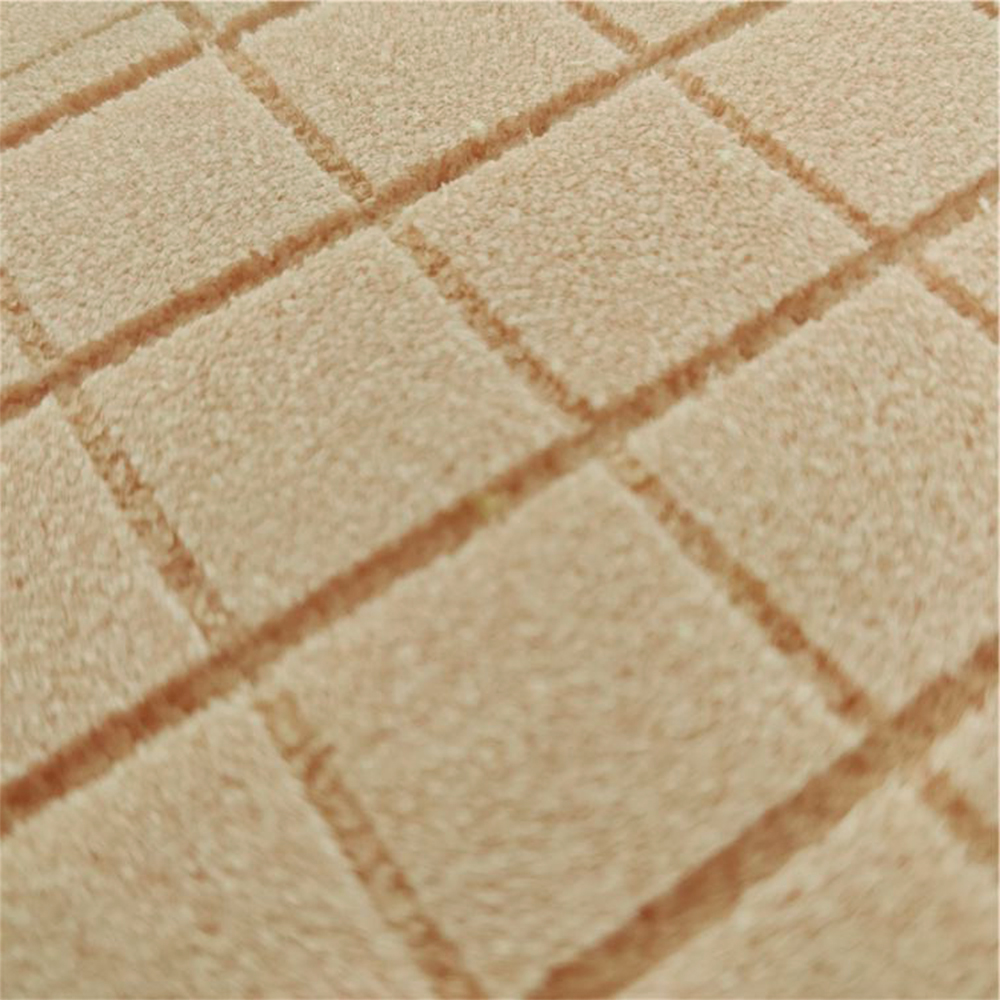
- Grooved
- Contoured
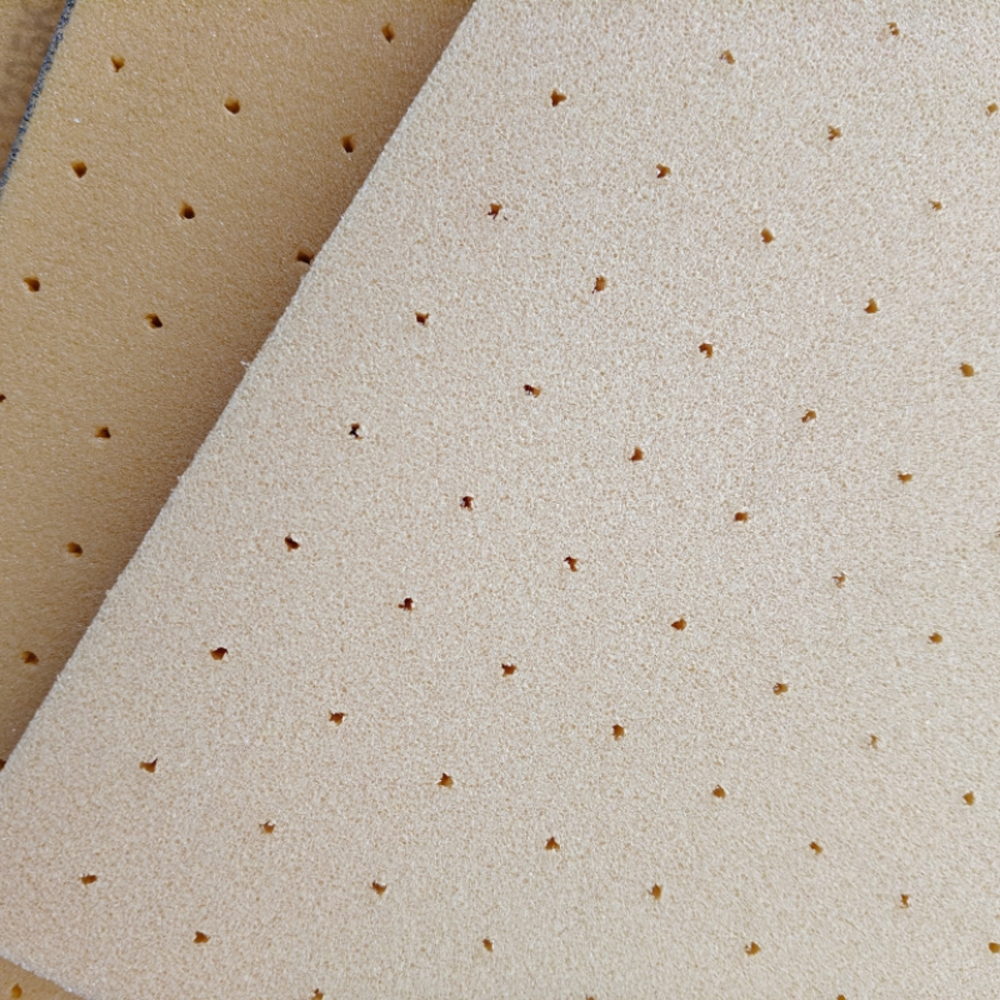
- Perforated
- Scored
- Chamfered
This makes it suitable for complex composite components.
11. PET Foam Core: Engineering Advantages
PET Foam Core has become increasingly relevant in composite manufacturing because it combines structural performance with thermoplastic material characteristics.
Important advantages can include:
- Recyclability potential
- Good dimensional stability
- Good fatigue performance
- Good chemical resistance
- Good processing compatibility
- Good weight-to-performance ratio
PET is particularly attractive when the buyer’s procurement criteria include:
Structural Performance + Environmental Strategy
However, buyers should verify whether the supplier’s sustainability claim refers to:
- Recyclable polymer
- Recycled content
- Recyclable production scrap
- End-of-life recyclability
- Certified recycled material
These are different claims.
12. Balsa Core: Engineering Advantages
Balsa has a long history in sandwich composite structures.
Its major advantage is its natural cellular architecture.
It can provide excellent:
- Compression resistance
- Shear performance
- Specific stiffness
- Local load resistance
This makes it attractive in applications such as:
- Marine hulls
- Yacht decks
- Wind turbine components
- Large structural panels
However, procurement teams must pay greater attention to:
- Moisture content
- Wood density
- Grain orientation
- Core assembly
- Piece quality
- Voids
- Bonding
- Sealing
Balsa should therefore be evaluated as a natural structural material rather than treated as a direct drop-in equivalent to synthetic foam.
13. Marine Engineering Case Study
Consider a yacht deck.
The structure requires:
- Low weight
- High bending stiffness
- Foot traffic
- Local point loading
- Moisture resistance
- Vacuum infusion
- Long-term fatigue resistance
Three candidates are evaluated.
| Parameter | PVC Foam | PET Foam | Balsa |
|---|---|---|---|
| Density | 80 kg/m³ | 100 kg/m³ | 150 kg/m³ |
| Core Thickness | 30 mm | 30 mm | 20 mm |
| Moisture Risk | Low | Low | Higher |
| Point Load Resistance | Medium | Medium/High | High |
| Machining | Excellent | Excellent | Good |
| Manufacturing Consistency | High | High | Medium |
| Weight Efficiency | High | High | Medium/High |
| Procurement Complexity | Low | Low/Medium | Medium/High |
Engineering Decision
If the deck has widespread distributed loads and moisture exposure is critical:
PVC Foam Core may be the preferred starting point.
If sustainability is a major procurement requirement:
PET Foam Core may become more attractive.
If local compression and high structural efficiency dominate:
Balsa may be evaluated seriously.
The correct choice depends on the complete sandwich design.
14. Marine Hull Case Study
Consider a composite yacht hull.
Requirements:
- Large surface area
- Repeated wave loading
- Impact exposure
- Low structural weight
- Moisture resistance
- Fatigue resistance
The initial selection might be:
Option A
80 kg/m³ PVC Foam Core
Option B
100 kg/m³ PET Foam Core
Option C
150 kg/m³ Balsa
The procurement team should not compare only the material prices.
Instead, compare:
| Evaluation | PVC | PET | Balsa |
|---|---|---|---|
| Core Cost | |||
| Resin Consumption | |||
| Panel Weight | |||
| Machining Cost | |||
| Installation Labor | |||
| Moisture Protection | |||
| Repair Complexity | |||
| Scrap Rate | |||
| Testing Cost | |||
| Total Cost |
This is a total installed cost comparison.
15. Wind Turbine Case Study
Wind turbine components place strong demands on core materials.
The core must withstand:
- Cyclic shear
- Compression
- Bending-induced deformation
- Temperature changes
- Long-term fatigue
- Resin infusion
- Bonding stresses
A simplified comparison could be:
| Requirement | PVC | PET | Balsa |
|---|---|---|---|
| Low Density | Excellent | Excellent | Good |
| Shear Resistance | Very Good | Very Good | Excellent |
| Fatigue | Very Good | Very Good | Good–Very Good |
| Manufacturing Consistency | Excellent | Excellent | Medium |
| Large-Scale Processing | Excellent | Excellent | Good |
| Moisture Sensitivity | Low | Low | Higher |
| CNC Processing | Excellent | Excellent | Good |
For a large production program, consistency can become a major procurement advantage.
A material that performs slightly better in laboratory testing may not be the better production material if it creates greater variation in:
- Density
- Thickness
- Resin uptake
- Bonding
- Machining
- Assembly
16. Real Engineering Evidence: Shear Behavior
Published experimental work on lightweight PVC cores has demonstrated that measured shear properties can vary depending on the testing method and loading configuration.
Research using ASTM C273 and comparison with ASTM C393 has shown that the measured shear modulus and strength can differ depending on the test approach and specimen configuration.
This reinforces a critical procurement rule:
Never compare two core materials using isolated numbers taken from different test methods.
For example:
PVC: 0.8 MPa
and
PET: 1.0 MPa
do not automatically mean PET is 25% stronger in the actual structure.
The test method, density, direction, conditioning and specimen construction must first be normalized.
17. Cross-Grooved PVC Foam: An Important Manufacturing Example
Core machining can significantly influence composite performance.
In one experimental study involving cross-grooved PVC foam sandwich panels, the grooved configuration was evaluated against plain PVC foam.
The study used vacuum-assisted composite manufacturing and investigated bending, compression and shear behavior.
The results demonstrated that core grooving can affect:
- Resin distribution
- Core shear behavior
- Bending performance
- Local compression
This illustrates an important engineering concept:
Core Material + Core Geometry + Manufacturing Process
can be more important than the nominal core material name alone.
Therefore, a buyer ordering PVC Foam Core for vacuum infusion should specify whether the core is:
- Plain
- Grooved
- Perforated
- Scored
- Contoured
rather than simply specifying density.
18. Resin Uptake Can Change the Cost Calculation
This is particularly important when comparing foam and balsa.
The nominal core price does not necessarily represent the actual material cost of a finished sandwich panel.
Suppose:
PVC Core
Lower resin uptake
versus
Balsa
Higher resin absorption due to its cellular wood structure and surface condition.
The balsa panel may require additional resin.
That means the real calculation should be:
Core Cost + Resin Cost + Processing Cost + Labor + Scrap + Quality Control
rather than:
Core Price Only
19. Procurement Example: Price Per Cubic Meter
Assume a buyer receives:
| Material | Core Price | Density | Resin Uptake | Processing |
|---|---|---|---|---|
| PVC | $X/m³ | 80 kg/m³ | Low/Medium | Easy |
| PET | $Y/m³ | 100 kg/m³ | Low/Medium | Easy |
| Balsa | $Z/m³ | 150 kg/m³ | Medium/High | Moderate |
If Balsa has the lowest quoted price per cubic meter, it does not automatically have the lowest finished-panel cost.
The buyer should calculate:
Finished Panel Cost
Core + Resin + Face Sheet + Adhesive + Labor + Machining + Waste + Inspection
This approach is especially important for large production orders.
20. Moisture and Water Resistance
This is one of the strongest differentiators between synthetic foams and natural wood.
PVC Foam Core
Generally:
- Closed-cell
- Low moisture uptake
- Good dimensional stability
PET Foam Core
Generally:
- Closed-cell
- Good moisture resistance
- Good dimensional stability
Balsa
Requires greater attention to:
- Moisture content
- Sealing
- Storage
- Lamination
- Edge protection
- Manufacturing environment
For marine procurement, buyers should therefore include:
- Water absorption testing
- Moisture conditioning
- Edge protection requirements
- Storage requirements
- Packaging requirements
21. Environmental and Sustainability Comparison
Environmental performance is becoming increasingly important in composite procurement.
| Factor | PVC | PET | Balsa |
|---|---|---|---|
| Synthetic Polymer | Yes | Yes | No |
| Recyclability Potential | Depends on system | Strong potential | Natural material |
| Renewable Raw Material | No | No | Yes |
| Recycled Content Potential | Product dependent | Strong | Natural |
| Manufacturing Consistency | High | High | Medium |
| Sustainability Marketing Potential | Medium | High | High |
However, sustainability should be evaluated through the complete product lifecycle.
Important questions include:
- How much recycled content is present?
- Can manufacturing scrap be recycled?
- Can the finished composite be recycled?
- What is the expected service life?
- What is the transportation footprint?
- How much resin is consumed?
- How much material is wasted during CNC cutting?
A “green” raw material does not automatically produce the lowest environmental impact finished structure.
22. Fire Performance Considerations
For building and transportation applications, fire behavior may become a critical selection factor.
The buyer should not assume that:
PVC = Fire Rated
or:
PET = Fire Rated
or:
Balsa = Non-Fire Rated.
Fire performance depends on:
- Core formulation
- Face sheet
- Resin
- Adhesive
- Panel thickness
- Construction
- Surface treatment
- Complete assembly
For projects requiring fire certification, the complete sandwich panel should be evaluated according to the applicable project standard.
This is especially important for:
- Railway
- Marine interiors
- Public transportation
- Buildings
- Hospitals
- Airports
- Industrial facilities
23. Temperature Considerations
Core selection must also consider service temperature.
A procurement specification should identify:
- Minimum service temperature
- Maximum continuous temperature
- Short-term peak temperature
- Resin curing temperature
- Post-cure temperature
- Thermal cycling
The relevant question is not:
“What is the maximum temperature of the foam?”
It is:
“What temperature can the complete sandwich structure withstand while maintaining the required mechanical and bonding performance?”
24. Fatigue Comparison
Static strength is only one part of structural performance.
For marine and wind applications, fatigue can dominate.
Typical cyclic loads include:
Marine
Wave loading → hull flexure → repeated shear
Wind
Blade rotation → cyclic bending → repeated core shear
Transportation
Road vibration → panel deformation → repeated loading
A material with high static shear strength but poor fatigue behavior may not be the best engineering choice.
Therefore, buyers for demanding applications should request:
- Fatigue test data
- Number of cycles
- Stress level
- Loading frequency
- Test temperature
- Conditioning
- Failure criteria
25. Core-to-Skin Bonding
A sandwich structure can fail even when the core itself is strong.
Possible failure modes include:
- Core shear failure
- Core compression
- Skin failure
- Skin-core debonding
- Delamination
- Local buckling
- Core crushing
- Insert failure
This means a high-performance core cannot compensate for poor bonding.
The procurement process should therefore evaluate:
- Surface treatment
- Adhesive compatibility
- Adhesive thickness
- Surface cleanliness
- Bond strength
- Resin compatibility
- Vacuum process
- Cure conditions
26. Machining Comparison
| Machining Requirement | PVC | PET | Balsa |
|---|---|---|---|
| Straight Cutting | Excellent | Excellent | Good |
| CNC Cutting | Excellent | Excellent | Good |
| Contour Cutting | Excellent | Excellent | Good |
| Grooving | Excellent | Excellent | Good |
| Perforation | Excellent | Excellent | Good |
| Complex Geometry | Excellent | Excellent | Good |
| Dust Management | Easy/Moderate | Easy/Moderate | Requires attention |
| Dimensional Consistency | Excellent | Excellent | Medium |
For high-volume automated manufacturing, PVC and PET often provide advantages in dimensional consistency.
27. When PVC Is the Better Choice
PVC Foam Core is often a strong candidate when the project requires:
- Marine durability
- Low moisture absorption
- Consistent density
- Consistent thickness
- CNC machining
- Vacuum infusion
- Good fatigue performance
- Broad density options
- Custom dimensions
- Stable industrial supply
Typical applications:
Boat Hulls + Yacht Decks + Marine Panels + Wind Components + Transportation Panels + Industrial Sandwich Panels
28. When PET Is the Better Choice
PET Foam Core becomes particularly attractive when the project prioritizes:
- Thermoplastic foam characteristics
- Recycled-content strategies
- Sustainability objectives
- Good structural performance
- Lightweight construction
- Industrial production consistency
Typical applications include:
Transportation + Marine + Industrial Composite Panels + Sustainable Composite Structures
The buyer should still confirm the actual grade and performance data.
29. When Balsa Is the Better Choice
Balsa can be attractive when the project requires:
- High specific stiffness
- High compression resistance
- Strong structural performance
- Natural material content
- Proven marine composite technology
- Large structural sandwich components
Typical applications include:
Marine Hulls + Yacht Decks + Wind Energy + Large Composite Structures
However, moisture control and quality consistency deserve greater attention.
30. Supplier Evaluation Matrix
For international procurement, use a weighted evaluation system.
| Criterion | Suggested Weight |
|---|---|
| Mechanical Performance | 20% |
| Density Consistency | 10% |
| Thickness Consistency | 10% |
| Moisture Resistance | 8% |
| Resin Compatibility | 8% |
| Processing Capability | 8% |
| Customization | 8% |
| Quality Documentation | 8% |
| Production Capacity | 7% |
| Lead Time | 5% |
| Price | 8% |
| Total | 100% |
This weighting can be changed according to the project.
For a marine project, moisture resistance and fatigue may receive greater weighting.
For transportation, weight and fire performance may receive greater weighting.
For wind energy, shear, fatigue and manufacturing consistency may dominate.
31. Questions to Ask Each Supplier
Before comparing quotations, ask every supplier to provide the same information.
Material
- Material type
- Grade
- Nominal density
- Density tolerance
- Thickness
- Thickness tolerance
- Sheet dimensions
Mechanical
- Compression strength
- Compression modulus
- Shear strength
- Shear modulus
- Tensile strength
- Fatigue data
Physical
- Water absorption
- Dimensional stability
- Temperature resistance
- Cell structure
Manufacturing
- CNC capability
- Grooving
- Perforation
- Scoring
- Contour cutting
- Custom dimensions
Composite
- Epoxy compatibility
- Polyester compatibility
- Vinyl ester compatibility
- Vacuum infusion compatibility
- Adhesive compatibility
Quality
- Test standards
- Batch reports
- Inspection frequency
- Traceability
- Sample availability
32. Procurement Red Flags
Be careful when a supplier only provides:
“High strength.”
“Marine grade.”
“Lightweight.”
“Eco-friendly.”
“Premium structural core.”
These are marketing descriptions rather than engineering specifications.
A professional technical quotation should provide measurable information.
For example:
Weak
100 kg/m³ PET Foam Core
Better
100 kg/m³ PET Structural Foam Core, 30 mm Thickness, Controlled Density and Thickness Tolerance, ASTM-Tested Compression and Shear Properties, Suitable for Vacuum Infusion
The second specification allows an engineer to evaluate the material.
33. A Practical Material Selection Decision Tree
Choose PVC Foam Core when:
Moisture resistance + dimensional consistency + processing flexibility are major requirements.
↓
Choose PET Foam Core when:
Structural performance + thermoplastic characteristics + sustainability strategy are important.
↓
Choose Balsa when:
Specific structural efficiency + compression/shear performance + established natural-core technology are dominant.
↓
Then evaluate:
Core Thickness → Facesheet → Adhesive → Manufacturing Process → Testing
34. Recommended Engineering Comparison Procedure
For a serious project, do not select the material based only on datasheets.
Use the following process.
Stage 1 — Datasheet Screening
Compare:
- Density
- Compression
- Shear
- Water absorption
- Temperature
- Thickness
- Cost
Stage 2 — Sample Evaluation
Receive representative samples.
Check:
- Density
- Thickness
- Surface
- Cell structure
- Dimensional stability
Stage 3 — Coupon Testing
Test:
- Compression
- Shear
- Tensile
- Water absorption
Stage 4 — Sandwich Coupon
Manufacture the actual:
Skin + Core + Skin
system.
Stage 5 — Structural Testing
Evaluate:
- Flexure
- Shear
- Compression
- Impact
- Fatigue where necessary
Stage 6 — Production Trial
Check:
- Resin consumption
- Vacuum stability
- Bonding
- Machining
- Panel flatness
- Production cycle
Stage 7 — Supplier Qualification
Evaluate:
- Batch consistency
- Capacity
- Traceability
- Technical support
- Packaging
- Delivery
Only after these steps should the material be approved for mass production.
35. Final Comparison
The three materials can be summarized as follows.
| Category | PVC Foam Core | PET Foam Core | Balsa Wood Core |
|---|---|---|---|
| Lightweight Structures | ★★★★★ | ★★★★★ | ★★★★ |
| Moisture Resistance | ★★★★★ | ★★★★★ | ★★★ |
| Structural Performance | ★★★★ | ★★★★ | ★★★★★ |
| Density Consistency | ★★★★★ | ★★★★★ | ★★★ |
| Processing | ★★★★★ | ★★★★★ | ★★★★ |
| CNC Machining | ★★★★★ | ★★★★★ | ★★★★ |
| Vacuum Infusion | ★★★★★ | ★★★★★ | ★★★★★ |
| Sustainability Potential | ★★★ | ★★★★★ | ★★★★★ |
| Marine Applications | ★★★★★ | ★★★★ | ★★★★★ |
| Wind Applications | ★★★★★ | ★★★★ | ★★★★★ |
| Transportation | ★★★★★ | ★★★★★ | ★★★ |
| Procurement Flexibility | ★★★★★ | ★★★★★ | ★★★★ |
These ratings are a qualitative engineering framework rather than standardized test results.
Conclusion
PVC Foam Core, PET Foam Core and Balsa Wood Core should not be treated as simple interchangeable products.
Each has a different combination of:
Density + Cell Structure + Shear Performance + Compression Performance + Moisture Behavior + Fatigue + Processing + Manufacturing Consistency
PVC Foam Core is particularly attractive for projects requiring a balanced combination of lightweight construction, moisture resistance, dimensional consistency, machining flexibility and structural performance.
PET Foam Core is increasingly attractive when structural performance needs to be combined with thermoplastic material characteristics and sustainability objectives.
Balsa remains highly relevant where specific structural performance, compression resistance and established marine or wind composite technology are important.
The correct engineering decision should therefore follow this sequence:
Application → Load Case → Environmental Conditions → Core Density → Core Thickness → Mechanical Properties → Skin System → Bonding → Manufacturing Process → Testing → Total Cost
For international procurement, one of the biggest mistakes is comparing materials only by price per cubic meter.
A better approach is to compare:
Cost per Finished Structural Panel
This includes:
- Core material
- Face sheets
- Resin
- Adhesive
- Machining
- Labor
- Scrap
- Testing
- Quality control
- Transportation
- Installation
- Long-term maintenance risk
The best core material is therefore not necessarily the strongest, lightest or cheapest material.
It is the material that delivers the required structural performance, manufacturing consistency, environmental durability and total lifecycle value for the specific sandwich structure.
For a professional PVC Foam Core manufacturer, this also creates an important competitive advantage: the ability to provide multiple density grades, customized thicknesses, sheet sizes, CNC machining, grooves, perforations, surface treatments, technical data and application-specific material recommendations allows the buyer to optimize the entire composite system, rather than simply purchasing a generic foam sheet.
In high-performance composite manufacturing, that difference between “selling foam” and “engineering the core material for the application” can determine the success of the final product.
