
1. Introduction
The marine industry increasingly relies on lightweight composite materials to improve vessel efficiency, reduce structural weight, and enhance durability in demanding operating environments. From recreational boats and luxury yachts to commercial vessels and marine interior systems, manufacturers are looking for core materials that combine low weight, moisture resistance, structural performance, and manufacturing flexibility.
PP Honeycomb Core, also known as Polypropylene Honeycomb Core, is a lightweight cellular material used in composite sandwich structures. Its honeycomb geometry provides a high stiffness-to-weight ratio when combined with appropriately designed face sheets, making it a potential solution for selected marine panels and interior components.
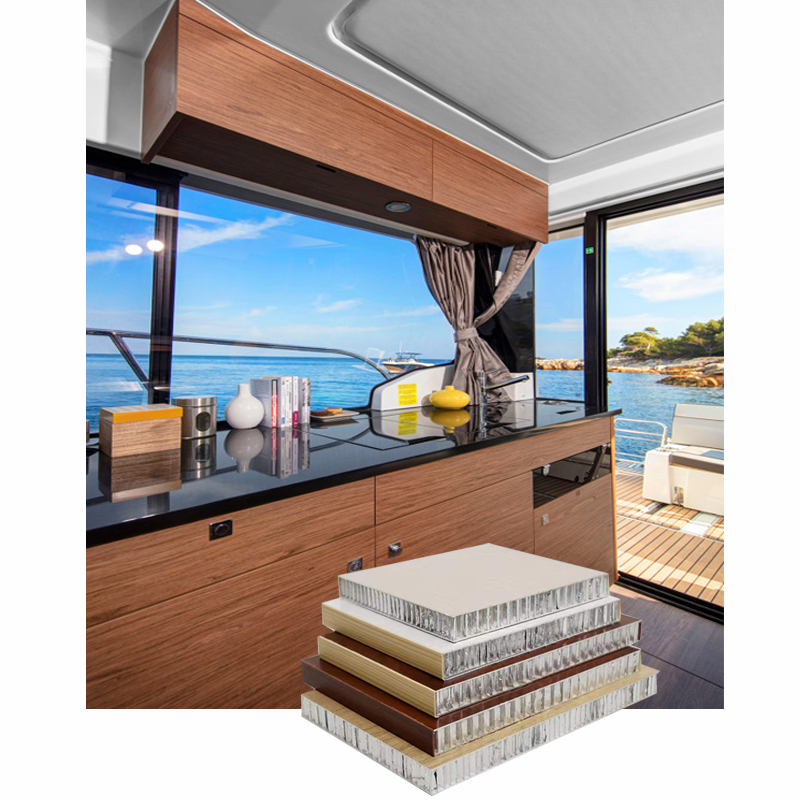
PP honeycomb core can be incorporated into composite structures with fiberglass-reinforced plastic (FRP), carbon fiber composites, and other compatible face materials. Depending on the structural design, these combinations can be used to manufacture boat interior panels, yacht furniture, bulkheads, lightweight doors, and other components.
However, selecting a suitable core material requires more than comparing weight or price. Marine manufacturers must evaluate water exposure, mechanical loads, bonding compatibility, fatigue resistance, fire performance, and long-term durability.
This article explains the properties, applications, manufacturing considerations, and selection criteria for PP honeycomb core in marine composite manufacturing.
2. What Is PP Honeycomb Core?
PP Honeycomb Core is a cellular structural material manufactured from polypropylene, a thermoplastic polymer. Its internal geometry consists of interconnected cells that resemble the structure of a natural honeycomb.
The cellular architecture reduces material consumption while creating a lightweight core that can support the face sheets of a composite sandwich panel.
In a typical marine sandwich panel, the structure consists of three main components:
- Top face sheet: Provides surface protection, tensile strength, and part of the panel’s bending resistance.
- PP honeycomb core: Maintains the separation between the face sheets and transfers shear loads through the panel.
- Bottom face sheet: Completes the sandwich structure and contributes to bending stiffness and load distribution.
When these components are properly designed and bonded, the resulting panel can provide substantially greater bending stiffness than a single thin sheet of comparable face-sheet material, without requiring a solid, heavy construction.
The actual performance depends on the core geometry, core thickness, face-sheet properties, adhesive system, manufacturing quality, and loading conditions.
Typical Material Characteristics
| Property | Description | Importance in Marine Applications |
|---|---|---|
| Base material | Polypropylene (PP) | Provides a lightweight thermoplastic core |
| Structure | Cellular honeycomb | Reduces material consumption while supporting a sandwich structure |
| Density | Grade-dependent | Influences panel weight and mechanical performance |
| Cell size | Available in different configurations | Affects bonding, local support, and mechanical behavior |
| Core thickness | Selected according to design requirements | Influences panel stiffness and overall thickness |
| Moisture resistance | Generally good for polypropylene | Useful in humid and moisture-exposed environments |
| Corrosion resistance | Resistant to many forms of corrosion affecting metals | Suitable for applications where metallic core corrosion is a concern |
| Chemical resistance | Depends on the chemical and exposure conditions | Important for cleaning agents, fuels, oils, and marine chemicals |
| Processing | Can be combined with compatible composite manufacturing systems | Supports customized panel production |
These characteristics describe the general material category. Actual specifications must be confirmed using the manufacturer’s technical data sheet and relevant test reports.
3. Why Use PP Honeycomb Core in Marine Applications?
Marine manufacturers must balance structural performance, weight, environmental exposure, and production costs. PP honeycomb core offers several potential advantages when used in appropriately engineered composite panels.
3.1 Lightweight Construction
Reducing structural weight is an important objective in boat and yacht manufacturing.
Lower vessel weight can contribute to improved payload capacity and may reduce energy requirements under certain operating conditions. The actual effect depends on vessel design, propulsion systems, loading, and operating speed.
PP honeycomb core replaces part of the solid material that would otherwise occupy the panel’s internal volume.
When combined with suitable face sheets, it allows manufacturers to produce lightweight sandwich panels for interior partitions, furniture, access doors, and selected deck or floor structures.
For yacht manufacturers, weight reduction can be particularly valuable when numerous interior components are installed throughout the vessel.
3.2 Moisture Resistance
Marine environments expose materials to high humidity, condensation, cleaning water, and, in some applications, direct seawater contact.
Polypropylene is generally resistant to water absorption compared with many water-sensitive core materials. This characteristic can make PP honeycomb core suitable for selected moisture-exposed composite structures.
However, moisture resistance of the core does not guarantee that the finished panel is waterproof.
Water may enter through damaged face sheets, unsealed edges, fastener holes, cutouts, or poorly bonded interfaces. These areas require appropriate design, sealing, and inspection.
For boat manufacturers, edge sealing and connection detailing are particularly important when panels are installed in areas exposed to repeated washing or water accumulation.
3.3 Corrosion Resistance
Unlike metallic honeycomb cores, polypropylene does not undergo electrochemical corrosion.
This can be advantageous in marine environments where saltwater and moisture accelerate corrosion of susceptible metals.
The benefit is particularly relevant when manufacturing lightweight interior panels, cabinet structures, partitions, and other components where a nonmetallic core is desirable.
Nevertheless, metallic fasteners, inserts, fittings, and other attached components must still be selected to withstand the intended marine environment.
3.4 Design Flexibility
PP honeycomb core can be incorporated into different composite panel configurations.
Manufacturers may select different core thicknesses, cell geometries, face-sheet materials, and panel dimensions according to the intended application.
Possible configurations include:
- PP honeycomb core with FRP face sheets.
- PP honeycomb core with compatible thermoplastic composite skins.
- PP honeycomb core with selected metallic face sheets.
- PP honeycomb core integrated into customized lightweight interior panels.
Not every combination is compatible with every manufacturing process. Adhesion, surface treatment, thermal behavior, and the intended service environment must be evaluated before production.
3.5 Potential for Manufacturing Efficiency
PP honeycomb panels can be manufactured using suitable bonding, pressing, lamination, or thermoplastic consolidation processes.
Depending on the selected production method, manufacturers may produce flat panels, customized components, or prefabricated interior structures.
A repeatable manufacturing process can improve dimensional consistency and reduce unnecessary material consumption.
However, production efficiency depends on equipment, adhesive selection, surface preparation, curing or consolidation requirements, and quality control.
4. Main Marine Applications of PP Honeycomb Core
PP honeycomb core is not limited to a single type of vessel or component. Its suitability depends on the required mechanical performance and the surrounding structural design.
4.1 Boat Interior Panels
Boat interiors require lightweight materials that can accommodate limited installation space while maintaining adequate rigidity.
PP honeycomb core can be used in sandwich panels for:
- Interior wall panels.
- Cabin partitions.
- Lightweight access doors.
- Cabinet doors and furniture panels.
- Decorative interior panels.
- Selected non-primary structural components.
FRP-faced PP honeycomb panels are one possible configuration for these applications.
Their performance depends on the FRP laminate design, bonding quality, panel thickness, and attachment details.
For interior applications, manufacturers should also evaluate surface finish, cleanability, odor or emissions requirements, and applicable fire and smoke regulations.
4.2 Yacht Furniture and Cabinetry
Weight reduction is an important consideration when designing yacht furniture.
Traditional solid materials may create unnecessary weight when used in large cabinet doors, partitions, or furniture panels.
PP honeycomb core can replace part of the solid internal structure while allowing the use of decorative or functional face materials.
Potential applications include:
- Yacht cabinet doors.
- Lightweight tabletops.
- Storage compartment panels.
- Interior furniture partitions.
- Decorative wall panels.
- Selected lightweight shelving components.
For these applications, the designer must consider local loads, hinge attachment, screw retention, impact resistance, and edge finishing.
Honeycomb structures do not automatically provide sufficient holding strength for concentrated loads. Reinforced inserts or solid edge sections may be required where hinges, handles, and other fittings are installed.
4.3 Marine Bulkheads and Partitions
Bulkheads and partitions divide interior spaces and may contribute to the overall functionality of a vessel.
PP honeycomb sandwich panels can be considered for selected non-primary structural partitions where their mechanical properties, environmental resistance, and regulatory suitability meet project requirements.
The design process should account for:
- Panel span and support spacing.
- Distributed and concentrated loads.
- Vibration and cyclic loading.
- Attachment and fastening methods.
- Impact resistance.
- Fire and smoke requirements.
- Water exposure and edge protection.
A panel intended for a decorative cabin partition should not automatically be considered suitable for a watertight bulkhead or a load-bearing structural bulkhead.
Those applications require specific engineering verification and compliance with the applicable marine regulations.
4.4 Boat Decks and Flooring
Lightweight sandwich structures are used in various marine flooring and deck systems.
PP honeycomb core may be considered for selected floor panels where the complete assembly can withstand the required bending, shear, compression, impact, and environmental loads.
For deck applications, manufacturers should pay particular attention to:
- Core shear strength.
- Face-sheet thickness and reinforcement.
- Local compression under concentrated loads.
- Water ingress at edges and penetrations.
- Bonding durability under cyclic loading.
- Surface slip resistance.
- Long-term fatigue performance.
Decks supporting heavy equipment, machinery, or significant point loads may require reinforced inserts, additional core support, or a different core material.
The core should therefore be selected through structural design rather than weight comparison alone.
4.5 Marine Access Doors and Lightweight Covers
Access doors and removable covers are used to protect equipment compartments and provide access for maintenance.
PP honeycomb sandwich panels can offer a lightweight alternative to solid panel constructions when suitable face sheets, edge reinforcements, and hardware attachments are incorporated.
Typical applications include equipment access covers, interior service doors, and lightweight compartment panels.
The required stiffness, impact resistance, sealing performance, and fire characteristics should be evaluated according to the location and function of each component.
5. PP Honeycomb Core vs. PVC Foam Core for Marine Panels
PVC foam core is widely used in marine composite manufacturing. PP honeycomb core and PVC foam core have different cellular structures and material characteristics, so neither is universally superior.
The appropriate choice depends on the required performance, manufacturing process, and total panel cost.
| Comparison Factor | PP Honeycomb Core | PVC Foam Core |
|---|---|---|
| Core structure | Honeycomb cellular structure | Closed-cell polymer foam |
| Base material | Polypropylene | Polyvinyl chloride-based foam |
| Moisture behavior | Polypropylene itself has low water absorption | Closed-cell foam can provide good moisture resistance |
| Weight | Depends on grade and geometry | Depends on density and grade |
| Mechanical behavior | Directional and geometry-dependent | Depends on foam density, formulation, and orientation |
| Core shear performance | Must be verified for the selected grade | Must be verified for the selected grade |
| Bonding requirements | Surface treatment or compatible adhesive may be necessary | Depends on foam formulation and adhesive compatibility |
| Local load support | May require inserts or reinforced areas | May require inserts or reinforced areas |
| Manufacturing methods | Depends on thermoplastic processing and bonding system | Compatible with various marine composite processes |
| Common considerations | Cell geometry, surface bonding, edge sealing | Density, shear strength, compression strength, resin compatibility |
| Relative cost | Depends on grade, processing, and supply conditions | Depends on grade, processing, and supply conditions |
Which Material Should Marine Manufacturers Choose?
PP honeycomb core may be attractive when a lightweight thermoplastic cellular structure, moisture resistance, and a particular panel architecture are important.
PVC foam core may be attractive when the manufacturer requires established foam-core processing methods, specific mechanical properties, or compatibility with an existing marine composite manufacturing system.
The decision should be based on comparable test data rather than material names alone.
For a meaningful comparison, manufacturers should evaluate core density, shear strength, shear modulus, compressive strength, water absorption, bonding performance, fatigue behavior, and the finished panel’s bending properties.
The adhesive or resin system must also be compatible with the selected core material.
6. Key Technical Parameters for Selecting PP Honeycomb Core
Selecting the correct PP honeycomb core requires an understanding of the core’s geometry, mechanical properties, and intended operating conditions.
The following table identifies important purchasing and engineering parameters.
| Parameter | What to Check | Why It Matters |
|---|---|---|
| Core density | Nominal density and tolerance | Influences mass and mechanical properties |
| Cell size | Nominal cell dimensions | Affects structural behavior and manufacturing compatibility |
| Core thickness | Available thicknesses and tolerances | Influences panel thickness and stiffness |
| Compressive strength | Test value and test method | Helps assess resistance to through-thickness compression |
| Shear strength | Test value and test method | Important for load transfer within the sandwich structure |
| Shear modulus | Test value and test method | Helps predict deformation under shear loading |
| Water absorption | Test method, duration, and result | Helps assess performance under moisture exposure |
| Face-sheet compatibility | Skin material and bonding method | Influences interface integrity |
| Surface treatment | Required treatment and process | May be necessary to improve adhesion |
| Temperature resistance | Service limits and test conditions | Helps assess suitability for the operating environment |
| Dimensional tolerance | Thickness, length, width, and flatness | Important for repeatable manufacturing |
| Fire performance | Applicable test reports and classification | Required for relevant vessel applications |
Important: Actual values vary by manufacturer, grade, cell geometry, and production process. Buyers should obtain a current technical data sheet and relevant test reports rather than relying on generic specifications.
Example of a Supplier Inquiry Specification
For initial supplier discussions, marine manufacturers can prepare a specification sheet containing the following information.
| Specification Item | Information to Provide |
|---|---|
| Product | PP Honeycomb Core |
| Intended application | Boat interior panel, yacht furniture, or other defined component |
| Required thickness | Project-specific requirement |
| Target density | Based on design requirements |
| Cell size | Based on the selected grade and manufacturing process |
| Panel dimensions | Required length and width |
| Face-sheet material | FRP, thermoplastic composite, metal, or other material |
| Bonding process | Adhesive bonding, lamination, or another compatible process |
| Environmental conditions | Humidity, water exposure, temperature, and chemicals |
| Mechanical requirements | Required shear, compression, bending, or impact performance |
| Regulatory requirements | Applicable marine standards and project specifications |
| Required documentation | Technical data sheet, test reports, and quality documentation |
This information helps the supplier recommend a suitable grade and reduces the risk of selecting a core based only on price or nominal density.
7. Manufacturing PP Honeycomb Marine Sandwich Panels
The quality of a PP honeycomb marine panel depends on the complete manufacturing process rather than the core material alone.
Although production methods vary, a typical panel manufacturing workflow includes the following stages.
Step 1: Core Material Inspection
The manufacturer checks core dimensions, thickness, density, surface condition, and relevant material documentation.
Incoming inspection helps identify inconsistencies before the core enters production.
Step 2: Face-Sheet Preparation
FRP laminates or other selected face sheets are prepared to the required dimensions.
Surface cleanliness and the condition of the bonding surfaces are important for achieving reliable adhesion.
Step 3: Surface Treatment and Adhesive Selection
Polypropylene has relatively low surface energy, which can make bonding difficult with some conventional adhesives.
Depending on the material grade and bonding system, surface treatment or a specifically formulated adhesive may be required.
Possible approaches include qualified plasma or corona treatment, suitable chemical treatment, or a compatible adhesive system.
The selected method must be validated for the actual PP grade, face-sheet material, and intended service environment.
Step 4: Core and Face-Sheet Assembly
The PP honeycomb core is positioned between the face sheets according to the panel design.
Edge reinforcements, inserts, or local support materials may be incorporated where the design requires additional strength around fasteners and fittings.
Step 5: Bonding and Consolidation
The assembly is bonded using a qualified manufacturing process.
Depending on the adhesive and production system, this may involve controlled pressure, temperature, curing time, or thermoplastic consolidation.
Excessive pressure or inappropriate processing conditions can damage the core or create uneven bonding.
Step 6: Trimming and Edge Sealing
The panel is cut to its final dimensions.
Edges, penetrations, and cutouts are treated according to the design requirements to reduce the risk of moisture ingress and mechanical damage.
Step 7: Quality Inspection
The finished panel is inspected for dimensional accuracy, surface defects, bonding integrity, and other specified characteristics.
Mechanical tests should be conducted when required by the product specification or qualification plan.
For marine applications, testing should reflect the intended service environment and the applicable project standards.
8. Common Purchasing Mistakes to Avoid
Marine composite manufacturers should avoid several common mistakes when sourcing PP honeycomb core.
Mistake 1: Selecting the lowest-density core without checking mechanical performance.
A lower-density material may reduce weight, but it may not meet the project’s shear, compression, or local-load requirements.
Mistake 2: Assuming that moisture-resistant core material makes the entire panel waterproof.
Water can enter through exposed edges, damaged face sheets, fastener holes, and poorly sealed joints.
Mistake 3: Ignoring bonding compatibility.
Polypropylene may require a qualified surface treatment or adhesive system. Poor bonding can compromise the performance of the complete sandwich panel.
Mistake 4: Using the same core design for every marine component.
Cabin partitions, furniture panels, deck structures, and equipment covers have different loading conditions and environmental requirements.
Mistake 5: Overlooking fire and smoke requirements.
Marine interior materials may be subject to specific fire, smoke, and toxicity requirements. Compliance must be established for the relevant finished assembly and intended installation.
Mistake 6: Comparing material prices without evaluating total manufacturing cost.
The purchase price is only one part of the total cost. Processing time, bonding materials, machining, edge reinforcement, waste, inspection, and service life can also affect the final economics.
9. How to Choose a Reliable PP Honeycomb Core Supplier
A qualified supplier should provide more than a basic material quotation.
Marine manufacturers should evaluate the supplier’s ability to maintain consistent specifications, support material selection, and provide technical information for the intended application.
Important evaluation criteria include:
- Consistent product specifications: Density, thickness, cell size, and dimensional tolerances should be clearly defined.
- Technical documentation: The supplier should provide relevant product data and available test reports.
- Customization capability: Core thickness, dimensions, and other available specifications should match the project requirements.
- Bonding support: The supplier should be able to discuss compatibility with the proposed face sheets and bonding system.
- Quality control: Production consistency and traceability should be considered during supplier qualification.
- Application knowledge: The supplier should understand the difference between decorative panels, interior partitions, and load-bearing marine structures.
- Sample evaluation: Where appropriate, buyers should test samples or prototype panels before committing to large production volumes.
For critical marine structures, supplier qualification should be supported by engineering review and appropriate testing.
10. Conclusion
PP Honeycomb Core offers a lightweight thermoplastic core option for selected marine composite applications. Its low moisture absorption, corrosion resistance, and cellular architecture can make it suitable for boat interior panels, yacht furniture, lightweight partitions, access covers, and other appropriately designed sandwich structures.
However, the core material alone does not determine the performance of a marine panel. Face-sheet selection, bonding compatibility, edge protection, structural design, and manufacturing quality are equally important.
When comparing PP honeycomb core with PVC foam core or other alternatives, manufacturers should evaluate verified mechanical properties and finished-panel performance under the intended operating conditions.
For marine composite manufacturers, the most effective material selection process begins with a clear application definition, measurable performance requirements, and a qualified supplier capable of supporting customization and technical evaluation.
Looking for a PP Honeycomb Core Supplier for Marine Applications?
ONEBOND can use application-specific requirements to guide product selection for marine composite panel manufacturing. When requesting a quotation, provide the intended application, required core thickness, target density, cell size, panel dimensions, face-sheet material, and relevant performance requirements.
These details help establish whether a particular PP honeycomb core grade is suitable for your boat, yacht, or marine interior panel project.
