
Custom PP Honeycomb Core Manufacturing for Industrial Buyers: Specifications, OEM Services and Supplier Selection
As demand for lightweight composite materials continues to grow, PP honeycomb core has become an important material option for manufacturers producing FRP sandwich panels, truck body panels, RV components, marine interiors and industrial composite structures.
However, industrial buyers rarely need a standard honeycomb core product that fits every application. Different panel designs require different core thicknesses, cell sizes, densities, facing materials and dimensional configurations.
For composite panel manufacturers, finding a reliable custom PP honeycomb core manufacturer is therefore about more than purchasing raw materials. It involves selecting a supplier capable of understanding technical requirements, controlling product specifications, supporting sample development and maintaining consistent quality during bulk production.
This article explains how customized PP honeycomb core manufacturing works, which specifications buyers should consider, what OEM services may involve and how to evaluate a manufacturer before placing an order.
1. Why Do Industrial Buyers Need Custom PP Honeycomb Core?
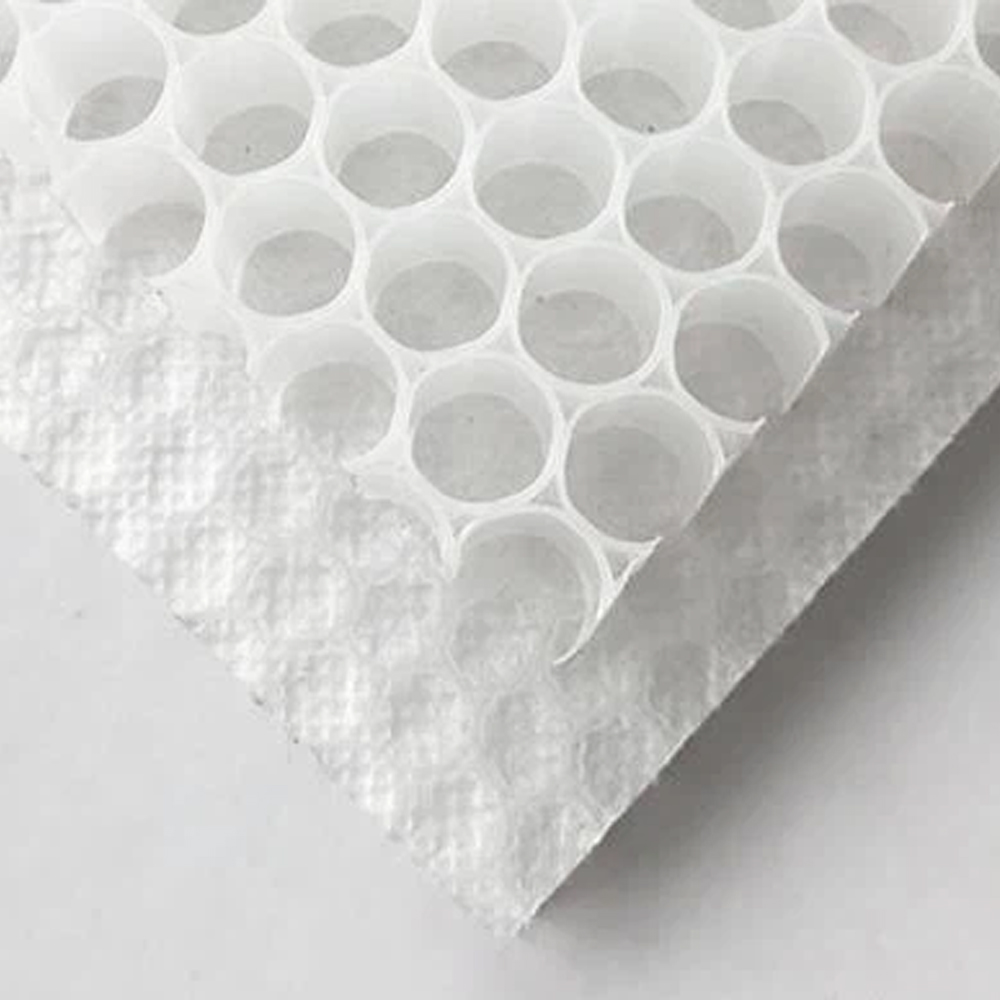
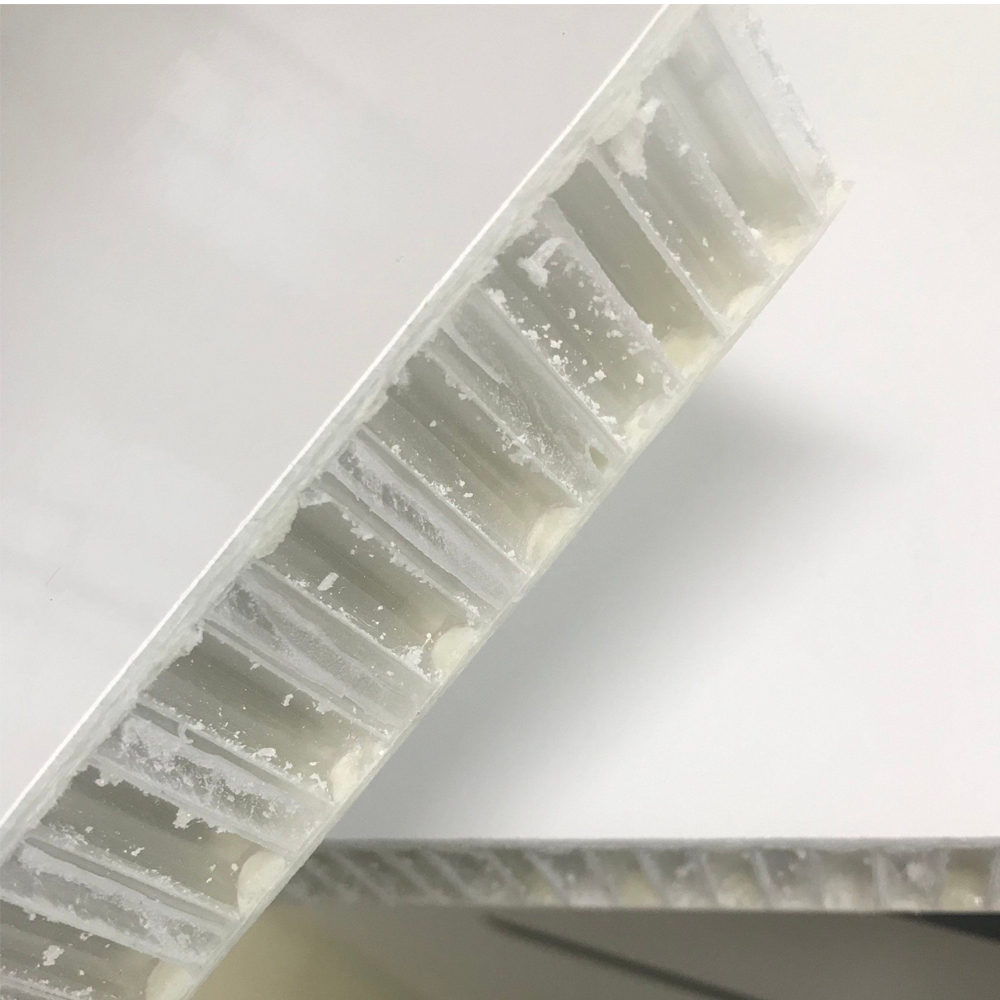
PP honeycomb core is a lightweight cellular material manufactured from polypropylene thermoplastic.
Its honeycomb structure provides internal support for sandwich panels while helping reduce structural weight. Depending on the product configuration, it can be used with FRP, fiberglass, aluminum and other facing materials.
Although standard products may meet some general requirements, industrial applications often involve specific engineering and production conditions.
For example:
- A truck body panel manufacturer may require a particular core thickness and panel width.
- An FRP panel factory may need nonwoven faced PP honeycomb core for its lamination process.
- An RV manufacturer may prioritize lightweight construction and dimensional consistency.
- An industrial equipment manufacturer may require customized sheet dimensions and specific mechanical performance.
- A composite panel producer may need continuous supply of the same specifications for long-term production.
These different requirements make product customization an important part of the procurement process.
Common Reasons for Customization
1. Different panel thickness requirements
The core thickness affects the total sandwich panel thickness and structural design.
2. Different cell size requirements
Cell geometry can influence adhesive contact, structural behavior and compatibility with the manufacturing process.
3. Different weight targets
Density and areal weight are important when designing lightweight composite panels.
4. Different facing configurations
Bare PP honeycomb and nonwoven faced PP honeycomb may be required for different bonding systems.
5. Different production dimensions
Panel manufacturers may require customized lengths, widths or cutting configurations to fit their production lines.
6. Different application environments
Truck bodies, RVs, marine interiors and industrial panels may have different mechanical, environmental and regulatory requirements.
A customized PP honeycomb core should therefore be developed around the buyer’s actual application rather than selected only by material name.
2. What PP Honeycomb Core Products Can Be Customized?
A professional PP honeycomb core supplier should understand the differences between the main product configurations and how they relate to downstream manufacturing requirements.
2.1 Bare PP Honeycomb Core
Bare PP honeycomb core is supplied without an additional nonwoven facing layer.
It is suitable for applications where the manufacturer has an established bonding or surface preparation process.
Possible customization parameters include:
- Core thickness
- Cell size
- Density or areal weight
- Sheet dimensions
- Cellular structure
- Cutting configuration
Because polypropylene has relatively low surface energy, buyers should evaluate adhesive compatibility and bonding requirements before choosing bare core.
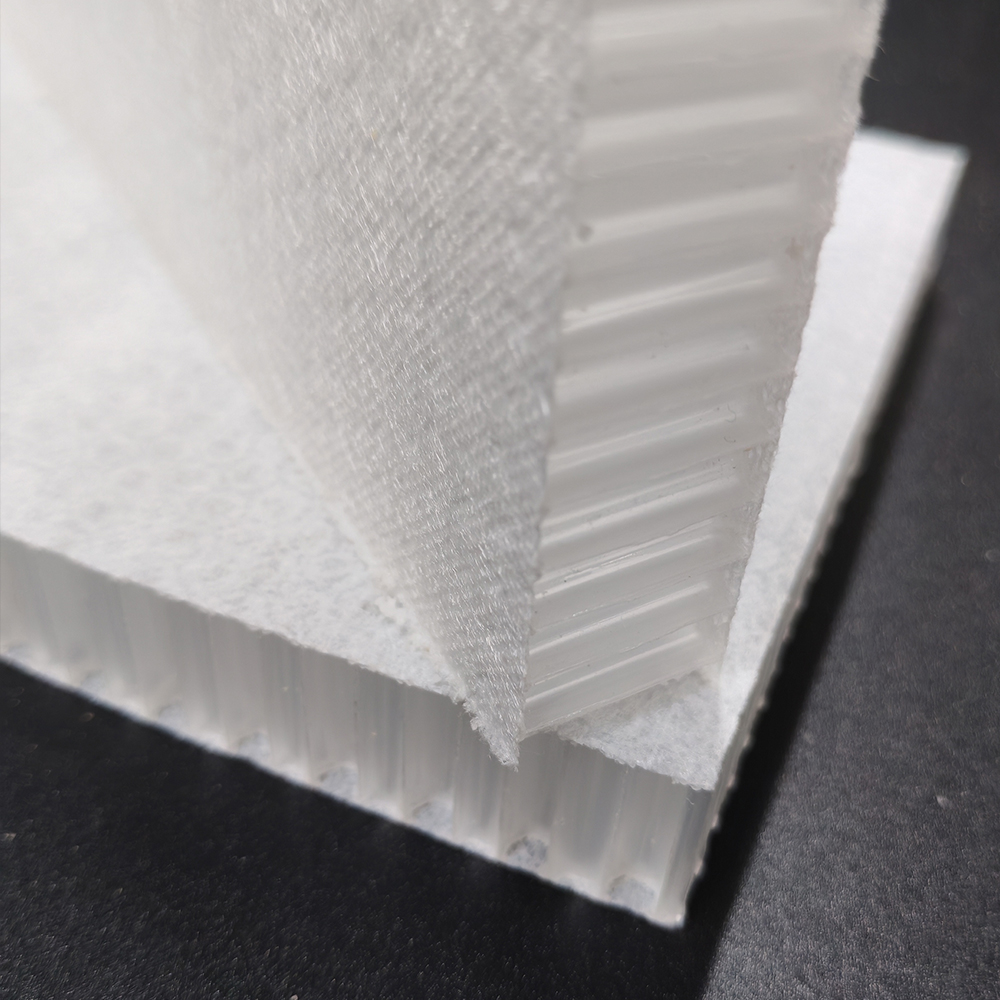
2.2 Nonwoven Faced PP Honeycomb Core
Nonwoven faced PP honeycomb core includes a nonwoven layer attached to one or both sides of the honeycomb structure.
It is often considered for composite panel manufacturing where a more continuous surface is needed for subsequent lamination.
Customization may involve:
- One-side or two-side facing
- Nonwoven material composition
- Nonwoven basis weight
- Facing thickness
- Surface configuration
- Core thickness
- Sheet dimensions
The actual bonding performance depends on both the nonwoven-to-core interface and the facing-to-skin interface.
The facing material should be selected according to the adhesive system, FRP resin and manufacturing process.
2.3 Customized PP Honeycomb Sheets
PP honeycomb core can also be supplied in customized sheet dimensions according to project requirements.
This may help panel manufacturers coordinate incoming material dimensions with their cutting and lamination processes.
Important considerations include:
- Sheet length
- Sheet width
- Core thickness
- Dimensional tolerance
- Packaging requirements
- Cutting accuracy
The available dimensions and production tolerances should be confirmed with the manufacturer.
2.4 PP Honeycomb Core for Specific Industries
Different industries may require different material configurations.
| Industry | Potential Product Configuration | Main Considerations |
|---|---|---|
| Truck Body Manufacturing | PP Honeycomb Core for FRP Panels | Panel weight, compression, shear and bonding |
| Trailer Manufacturing | Customized PP Honeycomb Sheets | Panel dimensions and structural requirements |
| RV and Caravan | Lightweight PP Honeycomb Core | Weight, dimensional stability and moisture exposure |
| Marine Interiors | Bare or Nonwoven Faced PP Honeycomb | Moisture, fire requirements and bonding durability |
| Industrial Composite Panels | Customized PP Honeycomb Core | Core geometry and manufacturing compatibility |
| Packaging and Protective Structures | Lightweight PP Honeycomb | Weight, handling and application-specific performance |
The final product configuration should be determined by the intended application and engineering requirements.
3. Key Specifications for Custom PP Honeycomb Core
For industrial procurement, accurate technical specifications are essential.
A buyer should provide enough information for the manufacturer to understand the required core structure and evaluate whether the product can be produced consistently.
3.1 Core Thickness
Core thickness is one of the most important purchasing parameters.
It affects:
- Overall sandwich panel thickness
- Separation between the facing materials
- Structural stiffness of the complete panel
- Core material consumption
- Cutting and lamination requirements
The required thickness should be determined by the panel design rather than selected only according to available stock.
Buyers should also clarify whether the specified thickness refers to the core alone or the finished sandwich panel.
3.2 Cell Size
Cell size describes the dimensions of the honeycomb cells.
It can influence:
- Cellular geometry
- Local support for facing materials
- Adhesive contact characteristics
- Structural behavior
- Compatibility with the panel manufacturing process
Smaller and larger cell configurations may behave differently under specific loading and lamination conditions.
However, cell size alone does not determine core strength.
Cell wall geometry, material characteristics, density and manufacturing consistency must also be considered.
3.3 Density and Areal Weight
Density and areal weight are important when controlling panel weight.
For a uniform core material, theoretical areal weight can be estimated using:
Areal Weight = Density × Core Thickness
Density is expressed in kg/m³, thickness in meters and areal weight in kg/m².
For example, an illustrative material with an apparent density of 80 kg/m³ and a thickness of 20 mm would have a theoretical areal weight of:
80 × 0.020 = 1.6 kg/m²
This is a calculation example, not a ONEBOND product specification.
For PP honeycomb core, buyers should confirm how apparent density is defined and measured, because the cellular geometry is part of the product structure.
For quality control, areal weight can be a useful supplementary parameter when evaluating consistency between production batches.
3.4 Nonwoven Facing Specifications
For nonwoven faced PP honeycomb core, the facing material should be specified separately.
Relevant parameters include:
- Facing material
- Basis weight
- Thickness
- Surface condition
- Number of faced sides
- Attachment method
- Compatibility with the selected adhesive or resin
A suitable facing configuration can simplify certain lamination processes, but it must be validated using the actual FRP skin and bonding system.
3.5 Sheet Dimensions and Tolerances
Industrial buyers should define the required sheet dimensions and dimensional tolerances.
| Specification | Information Required |
|---|---|
| Length | Required sheet length |
| Width | Required sheet width |
| Thickness | Nominal core thickness |
| Thickness tolerance | Permitted dimensional variation |
| Cell size | Target aperture dimensions |
| Density | Target apparent density or agreed weight range |
| Areal weight | Target mass per square meter, if applicable |
| Facing | Bare, one-side faced or two-side faced |
| Packaging | Protection and shipment requirements |
Tolerances should be agreed before production begins.
The manufacturer and buyer should also agree on measurement locations, sampling frequency and acceptance criteria.
4. OEM and ODM Services for PP Honeycomb Core
OEM and ODM are common terms in international manufacturing, but their scope should be clearly defined.
4.1 What Is OEM PP Honeycomb Core Manufacturing?
OEM manufacturing generally means producing products according to the buyer’s specifications, drawings, technical requirements or agreed product design.
For PP honeycomb core, OEM cooperation may include:
- Customized core thickness
- Customized cell size
- Density or weight targets
- Customized sheet dimensions
- Nonwoven facing configurations
- Cutting and packaging requirements
- Buyer-specific product identification
- Agreed inspection and quality documentation
The exact OEM service scope depends on the manufacturer’s equipment, production capability and technical resources.
4.2 What Is ODM for PP Honeycomb Core?
ODM refers to product development or design support based on the supplier’s manufacturing and technical capabilities.
In a customized composite material project, ODM cooperation may involve:
- Discussing suitable core configurations
- Evaluating different cell structures
- Recommending facing materials
- Developing sample specifications
- Conducting application trials
- Adjusting product configurations based on test results
ODM development should be based on clearly defined responsibilities and an agreed development process.
4.3 OEM vs ODM Comparison
| Item | OEM | ODM |
|---|---|---|
| Product design | Mainly provided by buyer | Developed with supplier involvement |
| Technical specifications | Buyer-defined or jointly confirmed | Developed through technical discussion |
| Sample development | According to buyer specifications | May involve product design optimization |
| Custom dimensions | Based on agreed drawings | Based on development requirements |
| Application support | Depends on supplier scope | May include configuration recommendations |
| Main objective | Manufacture according to requirements | Develop a suitable product configuration |
For industrial buyers, the most important issue is not the label OEM or ODM. It is whether the supplier can understand the project, define measurable specifications and deliver the agreed product consistently.
5. Custom PP Honeycomb Core Manufacturing Process
The production process depends on the manufacturer’s equipment and product configuration.
For industrial buyers, understanding the general manufacturing workflow helps identify important quality-control points.
Step 1: Confirm Technical Requirements
Before production, the manufacturer and buyer should confirm:
- Material type
- Core thickness
- Cell size
- Density or areal weight
- Sheet dimensions
- Facing configuration
- Dimensional tolerances
- Application requirements
A written specification is preferable to relying only on verbal descriptions.
Step 2: Raw Material Preparation
Polypropylene raw materials are prepared according to the product formulation and manufacturing process.
Material consistency can influence forming behavior and the final cellular structure.
Where applicable, raw material identification and incoming inspection should be included in the quality-control process.
Step 3: Thermoforming and Honeycomb Structure Formation
The PP material is processed through a forming process to create the honeycomb cellular structure.
Temperature, forming conditions and process stability influence the resulting geometry.
Important inspection factors include:
- Cell consistency
- Structural integrity
- Wall formation
- Thickness
- Surface condition
The exact forming process depends on the production line design.
Step 4: Cooling and Dimensional Stabilization
After forming, the cellular structure requires appropriate cooling and stabilization.
Process control helps maintain dimensional consistency and reduce unwanted deformation.
Step 5: Facing and Surface Configuration
Depending on the order requirements, nonwoven facing or other surface configurations may be applied.
For faced products, the attachment between the PP core and facing material is an important quality-control point.
Step 6: Cutting and Dimensional Processing
The core is processed into the required sheet dimensions.
Cutting accuracy and edge quality should be checked against the agreed specification.
Step 7: Final Inspection and Packaging
Before shipment, the finished core should undergo inspection according to the agreed quality plan.
Packaging should protect the product against damage, deformation and contamination during transportation.
6. Quality Control: What Should Buyers Expect from a PP Honeycomb Core Factory?
Quality consistency is especially important for manufacturers using PP honeycomb core in continuous panel production.
A small variation in core dimensions, cell structure or facing quality may affect downstream lamination and finished panel consistency.
Buyers should evaluate the manufacturer’s quality-control system before placing large orders.
6.1 Incoming Material Inspection
The supplier should have a process for checking incoming raw materials.
Depending on the manufacturing system, this may include:
- Material identification
- Supplier batch records
- Appearance inspection
- Relevant material documentation
6.2 In-Process Quality Control
Production inspection should monitor important parameters during manufacturing.
Potential checkpoints include:
- Forming consistency
- Cell geometry
- Core thickness
- Surface condition
- Dimensional stability
- Facing attachment
The specific inspection frequency should be defined according to the production process and quality requirements.
6.3 Finished Product Inspection
Finished PP honeycomb core should be inspected against the agreed product specification.
| Quality Item | Inspection Purpose |
|---|---|
| Appearance | Identify visible defects and contamination |
| Thickness | Verify core dimensional consistency |
| Cell size | Check cellular geometry |
| Density or areal weight | Monitor product weight consistency |
| Sheet dimensions | Verify length and width |
| Facing quality | Check facing coverage and attachment |
| Structural integrity | Identify damaged or collapsed cells |
| Packaging | Protect the product during transportation |
6.4 Mechanical Testing
Depending on the intended application, buyers may require mechanical testing.
Relevant properties may include:
- Flatwise compression
- Core shear
- Flatwise tensile
- Water absorption
- Bonding performance
- Complete sandwich panel flexural performance
Possible ASTM methods include:
- ASTM C271/C271M for sandwich core density
- ASTM C365/C365M for flatwise compressive properties
- ASTM C273/C273M for core shear properties
- ASTM C297/C297M for flatwise tensile properties of sandwich constructions
- ASTM C393/C393M for core shear properties of sandwich constructions by beam flexure
- ASTM C272/C272M for water absorption of core materials
The applicable standard and test configuration should be confirmed for the actual product and specimen construction.
A supplier should only claim a particular test result or certification when it can provide supporting documentation.
7. How to Evaluate a PP Honeycomb Core Manufacturer
Selecting the right manufacturer is a critical part of international procurement.
A competitive quotation does not necessarily indicate that a supplier has the technical capability, manufacturing consistency or long-term supply reliability required for industrial projects.
The following factors can help buyers evaluate potential suppliers.
7.1 Manufacturing Capability
Check whether the supplier is an actual manufacturer or a trading company.
Useful evidence may include:
- Factory address
- Production workshop
- Manufacturing equipment
- Production process documentation
- Product inspection facilities
- Actual production photographs or videos
Factory claims should be supported by verifiable information.
7.2 Product Customization Capability
A suitable supplier should be able to discuss the technical requirements of customized products.
Ask whether the supplier can support:
- Different core thicknesses
- Different cell sizes
- Density or areal weight targets
- Customized sheet dimensions
- Bare and nonwoven faced configurations
- Application-specific product development
Do not assume every supplier can manufacture every configuration.
7.3 Technical Support
Technical support is particularly important when the buyer is developing a new sandwich panel structure.
A capable supplier should be able to discuss:
- Core configuration
- Material properties
- Facing compatibility
- Bonding considerations
- Sample development
- Product testing
The supplier should also be clear about the limits of its technical support and avoid making unsupported performance guarantees.
7.4 Quality Management
Buyers should understand how the manufacturer controls production consistency.
Ask about:
- Incoming inspection
- In-process inspection
- Finished product inspection
- Batch identification
- Traceability
- Nonconforming product management
- Corrective actions
If a supplier claims ISO certification or another quality certification, request the relevant certificate and verify its validity and scope.
7.5 Production and Delivery Reliability
For long-term industrial cooperation, supply reliability matters as much as initial product quality.
Buyers should confirm:
- Production lead time
- Order capacity
- MOQ
- Sample lead time
- Packaging method
- Export experience
- Shipment arrangements
- Reorder consistency
These details should be confirmed before signing a supply agreement.
8. Manufacturer vs Trading Company: What Should Industrial Buyers Consider?
International buyers may encounter both manufacturers and trading companies when sourcing PP honeycomb core.
Neither business model is automatically better in every situation.
However, the buyer should understand who is responsible for production, quality control and technical support.
| Evaluation Factor | Direct Manufacturer | Trading Company |
|---|---|---|
| Production control | Direct production involvement | Depends on manufacturing partners |
| Product customization | Can communicate directly with production teams | Depends on factory cooperation |
| Process visibility | Potentially more direct | May require additional coordination |
| Quality responsibility | Should be defined in the supply agreement | Should be defined in the supply agreement |
| Technical communication | Direct access may be available | May involve an intermediary |
| Product sourcing | Own manufacturing or defined production resources | May offer products from multiple factories |
When evaluating a direct manufacturer, buyers should verify the actual factory, product range and production capabilities rather than relying solely on the supplier’s marketing description.
9. Sample Development and Bulk Production
One of the most important steps in customized PP honeycomb core procurement is moving from sample approval to stable mass production.
A sample may look acceptable, but that does not automatically mean the same quality will be maintained across every production batch.
A controlled development process can reduce this risk.
Stage 1: Technical Discussion
The buyer provides application details, drawings, required dimensions and performance targets.
The supplier reviews the requirements and identifies any specifications that need clarification.
Stage 2: Sample Specification Confirmation
Before sample production, both parties agree on:
- Material configuration
- Core thickness
- Cell size
- Density or areal weight
- Sheet dimensions
- Facing configuration
- Inspection criteria
Stage 3: Sample Evaluation
The buyer checks the sample for dimensional accuracy, appearance and compatibility with its production process.
For composite panels, a representative lamination trial is recommended.
Stage 4: Performance Validation
Where required, the buyer conducts compression, shear, bonding or complete panel testing.
The test results should be compared with the original project requirements.
Stage 5: Specification Approval
The final approved specification should be documented.
Any later changes should be controlled through an agreed change-management process.
Stage 6: Bulk Production
The supplier manufactures the order according to the approved specification.
Production records and inspection results should be maintained according to the agreed quality plan.
Stage 7: Reorder and Continuous Improvement
For repeat orders, the buyer and supplier should monitor product consistency and review any quality issues or specification changes.
10. What Should Be Included in an RFQ for Custom PP Honeycomb Core?
A detailed Request for Quotation (RFQ) helps manufacturers provide more accurate quotations and reduces unnecessary communication.
Industrial buyers should provide the following information.
| RFQ Item | Recommended Information |
|---|---|
| Product name | PP Honeycomb Core |
| Product configuration | Bare or nonwoven faced |
| Application | Truck body, FRP panel, RV, marine or industrial |
| Core thickness | Required thickness in mm |
| Cell size | Target aperture size in mm |
| Density | Target apparent density in kg/m³ |
| Areal weight | Target weight in kg/m², if specified |
| Sheet dimensions | Required length and width |
| Facing material | Type and specification |
| Mechanical requirements | Compression, shear or other requirements |
| Quantity | Sample quantity and estimated bulk order |
| Delivery destination | Country and port or delivery location |
| Packaging | Required protection and packing configuration |
| Testing | Required test methods and documentation |
Example RFQ Description
The following is a sample purchasing description. Replace the specifications with actual project requirements.
Product: Customized PP Honeycomb Core
Application: FRP Composite Sandwich Panel
Core Configuration: Nonwoven Faced PP Honeycomb Core
Core Thickness: 20 mm
Cell Size: 8 mm
Target Density: To be confirmed
Sheet Dimensions: Customized according to production requirements
Facing: Nonwoven on both sides
Quantity: Sample order followed by bulk production
Additional Requirements: Dimensional consistency, bonding compatibility and product inspection documentation.
This example is intended to demonstrate RFQ structure, not to represent a standard ONEBOND product specification.
11. Common Purchasing Mistakes When Sourcing PP Honeycomb Core
Even experienced buyers can encounter problems when sourcing customized composite core materials.
The following mistakes should be avoided.
Mistake 1: Purchasing based only on price
A lower quotation may involve different cell geometry, density, facing material or tolerances.
Compare products using the same agreed specifications.
Mistake 2: Ignoring bonding compatibility
PP honeycomb core and FRP skins must work with the selected adhesive and lamination process.
A core that is unsuitable for the existing bonding system may increase production problems.
Mistake 3: Comparing density without checking product structure
Density is important, but it does not fully describe the mechanical performance of a honeycomb core.
Cell geometry and manufacturing consistency also matter.
Mistake 4: Skipping sample testing
A sample should be tested using the buyer’s actual manufacturing process whenever possible.
Visual inspection alone is insufficient for structural applications.
Mistake 5: Failing to define tolerances
Unclear dimensional requirements can lead to disagreements during inspection and acceptance.
Mistake 6: Not documenting the approved specification
Without a written specification, repeat orders may not match the original sample.
Mistake 7: Accepting unsupported manufacturer claims
Production capacity, certifications, testing results and quality claims should be verified through appropriate evidence.
12. Why Choose ONEBOND for Custom PP Honeycomb Core?
ONEBOND focuses on composite core materials and lightweight sandwich panel solutions for industrial applications.
Our product portfolio includes PP honeycomb core, PVC foam core, PET foam core, XPS foam core and other composite core materials.
For industrial buyers, customized PP honeycomb core configurations can be discussed according to application and production requirements.
Available PP Honeycomb Core Configurations
- Bare PP Honeycomb Core
- Nonwoven Faced PP Honeycomb Core
- Customized PP Honeycomb Sheets
- PP Honeycomb Core for FRP Composite Panels
- PP Honeycomb Core for Truck Body Panels
- Customized PP Honeycomb Core for Industrial Applications
Customization Parameters
Depending on the product configuration and confirmed manufacturing capability, customization discussions may cover:
- Core thickness
- Cell size
- Density or areal weight
- Sheet dimensions
- Nonwoven facing configuration
- Cutting requirements
- Packaging requirements
Cooperation with Industrial Buyers
ONEBOND aims to support industrial buyers through specification discussions, sample evaluation and customized product supply.
For long-term cooperation, technical requirements, approved samples, inspection criteria and order specifications should be confirmed before bulk production.
Our objective is to help customers identify suitable composite core configurations for their downstream panel manufacturing requirements.
13. Request a Custom PP Honeycomb Core Quotation
Are you looking for a PP honeycomb core manufacturer for your composite panel production?
Whether you manufacture FRP sandwich panels, truck body panels, RV components or industrial composite structures, the right core configuration starts with a clear understanding of your application.
Send ONEBOND your project requirements to discuss a customized PP honeycomb core solution.
Please provide the following information:
- Application and end-use industry
- Required core thickness
- Target cell size
- Target density or areal weight
- Bare or nonwoven faced configuration
- Required sheet dimensions
- Facing material requirements
- Estimated monthly or annual consumption
- Sample and bulk order requirements
Contact ONEBOND to discuss your OEM requirements and request product information.
Frequently Asked Questions
1. Can PP honeycomb core be customized according to buyer specifications?
Customized PP honeycomb core may be developed according to agreed requirements for thickness, cell size, density or areal weight, sheet dimensions and facing configuration, subject to manufacturing capability.
2. What specifications are needed to order custom PP honeycomb core?
Buyers should provide core thickness, cell size, target density, sheet dimensions, facing configuration, application and estimated order quantity.
3. Does ONEBOND provide OEM PP honeycomb core services?
OEM cooperation can be discussed according to buyer drawings, technical specifications, product configuration and confirmed manufacturing requirements.
4. What is the difference between bare and nonwoven faced PP honeycomb core?
Bare PP honeycomb core has an exposed polypropylene cellular structure, while nonwoven faced PP honeycomb core includes an additional facing layer that may provide a more continuous bonding surface.
5. Can PP honeycomb core be used for FRP sandwich panels?
Yes. PP honeycomb core can be used in FRP sandwich panels when the core configuration, adhesive system and lamination process have been properly validated.
6. How do buyers evaluate PP honeycomb core quality?
Important quality factors include thickness, cell size, density or areal weight, dimensional accuracy, appearance, facing attachment and application-specific mechanical performance.
7. Can suppliers provide samples before bulk production?
Sample development should be discussed before mass production. Buyers should confirm sample specifications, quantity, lead time and testing requirements with the supplier.
8. What is the MOQ for customized PP honeycomb core?
MOQ depends on product specifications, customization requirements and manufacturing arrangements. Buyers should confirm the MOQ for each proposed configuration.
9. How can buyers ensure consistent quality for repeat orders?
Use an approved product specification, agreed tolerances, batch inspection requirements and sample approval procedures. Changes should be documented and approved by both parties.
10. What industries use customized PP honeycomb core?
Typical potential applications include truck body panels, trailers, RVs, marine interiors, FRP sandwich panels, transportation structures and industrial composite products.
11. What should buyers check before selecting a PP honeycomb core manufacturer?
Evaluate actual manufacturing capability, customization options, quality-control procedures, technical communication, sample performance, documentation and delivery reliability.
12. Can PP honeycomb core be supplied with customized nonwoven facing?
Nonwoven facing configurations can be discussed according to material type, basis weight, number of faced sides and bonding requirements, subject to the supplier’s manufacturing capability.
