
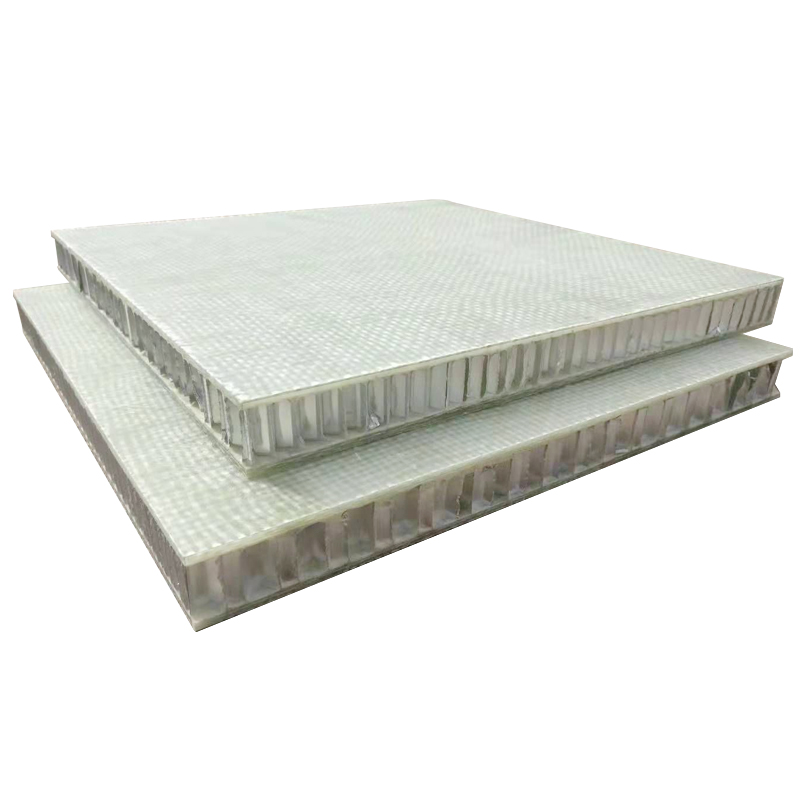
FRP Sandwich Panels for RV and Motorhome Manufacturing: Lightweight Materials, Interior Panels and Structural Applications
1. Introduction: The Growing Demand for Lightweight RV Composite Panels
The recreational vehicle industry continues to develop as manufacturers focus on vehicle weight, interior comfort, structural reliability and production efficiency.
RVs, motorhomes and caravans combine transportation and living functions in one vehicle. Their construction materials must therefore satisfy several requirements at the same time.
Unlike conventional buildings, recreational vehicles are exposed to continuous vibration, road impacts, changing weather conditions and repeated loading during transportation.
At the same time, manufacturers need materials that support attractive interior designs, efficient assembly and long-term durability.
FRP sandwich panels have become an important material option for modern RV construction.
By combining fiberglass-reinforced plastic skins with lightweight core materials, manufacturers can develop composite panels for:
- RV exterior walls
- Motorhome side walls
- Caravan roof panels
- RV floor panels
- Interior partition panels
- Bathroom and kitchen panels
- Furniture and cabinet structures
- Storage compartments
- Door and ceiling panels
Different components require different material properties. An exterior wall panel, for example, may prioritize weather resistance and bending stiffness, while an interior partition may focus more on weight, surface finish and ease of installation.
Selecting the right core material and panel configuration is therefore essential for RV manufacturers.
This article explains the structure, materials, applications and purchasing considerations of FRP sandwich panels for RV and motorhome manufacturing.
2. What Is an FRP Sandwich Panel for RV Construction?
An FRP sandwich panel is a composite board made by bonding two surface skins to a lightweight core.
A typical RV sandwich panel includes three main layers:
- An outer FRP skin
- A lightweight core material
- An inner FRP skin or decorative facing
This structure provides a combination of surface protection, structural support and lightweight construction.
2.1 FRP Surface Skin
FRP stands for Fiberglass Reinforced Plastic.
It consists of fiberglass reinforcement combined with a polymer resin matrix.
In RV applications, FRP skins can provide:
- A durable external or internal surface
- Resistance to moisture and corrosion
- Surface protection
- Contribution to panel bending performance
- Different colors and surface finishes
For exterior panels, the surface should be suitable for UV exposure, weather conditions and the selected cleaning process.
For interior panels, manufacturers may prioritize appearance, cleanability, scratch resistance and compatibility with decorative finishes.
2.2 Lightweight Core Material
The core material is positioned between the two skins.
It maintains the distance between the skins and contributes to the mechanical and thermal characteristics of the sandwich structure.
Common core options include:
- PP Honeycomb Core
- PET Foam Core
- PVC Foam Core
- XPS Foam Core
- PU Foam Core
- Aluminum Honeycomb Core
Each material has its own characteristics.
PP honeycomb offers a cellular thermoplastic structure, while PET and PVC foam are structural foam materials. XPS and PU foam are often evaluated when insulation is a major design consideration.
2.3 Bonding Interface
The bonding interface connects the skins and the core.
This is one of the most important factors in sandwich panel production.
The bonding system should be compatible with the surface chemistry of the core material, the FRP skin and the selected manufacturing process.
For PP honeycomb, its relatively low surface energy means that direct bonding should not be assumed to work with every adhesive.
Manufacturers should evaluate:
- Surface treatment
- Nonwoven facing options
- Adhesive compatibility
- Bonding pressure
- Curing conditions
- Finished panel bonding strength
The complete panel structure should be validated before mass production.
3. Core Materials for FRP RV Sandwich Panels
Different RV components have different requirements. Manufacturers should select core materials according to the intended application rather than using one material for every panel.
3.1 PP Honeycomb Core
PP Honeycomb Core is a lightweight thermoplastic cellular material.
Its honeycomb geometry provides a low-weight structural configuration that can be used in composite sandwich panels.
Key characteristics include:
- Lightweight cellular construction
- Moisture resistance
- Thermoplastic material properties
- Customizable thickness and cell size
- Potential for large-format composite panel production
Potential RV applications include:
- Interior partition panels
- Lightweight wall panels
- Furniture panels
- Cabinet panels
- Selected floor and structural panels
PP honeycomb is particularly interesting for manufacturers seeking lightweight panel structures.
However, bonding needs careful consideration because polypropylene has relatively low surface energy.
Bare PP honeycomb and nonwoven-faced PP honeycomb should be evaluated according to the intended adhesive system.
3.2 PET Foam Core
PET Foam Core is a thermoplastic structural foam used in composite sandwich construction.
Its potential advantages include:
- Lightweight structure
- Closed-cell foam construction
- Structural support
- Different density and thickness options
- Recyclability considerations depending on the product and processing system
PET foam can be considered for RV walls, roofs, floors and other composite structures, subject to the mechanical and environmental requirements of each component.
3.3 PVC Foam Core
PVC Foam Core is a rigid structural foam used in various composite industries.
Its characteristics include:
- Closed-cell structure
- Structural design flexibility
- Different density grades
- Compatibility with certain FRP manufacturing processes
- Applications in marine and industrial sandwich panels
PVC foam can be evaluated for RV panels requiring structural performance and a suitable bonding system.
3.4 XPS Foam Core
XPS, or Extruded Polystyrene Foam, is a closed-cell insulation material.
Its characteristics include:
- Lightweight construction
- Low water absorption in suitable products
- Thermal insulation potential
- Easy cutting and processing
- Availability in different thicknesses and densities
XPS can be considered for selected RV wall and roof panels where thermal insulation is important.
Manufacturers should confirm compatibility with the adhesive or resin system and verify temperature and fire requirements.
3.5 PU Foam Core
Polyurethane foam is widely used in thermal insulation applications.
It can be considered for RV wall, roof and floor structures where insulation is a key requirement.
Its performance depends on formulation, density, thickness, processing conditions and the complete panel design.
3.6 Core Material Comparison
| Core Material | Main Characteristics | Potential RV Applications | Key Considerations |
|---|---|---|---|
| PP Honeycomb | Lightweight cellular structure, moisture resistant | Interior partitions, furniture, wall panels | Bonding and facing compatibility |
| PET Foam | Lightweight structural foam | Walls, roofs, floors | Density, shear and thermal properties |
| PVC Foam | Rigid closed-cell structural foam | Structural wall and roof panels | Bonding and mechanical properties |
| XPS Foam | Insulation-oriented closed-cell foam | Insulated walls and roofs | Adhesive, temperature and fire requirements |
| PU Foam | Thermal insulation potential | Walls, roofs and insulated panels | Formulation and dimensional stability |
| Aluminum Honeycomb | Lightweight metallic cellular structure | Specialized structural and decorative panels | Edge protection, corrosion and bonding |
The best choice depends on the target panel performance, production process, weight requirements and total manufacturing cost.
4. Applications of FRP Sandwich Panels in RV Manufacturing
RV construction includes many different panel components.
Each component has its own structural and functional requirements.
4.1 RV Exterior Wall Panels
Exterior walls form a large part of the vehicle body.
They need to provide:
- Adequate bending stiffness
- Weather resistance
- Moisture protection
- Dimensional stability
- Suitable surface appearance
- Reliable bonding between skin and core
FRP sandwich panels with suitable foam or honeycomb cores can be evaluated for lightweight exterior wall construction.
Panel design should also consider window openings, door openings, corners and structural connections.
4.2 RV Roof Panels
Roof panels are exposed to sunlight, rain, wind and temperature changes.
Important design factors include:
- Thermal insulation
- Water resistance
- Weather durability
- Bending stiffness
- Roof equipment mounting
- Joint and edge sealing
Roof-mounted equipment, air-conditioning systems and other accessories can create concentrated loads.
Reinforcement may therefore be necessary around mounting points.
4.3 RV Floor Panels
Floor panels need to withstand repeated loading from occupants, furniture, appliances and storage systems.
Depending on the RV design, they may also experience concentrated loads from equipment and furniture supports.
Key performance requirements include:
- Compression strength
- Flexural stiffness
- Core shear performance
- Impact resistance
- Moisture resistance
- Surface wear resistance
The floor structure should be designed according to the expected loading conditions.
A lightweight core should not be selected without evaluating the finished panel’s mechanical performance.
4.4 Interior Wall and Partition Panels
Interior panels divide the living space into functional areas.
They may be used for:
- Bedroom partitions
- Bathroom walls
- Kitchen partitions
- Storage compartments
- Decorative wall cladding
For these applications, manufacturers may prioritize low weight, dimensional accuracy, surface finish and ease of installation.
PP honeycomb and lightweight foam cores can be evaluated according to the required panel configuration.
4.5 Cabinet and Furniture Panels
RV furniture must be lightweight because every component contributes to the total vehicle weight.
Traditional solid boards may be replaced by lightweight sandwich structures in selected applications.
FRP sandwich panels and other composite boards can be considered for:
- Kitchen cabinets
- Wardrobe panels
- Storage compartments
- Bathroom vanity units
- Furniture doors
- Lightweight shelves
The design should account for screw retention, edge reinforcement, hinges and hardware attachment.
5. Lightweight Design: Balancing Panel Weight and Structural Performance
Weight reduction is a major consideration in RV manufacturing.
However, selecting the lowest-density core does not automatically create the best panel.
A properly designed sandwich panel must balance several factors.
Skin Thickness
FRP skins contribute to the panel’s tensile and compressive performance.
Skin thickness affects finished panel weight, stiffness, surface durability and material cost.
Core Thickness
The core separates the two skins and helps create the sandwich structure.
Increasing core thickness can improve bending stiffness under suitable design conditions, but the core’s shear properties and bonding integrity must also be considered.
Core Density
Core density is an important purchasing parameter, but it should not be used as the only indicator of performance.
Manufacturers should evaluate compression strength, shear strength, dimensional stability and bonding compatibility.
Panel Dimensions
Large-format panels may require additional attention to flatness, handling, support spacing and manufacturing consistency.
Local Reinforcement
Window frames, doors, hinges, furniture connections and equipment mounting points may require reinforced areas.
A sandwich panel designed without considering these connections may perform poorly in actual service.
6. Thermal Insulation and Moisture Protection in RV Panels
Unlike some industrial panels, RV composite panels are used in a mobile environment.
They experience changes in external temperature, humidity, vibration and weather exposure.
Thermal insulation and moisture protection should therefore be considered together.
Thermal Conductivity
Thermal conductivity measures how readily heat passes through a material.
Lower thermal conductivity generally means better insulation under comparable testing conditions.
For RV manufacturers, it is important to compare the actual thermal conductivity values of different core grades rather than relying only on material names.
Panel Thickness
Core thickness affects the thermal resistance of the panel.
The thermal performance of the finished wall or roof also depends on FRP skins, joints, frames and other structural connections.
Moisture Resistance
Moisture can enter composite structures through damaged surfaces, joints, edges and poorly sealed connections.
Manufacturers should consider:
- Edge sealing
- Joint design
- Water-resistant bonding systems
- Surface protection
- Condensation management
- Bathroom and kitchen installation details
A moisture-resistant core does not eliminate the need for proper panel sealing.
7. Typical FRP RV Sandwich Panel Specification Table
The following specification framework can help RV panel manufacturers prepare technical inquiries.
| Parameter | Description |
|---|---|
| Product | FRP RV Sandwich Panel |
| Application | RV / Motorhome / Caravan |
| Panel Location | Exterior wall, roof, floor or interior partition |
| Outer Skin | Fiberglass Reinforced Plastic |
| Inner Skin | FRP or customized decorative facing |
| Core Material | PP Honeycomb / PET / PVC / XPS / PU |
| Core Density | Customized according to requirements |
| Core Thickness | Customized according to panel design |
| Overall Thickness | Customized |
| Panel Length | Customized |
| Panel Width | Customized |
| FRP Skin Thickness | According to application |
| Surface Finish | Smooth, textured or decorative |
| Bonding System | Compatible adhesive or resin |
| Mechanical Requirements | Compression, shear, bending and bonding |
| Thermal Requirements | According to application |
| Moisture Requirements | According to service environment |
| Special Requirements | Fire performance, UV resistance or other project specifications |
Actual technical values should be confirmed through product specifications and finished panel testing.
8. Manufacturing Considerations for RV Composite Panels
Consistent production is essential for RV sandwich panel manufacturers.
A suitable core material can only deliver reliable performance when the complete production process is properly controlled.
Material Preparation
Check core thickness, density, flatness, dimensions and surface condition.
For PP honeycomb, verify the facing or surface treatment required by the selected bonding system.
Skin and Core Assembly
The FRP skins and core should be assembled according to the specified panel configuration.
Material positioning and adhesive distribution need to be consistent.
Bonding and Pressing
Control adhesive quantity, pressing pressure, curing time and temperature according to the adhesive system.
The process should avoid excessive deformation of the core and incomplete bonding areas.
Cutting and Machining
RV panels often require precise dimensions and openings for doors, windows, electrical systems and furniture connections.
Cutting accuracy and edge finishing are important for final assembly.
Quality Inspection
Manufacturers should establish inspection procedures for:
- Thickness consistency
- Flatness
- Dimensional accuracy
- Surface quality
- Bonding integrity
- Mechanical properties
- Edge quality
For critical structural components, representative finished panel tests should be included in the quality control plan.
9. How to Select an FRP Sandwich Panel Core Supplier
RV manufacturers and composite panel producers should evaluate suppliers based on technical suitability, production consistency and customization capabilities.
Important purchasing considerations include:
Product Range
Can the supplier provide PP honeycomb, PET foam, PVC foam, XPS foam and other core materials?
Customization
Can the supplier discuss customized density, thickness, dimensions, cell size and facing options?
Technical Support
Can the supplier help evaluate the compatibility between the core material and the FRP bonding system?
Quality Control
Are there procedures for checking raw material consistency and finished product specifications?
Sample Evaluation
Can samples be supplied for production trials and bonding tests?
Long-Term Supply
Can the supplier support repeat orders with consistent specifications?
For RV manufacturers, a technically suitable core material can help improve panel design and manufacturing efficiency.
10. ONEBOND Composite Core Materials for RV and Motorhome Manufacturers
ONEBOND supplies composite core materials for manufacturers of sandwich panels and lightweight composite structures.
Our product range includes:
- PP Honeycomb Core
- PET Foam Core
- PVC Foam Core
- XPS Foam Core
- PU Foam Core
- Customized Composite Core Materials
These materials can be evaluated for FRP sandwich panels used in RVs, motorhomes, caravans, truck bodies, marine structures and industrial applications.
We understand that different vehicle manufacturers have different requirements for panel weight, thickness, density, bonding compatibility and finished surface construction.
ONEBOND focuses on providing material options and customization discussions based on the buyer’s actual application.
If you are an RV panel manufacturer, caravan producer or composite board factory, contact ONEBOND to discuss your core material requirements.
ONEBOND – Composite Core Materials for Lightweight Sandwich Panel Manufacturing.
11. Frequently Asked Questions
Q1. What is an FRP RV sandwich panel?
An FRP RV sandwich panel is a lightweight composite board made with fiberglass-reinforced plastic skins and a core material such as PP honeycomb, PET foam, PVC foam or insulation foam.
Q2. What core materials are used in RV sandwich panels?
Commonly evaluated materials include PP honeycomb, PET foam, PVC foam, XPS foam and PU foam. The selection depends on panel location, weight, insulation and mechanical requirements.
Q3. Is PP honeycomb suitable for RV interior panels?
Yes. PP honeycomb can be considered for lightweight RV interior panels, partitions and furniture structures. Its bonding system and facing compatibility should be properly evaluated.
Q4. Can PET foam be used for RV exterior walls?
PET foam can be considered for FRP exterior wall sandwich panels. Its density, thickness, shear properties, bonding compatibility and environmental performance should be evaluated.
Q5. Which core material is suitable for RV insulation panels?
PU and XPS foam are commonly evaluated for insulation-focused panels. Actual selection should be based on thermal conductivity, thickness, mechanical requirements and the complete panel design.
Q6. Are FRP sandwich panels suitable for RV flooring?
Yes, provided the finished panel is designed and tested for the expected compression, bending, impact and point-load requirements.
Q7. Why are lightweight panels important in motorhome manufacturing?
Reducing panel weight can help control total vehicle weight and support payload efficiency. However, weight reduction must not compromise structural safety or durability.
Q8. Can FRP sandwich panels be customized for caravan manufacturers?
Yes. Panel dimensions, core materials, thicknesses, skin configurations and surface finishes can be specified according to project requirements and manufacturing feasibility.
Q9. What should buyers consider when selecting an RV panel supplier?
Buyers should evaluate material options, customization, bonding compatibility, quality control, technical documentation, sample availability and long-term supply consistency.
Q10. Does ONEBOND supply core materials for RV sandwich panel manufacturers?
ONEBOND offers PP honeycomb and multiple foam core material options that can be evaluated for RV sandwich panel production, subject to application and specification requirements.
