
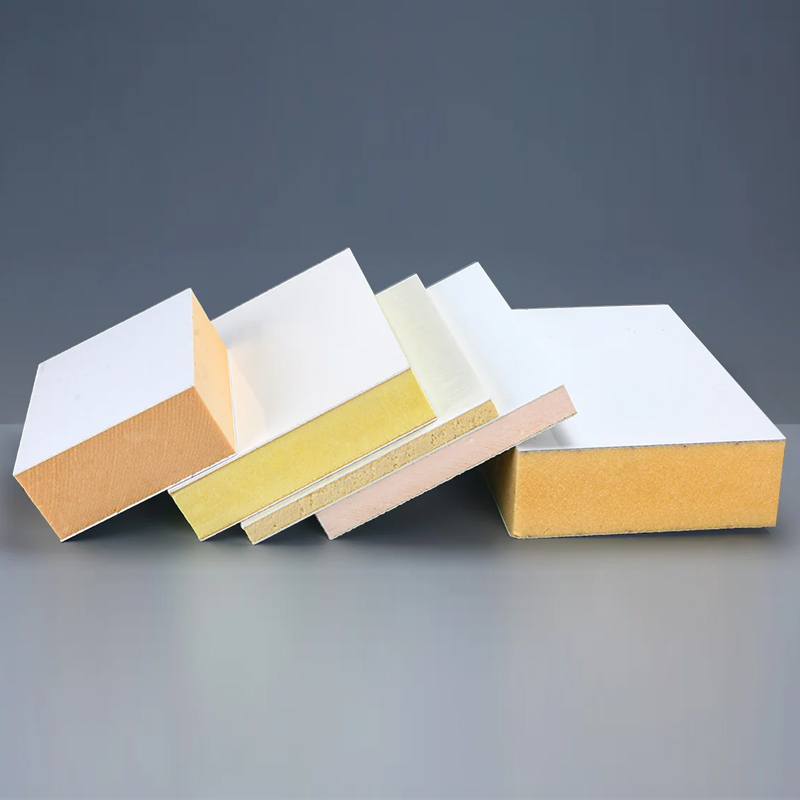
What Materials Are Used in Modern Truck Body Panels?
Truck body manufacturing is moving toward lighter, stronger, and more efficient composite structures. As transportation companies look for ways to reduce vehicle weight, improve payload capacity, and control operating costs, traditional solid materials are increasingly being evaluated alongside lightweight sandwich panel solutions.
Modern truck body panels are no longer made from just one material. Depending on the vehicle type and operating conditions, manufacturers may combine fiberglass-reinforced plastic (FRP), aluminum sheets, polypropylene honeycomb, PET foam, PVC foam, polyurethane foam, and other core materials to create lightweight composite structures.
For truck body manufacturers, trailer producers, and refrigerated vehicle manufacturers, selecting the right panel structure is an important engineering and purchasing decision.
This article explains the main materials used in modern truck body panels, compares different core materials, and discusses how to select suitable composite structures for truck side walls, roofs, floors, front panels, and rear doors.
1. What Are Modern Truck Body Panels?
Truck body panels are structural or semi-structural components used to construct the walls, roofs, floors, doors, and partitions of commercial vehicle bodies.
They are commonly used in:
- Box trucks
- Dry freight trucks
- Refrigerated trucks
- Insulated delivery vehicles
- Semi-trailers
- Cargo trailers
- Lightweight commercial vehicles
- Special-purpose transport vehicles
Traditional truck body construction often uses metal sheets, timber boards, or metal-framed structures.
Modern composite truck body panels frequently use a sandwich construction consisting of two outer skins and a lightweight core.
A typical FRP sandwich panel includes three components:
| Component | Material Options | Main Function |
|---|---|---|
| Outer Skin | FRP, aluminum, steel, other composite sheets | Surface protection and tensile performance |
| Core Material | PP honeycomb, PET foam, PVC foam, PU foam, aluminum honeycomb | Panel thickness, stiffness, compression and insulation characteristics |
| Bonding Layer | Structural adhesive or compatible resin system | Transfers loads between skins and core |
The sandwich structure separates the two face sheets with a lightweight core. This configuration can provide high bending stiffness without requiring a solid, heavy panel.
The final performance depends on the complete panel design, including skin thickness, core properties, adhesive compatibility, panel dimensions, and manufacturing quality.
2. FRP Skin: A Common Surface Material for Composite Truck Body Panels
Fiberglass Reinforced Plastic (FRP) is widely considered for truck body panel manufacturing because it combines relatively low weight with corrosion resistance and design flexibility.
FRP sheets can be used as exterior or interior skins in composite sandwich panels.
Main Characteristics of FRP Skins
- Corrosion resistance
- Good surface durability when properly specified
- Available in different thicknesses and finishes
- Suitable for bonding with compatible core materials
- Can be manufactured in different colors and surface textures
- Suitable for large composite panel structures
FRP skins are commonly evaluated for truck side walls, roof panels, rear doors, and refrigerated vehicle bodies.
However, FRP skin selection should consider the actual application. A panel exposed to frequent impacts, abrasion, UV radiation, or chemical cleaning may require a different skin specification from an interior partition.
The bonding surface also needs to be compatible with the selected adhesive or resin system.
3. PP Honeycomb Core: A Lightweight Option for Truck Body Sandwich Panels
PP Honeycomb Core is a cellular polypropylene material with a honeycomb structure.
Its lightweight construction makes it an option for manufacturers developing truck body composite panels where weight reduction is important.
When combined with suitable FRP skins, PP honeycomb can be used to produce FRP PP honeycomb sandwich panels.
Advantages of PP Honeycomb Core
- Lightweight cellular structure
- High thickness-to-weight potential
- Good dimensional stability when properly designed
- Resistance to moisture absorption compared with many open-cell materials
- Suitable for customized panel thicknesses and dimensions
- Can be evaluated for large-format composite panels
Typical Applications
- Truck side wall panels
- Trailer wall panels
- Interior partitions
- Lightweight cargo body panels
- Selected vehicle floor structures, subject to load and design verification
Important Bonding Consideration
Polypropylene has relatively low surface energy, which can make direct bonding difficult with conventional adhesives.
For FRP truck body panel production, manufacturers should evaluate:
- Surface treatment
- Compatible adhesive systems
- Nonwoven-faced PP honeycomb
- Core-to-facing bonding strength
- Facing-to-FRP bonding strength
A nonwoven-faced PP honeycomb core may provide a more suitable bonding surface, but the complete bonding system still requires testing.
PP honeycomb should not be selected based on density alone. Compression resistance, shear performance, panel span, local reinforcement, and complete sandwich panel testing are also important.
4. PET Foam Core: A Structural Foam Option for Composite Truck Panels
PET Foam Core is a closed-cell structural foam material used in various composite sandwich constructions.
For truck body manufacturers, PET foam can be considered when the panel design requires a foam core with suitable mechanical properties and compatibility with the selected composite manufacturing process.
Main Characteristics
- Closed-cell foam structure
- Available in different density grades
- Suitable for composite sandwich construction
- Can be machined and cut into customized shapes
- Can be evaluated for structural panel applications
Potential Applications
- FRP truck side panels
- Composite trailer panels
- Vehicle interior panels
- Lightweight industrial transportation panels
PET foam selection should consider density, compressive strength, shear properties, water absorption, and adhesive compatibility.
Different PET foam grades can have significantly different performance characteristics. Manufacturers should therefore request technical data for the actual grade rather than relying on general material descriptions.
5. PVC Foam Core: Structural Core Material for Demanding Composite Applications
PVC Foam Core is commonly used in structural composite sandwich construction, including marine, transportation, and industrial applications.
Its mechanical performance depends on the specific formulation, density, cell structure, and manufacturing process.
Main Characteristics
- Closed-cell structural foam
- Available in different density grades
- Suitable for composite sandwich structures
- Can be machined and shaped
- Available in different thicknesses and configurations
PVC foam may be evaluated for truck body panels requiring structural support, especially where the panel design involves more demanding bending, shear, or local loading requirements.
For truck body applications, manufacturers should compare the specific PVC foam grade with other available cores based on:
- Compressive strength
- Shear strength
- Shear modulus
- Density
- Water absorption
- Bonding compatibility
- Cost per finished panel
A higher-density core may offer improved mechanical properties, but it can also increase panel weight and material cost. The appropriate grade depends on the complete structural design.
6. PU Foam and XPS Foam: Options for Insulated Truck Body Panels
Insulated truck bodies have different requirements from standard dry freight truck bodies.
For refrigerated vehicles and temperature-controlled transportation, thermal performance becomes a major design consideration.
PU Foam Core
Polyurethane foam is commonly used in insulated panel construction because of its thermal insulation characteristics.
Potential applications include:
- Refrigerated truck body panels
- Insulated trailer walls
- Temperature-controlled delivery vehicles
- Insulated roof and door panels
XPS Foam Core
Extruded Polystyrene (XPS) foam is another material that can be evaluated for insulated composite panel applications.
Its closed-cell structure and thermal insulation characteristics make it relevant to selected building and transportation panel designs.
However, XPS must be evaluated for compatibility with the selected adhesive and resin system. Some resin and solvent chemistries may damage polystyrene foam.
Comparison of PU and XPS
| Evaluation Factor | PU Foam | XPS Foam |
|---|---|---|
| Main Purpose | Thermal insulation | Thermal insulation |
| Structure | Cellular foam | Extruded closed-cell foam |
| Density | Depends on grade | Depends on grade |
| Mechanical Properties | Grade-dependent | Grade-dependent |
| Bonding Compatibility | Requires adhesive verification | Requires compatibility testing |
| Typical Applications | Insulated vehicle panels | Selected insulated composite panels |
The thermal performance of a finished refrigerated truck panel cannot be determined from core material alone. Skin materials, panel thickness, joints, door seals, thermal bridges, and manufacturing quality all influence the complete structure.
7. Aluminum Honeycomb Core: For Lightweight and High-Stiffness Panel Designs
Aluminum Honeycomb Core consists of thin aluminum foil formed into a cellular honeycomb structure.
It is used in lightweight sandwich panels where stiffness and structural efficiency are important.
When combined with suitable FRP or metal skins, aluminum honeycomb can be considered for selected truck body and trailer panel designs.
Potential advantages include:
- Lightweight cellular structure
- High stiffness-to-weight potential
- Good dimensional stability
- Customizable cell sizes and core thicknesses
- Compatibility with various sandwich panel designs
However, aluminum honeycomb is not automatically suitable for every truck body application.
Manufacturers should consider corrosion protection, edge treatment, adhesive compatibility, moisture exposure, impact resistance, and the possibility of local core damage.
For refrigerated truck bodies, thermal bridging through metal components must also be evaluated.
8. Comparison of Common Truck Body Panel Core Materials
Choosing a core material requires balancing weight, mechanical properties, insulation requirements, manufacturing compatibility, and total cost.
The following table provides a general material selection guide.
| Core Material | Lightweight Potential | Structural Applications | Thermal Insulation Focus | Key Consideration |
|---|---|---|---|---|
| PP Honeycomb | High | Depends on design | Not primarily selected for insulation | Low surface energy and bonding |
| PET Foam | Grade-dependent | Yes | Grade-dependent | Mechanical grade selection |
| PVC Foam | Grade-dependent | Yes | Grade-dependent | Density and structural properties |
| PU Foam | Grade-dependent | Selected applications | Commonly used | Insulation and bonding compatibility |
| XPS Foam | Grade-dependent | Selected applications | Commonly used | Adhesive and resin compatibility |
| Aluminum Honeycomb | High | Yes | Not primarily selected for insulation | Corrosion, edges, and thermal bridging |
The table is intended for initial material screening. Actual panel performance must be verified using the selected core grade, FRP skin, adhesive system, and finished panel configuration.
9. Different Truck Body Parts Require Different Panel Structures
A truck body is not a single uniform structure. Each component experiences different loading conditions.
9.1 Truck Side Wall Panels
Side walls generally require a balance of low weight, bending stiffness, surface durability, and impact resistance.
FRP skins combined with PP honeycomb, PET foam, or PVC foam may be considered depending on the design.
9.2 Truck Roof Panels
Roof panels need to withstand environmental exposure, vibration, and loads from the roof structure or installed accessories.
The design should consider panel span, support spacing, water resistance, and local reinforcement around mounting points.
9.3 Truck Floor Panels
Truck floors usually experience more demanding loading conditions than side walls.
They may be exposed to:
- Concentrated wheel loads
- Forklift loading
- Cargo impact
- Abrasion
- Repeated loading cycles
The core material and skin structure must be selected according to the expected service loads.
A lightweight core should not be assumed suitable for flooring without compression, bending, impact, and load-distribution testing.
9.4 Rear Doors and Front Panels
Rear doors and front walls may require reinforced areas for hinges, locks, mounting hardware, and other accessories.
Local inserts or higher-density core sections may be necessary to distribute concentrated loads.
10. How to Select the Right Truck Body Panel Materials
For truck body manufacturers, material selection should begin with the required panel performance rather than the lowest core material price.
The following factors should be considered.
1. Vehicle Type
A dry cargo truck, refrigerated truck, and heavy-duty trailer have different panel requirements.
2. Target Panel Weight
Manufacturers should calculate the weight of the complete panel, including both skins, core, adhesive, inserts, and edge components.
3. Mechanical Requirements
Consider bending stiffness, compression strength, shear strength, impact resistance, and local loading.
4. Thermal Requirements
For insulated vehicles, evaluate the complete panel thermal resistance rather than only the core’s thermal conductivity.
5. Bonding Compatibility
The core, FRP skin, and adhesive must work together as a complete bonding system.
6. Production Process
The core must be compatible with the factory’s cutting, bonding, pressing, curing, and machining equipment.
7. Total Manufacturing Cost
Consider material price, processing time, adhesive consumption, waste, rework, and finished panel performance.
11. What Should Truck Body Panel Manufacturers Ask Their Core Material Suppliers?
When purchasing core materials for truck body composite panels, manufacturers should provide clear technical information.
| Specification | Recommended Information |
|---|---|
| Application | Truck side wall, roof, floor, door, trailer panel |
| Core Type | PP honeycomb, PET foam, PVC foam, PU foam, XPS, aluminum honeycomb |
| Density | Required density or target range |
| Thickness | Required core thickness |
| Panel Dimensions | Length and width |
| Facing | Bare, nonwoven-faced, or customized |
| Cell Size | Required for honeycomb materials |
| Mechanical Requirements | Compression, shear, bending, or other target properties |
| Bonding System | Adhesive or resin type |
| Surface Treatment | Required treatment or facing |
| Processing | Cutting, bonding, pressing, and machining requirements |
| Order Quantity | Prototype, trial production, or mass production |
A good supplier should be able to discuss material specifications, technical data, customization, and bonding compatibility rather than simply offering a price per sheet.
12. ONEBOND Core Materials for Truck Body Composite Panel Manufacturers
ONEBOND supplies composite core materials for manufacturers developing lightweight sandwich panels.
Our product range includes:
- PP Honeycomb Core
- PET Foam Core
- PVC Foam Core
- XPS Foam Core
- PU Foam Core
- Aluminum Honeycomb Core
These core materials can be evaluated for truck body panels, trailer panels, FRP sandwich panels, and other lightweight composite structures.
For truck body panel manufacturers, material selection should be based on the intended vehicle application, panel construction, mechanical requirements, and manufacturing process.
ONEBOND supports customized core material solutions according to project specifications.
To discuss a truck body panel project, provide your required core type, density, thickness, panel dimensions, facing requirements, and intended application.
Frequently Asked Questions
1. What materials are used in modern truck body panels?
Modern truck body panels may use FRP, aluminum, steel, PP honeycomb, PET foam, PVC foam, PU foam, XPS foam, and aluminum honeycomb.
2. What is the best core material for FRP truck body panels?
PP honeycomb, PET foam, and PVC foam may all be suitable depending on panel weight, mechanical requirements, bonding compatibility, and application.
3. What is an FRP truck body sandwich panel?
It is a composite panel made with FRP outer skins bonded to a lightweight core such as PP honeycomb or structural foam.
4. Is PP honeycomb core suitable for truck body panels?
PP honeycomb can be evaluated for truck side walls, trailer panels, and selected vehicle structures, provided that the bonding system and mechanical performance are properly verified.
5. What is the difference between PP honeycomb and PET foam for truck panels?
PP honeycomb has a cellular structure, while PET foam has a closed-cell foam structure. Their weight, bonding, compression, shear, and processing characteristics differ.
6. Which core material is suitable for refrigerated truck body panels?
PU foam and XPS foam are commonly evaluated for insulation-focused designs. The final selection should consider complete panel thermal performance and bonding compatibility.
7. What factors affect truck body sandwich panel weight?
Panel weight depends on the skins, core density and thickness, adhesive quantity, inserts, reinforcements, and edge components.
8. Can truck body panel core materials be customized?
Yes. Core material, density, thickness, dimensions, facing, and other specifications can be discussed according to the manufacturer’s requirements.
9. What should manufacturers consider when buying truck body panel core materials?
Important factors include material specifications, mechanical properties, bonding compatibility, processing requirements, consistency, and total manufacturing cost.
10. Why are lightweight composite panels used in truck body manufacturing?
Lightweight composite panels can help reduce vehicle body weight while providing suitable stiffness and structural performance when properly designed and manufactured.
Conclusion
Modern truck body panels are increasingly designed around lightweight composite structures rather than relying exclusively on traditional solid materials.
FRP skins combined with PP honeycomb, PET foam, PVC foam, PU foam, XPS foam, or aluminum honeycomb can provide different solutions for truck body and trailer manufacturing.
The right material depends on the vehicle type, panel location, mechanical loading, thermal requirements, bonding process, and total manufacturing cost.
For truck body panel manufacturers, selecting the right core material is an important step toward developing lightweight, durable, and production-efficient composite panels.
