
PP Honeycomb Core for Truck Body Panels: Lightweight Structure and Applications
Lightweight construction has become an important consideration in modern truck body and trailer manufacturing. Vehicle manufacturers are constantly evaluating ways to reduce body weight, improve payload capacity, and maintain the structural performance required for commercial transportation.
One material attracting attention in composite vehicle panel manufacturing is PP Honeycomb Core.
Made from polypropylene with a cellular honeycomb structure, PP honeycomb core provides a lightweight alternative to some traditional solid and foam-based core materials. When combined with suitable FRP skins and a validated bonding system, it can be used to manufacture lightweight truck body sandwich panels.
For truck body composite panel manufacturers, trailer producers, and FRP sandwich panel factories, understanding the structure, material characteristics, bonding requirements, and application limitations of PP honeycomb core is essential.
This article explains how PP honeycomb core can be used in truck body panel manufacturing, how to select suitable specifications, and what manufacturers should consider before purchasing.
1. What Is PP Honeycomb Core?
PP Honeycomb Core, also known as Polypropylene Honeycomb Core or PP Honeycomb Material, is a lightweight cellular core made from polypropylene.
Its internal structure consists of interconnected honeycomb cells. This cellular configuration provides material thickness while limiting the amount of solid material used.
PP honeycomb core is commonly considered for composite sandwich structures where manufacturers want to achieve a balance between low weight, panel thickness, and structural performance.
Depending on the production method and product configuration, PP honeycomb core can be supplied in different forms:
- Bare PP Honeycomb Core
- Nonwoven Faced PP Honeycomb Core
- PP Honeycomb Sheets
- Customized PP Honeycomb Core Blocks
- PP Honeycomb Core for FRP Sandwich Panels
For truck body applications, the core is generally combined with outer skins such as FRP sheets to create a composite sandwich panel.
The final panel performance depends on the core properties, face-sheet materials, bonding interface, panel geometry, and manufacturing process.
2. Why Use PP Honeycomb Core for Truck Body Panels?
Truck body manufacturers are under continuous pressure to improve vehicle efficiency. Reducing unnecessary body weight can help increase available payload capacity, depending on vehicle design and applicable load limits.
PP honeycomb core offers several characteristics that make it worth evaluating for lightweight truck body structures.
2.1 Lightweight Cellular Structure
The honeycomb structure uses relatively little material to create a panel core with substantial thickness.
When incorporated into an appropriately designed sandwich panel, it can help manufacturers achieve a lightweight construction.
However, the weight of the complete panel must include both FRP skins, adhesive, reinforcements, inserts, and edge components.
2.2 Panel Thickness and Structural Efficiency
The core separates the two FRP face sheets, increasing the distance between them.
This separation can improve the bending stiffness of the sandwich structure when the skins and core are properly bonded and designed.
For truck body panel manufacturers, this makes PP honeycomb worth considering for large-format side walls and other lightweight panel structures.
2.3 Moisture Resistance
Polypropylene itself has low water absorption.
This characteristic can be useful in vehicle applications exposed to rain, humidity, and regular cleaning.
However, moisture resistance of the complete sandwich panel also depends on FRP skin integrity, adhesive performance, edge sealing, cutouts, and connection details.
2.4 Customizable Structure
PP honeycomb core can be evaluated in different cell sizes, thicknesses, densities, and facing configurations.
This flexibility allows manufacturers to select core specifications according to panel design and production requirements.
3. Typical Structure of an FRP PP Honeycomb Truck Body Panel
A common construction for a lightweight truck body panel consists of two FRP skins bonded to a PP honeycomb core.
A typical structure includes:
Outer FRP Skin
Provides the external surface and contributes to the tensile and compressive performance of the sandwich panel.
PP Honeycomb Core
Creates the lightweight cellular structure, maintains panel thickness, and contributes to shear and compression behavior.
Inner FRP Skin
Provides the internal surface and works together with the outer skin to resist bending loads.
Bonding Interface
Transfers loads between the skins and core through a compatible adhesive or validated bonding system.
A simplified panel construction is shown below:
| Layer | Material | Function |
|---|---|---|
| Outer Face | FRP Sheet | Surface protection and structural contribution |
| Bonding Layer | Compatible Adhesive | Transfers loads between components |
| Core | PP Honeycomb Core | Lightweight structural separation |
| Bonding Layer | Compatible Adhesive | Maintains skin-to-core bonding |
| Inner Face | FRP Sheet | Structural contribution and interior finish |
The actual structure can be customized according to the application.
For example, a truck side wall panel may use a different thickness and reinforcement design from a truck floor panel.
4. Applications of PP Honeycomb Core in Truck Body Manufacturing
PP honeycomb core can be considered for different truck body and trailer components. Each application requires a separate evaluation of loading conditions and panel construction.
4.1 Truck Side Wall Panels
Truck side walls are among the potential applications for PP honeycomb FRP sandwich panels.
These panels generally need to balance:
- Low panel weight
- Bending stiffness
- Surface durability
- Impact resistance
- Dimensional stability
- Moisture resistance
FRP skins combined with PP honeycomb core can be evaluated for lightweight side wall construction.
For large panels, manufacturers should pay particular attention to support spacing, panel span, skin thickness, and edge reinforcement.
4.2 Truck Roof Panels
Roof panels are exposed to weather conditions, vibration, and structural loads from the vehicle body.
PP honeycomb core may be considered where a lightweight sandwich structure is required.
The design should account for:
- Roof span
- Supporting frame arrangement
- Water drainage
- Mounting points
- Wind loading
- Local reinforcement
- Edge sealing
Areas used for installing roof accessories or equipment may require additional reinforcement.
4.3 Trailer Wall Panels
Trailer manufacturers often require large-format lightweight panels for side walls and other body components.
PP honeycomb core can be evaluated as an alternative to selected foam or traditional board cores.
The final structure should be tested for bending, shear, compression, impact, and bonding performance according to the trailer’s operating requirements.
4.4 Interior Partitions and Lining Panels
PP honeycomb sandwich panels may also be considered for interior partitions and lining structures where reducing weight is important.
Depending on the design, the panels may use FRP, decorative composite sheets, or other suitable face materials.
4.5 Truck Floor Panels: Special Design Considerations
Truck floors are more demanding than typical side wall panels.
They may experience concentrated wheel loads, forklift traffic, cargo impact, abrasion, and repeated loading.
A PP honeycomb core should not be assumed suitable for truck flooring simply because it is lightweight.
Floor panel design should consider:
- Core compression strength
- Face-sheet thickness and stiffness
- Local load distribution
- Support spacing
- Insert and reinforcement design
- Impact and fatigue performance
- Surface wear resistance
For demanding floor applications, the complete panel structure must be evaluated through appropriate mechanical testing.
5. Bare PP Honeycomb Core vs Nonwoven Faced PP Honeycomb Core
One important decision in FRP truck body panel production is whether to use bare PP honeycomb core or nonwoven-faced PP honeycomb core.
These configurations have different bonding and processing considerations.
| Comparison | Bare PP Honeycomb Core | Nonwoven Faced PP Honeycomb Core |
|---|---|---|
| Surface Configuration | Exposed polypropylene cellular surface | Nonwoven facing attached to the core |
| Weight | Depends on core specification | Includes facing weight |
| Bonding Consideration | Requires a validated PP bonding method | Provides an alternative bonding surface |
| Processing | May require additional surface treatment | Can simplify certain bonding processes |
| Application | Depends on validated adhesive system | Depends on facing and adhesive compatibility |
Why Does Nonwoven Facing Matter?
Polypropylene has relatively low surface energy, which makes bonding to conventional adhesives more challenging.
A nonwoven facing can provide a more suitable surface for bonding to FRP skins.
However, the presence of nonwoven material does not automatically guarantee strong adhesion.
Manufacturers should verify two separate interfaces:
- PP honeycomb core to nonwoven facing.
- Nonwoven facing to FRP skin.
If either interface is weak, the finished sandwich panel may experience delamination.
Therefore, bonding trials and finished-panel testing should be conducted before mass production.
6. How to Select PP Honeycomb Core Specifications for Truck Body Panels
There is no single PP honeycomb specification suitable for all truck body panels.
Manufacturers should select the core based on panel dimensions, skin materials, loading conditions, production process, and target weight.
Important specifications include:
6.1 Core Density
Core density affects material weight and is related to the amount and configuration of polypropylene used in the cellular structure.
A higher-density core may offer different compression and shear properties from a lower-density grade.
However, density alone cannot determine finished panel performance.
6.2 Core Thickness
Core thickness influences panel geometry and can have a significant effect on sandwich panel bending stiffness.
The correct thickness depends on panel span, support arrangement, face-sheet properties, and loading conditions.
6.3 Cell Size
Cell size is another important parameter.
Different cell sizes can affect the cellular structure, bonding contact, local support, and manufacturing behavior.
The appropriate selection should be validated using the actual FRP skin and adhesive system.
6.4 Facing Type
Manufacturers may choose between bare and faced PP honeycomb depending on the bonding process.
Possible configurations include:
- Bare PP Honeycomb Core
- Nonwoven Faced PP Honeycomb Core
- Customized Facing Solutions
6.5 Mechanical Properties
For truck body panel applications, important performance indicators include:
- Flatwise compression strength
- Core shear strength
- Core shear modulus
- Panel bending performance
- Skin-to-core bonding strength
- Impact resistance of the finished panel
These properties should be evaluated using appropriate test methods and representative finished-panel samples.
7. Example PP Honeycomb Core Specification Table
The following table provides a template for technical communication between core suppliers and truck body panel manufacturers.
Actual specifications should be confirmed against the supplier’s product data and test results.
| Parameter | Specification |
|---|---|
| Product Name | PP Honeycomb Core |
| Material | Polypropylene |
| Core Structure | Honeycomb Cellular Structure |
| Density | Customized According to Requirements |
| Core Thickness | Customized According to Requirements |
| Cell Size | Customized According to Requirements |
| Facing | Bare / Nonwoven Faced |
| Color | Customized According to Requirements |
| Sheet Dimensions | Customized According to Requirements |
| Cutting | Customized Size Available |
| Application | Truck Body / Trailer / FRP Sandwich Panel |
| Bonding Method | To Be Confirmed Through Compatibility Testing |
For a more accurate quotation, buyers should provide their target density, thickness, cell size, facing type, sheet dimensions, and annual purchasing quantity.
8. PP Honeycomb Core vs Foam Core for Truck Body Panels
PP honeycomb core is not the only option for truck body sandwich panel manufacturing.
PET foam, PVC foam, PU foam, and XPS foam may also be considered depending on the application.
| Material | Structure | Main Selection Focus | Important Consideration |
|---|---|---|---|
| PP Honeycomb | Cellular honeycomb | Lightweight panel construction | PP bonding compatibility |
| PET Foam | Closed-cell foam | Structural composite applications | Grade-specific mechanical properties |
| PVC Foam | Closed-cell foam | Structural sandwich applications | Density, shear and compression properties |
| PU Foam | Cellular foam | Insulated panel construction | Thermal performance and grade |
| XPS Foam | Extruded closed-cell foam | Insulation-focused applications | Adhesive and resin compatibility |
For truck side walls, manufacturers may compare PP honeycomb with structural foam cores.
For refrigerated truck panels, insulation requirements become more important, and PU or XPS may be considered depending on the complete panel design.
The selection should be based on finished-panel weight, structural performance, thermal requirements, processing compatibility, and total production cost.
9. Manufacturing Considerations for FRP PP Honeycomb Truck Body Panels
Using PP honeycomb core in FRP truck body panel production requires careful process control.
Step 1: Core Cutting
The PP honeycomb core is cut according to the required panel dimensions.
Cutting accuracy is important for consistent assembly and edge alignment.
Step 2: Surface Preparation
The core surface and facing condition should be checked before bonding.
For bare PP honeycomb, the selected surface treatment or bonding approach must be validated.
Step 3: FRP Skin Preparation
The FRP sheets should be inspected for surface cleanliness, thickness consistency, and compatibility with the adhesive system.
Step 4: Adhesive Application
The adhesive should be applied according to the validated process.
Adhesive quantity, open time, and application uniformity should be controlled.
Step 5: Panel Assembly
The FRP skins and core are positioned and aligned according to the panel design.
Step 6: Pressing and Curing
The assembly is pressed under conditions suitable for the core, adhesive, and FRP skins.
Excessive pressure may deform honeycomb cells, while insufficient pressure may result in incomplete bonding.
Step 7: Trimming and Inspection
The finished panel is trimmed and inspected for dimensions, flatness, appearance, weight, and bonding quality.
The complete process should be established through material-specific trials rather than applying one universal production setting to every core material.
10. Quality Control Requirements for Truck Body Honeycomb Panels
Quality control should cover both the incoming PP honeycomb core and the finished FRP sandwich panel.
| Inspection Item | Purpose |
|---|---|
| Core Density | Controls material consistency |
| Core Thickness | Checks dimensional accuracy |
| Cell Size | Verifies cellular structure |
| Surface Condition | Identifies damage or contamination |
| Facing Bonding | Checks facing-to-core integrity |
| Flatwise Compression | Evaluates compression behavior |
| Core Shear | Evaluates shear performance |
| Panel Bending | Evaluates complete sandwich structure |
| Skin-to-Core Bonding | Checks bonding integrity |
| Panel Weight | Controls finished-product consistency |
| Panel Flatness | Checks dimensional stability |
Testing methods should be selected according to the product design and intended application.
For example, ASTM C271/C271M can be considered for core density determination, ASTM C365/C365M for flatwise compressive properties, ASTM C273/C273M for core shear properties, and ASTM C297/C297M for flatwise tensile properties of sandwich constructions.
Always confirm the applicable standard edition, specimen configuration, and test requirements before specifying a test program.
11. What Truck Body Panel Manufacturers Should Consider When Buying PP Honeycomb Core
For B2B buyers, purchasing decisions should consider more than the quoted price per sheet.
The following points can help manufacturers evaluate suppliers:
Material Consistency
Check whether density, thickness, cell size, and facing specifications remain consistent between production batches.
Bonding Compatibility
Ask whether the core is bare or faced, and request technical information about the recommended bonding approach.
Customization
Confirm whether the supplier can provide the required core thickness, density, cell size, facing, and cutting dimensions.
Production Capacity
Discuss the supplier’s ability to support the required order volume and production schedule.
Technical Support
A suitable supplier should be able to discuss material selection, processing compatibility, and test requirements.
Quality Documentation
Request available technical data sheets, inspection records, and test reports relevant to the actual product specification.
12. ONEBOND PP Honeycomb Core for Truck Body Panel Manufacturers
ONEBOND supplies PP Honeycomb Core and other composite core materials for manufacturers developing lightweight sandwich panels.
Our product range includes:
- Bare PP Honeycomb Core
- Nonwoven Faced PP Honeycomb Core
- Customized PP Honeycomb Core
- PP Honeycomb Sheets
- PET Foam Core
- PVC Foam Core
- XPS Foam Core
- PU Foam Core
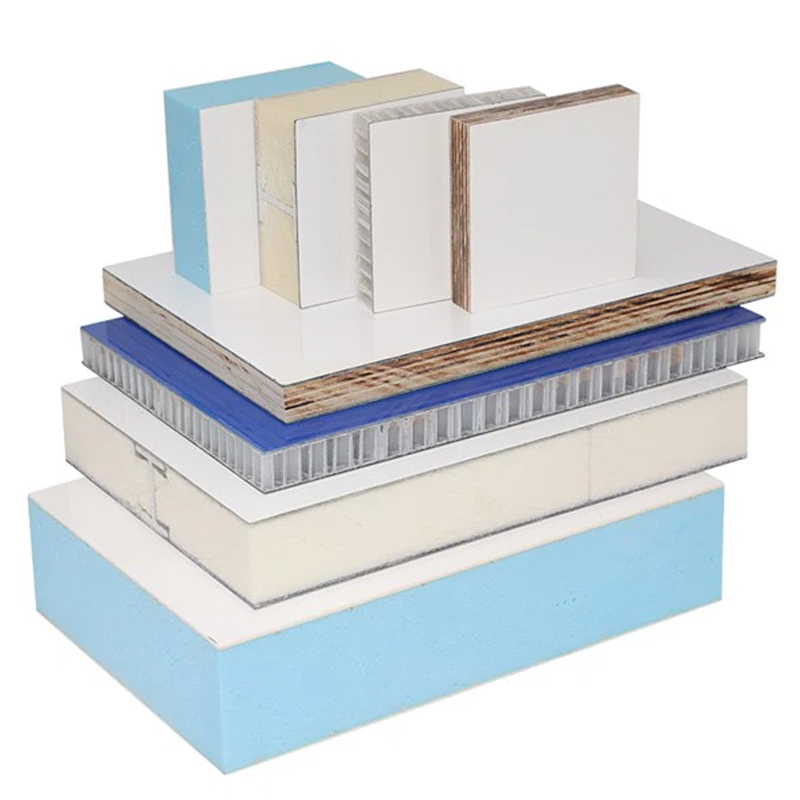
- Aluminum Honeycomb Core
These materials can be evaluated for truck body panels, trailer panels, FRP composite boards, vehicle interior panels, and other lightweight sandwich structures.
For truck body panel manufacturers, we understand that different panel components may require different core specifications.
ONEBOND can discuss customized core solutions according to your required density, thickness, cell size, facing configuration, sheet dimensions, and application.
Contact ONEBOND with your panel design and purchasing requirements to discuss a suitable PP honeycomb core solution.
Frequently Asked Questions
1. What is PP honeycomb core for truck body panels?
It is a lightweight polypropylene cellular core that can be combined with suitable face sheets to manufacture truck body sandwich panels.
2. Can PP honeycomb core be used in FRP truck body panels?
Yes, it can be evaluated for FRP truck body panels, provided that the bonding interface and complete panel performance are properly validated.
3. Is PP honeycomb core suitable for truck trailer side walls?
It can be considered for lightweight trailer side walls, depending on panel span, skin thickness, support structure, and mechanical requirements.
4. What is the difference between bare and nonwoven-faced PP honeycomb core?
Bare core has an exposed polypropylene surface, while nonwoven-faced core includes a facing layer intended to provide an alternative bonding surface.
5. What density is suitable for truck body PP honeycomb panels?
The suitable density depends on the required compression and shear properties, panel construction, loading conditions, and target weight.
6. What thickness of PP honeycomb core is used for truck body panels?
Core thickness should be selected according to panel span, skin stiffness, structural requirements, and finished panel dimensions.
7. Can PP honeycomb core be bonded directly to FRP sheets?
Direct bonding may be possible with a validated bonding system, but untreated PP has low surface energy and may require surface treatment or a suitable facing.
8. Is PP honeycomb core suitable for truck flooring?
It may be considered for selected floor designs, but the complete panel must be evaluated for concentrated loads, compression, impact, and repeated loading.
9. What information is required for a PP honeycomb core quotation?
Buyers should provide density, thickness, cell size, facing type, sheet dimensions, application, order quantity, and any special performance requirements.
10. Can ONEBOND supply customized PP honeycomb core for truck body manufacturers?
ONEBOND can discuss customized specifications according to project requirements, subject to technical and production confirmation.
Conclusion
PP Honeycomb Core offers truck body panel manufacturers a lightweight cellular core option for developing FRP sandwich panels and other composite vehicle structures.
Its potential applications include truck side walls, trailer panels, roof panels, interior partitions, and selected flooring designs.
However, successful application depends on more than the core material itself. Panel structure, FRP skin thickness, bonding compatibility, mechanical performance, and production conditions must all be considered.
For manufacturers looking to develop lightweight truck body panels, selecting the right PP honeycomb core specification and validating the complete sandwich construction are essential steps toward reliable production.
