
FRP Sandwich Panels for Truck Bodies: Structure, Thickness and Core Selection
FRP sandwich panels have become an important material option for modern truck body and trailer manufacturing. As transportation manufacturers focus on lightweight construction, payload efficiency, durability, and production consistency, composite sandwich structures offer an alternative to traditional solid boards and metal-based constructions.
However, choosing an FRP sandwich panel is not simply a matter of selecting a fiberglass sheet and a lightweight core. The complete panel structure must be designed around the vehicle’s application, panel dimensions, loading conditions, support arrangement, environmental exposure, and manufacturing process.
For truck body manufacturers and FRP composite panel producers, three factors are particularly important: FRP skin selection, core material selection, and panel thickness.
This article explains the structure of FRP truck body sandwich panels, compares commonly used core materials, and provides a practical framework for selecting panel specifications for side walls, roofs, floors, and doors.
1. What Is an FRP Sandwich Panel for Truck Bodies?
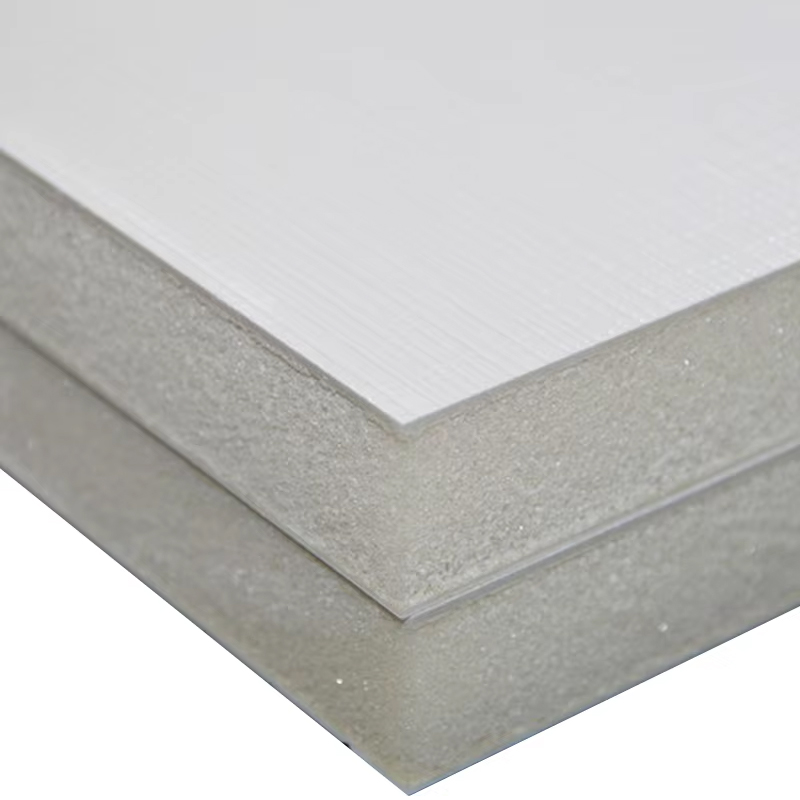
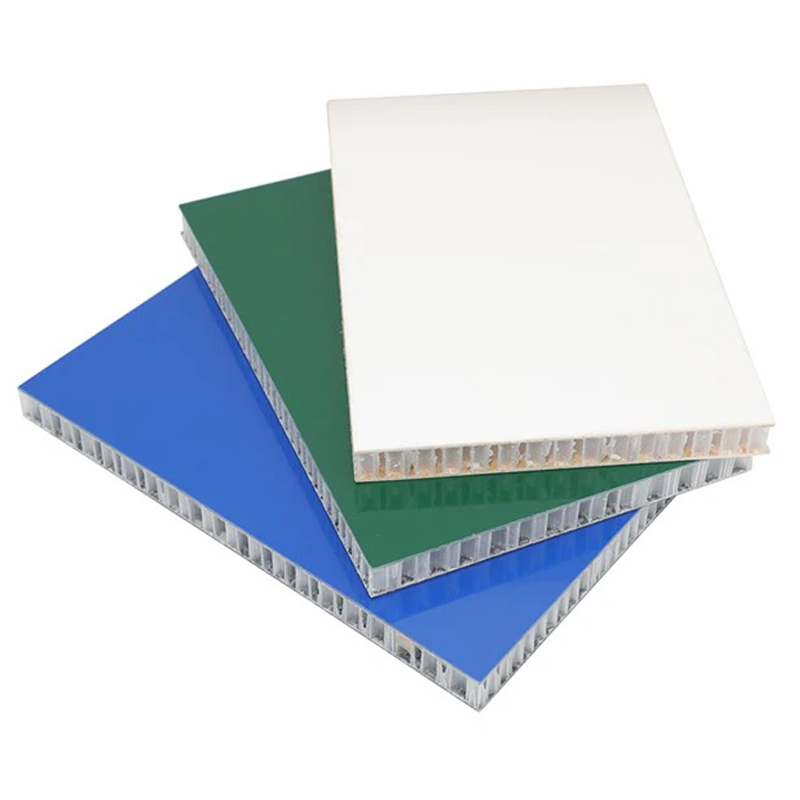
An FRP sandwich panel is a composite structure made by bonding lightweight core material between two outer face sheets.
For truck body applications, the face sheets are commonly fiberglass-reinforced plastic (FRP), while the core may consist of PP honeycomb, PET foam, PVC foam, PU foam, or other suitable materials.
A typical FRP sandwich panel contains five functional layers:
- Outer FRP skin
- Adhesive or bonding layer
- Lightweight core material
- Adhesive or bonding layer
- Inner FRP skin
The two FRP skins carry much of the tensile and compressive stress generated during panel bending, while the core separates the skins and contributes to shear resistance and structural stability.
This arrangement can provide higher bending stiffness than a solid sheet of similar weight when the structure is properly designed.
The final performance depends on the interaction between all components. A high-quality core cannot compensate for an unsuitable FRP skin, poor bonding, insufficient edge reinforcement, or an incorrectly designed support structure.
2. Main Components of FRP Truck Body Sandwich Panels
2.1 FRP Outer Skin
The outer FRP skin is exposed to the external environment and protects the panel structure.
Its main functions include:
- Surface protection
- Tensile and compressive load resistance
- Weather resistance
- Impact and abrasion resistance, depending on specification
- Exterior appearance
FRP skin thickness should be selected according to the panel location, expected impact, support spacing, and structural design.
A truck side wall exposed to regular cargo handling may require different skin properties from a roof panel or interior partition.
2.2 Core Material
The core provides separation between the two FRP skins and contributes to the overall panel thickness and structural performance.
Common core materials include:
| Core Material | Structure | Main Selection Consideration |
|---|---|---|
| PP Honeycomb Core | Polypropylene cellular structure | Lightweight design and bonding compatibility |
| PET Foam Core | Closed-cell structural foam | Mechanical properties and composite processing |
| PVC Foam Core | Closed-cell structural foam | Compression, shear and structural requirements |
| PU Foam Core | Cellular foam | Insulation-oriented panel construction |
| XPS Foam Core | Extruded closed-cell foam | Thermal performance and resin compatibility |
| Aluminum Honeycomb Core | Aluminum cellular structure | Stiffness, corrosion protection and edge design |
Different cores have different mechanical and thermal characteristics. They should not be treated as interchangeable materials.
2.3 Adhesive and Bonding Interface
The bonding layer connects the FRP skins to the core.
It is responsible for transferring loads between the face sheets and core, helping the sandwich structure work as a unified panel.
Important factors include:
- Adhesive compatibility
- Surface preparation
- Adhesive application quantity
- Curing conditions
- Bond-line uniformity
- Environmental durability
Polypropylene honeycomb requires particular attention because untreated PP has relatively low surface energy. Surface treatment, compatible adhesive systems, or suitable facing materials may be necessary.
For nonwoven-faced PP honeycomb, both the core-to-facing interface and facing-to-FRP interface should be validated.
3. How Does Panel Thickness Affect Truck Body Panel Performance?
Panel thickness is one of the most important design variables in sandwich panel manufacturing.
In general, increasing the distance between the two face sheets can improve bending stiffness, provided that the skins, core, bonding interfaces, and support conditions are suitable.
However, increasing panel thickness also affects:
- Total panel weight
- Material consumption
- Manufacturing cost
- Edge finishing
- Door and frame compatibility
- Installation details
- Available cargo space
The appropriate panel thickness should be determined through structural design and testing rather than selecting the thickest available core.
Main Thickness Components
The total panel thickness can be expressed as:
Total Panel Thickness = Outer FRP Skin + Core Thickness + Inner FRP Skin + Bond-Line Contributions
For example, a hypothetical panel with two 1.5 mm FRP skins and a 25 mm core would have a nominal thickness of approximately 28 mm before considering the bonding layers and manufacturing tolerances.
This is a calculation example only, not a standard truck body panel specification.
Why Does Core Thickness Matter?
In a sandwich panel, the face sheets are separated by the core. Increasing the separation can substantially increase bending stiffness, assuming that the core can transfer shear forces and maintain the distance between the skins.
This is why lightweight sandwich panels can achieve useful stiffness without using a solid board of the same thickness.
Nevertheless, core shear strength, face-sheet stiffness, bonding strength, panel span, and edge support must all be considered.
4. How to Select FRP Skin Thickness
FRP skin thickness influences panel weight, bending performance, impact resistance, surface durability, and total manufacturing cost.
A thicker FRP skin may improve certain mechanical properties, but it also increases material consumption and panel weight.
Manufacturers should evaluate the following factors:
Panel Location
Roof, side wall, floor, and door panels have different service conditions.
Impact Exposure
Panels frequently exposed to loading equipment, cargo movement, or external impacts may require additional protection.
Support Spacing
A larger unsupported span can increase bending demand and deflection.
Surface Requirements
Exterior panels may require specific gel-coat, UV-resistance, color, or finish requirements.
Structural Testing
Skin thickness should be verified through finished-panel performance testing rather than selected independently.
For a truck body project, the appropriate skin specification should be established together with the core and support structure.
5. PP Honeycomb Core for FRP Truck Body Panels
PP Honeycomb Core is a lightweight polypropylene cellular material that can be evaluated for truck body sandwich panels.
Its cellular structure provides panel thickness while limiting material consumption.
Main Characteristics
- Lightweight cellular construction
- Low water absorption of the polypropylene material
- Customizable density and thickness
- Different cell-size options
- Bare and nonwoven-faced configurations
- Suitable for selected FRP composite panel designs
Potential Applications
PP honeycomb core can be considered for:
- Truck side wall panels
- Trailer wall panels
- Roof panels
- Interior partitions
- Lightweight cargo body panels
- Selected floor structures with suitable reinforcement
Important Design Considerations
PP honeycomb is not automatically suitable for every truck body component.
For side walls and roofs, manufacturers should evaluate bending stiffness, core shear performance, skin thickness, support spacing, and bonding strength.
For floors, concentrated loads and repeated impact require more demanding structural verification.
The low surface energy of polypropylene also makes bonding an important part of the design.
Manufacturers should evaluate bare and nonwoven-faced PP honeycomb using the actual adhesive, FRP skin, and production process.
6. PET Foam and PVC Foam for FRP Truck Body Panels
PET foam and PVC foam are two structural foam options that can be considered for FRP sandwich panel manufacturing.
Both are closed-cell foam materials, but their mechanical properties and suitability depend on their specific grades and manufacturing characteristics.
PET Foam Core
PET foam is used in various composite sandwich structures.
It can be considered for truck body panels where the selected grade meets the required compression, shear, and bonding specifications.
Key evaluation factors include:
- Density
- Compressive strength
- Shear strength
- Shear modulus
- Water absorption
- Surface condition
- Adhesive compatibility
PVC Foam Core
PVC foam is also used in structural composite applications.
Different grades offer different combinations of density and mechanical performance.
It may be considered for panels that require a structural foam core and a suitable manufacturing process.
Important selection factors include:
- Density and thickness
- Compression performance
- Shear properties
- Resin and adhesive compatibility
- Environmental resistance
- Total panel weight
PET Foam vs PVC Foam
| Evaluation Factor | PET Foam | PVC Foam |
|---|---|---|
| Material Structure | Closed-cell foam | Closed-cell foam |
| Density | Grade-dependent | Grade-dependent |
| Compression Performance | Grade-dependent | Grade-dependent |
| Shear Performance | Grade-dependent | Grade-dependent |
| Composite Processing | Depends on grade and system | Depends on grade and system |
| Main Selection Basis | Mechanical and manufacturing requirements | Mechanical and manufacturing requirements |
There is no universal winner between PET and PVC foam. The correct selection depends on the actual material grade and finished-panel requirements.
7. Different Truck Body Components Need Different Panel Designs
A truck body consists of several panels with different functions and loading conditions.
Using one identical sandwich panel design for every component may result in unnecessary weight or inadequate structural performance.
7.1 Side Wall Panels
Side walls usually require a balance of:
- Low weight
- Bending stiffness
- Impact resistance
- Surface durability
- Moisture resistance
- Dimensional stability
FRP skins combined with PP honeycomb, PET foam, or PVC foam may be evaluated depending on the project.
For large side wall panels, support spacing and panel span should be carefully considered.
7.2 Roof Panels
Roof panels are exposed to weather, vibration, and possible loads from accessories or installed equipment.
The panel design should consider:
- Wind and environmental loading
- Roof support spacing
- Water drainage
- Mounting points
- Edge reinforcement
- Long-term deformation
Local reinforcement may be necessary around mounting points.
7.3 Floor Panels
Truck floors generally require higher resistance to concentrated loads and abrasion.
Potential loading conditions include:
- Forklift wheel loads
- Cargo impact
- Repeated traffic
- Concentrated pallet loads
- Abrasion during loading and unloading
A lightweight core alone does not guarantee a suitable floor panel.
The complete structure may require higher-density core sections, thicker face sheets, wear-resistant surface layers, or additional supports.
7.4 Front Wall and Rear Door Panels
Front walls and rear doors may require local reinforcement for hinges, locks, hinges, brackets, and other mechanical fittings.
The core design should account for concentrated loads and the connection between the panel and the truck body frame.
8. Truck Body Panel Structure Comparison
The following table provides a preliminary design comparison.
| Panel Location | Main Requirement | Core Materials to Evaluate | Important Design Factors |
|---|---|---|---|
| Side Wall | Lightweight and bending stiffness | PP Honeycomb, PET Foam, PVC Foam | Panel span, skin thickness, bonding |
| Roof | Low weight and dimensional stability | PP Honeycomb, PET Foam, PVC Foam | Support spacing, weather exposure, mounting |
| Floor | Compression and impact resistance | PET Foam, PVC Foam, reinforced PP Honeycomb designs | Concentrated loads, abrasion, reinforcement |
| Front Wall | Structural stability and impact resistance | PP Honeycomb, PET Foam, PVC Foam | Frame connection, local reinforcement |
| Rear Door | Stiffness and hardware support | PP Honeycomb, PET Foam, PVC Foam | Hinges, locks, inserts, edge design |
| Insulated Wall | Thermal performance | PU Foam, XPS Foam, suitable insulated structures | Thermal bridges, joints, insulation continuity |
This is an initial material screening guide. Final selection must be based on the actual vehicle design and testing requirements.
9. Example Truck Body Sandwich Panel Specification
The following table illustrates how a technical specification can be organized for quotation and engineering discussion.
It is not a universal industry standard or a confirmed ONEBOND product specification.
| Parameter | Example Specification Format |
|---|---|
| Product | FRP Truck Body Sandwich Panel |
| Outer Skin | FRP Sheet |
| Inner Skin | FRP Sheet |
| Core Material | PP Honeycomb / PET Foam / PVC Foam |
| Core Density | To Be Confirmed |
| Core Thickness | To Be Confirmed |
| FRP Skin Thickness | To Be Confirmed |
| Total Panel Thickness | According to Design |
| Panel Width | According to Vehicle Design |
| Panel Length | According to Vehicle Design |
| Surface Finish | Gel Coat / Smooth / Textured |
| Bonding System | Validated Adhesive System |
| Edge Treatment | Customized |
| Application | Truck Body / Trailer |
For accurate quotation, buyers should provide the panel drawing or detailed dimensions together with the required mechanical properties.
10. How to Calculate the Weight of an FRP Sandwich Panel
Panel weight is an important factor in truck body manufacturing.
A lower panel weight can contribute to vehicle weight reduction, but it must be balanced against structural performance and durability.
The theoretical panel weight per square meter can be estimated as:
Panel Weight = Outer Skin Weight + Core Weight + Inner Skin Weight + Adhesive Weight + Other Components
For a uniform core:
Core Weight per Square Meter = Core Density × Core Thickness
For example, consider a hypothetical core with:
- Density: 60 kg/m³
- Thickness: 20 mm (0.02 m)
The theoretical core weight is:
60 × 0.02 = 1.2 kg/m²
This calculation represents only the core material. It does not include FRP skins, adhesive, inserts, edge reinforcements, or manufacturing variations.
For an accurate finished-panel weight, all components must be included.
11. Manufacturing Considerations for FRP Truck Body Sandwich Panels
Selecting the correct core is only the first step. Manufacturing quality determines whether the selected structure can achieve consistent performance.
A typical production process includes:
1. Core Cutting
Cut the selected PP honeycomb, PET foam, or PVC foam to the required dimensions.
2. Core Surface Preparation
Check surface cleanliness, dimensional accuracy, and bonding suitability.
3. FRP Skin Preparation
Inspect skin thickness, surface finish, and bonding condition.
4. Adhesive Application
Apply the validated adhesive system with controlled quantity and uniformity.
5. Panel Assembly
Position the skins and core accurately according to the panel design.
6. Pressing and Curing
Control pressure, temperature, and curing time according to the adhesive and core specifications.
7. Trimming and Finishing
Complete edge trimming, machining, drilling, and sealing where required.
8. Finished Panel Inspection
Check thickness, dimensions, flatness, appearance, weight, and bonding quality.
For PP honeycomb structures, special attention should be given to surface treatment and bonding-interface validation.
12. Quality Testing for FRP Truck Body Sandwich Panels
Quality inspection should evaluate both individual materials and the finished panel.
| Test or Inspection | What It Evaluates |
|---|---|
| Core Density | Core material consistency |
| Core Thickness | Dimensional accuracy |
| Flatwise Compression | Resistance to compression |
| Core Shear | Shear strength and modulus |
| Flatwise Tension | Skin-to-core bonding behavior |
| Sandwich Beam Flexure | Structural response under bending |
| Panel Weight | Finished product consistency |
| Panel Flatness | Dimensional stability |
| Water Absorption | Relevant moisture-related behavior |
| Impact Testing | Resistance to application-specific impact |
Relevant ASTM methods may include C271/C271M for core density, C365/C365M for flatwise compressive properties, C273/C273M for core shear properties, C297/C297M for flatwise tensile properties, and C393/C393M for sandwich beam flexural testing.
The exact test method and specimen configuration should be selected according to the panel construction and the applicable standard edition.
13. How to Choose a Reliable FRP Truck Body Panel Core Supplier
For truck body panel manufacturers, choosing a core supplier is a long-term production decision.
A suitable supplier should provide more than a competitive quotation.
Material Specification
Check whether the supplier can clearly define density, thickness, cell size, facing, and dimensional tolerances.
Batch Consistency
Ask about production controls and batch inspection procedures.
Customization
Confirm whether customized core dimensions, facing configurations, and cutting services can be discussed.
Technical Communication
The supplier should understand the relationship between core materials, FRP skins, adhesive systems, and finished-panel performance.
Quality Documentation
Request available technical data sheets, inspection records, and relevant test reports.
Supply Reliability
Evaluate whether the supplier can support your expected purchasing volume and production schedule.
14. ONEBOND Core Materials for FRP Truck Body Panel Manufacturing
ONEBOND provides composite core materials for manufacturers developing lightweight FRP sandwich panels and transportation composite structures.
Our product range includes:
- PP Honeycomb Core
- Nonwoven Faced PP Honeycomb Core
- PET Foam Core
- PVC Foam Core
- XPS Foam Core
- PU Foam Core
- Aluminum Honeycomb Core
These materials can be evaluated for truck body panels, trailer panels, RV panels, marine structures, and other composite applications.
For truck body manufacturers, the appropriate core selection depends on panel location, target weight, mechanical requirements, bonding compatibility, and manufacturing conditions.
ONEBOND supports customized core material discussions according to project specifications.
If you are developing a new FRP truck body panel or optimizing an existing panel structure, provide your required core type, density, thickness, cell size, facing configuration, and application.
Our team can help discuss a suitable material solution based on your requirements.
Frequently Asked Questions
1. What is the typical structure of an FRP truck body sandwich panel?
A typical structure consists of an outer FRP skin, adhesive layer, lightweight core, adhesive layer, and inner FRP skin.
2. What core materials are used in FRP truck body panels?
Common options include PP honeycomb, PET foam, PVC foam, PU foam, XPS foam, and aluminum honeycomb.
3. How do I choose the thickness of an FRP truck body panel?
Panel thickness depends on the required stiffness, panel span, support arrangement, loading conditions, FRP skin properties, and core mechanical performance.
4. Is PP honeycomb suitable for truck body sandwich panels?
PP honeycomb can be considered for selected truck side walls, roof panels, and trailer structures, subject to bonding and structural verification.
5. What is the difference between PP honeycomb and PET foam for truck panels?
PP honeycomb has a cellular structure, while PET foam has a closed-cell foam structure. Their bonding, mechanical properties, weight, and processing requirements differ.
6. Which core material is better for truck body floors?
The choice depends on concentrated loading, impact, abrasion, support spacing, and the complete panel design. A lightweight core should not be selected without structural testing.
7. Does a thicker sandwich panel always have higher strength?
Not necessarily. Greater thickness can improve bending stiffness, but the final performance also depends on skin properties, core shear behavior, bonding, and support conditions.
8. How is FRP sandwich panel weight calculated?
It is calculated by adding the weight of both FRP skins, the core, adhesive, reinforcements, inserts, and other components per unit area.
9. Why is bonding important in FRP sandwich panel manufacturing?
Bonding transfers loads between the face sheets and core. Poor bonding can cause delamination and reduce the structural performance of the complete panel.
10. Can ONEBOND customize core materials for truck body panels?
ONEBOND can discuss customized core specifications, including material type, density, thickness, cell size, facing, and dimensions, subject to technical and production confirmation.
Conclusion
FRP sandwich panels provide truck body manufacturers with a flexible solution for developing lightweight composite vehicle structures.
The final panel design depends on the interaction between FRP skin thickness, core material, panel thickness, bonding system, support arrangement, and operating conditions.
PP honeycomb, PET foam, and PVC foam each offer different possibilities for truck body and trailer panel construction. The right choice should be based on the actual panel requirements rather than material price or density alone.
For composite panel manufacturers, a well-designed sandwich structure combined with validated bonding and quality control is the foundation of reliable truck body panel production.
