
1. Introduction: Growing Opportunities for Aluminum Honeycomb Panels in Vietnam
Vietnam has become an important manufacturing and construction market in Southeast Asia. With continued investment in commercial buildings, industrial facilities, infrastructure, hotels, and modern urban developments, demand for advanced building materials is creating new opportunities for international suppliers.
Among these materials, Aluminum Honeycomb Panel is attracting attention for its lightweight structure, high rigidity, dimensional stability, and flexible design possibilities.
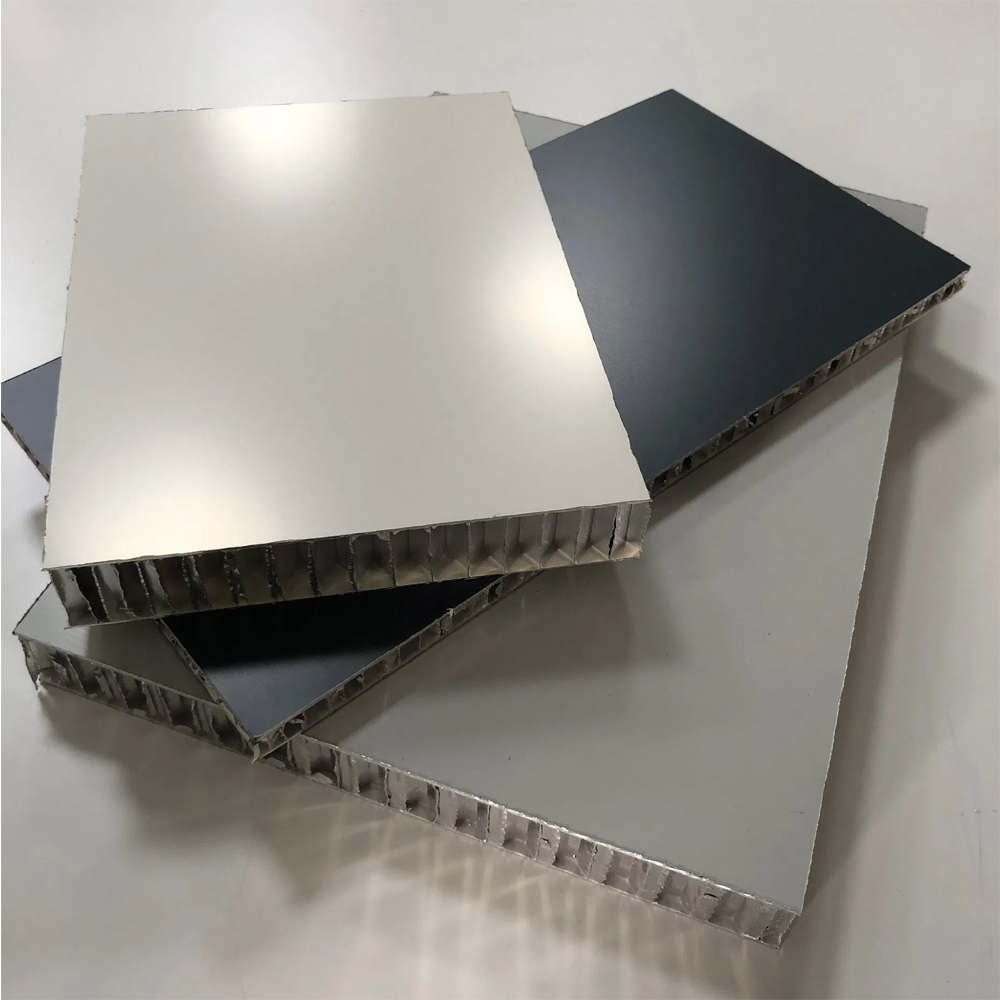
Unlike conventional solid aluminum sheets and ordinary aluminum composite panels, aluminum honeycomb panels feature a sandwich structure consisting of two aluminum face sheets bonded to an aluminum honeycomb core. This structure provides a favorable balance between weight and mechanical performance, making it suitable for architectural and industrial applications.
For Vietnamese construction companies, facade contractors, aluminum panel fabricators, and composite panel manufacturers, aluminum honeycomb panels offer opportunities to improve product performance and expand their product portfolios.
For international manufacturers such as ONEBOND, Vietnam represents a market worth developing through direct panel supply, aluminum honeycomb core distribution, OEM manufacturing, and long-term industrial cooperation.
This article examines the Vietnamese aluminum honeycomb panel market, its major application sectors, purchasing considerations, and potential business opportunities for international suppliers.
2. Vietnam’s Construction and Manufacturing Industry: Market Background
Vietnam’s construction and manufacturing industries provide an important foundation for the development of advanced composite building materials.
According to Vietnam’s National Statistics Office, the construction sector recorded approximately 9.62% year-on-year growth in 2025. The broader industry and construction sector increased by 8.95% during the same period.
Investment activity also remained significant. Total disbursed investment reached approximately VND 4,150.5 trillion in 2025, representing a 12.1% increase compared with the previous year.
These figures indicate continued activity in construction, manufacturing, and infrastructure development.
Several market trends are particularly relevant to aluminum honeycomb panel suppliers.
2.1 Commercial Building Development
Commercial buildings, shopping centers, hotels, office buildings, and public facilities require architectural materials that combine appearance, durability, and practical installation.
Architects and contractors increasingly need materials that can accommodate large decorative surfaces, customized shapes, and contemporary architectural designs.
Aluminum honeycomb panels can be considered for:
- Exterior building facades
- Interior wall cladding
- Suspended ceiling systems
- Decorative metal panels
- Column covers and architectural features
2.2 Industrial and Manufacturing Development
Vietnam’s manufacturing sector has attracted international investment and developed a broad industrial supply chain.
This creates opportunities not only for finished aluminum honeycomb panels but also for semi-finished materials and core components.
Local manufacturers may require aluminum honeycomb core materials to produce:
- Aluminum honeycomb sandwich panels
- FRP honeycomb composite panels
- Lightweight industrial boards
- Furniture panels
- Transportation composite panels
For Chinese manufacturers, supplying aluminum honeycomb cores to Vietnamese processing companies can be an effective way to establish long-term B2B relationships.
2.3 Demand for Lightweight Construction Materials
Lightweight materials can help reduce structural dead loads and simplify the handling and installation of large panels.
Aluminum honeycomb panels provide a relatively high stiffness-to-weight ratio when properly designed.
This makes them worth considering for applications where large panel dimensions, weight control, and surface flatness are important.
3. Aluminum Honeycomb Panel Import Demand in Vietnam
International trade records provide another useful reference for understanding the market.
According to Volza’s published trade database, Vietnam recorded 173 aluminum honeycomb panel import shipment records between June 2022 and May 2025. The database identified 32 importing companies and 30 suppliers.
Of these records, 168 were associated with China as the source country.
These figures suggest that Chinese manufacturers already play an important role in supplying the Vietnamese aluminum honeycomb panel market.
However, shipment records should not be interpreted as total market consumption. Trade databases may cover different product descriptions and customs classifications, and individual shipments do not necessarily represent unique projects or end users.
Another important observation is that Vietnam also has companies importing aluminum honeycomb core materials.
This creates two potential business models for overseas manufacturers:
Model 1: Finished Panel Supply
Chinese factories manufacture complete aluminum honeycomb panels and export them to Vietnamese distributors, contractors, and project buyers.
Model 2: Honeycomb Core Supply
Chinese factories supply aluminum honeycomb cores to Vietnamese manufacturers, who complete the bonding, pressing, cutting, and finishing processes locally.
The second model deserves particular attention because it allows local manufacturers to maintain control over panel dimensions, face materials, processing, and project delivery.
For ONEBOND, both business models offer opportunities to develop customers in Vietnam.
4. Major Applications of Aluminum Honeycomb Panels in Vietnam
The Vietnamese market has several potential application sectors. Among them, architectural decoration, facade systems, ceilings, furniture, and industrial composite panels are particularly relevant.
4.1 Aluminum Honeycomb Facade Panels
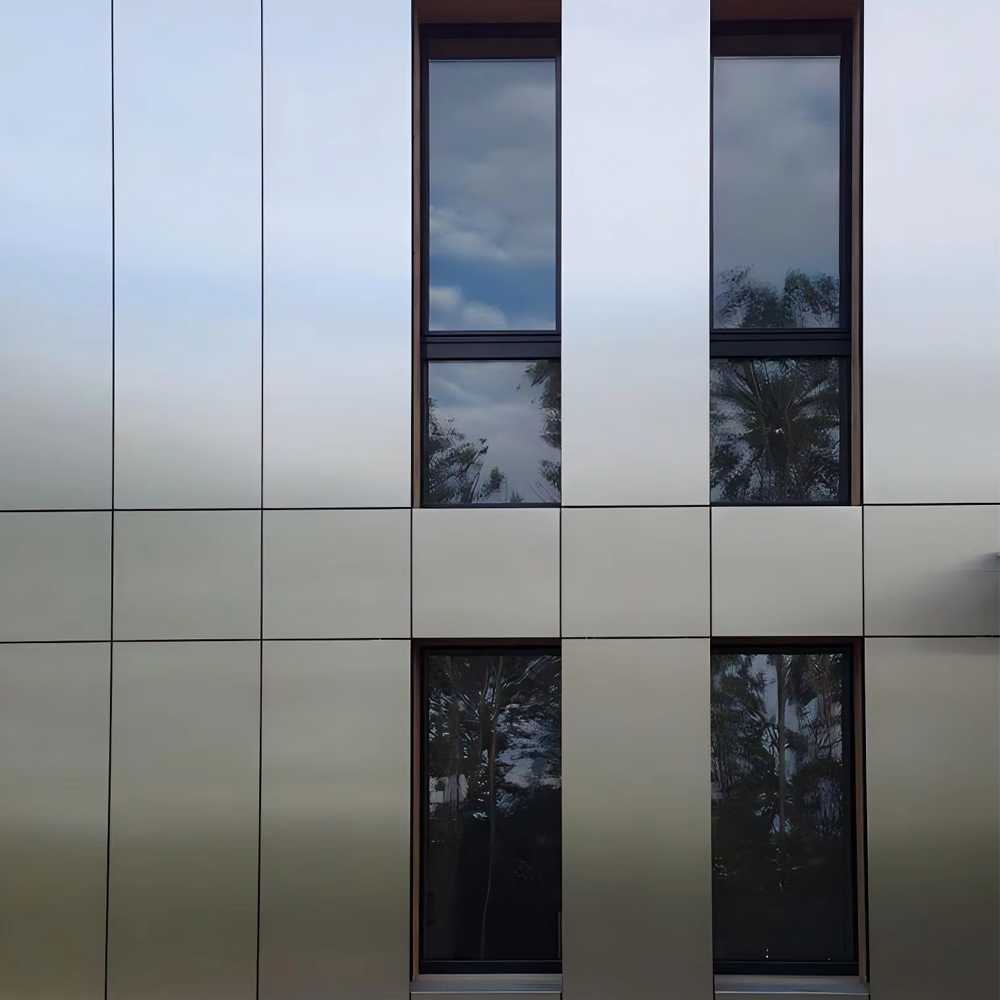
Building facades are one of the most important application areas for architectural aluminum honeycomb panels.
Modern commercial buildings require facade materials that provide a clean appearance, dimensional stability, and flexibility in architectural design.
Aluminum honeycomb facade panels can be used in:
- Commercial buildings
- Shopping centers
- Office buildings
- Hotels and resorts
- Public buildings
- Exhibition centers
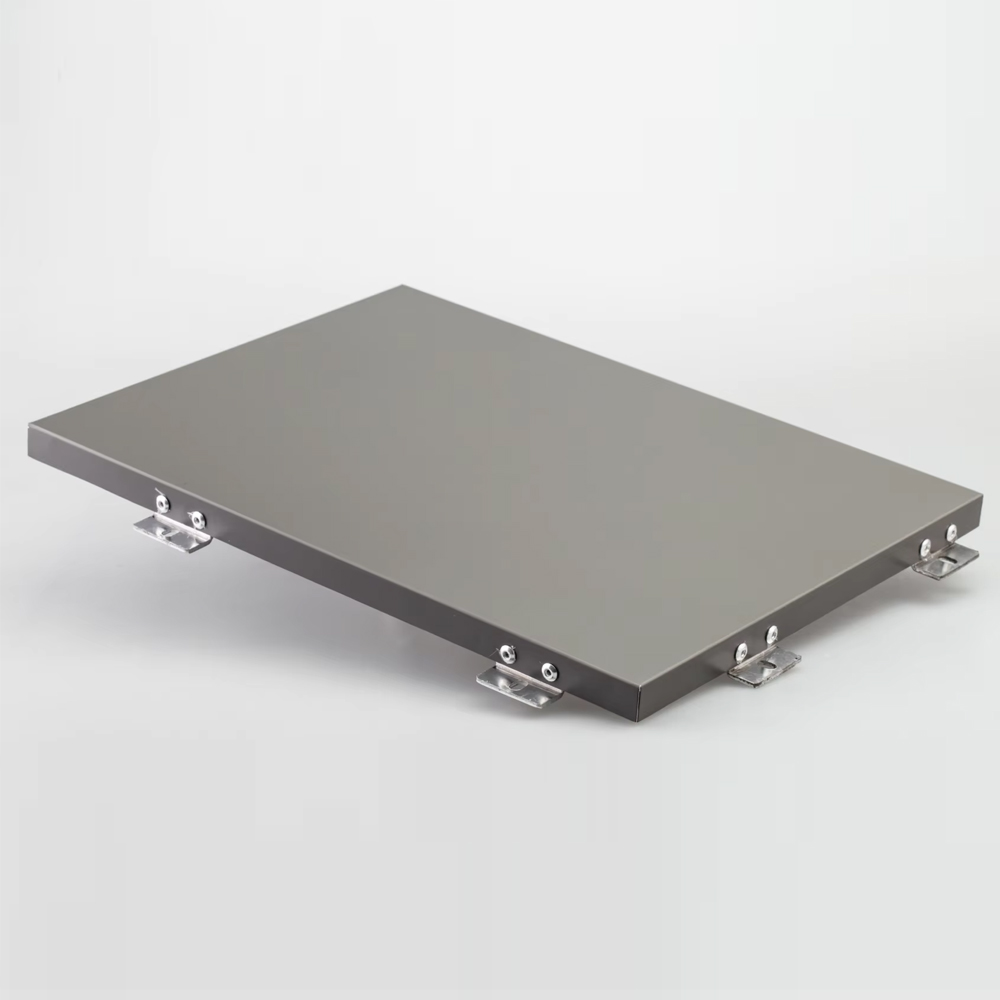
Compared with conventional solid aluminum panels, honeycomb sandwich construction can provide improved panel stiffness at a lower weight for suitable structural configurations.
Common customization options include:
- PVDF coating
- Powder coating
- Anodized aluminum surfaces
- Curved and customized panels
- Different aluminum skin thicknesses
- Customized panel dimensions
For Vietnamese facade contractors and aluminum fabricators, these features provide additional options for architectural projects.
4.2 Aluminum Honeycomb Ceiling Panels
Commercial interiors represent another potential market.
Airports, shopping centers, hotels, hospitals, and office buildings often require large ceiling systems with consistent surface quality and customized layouts.
Aluminum honeycomb ceiling panels can be considered for:
- Flat suspended ceilings
- Large-format ceiling panels
- Decorative ceiling systems
- Perforated metal ceiling panels
- Customized architectural ceiling structures
Perforated designs can be integrated with suitable acoustic backing materials when sound absorption is required.
The final acoustic performance depends on the perforation pattern, backing materials, cavity design, and installation structure.
4.3 Aluminum Honeycomb Wall Panels
Interior wall cladding is another application worth developing.
Compared with traditional decorative boards, aluminum honeycomb panels can provide a rigid, lightweight substrate for large-format interior surfaces.
Potential applications include:
- Hotel wall decoration
- Office interior partitions
- Hospital wall systems
- Commercial interior cladding
- Decorative column covers
- Public building interiors
Surface options can include metallic finishes, decorative coatings, and customized patterns.
4.4 Furniture and Cabinet Panels
Lightweight composite panels are also relevant to furniture manufacturing.
Potential applications include:
- Kitchen cabinet panels
- Wardrobe doors
- Bathroom cabinet panels
- Furniture partitions
- Decorative furniture components
For these applications, manufacturers should evaluate bonding strength, edge treatment, surface finishing, screw-holding requirements, and the intended furniture structure.
4.5 Transportation and Industrial Composite Panels
Vietnam’s industrial and transportation manufacturing sectors also provide opportunities for lightweight sandwich materials.
Aluminum honeycomb cores can be incorporated into different composite panel structures.
Examples include:
- Truck body panels
- Trailer panels
- Bus interior panels
- Industrial equipment panels
- FRP sandwich panels
- Lightweight partition systems
For transportation applications, panel selection must consider vibration, impact resistance, fatigue performance, moisture exposure, and mechanical loading.
5. Aluminum Honeycomb Panel Specifications and Material Selection
Selecting the correct aluminum honeycomb panel structure is essential for achieving the required performance and controlling purchasing costs.
The following table provides representative configurations for product development and customer discussions.
| Technical Parameter | Available Options |
|---|---|
| Panel Thickness | 6–50 mm |
| Aluminum Skin Thickness | 0.5–1.5 mm |
| Honeycomb Cell Size | 4–12 mm |
| Aluminum Foil Thickness | 0.04–0.08 mm |
| Aluminum Alloy | 3003 / 5052 |
| Surface Treatment | PVDF / Powder Coating / Anodizing |
| Panel Shape | Flat / Curved / Perforated |
| Panel Dimensions | Customized |
| Core Material | Aluminum Honeycomb Core |
Actual specifications should be determined according to the project design, loading requirements, panel dimensions, installation method, and applicable testing standards.
Important Factors When Selecting Honeycomb Panels
Aluminum Skin Thickness
The aluminum face sheets contribute significantly to panel strength, surface appearance, and impact resistance.
Thicker face sheets may be appropriate for certain applications, but the final design should consider the complete sandwich structure.
Honeycomb Cell Size
Cell size affects core geometry, bonding area, mechanical behavior, and manufacturing cost.
Different cell sizes can be selected according to panel dimensions and performance requirements.
Core Thickness
The core thickness influences the overall panel thickness and bending stiffness.
Larger core thicknesses can provide greater structural depth, but the final performance depends on the complete panel configuration.
Surface Treatment
PVDF coating, powder coating, and anodizing can be considered according to environmental exposure and architectural requirements.
For exterior applications in Vietnam, coating durability, corrosion protection, and edge sealing should receive particular attention.
6. Market Opportunities for Vietnamese Aluminum Panel Manufacturers
One important opportunity is the development of local panel processing and manufacturing businesses.
Importing finished panels is not always the most flexible solution for every Vietnamese manufacturer.
For companies handling customized architectural projects, local processing can provide advantages in production scheduling, dimensions, transportation, and project coordination.
This creates demand for reliable suppliers of aluminum honeycomb core materials and semi-finished composite components.
Opportunities for Local Manufacturers
| Customer Type | Potential Requirements |
|---|---|
| Aluminum Panel Manufacturers | Aluminum Honeycomb Core |
| Facade Fabricators | Finished Aluminum Honeycomb Panels |
| Ceiling Manufacturers | Customized Ceiling Panels |
| Composite Panel Factories | Aluminum Honeycomb Core and OEM Panels |
| Furniture Manufacturers | Lightweight Honeycomb Panels |
| FRP Panel Manufacturers | Honeycomb Core Materials |
For international suppliers, working with local manufacturers can create a more sustainable business relationship than depending entirely on individual construction projects.
A supplier that provides stable core dimensions, consistent foil thickness, reliable bonding compatibility, and customized production can become an important part of the local supply chain.
7. Challenges and Purchasing Considerations in Vietnam
Although the market offers opportunities, suppliers must also understand the challenges of entering Vietnam.
7.1 Strong Price Competition
Vietnamese buyers can source aluminum panels and composite materials from local manufacturers as well as international suppliers.
Ordinary aluminum composite panels are already widely available.
Therefore, aluminum honeycomb panel manufacturers should avoid competing only on price.
Instead, suppliers should emphasize:
- Panel rigidity and flatness
- Customized specifications
- Large-format production
- Stable manufacturing quality
- Technical support
- Consistent delivery schedules
7.2 Fire Safety and Material Compliance
Fire safety is an important consideration in Vietnamese building projects.
Vietnam’s QCVN 06:2022/BXD national technical regulation on fire safety, together with Amendment 1:2023 and applicable subsequent provisions, provides requirements relevant to building fire safety.
Aluminum honeycomb construction does not automatically mean that the complete panel is non-combustible or achieves a particular fire classification.
The face materials, adhesives, coatings, core structure, and other components must be evaluated as part of the complete panel system.
Manufacturers should prepare appropriate test reports and technical documentation for the actual panel configuration being offered.
7.3 Installation and Technical Support
For architectural applications, purchasing decisions are not based on panel specifications alone.
Contractors also need information about:
- Panel connection systems
- Installation accessories
- Reinforcement structures
- Edge folding and fabrication
- CNC cutting
- Installation drawings
Suppliers that can provide technical documentation and engineering support may have an advantage when developing relationships with local contractors.
8. How International Manufacturers Can Enter the Vietnamese Market
For Chinese aluminum honeycomb panel manufacturers, Vietnam offers several possible market entry strategies.
Strategy 1: Develop Local Distributors
Working with building material distributors can help suppliers reach local contractors, fabricators, and project buyers.
Distributors should have experience in architectural aluminum products, facade materials, or metal ceiling systems.
Strategy 2: Supply Aluminum Honeycomb Core Materials
This strategy targets local manufacturers rather than only end users.
Stable supply of aluminum honeycomb cores can support Vietnamese companies producing their own sandwich panels.
Long-term cooperation can be developed through customized cell sizes, foil thicknesses, core heights, and packaging specifications.
Strategy 3: Provide OEM Manufacturing Services
Some buyers may require customized panel dimensions, surface finishes, or composite structures.
OEM cooperation allows Vietnamese companies to expand their product ranges without investing immediately in complete manufacturing facilities.
Strategy 4: Develop Long-Term Engineering Cooperation
For larger projects, manufacturers can cooperate with facade contractors, architectural material suppliers, and engineering companies.
Providing samples, technical specifications, drawings, and project-based quotations can help establish credibility.
9. Why ONEBOND Is Exploring the Vietnamese Market
ONEBOND focuses on composite core materials, aluminum honeycomb products, and sandwich panel manufacturing solutions.
As a manufacturer based in China, ONEBOND aims to support international customers with customized materials and production solutions.
Our relevant product categories include:
- Aluminum Honeycomb Core
- Aluminum Honeycomb Panels
- FRP Honeycomb Panels
- Aluminum Honeycomb Sandwich Panels
- Customized Composite Panels
We recognize that different Vietnamese customers have different requirements.
A facade contractor may prioritize panel dimensions, surface finish, flatness, and installation compatibility.
A local panel manufacturer may focus more on aluminum honeycomb cell size, foil thickness, core height, and bonding consistency.
An industrial composite panel producer may require customized core materials for specific structural applications.
ONEBOND can work with customers to evaluate these requirements and develop suitable product configurations.
Our cooperation approach focuses on:
- Factory-direct manufacturing
- Customized product specifications
- OEM manufacturing support
- Consistent quality management
- Technical communication
- Long-term supply cooperation
Rather than offering only standard products, we aim to support customers with material selection and customized composite panel solutions.
10. Future Business Opportunities for Aluminum Honeycomb Panels in Vietnam
Vietnam’s developing construction and manufacturing industries provide a favorable environment for suppliers of specialized lightweight materials.
Several areas deserve attention in the coming years.
First, commercial construction and architectural renovation will continue to create opportunities for decorative facade, wall, and ceiling materials.
Second, local composite panel manufacturers may seek more flexible sources of aluminum honeycomb core materials to support their own production.
Third, industrial manufacturers may increasingly evaluate lightweight sandwich structures for transportation and equipment applications.
Fourth, OEM manufacturing and technical cooperation can help international suppliers establish stronger relationships with local businesses.
However, the actual adoption of aluminum honeycomb panels will depend on project budgets, material performance, construction regulations, and competition from alternative products.
For manufacturers, the key is to understand the requirements of each application rather than promote one standard panel for every project.
Conclusion
Vietnam is a promising market for aluminum honeycomb panel manufacturers, core material suppliers, and composite panel processing companies.
The market offers opportunities across architectural facades, interior wall systems, suspended ceilings, furniture, transportation, and industrial manufacturing.
Import trade records also indicate an established supply relationship between Chinese manufacturers and Vietnamese buyers.
For ONEBOND, the most practical approach is to develop two complementary business channels: supplying complete aluminum honeycomb panels to construction-related customers and providing aluminum honeycomb core materials to local composite panel manufacturers.
By combining factory-direct supply, customized manufacturing, OEM services, and technical support, ONEBOND aims to build long-term partnerships with Vietnamese customers.
Looking for a reliable Aluminum Honeycomb Panel Manufacturer or Aluminum Honeycomb Core Supplier for your Vietnam projects? Contact ONEBOND to discuss customized specifications, product samples, and OEM cooperation opportunities.
Frequently Asked Questions
1. What are the main applications of aluminum honeycomb panels in Vietnam?
Aluminum honeycomb panels are suitable for building facades, interior wall cladding, suspended ceilings, furniture panels, transportation structures, and industrial composite applications.
2. Why are aluminum honeycomb panels used in architectural projects?
They provide a lightweight sandwich structure with high stiffness, good dimensional stability, and flexible surface finishing options, making them suitable for large-format architectural applications.
3. Can Vietnamese manufacturers import aluminum honeycomb core materials from China?
Yes. Vietnamese composite panel manufacturers can import aluminum honeycomb cores from Chinese suppliers and use them in local panel bonding, fabrication, and finishing processes.
4. What specifications should buyers consider when purchasing aluminum honeycomb panels?
Important parameters include aluminum skin thickness, core thickness, cell size, aluminum foil thickness, alloy grade, surface treatment, panel dimensions, and mechanical performance.
5. Does ONEBOND provide customized aluminum honeycomb panels?
ONEBOND focuses on factory-direct supply and customized manufacturing solutions. Customers can discuss panel dimensions, material configurations, surface finishes, and OEM requirements with the sales team.
Article prepared by ONEBOND | Aluminum Honeycomb Panel and Composite Core Material Manufacturer
