
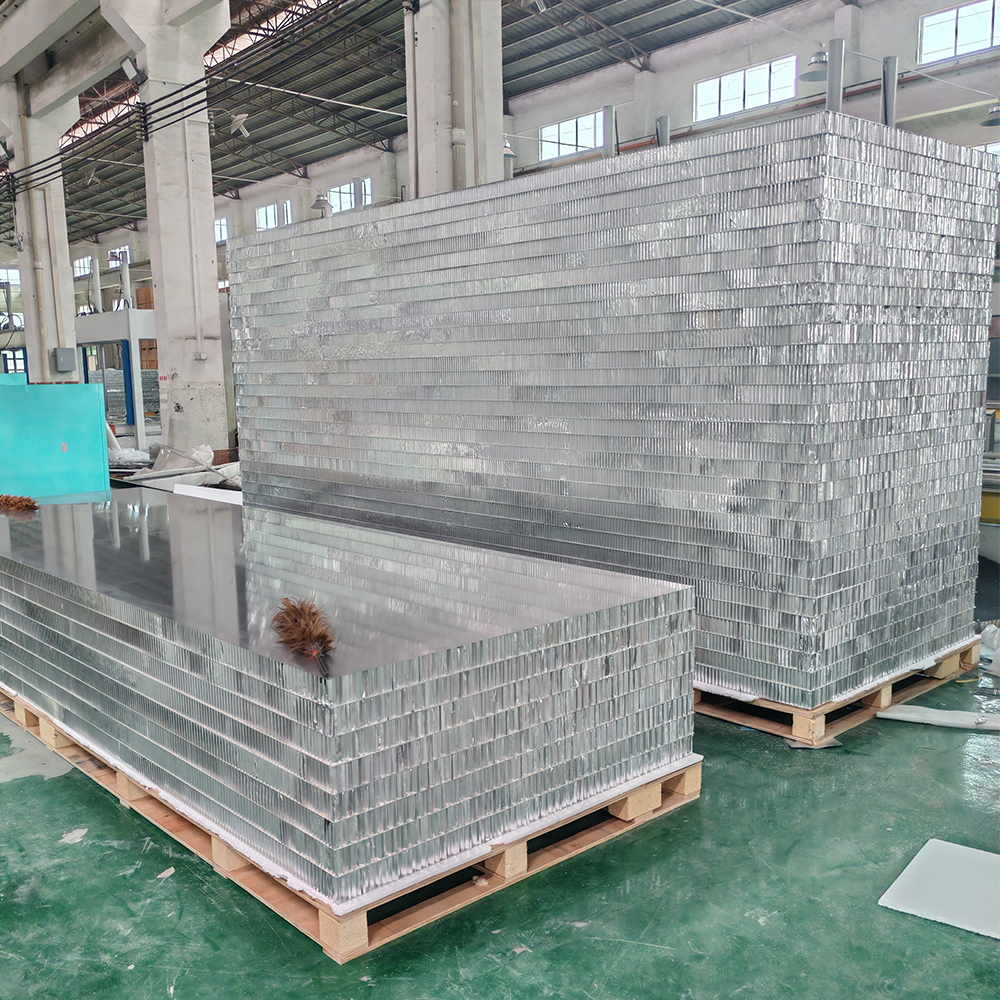
When people talk about modern building facades, they often focus on the visual effect first. Is the surface clean? Does the building look modern? Can the color and texture match the architectural concept?
But for anyone who has actually worked on a construction project, appearance is only one part of the story.
The real questions usually come later: How will the panels perform outdoors? How should they be fixed? What happens when the temperature changes? Is the panel suitable for the building height and local climate? Can it be fabricated easily? And perhaps most importantly, will the finished facade still look good after years of exposure?
This is where aluminum composite panel cladding has become a popular choice for commercial, residential and public buildings around the world.
Aluminum composite panels, commonly known as ACP, are lightweight architectural panels made from aluminum skins bonded to a core material. Depending on the application, manufacturers can provide different core types, panel thicknesses, surface finishes and fire-performance options.
The interesting thing about ACP is that it offers architects considerable design freedom without creating the weight and handling difficulties associated with some traditional facade materials.
Why Are Aluminum Composite Panels So Popular for Building Facades?
There is a simple reason: ACP offers a good balance between appearance, weight, fabrication and installation.
A large facade needs to look consistent, but it also needs to be practical to transport and install. Large solid metal sheets can become heavy and difficult to handle. Stone has its own structural and transportation challenges. Traditional finishes may require more complicated construction processes.
Aluminum composite panels provide another option.
The aluminum surface gives the panel a clean architectural appearance, while the composite construction keeps the overall panel relatively lightweight. This makes it easier for fabrication teams to cut, groove, fold and form panels into the shapes required by a particular project.
For architects, that means more freedom in facade design. For contractors, it can mean easier handling and installation. For developers, it can mean a facade system that achieves a modern appearance without unnecessarily increasing the building’s dead load.
Of course, the actual performance depends heavily on the specific ACP construction and the installation system. Not every aluminum composite panel is suitable for every building.
The Material Behind the Cladding Matters
One common mistake during material selection is to compare ACP products based only on color, thickness or price.
Two panels may look almost identical but have very different internal structures and performance characteristics.
The core material is particularly important. Depending on the product, ACP may use different types of polymer or mineral-filled cores, including fire-retardant options designed for specific architectural requirements.
For an exterior project, buyers should look beyond the decorative surface and ask for technical information about the entire panel.
Things such as aluminum skin thickness, core composition, panel thickness, coating system, fire performance, dimensional tolerance and weather resistance should be reviewed before the purchase order is finalized.
This becomes even more important for high-rise buildings and projects in regions with demanding fire or weather regulations.
Exterior Aluminum Composite Panel Cladding Needs More Than a Good Panel
Choosing the panel is only half of the job.
A facade works as a system.
The aluminum composite panel cladding itself is connected to a supporting structure, and that structure must transfer loads safely to the building. Depending on the project, the system may include aluminum profiles, steel supports, brackets, fasteners, insulation, sealants and other accessories.
This is why installation details should be considered at the design stage rather than after the panels arrive on site.
For example, panel joints need to accommodate movement. Aluminum expands and contracts as temperature changes. If a large facade is installed without allowing for appropriate movement, excessive stress can develop within the system.
Water management is another issue that should not be ignored. The design of joints, interfaces and drainage paths needs to be coordinated with the overall facade system.
In other words, a high-quality panel cannot compensate for a poorly designed installation.
What About Wind Loads?
For exterior facade projects, wind pressure is one of the key engineering considerations.
The higher the building, the more carefully the cladding system needs to be evaluated. Panel size, fixing method, support spacing, substrate condition and local wind conditions can all affect the final design.
This is also why a generic installation drawing should not simply be copied from one building to another.
A fixing detail that works for a low-rise commercial building may not be appropriate for a high-rise project in a coastal or high-wind environment.
Professional projects should therefore use engineering calculations and project-specific fixing details to determine the appropriate system.
Surface Finishes Can Completely Change the Building
One of the biggest attractions of ACP is the range of available finishes.
A building can use solid colors for a minimalist appearance, metallic finishes for a more industrial look, or wood-look and stone-look surfaces for a warmer architectural style.
The surface finish also needs to match the application.
For exterior projects, weather resistance and coating durability are especially important because the panels will be exposed to sunlight, rain, humidity and temperature fluctuations.
For interior applications, other factors may become more important, such as scratch resistance, cleanability and color consistency.
This is why it is usually worth requesting samples before placing a large order. A finish that looks perfect on a small screen may look quite different when installed across several hundred or several thousand square meters.
Fabrication Is Where ACP Becomes Really Flexible
Another reason aluminum composite panel cladding is widely used is that the panels can be fabricated before installation.
Depending on the panel system and project requirements, fabrication may include cutting, routing, grooving, folding and forming.
This allows flat sheets to become three-dimensional architectural components.
Corners, columns, parapets, fascias and decorative features can be produced with relatively precise dimensions. Pre-fabrication can also reduce the amount of complicated work that needs to be performed directly on the construction site.
For large projects, this can have a significant impact on installation efficiency.
But fabrication quality matters. Poor routing, incorrect bending, inaccurate measurements or damaged coating can affect both appearance and long-term performance.
A good workflow normally starts with accurate shop drawings and site measurements, followed by controlled fabrication and inspection before the panels are delivered to the project.
Installation Should Be Planned Before Production
This sounds obvious, but it is a problem that appears surprisingly often in real projects.
The panel is ordered first, and the installation method is discussed later.
A better approach is to determine the installation system first.
Will the panels be mechanically fixed? Will a cassette system be used? How will the corners be constructed? Where are the expansion joints? What type of support frame is required? How will windows, doors and other facade elements connect with the ACP system?
Once these questions are answered, panel fabrication can be based on actual project requirements.
The result is usually a cleaner installation process and fewer surprises on site.
Aluminum Composite Panel Cladding for Different Building Types
ACP is not limited to one type of architecture.
You can find aluminum composite panel cladding on office buildings, shopping centers, hotels, schools, hospitals, residential developments, industrial buildings and transportation facilities.
It is also commonly used for architectural entrance features, canopies, soffits and decorative facade elements.
For commercial buildings, ACP can create a strong corporate appearance. For residential projects, it can be combined with glass, stone, concrete or other materials to create contrasting textures.
For renovation projects, ACP can also provide a practical way to give an older building a completely different appearance without rebuilding the entire facade.
How Should Buyers Evaluate an ACP Supplier?
If you are purchasing aluminum composite panels for an international project, don’t make the decision based on price alone.
Start by asking for the technical datasheet.
Then look at the panel construction, available core options, aluminum thickness, coating system, fire-performance documentation and dimensional specifications.
Ask whether the manufacturer can provide samples and fabrication support. If your project requires customized panels, check whether the factory has the equipment and experience to handle CNC cutting, routing, bending or other fabrication requirements.
It is also worth discussing packaging and transportation early. Facade panels can be damaged during shipping if they are not properly protected, especially when the order involves large quantities.
A reliable manufacturer should be able to support you beyond simply sending a price quotation.
Final Thoughts
Aluminum composite panel cladding is not just about putting attractive panels on the outside of a building. A successful facade depends on the interaction between the panel, core material, surface coating, supporting structure, fixing system, joints and installation quality.
That’s why the best ACP solution is rarely the cheapest panel available. It is the panel system that matches the actual requirements of the building.
If you’re planning a commercial facade, residential project or architectural renovation, start with the project requirements first. Define the environment, fire-performance requirements, panel dimensions, fixing method and design expectations. Then select the panel and manufacturer accordingly.
With the right material and properly engineered installation, aluminum composite panels can deliver a clean, durable and highly customizable facade solution for modern architecture.
