
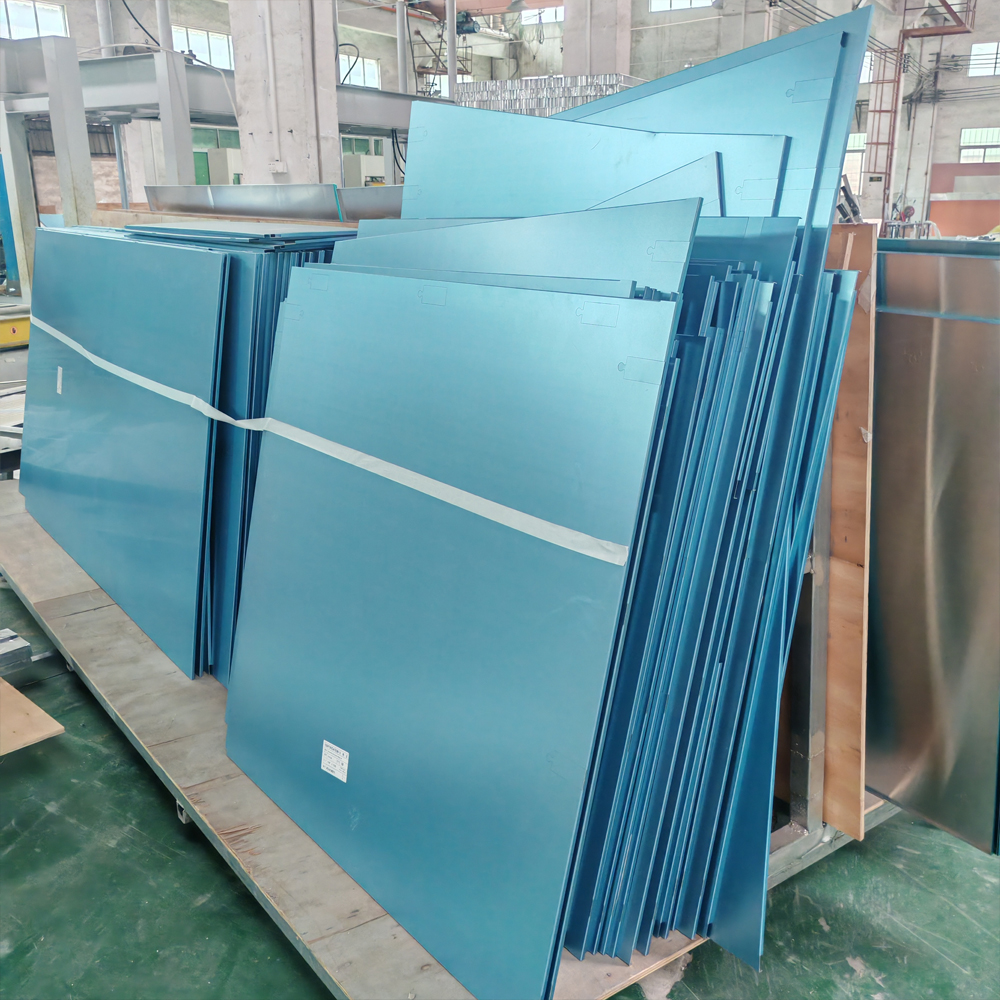
If you have ever worked on a building facade project, you already know that choosing the cladding material is not simply about finding something that looks good.
The material needs to work in the real world.
It has to survive changing weather conditions, remain stable after installation, fit the building’s design, and be practical enough for contractors to fabricate and install. At the same time, architects and developers usually want a clean appearance, consistent color and enough flexibility to create something different from the standard box-shaped building.
This is one of the reasons aluminium composite panel cladding has become such a widely used solution for modern architectural projects.
From office buildings and shopping centers to hotels, residential developments and commercial interiors, aluminium composite panels can be adapted to many different design concepts. Their relatively lightweight construction, fabrication flexibility and wide range of finishes make them particularly useful when both appearance and construction efficiency matter.
But there is more to ACP than the panel itself. Let’s take a closer look at what really matters when specifying it for a project.
What Makes Aluminium Composite Panel Cladding Different?
At first glance, an aluminium composite panel looks like a simple flat sheet.
In reality, it is a composite structure.
A typical panel consists of two aluminum layers bonded to a core material. The aluminum surfaces provide the finished appearance and contribute to the panel’s rigidity, while the core helps form the lightweight composite structure.
Different manufacturers offer different core constructions and performance levels. This is important because an ACP designed for an interior decorative application should not automatically be assumed to be suitable for every exterior facade project.
When specifying aluminium composite panel cladding, the intended application should always be defined first.
Is it a low-rise commercial building? A high-rise facade? A residential project? A shopfront? A canopy? A decorative wall? Or an interior application?
The answer affects the panel specification, fixing system and engineering requirements.
The Exterior Environment Changes Everything
An exterior facade has to deal with conditions that an indoor wall simply doesn’t experience.
Think about direct sunlight, heavy rain, humidity, temperature changes, wind pressure and airborne pollutants. Over time, all of these can affect the appearance and performance of a cladding system.
That’s why exterior ACP selection should involve more than comparing colors and prices.
The surface coating is particularly important. Different coating technologies can provide different levels of durability, color retention and resistance to environmental exposure.
For a building that will receive strong sunlight throughout the year, for example, coating performance becomes an important purchasing consideration.
The same principle applies to coastal projects. Salt-laden air can create a more demanding environment for exterior materials and supporting components.
A professional procurement process should therefore start with the project’s environmental conditions and not simply with the desired color.
Panel Thickness Is Only One Part of the Specification
A common question from buyers is:
“What thickness should I choose?”
It’s a reasonable question, but thickness alone doesn’t tell you whether a panel is suitable.
The overall construction of the panel matters. Aluminum skin thickness, core composition, panel dimensions, surface finish and fixing method all contribute to the final performance of the facade.
For example, a large-format panel creates different requirements from a small decorative panel. A high-rise facade experiences different wind conditions from a low-rise building.
So instead of asking only for the “thickest” or “cheapest” panel, it is better to provide the manufacturer with the actual project requirements.
A good supplier should then be able to recommend a suitable construction.
Design Freedom Is One of ACP’s Biggest Advantages
Architects often choose aluminium composite panel cladding because it gives them considerable freedom when developing a facade concept.
The panels are available in a wide range of colors and finishes. Solid colors can create a simple contemporary appearance, while metallic finishes can give a building a sharper, more technical look.
Wood-look and stone-look finishes can also be used when the designer wants to introduce visual warmth without using natural wood or stone across the entire facade.
And then there is the geometry.
ACP can be fabricated into different forms using appropriate cutting, routing and bending processes. This makes it possible to create folded panels, corners, columns, decorative bands and other architectural features.
That flexibility is particularly useful for projects where the facade needs to communicate a strong visual identity.
Don’t Forget Thermal Movement
One technical issue that deserves more attention is thermal expansion.
Aluminum reacts to temperature changes. When a facade is exposed to strong sunlight during the day and then cools at night, the panel dimensions can change slightly.
On a small panel, this movement may not be particularly noticeable.
Across a large facade, however, cumulative movement can become significant.
That’s why professional aluminium composite panel cladding systems need appropriate joint and fixing details. The installation should allow the panels to move as intended without creating excessive stress.
This is also one reason why panel joints shouldn’t simply be designed for appearance alone.
A very narrow, visually attractive joint may not necessarily be the best technical solution for every project.
Good facade design balances appearance with movement, drainage, ventilation and structural requirements.
The Supporting Structure Is Just as Important
Another misconception is that ACP itself carries the entire facade system.
It doesn’t.
The panels are normally connected to a supporting structure that transfers loads back to the building.
Depending on the project, this may involve aluminum profiles, steel structures, brackets, fasteners and other components.
The supporting system needs to be aligned correctly. If the frame is out of position, even perfectly manufactured panels can produce an uneven facade.
This is particularly noticeable on large, uninterrupted surfaces where small installation errors can become visually obvious.
For this reason, experienced contractors typically spend considerable time checking the supporting structure before panel installation begins.
Why Fabrication Quality Matters
Imagine ordering thousands of square meters of high-quality ACP and then discovering that the panels don’t fit the shop drawings correctly.
That’s an expensive problem.
The quality of fabrication directly affects installation efficiency.
Before production, the project dimensions should be reviewed carefully. Shop drawings should reflect actual site conditions as closely as possible. Cutting and routing should then be performed according to the approved dimensions.
For complex facades, CNC equipment can help achieve consistent fabrication accuracy.
The edges and corners also deserve attention. Incorrect routing depth, poor bending or careless handling can damage the surface or affect the final panel geometry.
For large projects, quality control should therefore cover both the raw panel and the fabricated components.
Where Is Aluminium Composite Panel Cladding Commonly Used?
The application range is quite broad.
Commercial office buildings are one obvious example. ACP can create a clean and contemporary facade while allowing designers to combine different colors and panel directions.
Retail buildings often use ACP around entrances, signage zones and feature walls.
Hotels can combine metallic, wood-look and solid-color panels to create a distinctive architectural identity.
Residential developments may use ACP together with glass, stone, concrete and other materials to create a more layered facade.
It can also be used for canopies, soffits, columns, parapets and decorative architectural elements.
This versatility is one of the reasons ACP continues to appear in different types of construction projects.
Installation Planning Should Start Early
A successful aluminium composite panel cladding project usually starts long before the first panel reaches the construction site.
The installation method should be considered during the design and procurement stages.
Questions such as these should be answered early:
How will the panels be fixed?
What type of support frame is required?
Where will the panel joints be located?
How will corners be constructed?
How will the facade connect to windows and doors?
How will water be managed?
Where are the movement joints?
Once these details are resolved, panel fabrication becomes much more straightforward.
It also reduces the risk of discovering installation problems after the materials have already been manufactured.
What Should International Buyers Ask the Manufacturer?
For international construction projects, communication with the supplier is especially important.
Instead of simply asking for a price per square meter, provide as much project information as possible.
A manufacturer may need to know the intended application, panel dimensions, required finish, approximate quantity, installation method, building location and relevant performance requirements.
You should also request technical documentation and samples before making a large purchase.
For facade projects, it can be useful to ask about:
- Aluminum alloy and skin thickness
- Core material
- Panel thickness
- Coating system
- Fire-performance options
- Available surface finishes
- Standard panel sizes
- Customized fabrication
- Installation recommendations
- Packaging and export protection
- Technical drawings and project support
The more clearly the requirements are communicated, the easier it is for the manufacturer to recommend the right solution.
A Practical Way to Think About ACP
The easiest way to evaluate aluminium composite panel cladding is to stop thinking of it as simply a decorative board.
Think of it as part of a complete facade system.
The panel provides the visible surface. The core contributes to the composite construction. The coating protects the exposed surface. The supporting frame provides the connection to the building. The fixing system holds everything together. Joints accommodate movement and help manage environmental exposure.
Every part has a role.
If one part is poorly designed or incorrectly installed, it can affect the performance of the entire facade.
That’s why material selection, engineering, fabrication and installation should be coordinated rather than treated as separate tasks.
Final Thoughts
Aluminium composite panel cladding offers architects and construction professionals a practical way to combine modern aesthetics with lightweight composite construction and flexible fabrication.
But the best results don’t come from choosing a panel based on appearance alone.
The right approach is to look at the complete project: environmental exposure, building height, panel size, structural conditions, fire-performance requirements, coating durability, fixing details and installation practices.
Once those factors are understood, ACP becomes much easier to specify correctly.
For architects, it provides design freedom. For contractors, it can simplify fabrication and handling. For developers, it offers a wide range of architectural finishes. And for material buyers, a properly specified ACP system can provide a reliable solution for large-scale facade projects.
In the end, good aluminium composite panel cladding is not simply about making a building look modern. It is about making sure the material, design and installation work together from the beginning.
