
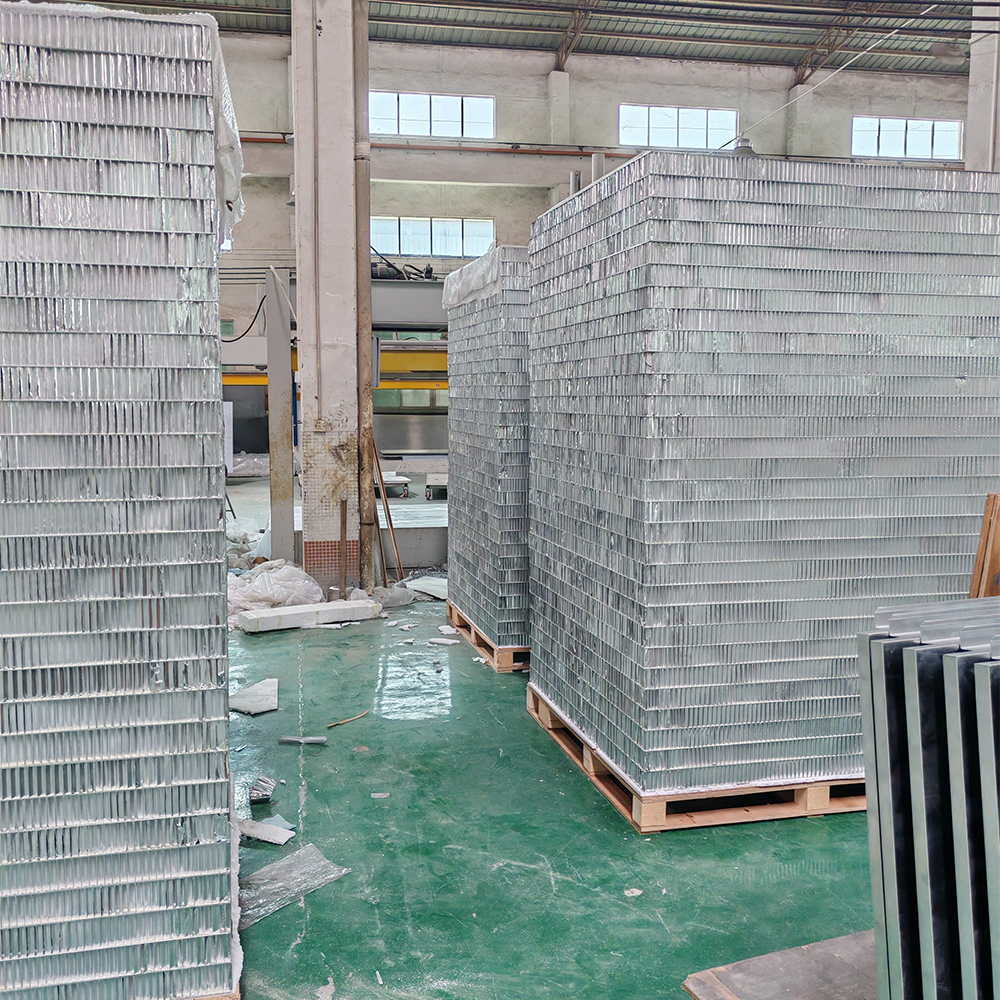
When you first look at an aluminum cladding composite panel, it may seem like a relatively simple building product: two aluminum sheets with a core in the middle. But once you start using it on a real building project, you quickly realize that there is much more to consider.
The panel has to work with the building structure, the fixing system, the facade design and the local environment. The wrong combination can lead to installation difficulties, premature surface problems or performance issues later on.
The right combination, on the other hand, can give a building a clean architectural appearance while keeping the facade lightweight and relatively easy to fabricate.
That is why aluminum composite panels have become an important material in modern building construction.
What Exactly Is an Aluminum Cladding Composite Panel?
An aluminum cladding composite panel is a sandwich-type panel generally made from aluminum sheets bonded to a central core.
The outer aluminum surfaces provide the finished appearance and contribute to the rigidity of the panel. The core forms the central layer and can be manufactured with different compositions depending on the required application and performance.
This construction is one of the main reasons ACP is attractive to architects and contractors.
Compared with many traditional facade materials, composite panels can provide a relatively lightweight solution while still creating a large, flat architectural surface.
The panels can also be processed into different forms, which is useful when a facade contains corners, columns, curves, canopies or other architectural details.
Why Do Architects Choose ACP for Building Facades?
The answer usually comes down to flexibility.
Imagine an architect has designed a facade with several different colors, horizontal lines and folded corners. Using a material that is difficult to cut or form can make the design expensive and complicated.
ACP is different.
The panels can be cut and fabricated according to project drawings, allowing manufacturers and contractors to produce customized components for specific parts of the building.
There is also a broad range of surface finishes.
A project can use a simple solid color, a metallic appearance, a matte surface or a decorative finish that resembles wood or stone.
This gives architects plenty of room to create different visual effects without changing the basic cladding system.
The Core Material Deserves More Attention
If you’re buying aluminum composite panels, don’t spend the entire conversation talking about color.
The core is one of the most important parts of the product.
Different projects have different performance requirements, and core construction can influence fire behavior, mechanical performance and overall suitability for a particular application.
For exterior building facades, especially larger commercial or high-rise projects, fire performance needs to be considered carefully.
The requirements vary depending on the country, building type and local regulations, so it is important to verify the applicable standards before selecting the product.
A professional manufacturer should be able to provide technical documentation showing the relevant performance of the panel rather than simply describing it as “fireproof” or “high quality.”
Aluminum Skin Thickness Matters Too
Another point that often gets overlooked is the thickness of the aluminum skin.
Two ACP products can have the same overall panel thickness but use different aluminum skin thicknesses and different core structures.
That can affect how the panel behaves during fabrication and installation.
For a large facade, the panel may need to withstand considerable wind pressure while maintaining its shape between fixing points. The design therefore needs to consider panel dimensions, support spacing and fixing method together.
This is why there isn’t one universal “best” ACP thickness.
The appropriate specification depends on the actual project.
Exterior Use Is More Demanding Than Interior Use
An aluminum cladding composite panel installed inside a building is protected from most environmental conditions.
An exterior panel isn’t.
Outdoor facades are exposed to UV radiation, rain, wind, humidity, temperature changes and pollution. The surface coating therefore plays an important role in long-term appearance.
If a project is located in a region with strong sunlight, high humidity or a coastal atmosphere, the coating and overall material specification should be selected accordingly.
It is also important to think about cleaning.
A facade located beside a busy road may collect dust and pollutants much faster than a building in a clean suburban environment.
Choosing a suitable surface finish can make long-term maintenance easier.
Don’t Treat the Panel as a Standalone Product
This is probably the most important practical point.
An ACP facade is a system.
The aluminum composite panel is only one component. There may also be a supporting frame, brackets, fasteners, insulation, sealants and other accessories.
All these components need to work together.
For example, even an excellent panel can perform poorly if the supporting frame is incorrectly aligned. Likewise, a well-designed frame cannot solve problems caused by inappropriate panel fabrication.
This is why successful facade projects normally involve coordination between the architect, facade engineer, panel manufacturer and installation contractor.
What Happens During Installation?
The exact process varies from project to project, but the basic workflow is fairly straightforward.
First, the building dimensions and substrate are checked.
Then the supporting structure is installed and aligned according to the approved drawings.
The ACP panels are fabricated to the required dimensions. Depending on the system, this may involve cutting, routing, folding or forming.
After that, the finished panels are transported to the installation area and fixed to the supporting structure.
Finally, the contractor checks alignment, joints, corners, fasteners and surface condition.
It sounds simple.
In reality, the quality of each step matters.
A small dimensional error during fabrication can become a much bigger problem when dozens of panels meet at the same corner.
Joint Design Is Not Just an Appearance Issue
When designing an ACP facade, architects naturally pay attention to joint lines because they are visible.
But joints have a technical purpose as well.
They need to accommodate movement and allow the facade to respond to changes in temperature and environmental conditions.
Aluminum expands and contracts as its temperature changes. Large facade systems therefore need appropriate movement allowances.
If panels are fixed too rigidly, the resulting stress can affect the panels, fasteners or surrounding components.
The joint design should therefore balance appearance, movement and environmental performance.
How ACP Supports Modern Facade Design
One of the most interesting aspects of an aluminum cladding composite panel is the ability to combine different panel layouts.
Panels can be installed vertically or horizontally. Different colors can be combined to create patterns. Metallic surfaces can be paired with matte surfaces. Wood-effect panels can be combined with solid colors.
This means the same basic material can produce very different architectural results.
A shopping center might use bold metallic colors to create a strong commercial identity.
An office building might use neutral colors and regular panel lines for a professional appearance.
A residential project might combine wood-look ACP with glass and stone to create a warmer facade.
The material doesn’t determine the design. It gives the designer more options.
ACP for Renovation Projects
New construction isn’t the only application.
Aluminum composite panels are also useful for building renovation.
Older facades can sometimes look outdated even when the underlying building structure remains serviceable. Replacing or adding a new cladding system can completely change the appearance of the building.
ACP can be particularly attractive for renovation because the material is relatively lightweight and available in many finishes.
However, renovation projects require careful inspection of the existing structure.
The supporting wall must be capable of accepting the new system, and any damaged or unstable substrate should be addressed before installation.
What Should You Ask an ACP Manufacturer?
If you’re purchasing an aluminum cladding composite panel for a commercial or architectural project, don’t hesitate to ask detailed questions.
A professional supplier should be able to discuss:
- Aluminum alloy
- Aluminum skin thickness
- Overall panel thickness
- Core composition
- Fire-performance options
- Surface coating
- Available colors
- Available finishes
- Standard dimensions
- Custom dimensions
- Fabrication capabilities
- Installation methods
- Supporting systems
- Technical drawings
- Quality control
- Packaging and transportation
It’s also useful to send the manufacturer your project drawings if customized fabrication is required.
This gives the supplier a much better understanding of what you’re actually trying to build.
Price Shouldn’t Be the Only Comparison
ACP suppliers can quote very different prices for what appears to be the same product.
Before comparing prices, make sure you’re comparing the same specification.
Check the aluminum skin, core, coating, thickness, dimensions and other relevant requirements.
Otherwise, a cheaper quotation may simply represent a different product.
For large facade projects, the total project cost is more important than the initial panel price. Fabrication, transportation, accessories, installation and maintenance can all contribute significantly to the final cost.
A panel that is slightly more expensive but easier to fabricate and install may actually reduce the overall project cost.
A Practical Way to Select the Right Panel
A simple approach is to work through the project requirements in this order:
First, define the application.
Exterior facade, interior wall, ceiling, commercial decoration or another application?
Next, define the environment.
What kind of weather and exposure will the panel experience?
Then, determine the performance requirements.
Fire performance, durability, mechanical requirements and other project-specific standards should be identified.
After that, define the appearance.
Color, gloss, texture and pattern can be selected once the technical requirements are clear.
Finally, determine fabrication and installation.
Panel dimensions, joints, bends, fixing points and supporting structures should be coordinated before production.
This approach is much more reliable than starting with the cheapest available product.
