
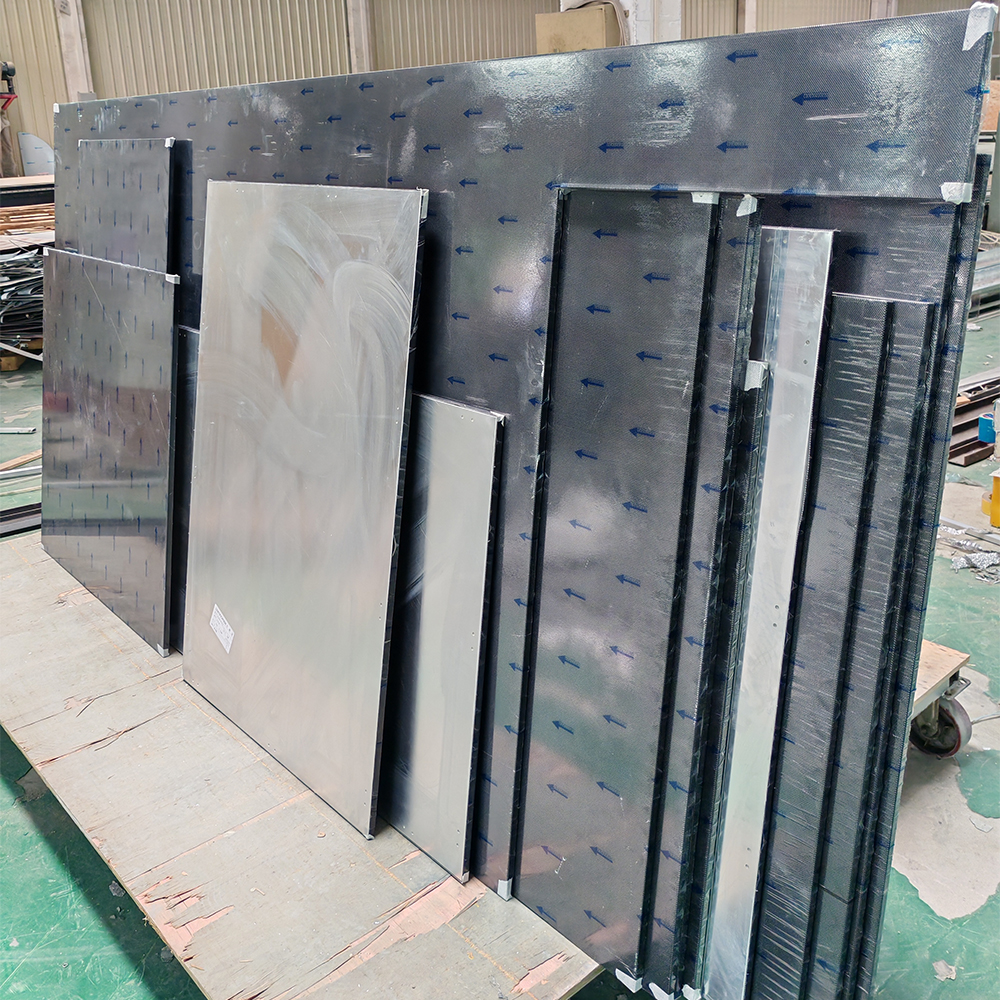
Choosing a facade material is one of those decisions that can look easy at the beginning and become surprisingly complicated once the project moves into the engineering and construction stages.
The architect may already know exactly what the building should look like. The contractor wants something that can be fabricated and installed efficiently. The developer is thinking about durability and total cost. Meanwhile, the procurement team needs to make sure the material meets the project’s technical requirements and can actually be delivered on time.
An exterior aluminum composite panel can be a practical solution when all of these requirements need to come together.
Aluminum composite panels are widely used on commercial buildings, residential projects, offices, hotels, retail stores and other architectural structures. Their lightweight composite construction, range of surface finishes and fabrication flexibility make them suitable for many different facade concepts.
However, the important point is this: not every ACP product is automatically suitable for exterior use. The panel needs to be selected according to the building, environment, installation method and applicable standards.
Why Exterior Aluminum Composite Panel Is Widely Used
The popularity of ACP comes from its combination of practical characteristics.
An aluminum composite panel normally consists of two aluminum skins bonded to a central core. This sandwich construction provides a lightweight panel with a relatively rigid structure.
For facade applications, that can be a major advantage.
Large panels can be easier to handle and transport than many heavier cladding materials. At the factory, they can also be cut, routed, folded and fabricated into different shapes.
From an architectural perspective, this creates a lot of possibilities.
A facade can use large flat areas, contrasting colors, horizontal or vertical layouts, folded corners and customized architectural features without changing the basic panel material.
That flexibility is one of the main reasons ACP remains popular in contemporary facade design.
Exterior Does Not Mean Every ACP Is the Same
This is an important distinction for buyers.
An ACP product designed for interior decoration should not simply be moved outside and assumed to be suitable for exterior use.
Outdoor applications are much more demanding.
An exterior aluminum composite panel may be exposed to intense sunlight, rain, wind, humidity, temperature fluctuations, dust and pollution for many years.
The surface coating therefore becomes an important part of the specification.
The core material matters too, particularly when the building has specific fire-performance requirements.
The correct panel should be selected based on the actual project requirements rather than simply choosing the most common specification offered by a supplier.
What Should You Look for in an Exterior ACP?
When evaluating an exterior aluminum composite panel, it is useful to look at the product from several angles.
First is the panel construction.
Check the aluminum alloy, aluminum skin thickness, total panel thickness and core composition.
Next is the surface finish.
Depending on the manufacturer, ACP can be available in solid colors, metallic finishes, matte surfaces, wood-look designs, stone-look finishes and customized colors.
Then consider performance.
Weather resistance, coating durability, fire performance, mechanical characteristics and dimensional stability may all be relevant depending on the application.
Finally, consider how the panel will actually be installed.
A technically good panel can still produce poor results if the supporting structure or fixing system is incorrectly designed.
Climate Should Influence Your Material Choice
Where the building is located matters.
A facade in a hot and sunny region may experience significant solar heating. A project in a humid or rainy climate will have different concerns. Coastal buildings can face additional environmental exposure due to salt in the atmosphere.
This doesn’t mean there is one ACP specification for every climate.
It means the material should be selected with the local environment in mind.
For projects with demanding exposure conditions, buyers should discuss coating performance and suitable panel construction directly with the manufacturer.
It is also worth requesting technical documents rather than relying only on marketing descriptions.
Terms such as “weather resistant” or “high durability” are not enough by themselves. A professional project needs measurable specifications and documentation that can be evaluated against the project requirements.
Fire Performance Needs Careful Attention
Fire performance is one of the most important topics when selecting facade materials.
Different buildings and markets can have different regulatory requirements, and the acceptable performance level can depend on building height, occupancy, facade design and local building codes.
The core of the panel is particularly relevant here.
If a project requires a specific fire classification, the buyer should request the manufacturer’s relevant test reports and certificates and confirm that they apply to the actual panel construction being supplied.
Don’t assume that two panels with the same appearance have the same fire performance.
For high-rise and large commercial projects, this part of material selection should be handled carefully and preferably reviewed by the project’s qualified facade and fire-safety professionals.
Panel Size and Building Design Go Together
Architects often want large panels because fewer joints can create a cleaner visual appearance.
That’s understandable.
But panel size affects more than appearance.
Larger panels can change the requirements for support spacing, fixing locations, transportation and fabrication. Wind loads also need to be considered as part of the overall facade design.
This is why panel dimensions should be determined in coordination with the facade system.
Instead of deciding on a panel size first and figuring out the engineering later, it is usually more efficient to coordinate architectural drawings, structural requirements and fabrication capabilities from the beginning.
Thermal Movement Is Easy to Forget
Aluminum responds to temperature changes.
During the day, exterior panels can become hot under direct sunlight. At night, they cool down again. This creates dimensional movement.
On a single small panel, this may seem insignificant.
Across a large facade, however, repeated movement can become an important design consideration.
The fixing system and joints therefore need to be designed to accommodate the expected movement.
This is one reason experienced facade contractors pay close attention to joint width, fixing points and connection details.
A facade should not simply hold every panel rigidly in place. It needs to provide the appropriate degree of movement while maintaining the required appearance and performance.
The Supporting Frame Is Critical
When people talk about an exterior aluminum composite panel, they sometimes focus entirely on the visible sheet.
But once installed, the panel is part of a larger system.
The supporting frame, brackets and fasteners transfer loads from the cladding back to the building structure.
If the supporting frame is incorrectly positioned, the finished facade can look uneven even if the panels were manufactured perfectly.
Alignment is particularly important for large facades with long straight joint lines.
Before panel installation begins, the contractor should check the supporting structure carefully and make sure it matches the approved drawings.
Fabrication Can Make or Break the Project
ACP is relatively easy to fabricate compared with some traditional facade materials, but “easy” doesn’t mean “careless.”
The panel needs to be processed accurately.
Depending on the design, fabrication may include cutting, routing, folding, bending or other forming operations.
For simple flat panels, the process is straightforward.
For complex facade systems, however, every dimension matters.
A panel around a window opening, for example, may need to match several adjacent components at the same time. A small error in the shop drawing can create a visible gap or alignment issue on site.
For this reason, project teams should approve fabrication drawings before mass production begins.
Exterior ACP Offers Plenty of Design Possibilities
One of the strongest advantages of an exterior aluminum composite panel is its visual flexibility.
A building doesn’t have to use one color across the entire facade.
Designers can combine different colors, finishes and panel orientations to create depth and visual rhythm.
For example, a commercial building might use metallic ACP around the main entrance and a neutral solid color across the larger wall areas.
A residential building might combine wood-look panels with glass and stone.
An office building might use several shades of the same color to create a subtle geometric pattern.
The possibilities are broad because the panel is both a finished surface and a material that can be fabricated into different architectural forms.
ACP Is Also Useful for Building Renovation
Exterior aluminum composite panel is not limited to new construction.
It can also be used in renovation projects.
An older commercial building may have a structurally usable exterior but an outdated appearance. A new cladding system can dramatically change its visual identity.
ACP is attractive for these projects because of its relatively lightweight construction and fabrication flexibility.
However, renovation work requires careful assessment of the existing wall.
The condition and strength of the substrate need to be evaluated, and the new supporting system must be properly connected to the existing structure.
This is another situation where project-specific engineering is more important than simply selecting a panel from a catalog.
Don’t Forget the Installation Accessories
A complete facade project may require much more than panels.
Depending on the system, components can include aluminum profiles, brackets, screws, rivets, fasteners, corner components, joint materials and sealants.
These accessories should be compatible with the panel system and the building structure.
Using inappropriate accessories simply because they are cheaper can create problems later.
For large projects, it is generally better to coordinate the panel manufacturer and installation contractor early so that the entire system can be considered together.
How to Buy Exterior Aluminum Composite Panels
If you’re sourcing ACP internationally, start by preparing a clear product specification.
Tell the manufacturer where the panels will be used, the approximate project quantity, required dimensions, surface finish and any known technical requirements.
If possible, provide architectural drawings.
Then ask the supplier to provide:
- Product datasheet
- Panel construction information
- Aluminum skin specification
- Core information
- Fire-performance documentation
- Coating information
- Available finishes
- Dimensional tolerances
- Fabrication capabilities
- Installation recommendations
- Quality-control information
- Packaging details
This makes it much easier to compare different suppliers on a like-for-like basis.
The Cheapest Panel Is Not Always the Cheapest Solution
Price matters, especially for large construction projects.
But comparing only the price per square meter can be misleading.
A lower-priced panel may have a different aluminum skin, different core, different coating or different fabrication requirements.
If the material is difficult to fabricate or install, the project may end up costing more in labor.
Similarly, if the coating does not match the environmental requirements, future maintenance costs may be higher.
A better purchasing decision looks at the total installed value rather than just the initial material price.
Final Thoughts
An exterior aluminum composite panel can provide an attractive and practical solution for modern building facades, but choosing the right product requires a little more thought than simply selecting a color and thickness.
The building location, climate, facade design, fire-performance requirements, panel dimensions, supporting structure, fixing method and surface finish all need to be considered.
The panel should also be treated as part of a complete cladding system.
When the material specification, engineering design, fabrication and installation are properly coordinated, ACP can provide a clean architectural appearance while offering the flexibility needed for contemporary building projects.
For architects, it provides plenty of creative freedom. For contractors, it offers efficient fabrication and installation possibilities. For developers and building owners, it can create a modern facade with manageable maintenance requirements.
And for buyers, the most important lesson is simple: don’t buy an exterior aluminum composite panel based on appearance or price alone. Look at the complete system and make sure the product is genuinely matched to the project.
