
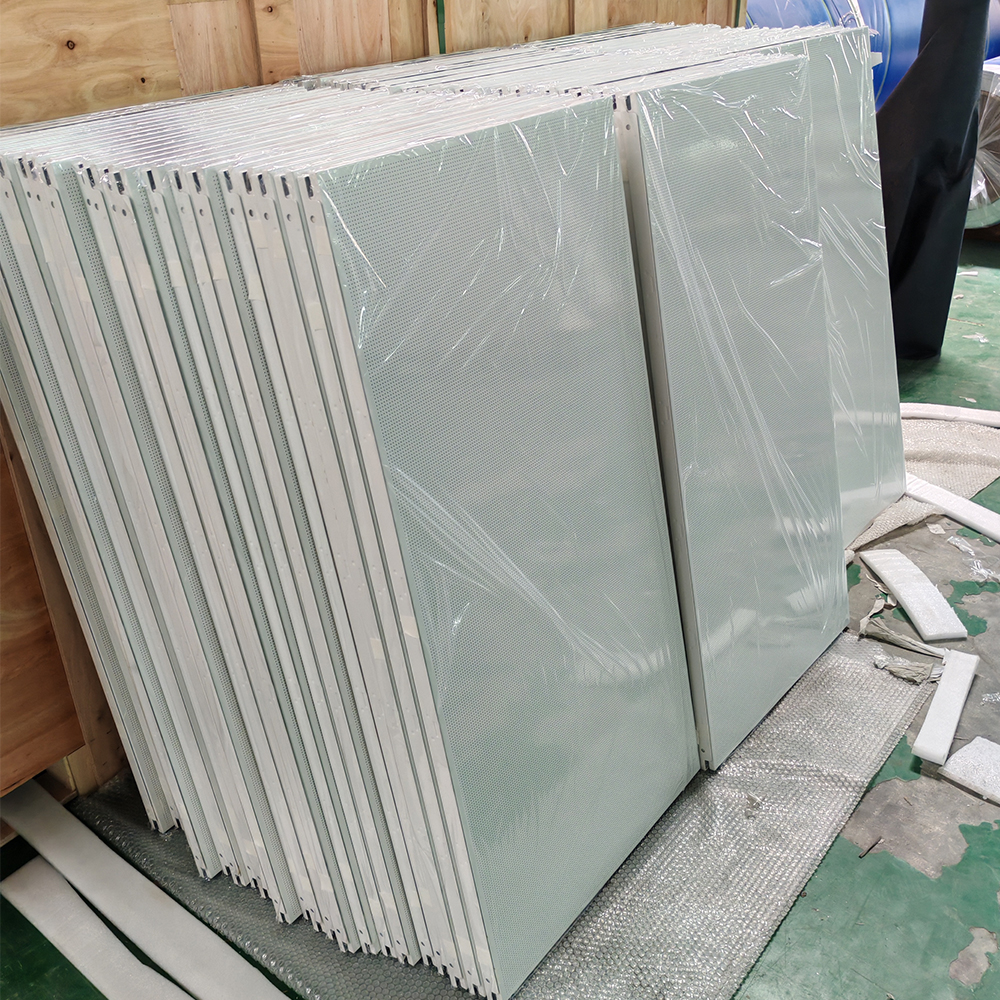
When choosing a material for the outside of a building, the first thing most people notice is appearance. That’s natural. A facade is one of the most visible parts of a building, and architects want the finished surface to look clean, modern and consistent.
But anyone who has been involved in an actual construction project knows that appearance is only the beginning.
Once aluminum composite panels exterior applications are considered, a much longer list of questions comes up. How will the panels perform in the local climate? What type of core should be used? How will the panels be fixed? What happens when temperatures change? Can the panels be fabricated accurately? And how easy will the facade be to maintain after the building is completed?
These questions are important because an exterior facade is constantly exposed to the environment.
Aluminum composite panels have become popular for this type of application because they combine a finished aluminum surface with a lightweight composite construction. They can also be manufactured in many colors and finishes and fabricated into different shapes.
Still, the right result depends on selecting the right panel and designing the installation system properly.
Why Are Aluminum Composite Panels Used on the Exterior?
There are several reasons ACP is commonly considered for exterior architecture.
First, the material offers considerable design flexibility.
Architects can choose from different colors, surface textures and finishes. Panels can also be arranged vertically, horizontally or in more complex patterns.
Second, ACP is relatively lightweight compared with many traditional facade materials.
That makes transportation and on-site handling more manageable, particularly for large projects.
Third, the panels can be fabricated.
They can be cut, routed, folded and formed according to project drawings. This allows the material to be used around corners, columns, entrances, windows and other architectural features.
Finally, ACP can provide a very clean visual appearance.
Large flat panels and carefully controlled joints can create the kind of simple geometric facade that is common in contemporary architecture.
But Exterior Applications Are More Demanding
An indoor wall is protected from most environmental conditions.
An exterior facade isn’t.
The panels may experience strong sunlight during the day, rain during storms, high humidity, dust, pollution and significant temperature changes.
Over time, these conditions can affect the coating and other components of the cladding system.
This means the specification for aluminum composite panels exterior use should be based on the actual environment.
For example, a project in a hot, sunny climate may require careful attention to coating durability and thermal movement.
A project in a coastal environment may require additional consideration of environmental exposure and the durability of exposed components.
The important point is that there is no single ACP specification that is automatically suitable for every exterior project.
Panel Construction Matters
An aluminum composite panel is generally made from aluminum skins bonded to a central core.
Although the basic construction sounds simple, the actual materials and specifications can vary significantly between products.
The aluminum skin thickness can differ. Core materials can differ. Coating systems can differ. Overall panel thickness can differ.
These differences can influence fabrication, rigidity, weight and overall performance.
For this reason, professional buyers should request detailed technical information instead of relying only on the product name.
If a supplier says a panel is “high quality,” that’s not enough information for an engineering or procurement decision.
Ask for the actual specification.
Fire Performance Should Be Considered Early
Fire performance is a major consideration for exterior facade materials.
The requirements can vary depending on the building type, height, location and applicable regulations.
The core material is particularly important because different core constructions can behave differently when exposed to fire.
For projects with specific fire-performance requirements, buyers should request relevant test reports and certificates from the manufacturer.
It’s also important to make sure that the documentation corresponds to the actual panel construction being supplied.
In other words, don’t select a product based on a general statement about fire resistance. Confirm the specific product and specification.
For high-rise buildings and other projects with strict facade requirements, the final material selection should be reviewed by the appropriate architects, facade engineers and fire-safety professionals.
What About Weather Resistance?
When people talk about exterior ACP, weather resistance is often one of the first technical questions.
The aluminum surface is protected by a coating system, and the coating needs to withstand the conditions expected at the project location.
Sunlight can gradually affect coatings. Rain and humidity can expose joints and interfaces to moisture. Pollution can accumulate on the surface.
This doesn’t mean that ACP is difficult to maintain.
In fact, one of the practical benefits of a properly selected panel is that routine cleaning can usually be managed relatively easily.
But maintenance expectations should still be discussed before selecting the finish.
A smooth surface may be easier to clean than a highly textured one. A building in a polluted urban environment may require more frequent cleaning than a building in a low-pollution area.
Large Panels Create New Design Possibilities
One of the reasons architects like aluminum composite panels exterior is the ability to create large, visually continuous surfaces.
Fewer joints can create a cleaner appearance.
However, larger panels also require more careful engineering.
The panel size affects fixing points, support spacing, fabrication, transportation and installation.
Wind loads also need to be considered.
A panel that is perfectly suitable for a small low-rise application may not automatically be suitable when used as a very large panel on a high-rise facade.
That’s why panel size should be coordinated with the facade system rather than selected purely for aesthetic reasons.
Thermal Movement Is a Real Design Issue
Here’s something that is easy to overlook when looking at a small ACP sample.
The sample doesn’t move very much.
A building facade made from thousands of square meters of aluminum does.
Aluminum expands when heated and contracts when cooled. On an exterior building, temperature changes happen continuously.
During a hot afternoon, a dark-colored panel exposed to direct sunlight can become significantly warmer than the surrounding air. Later, as temperatures fall, the panel cools down.
The facade system needs to accommodate this movement.
That means the fixing system and joint design need to be considered together.
If panels are fixed incorrectly or movement isn’t properly accommodated, stress can build up in the system.
This is one reason professional installation drawings are so important.
The Supporting Structure Is Part of the Solution
The visible panel is only one part of an exterior cladding system.
Behind it, there may be brackets, aluminum profiles, steel supports, fasteners and other components.
These components transfer the loads from the cladding back to the building.
The supporting frame needs to be properly aligned.
Imagine installing hundreds of perfectly fabricated panels onto a frame that is slightly out of alignment. The final facade will still look uneven.
For large buildings, this can become particularly obvious because long joint lines make small alignment errors easier to see.
Good installation therefore starts with checking the supporting structure, not just hanging the first panel.
Fabrication Accuracy Makes Installation Easier
ACP is popular partly because it is easy to fabricate into different forms.
But fabrication needs to be controlled.
The process may involve cutting, routing, folding and forming. Each operation needs to follow the approved shop drawings.
For simple rectangular panels, the process is relatively straightforward.
Complex panels are another story.
A corner panel may need to connect with several adjacent panels. A panel around a window may have to match the window frame, surrounding cladding and waterproofing detail.
If the measurements are wrong, the problem may not be discovered until the panel reaches the site.
That’s why project teams should review shop drawings carefully before mass production.
Design Flexibility Is a Major Advantage
Architects have a lot of freedom when using ACP.
The same basic material can produce very different facade styles.
A modern office building might use silver or gray metallic panels.
A retail building might use bold colors around its entrance.
A residential project might combine wood-look ACP with glass and stone.
A hotel might use a combination of metallic and matte finishes to create a more sophisticated appearance.
Panel orientation can also change the visual effect.
Vertical panels can emphasize building height, while horizontal layouts can make a building appear wider.
This flexibility makes ACP useful for both simple and highly customized facade designs.
Aluminum Composite Panels Exterior for Renovation
Exterior ACP is also frequently considered for renovation.
Many older commercial buildings have perfectly usable structures but outdated facades.
Instead of completely rebuilding the exterior, a new cladding system can change the building’s appearance significantly.
ACP can be useful in these situations because it is relatively lightweight and can be fabricated into customized shapes.
However, renovation projects have one additional challenge: the existing structure.
Before installation begins, the contractor needs to determine whether the existing substrate can safely support the new cladding system.
Any damaged areas should be repaired before the new facade is installed.
The new supporting structure must also be designed to connect properly to the existing building.
Installation Method Makes a Difference
There isn’t one universal method for installing aluminum composite panels.
Depending on the project, the system may use mechanical fixing, cassette-style construction, hanging systems or other engineered approaches.
The choice depends on the panel specification, building structure, panel dimensions and design requirements.
Interior applications may sometimes use adhesive installation, but exterior facade systems generally require a properly engineered mechanical or structural fixing approach.
The installation method should be determined before panel fabrication whenever possible.
This allows the manufacturer to produce the panels with the correct dimensions and details.
What Should Buyers Ask the Manufacturer?
If you’re sourcing aluminum composite panels exterior products for a building project, don’t be afraid to ask technical questions.
At minimum, you should understand:
- Overall panel thickness
- Aluminum skin thickness
- Aluminum alloy
- Core material
- Surface coating
- Available colors and finishes
- Fire-performance information
- Weather-resistance information
- Standard panel dimensions
- Customized dimensions
- Fabrication capabilities
- Installation recommendations
- Technical drawings
- Quality-control procedures
- Export packaging
If the supplier can provide samples, technical datasheets and project-specific recommendations, that’s a good starting point.
For larger projects, it is also useful to discuss fabrication and installation with the supplier before the final order is placed.
Don’t Compare Suppliers Based on Price Alone
Price is obviously important in construction.
But comparing ACP suppliers only by price per square meter can create problems.
A lower price may represent a different core, thinner aluminum skins, a different coating or a different specification altogether.
It is better to compare equivalent products.
For example, if Supplier A offers a lower price but uses a different panel construction from Supplier B, the two quotations aren’t really comparable.
You should compare the full specification first.
Then look at fabrication, accessories, transportation and installation requirements.
The cheapest panel isn’t necessarily the cheapest solution once the entire project is considered.
A Simple Procurement Approach
If you’re responsible for purchasing exterior ACP, a practical process is:
Step 1: Define the application.
Confirm that the panels will be used for exterior architectural cladding.
Step 2: Define the environment.
Consider climate, sunlight, humidity, rainfall, coastal exposure and pollution.
Step 3: Confirm performance requirements.
Identify fire, weather, mechanical and other project-specific requirements.
Step 4: Select the appearance.
Choose color, coating, texture and finish.
Step 5: Confirm panel dimensions.
Coordinate architectural requirements with fabrication and transportation limitations.
Step 6: Design the fixing system.
Determine the supporting structure, joints, brackets and fasteners.
Step 7: Approve samples and drawings.
Don’t skip this stage before mass production.
This process can save considerable time later.
Final Thoughts
There is a reason aluminum composite panels exterior applications remain popular in modern architecture.
They offer a combination of lightweight construction, visual flexibility and fabrication convenience that works well for many commercial and residential facade projects.
But the panel itself is only part of the equation.
The core material, aluminum skins, surface coating, panel dimensions, supporting frame, fixing method, joint design and installation quality all influence the final result.
If you’re selecting ACP for an exterior building, start with the project’s actual requirements instead of starting with the cheapest quotation.
Think about the climate. Think about the building height. Think about fire performance. Think about panel size and thermal movement. Think about how the panels will be fabricated and installed.
Most importantly, work with the manufacturer and facade contractor early in the process.
When the material and installation system are planned together, aluminum composite panels can provide a clean, modern and durable exterior finish while giving architects the flexibility to create distinctive building facades.
