
When engineers and procurement teams evaluate lightweight sandwich structures, Aluminum Honeycomb versus Foam Sandwich Panels is a common material-selection question. Both solutions can reduce structural weight while providing high stiffness, but their performance characteristics are quite different.
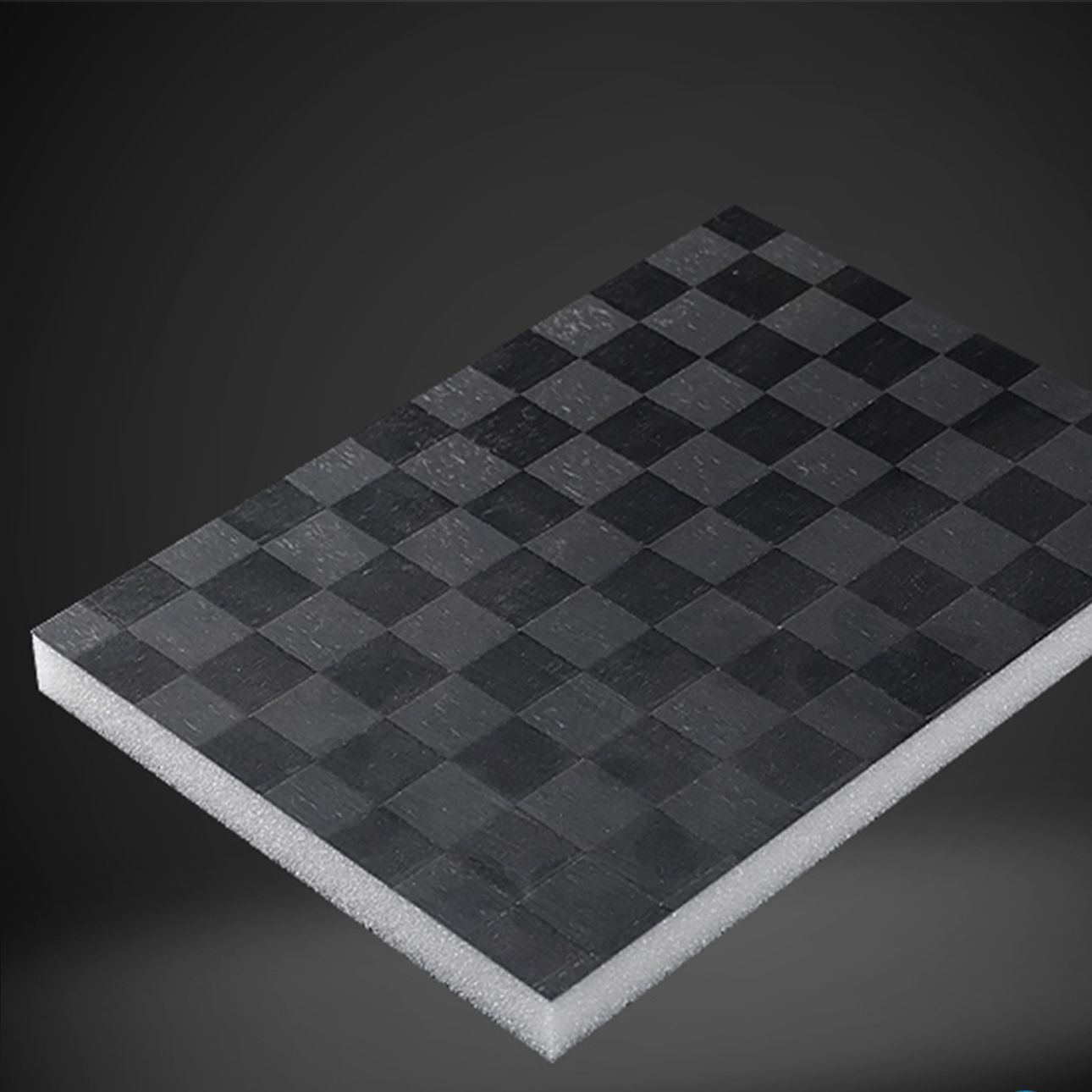
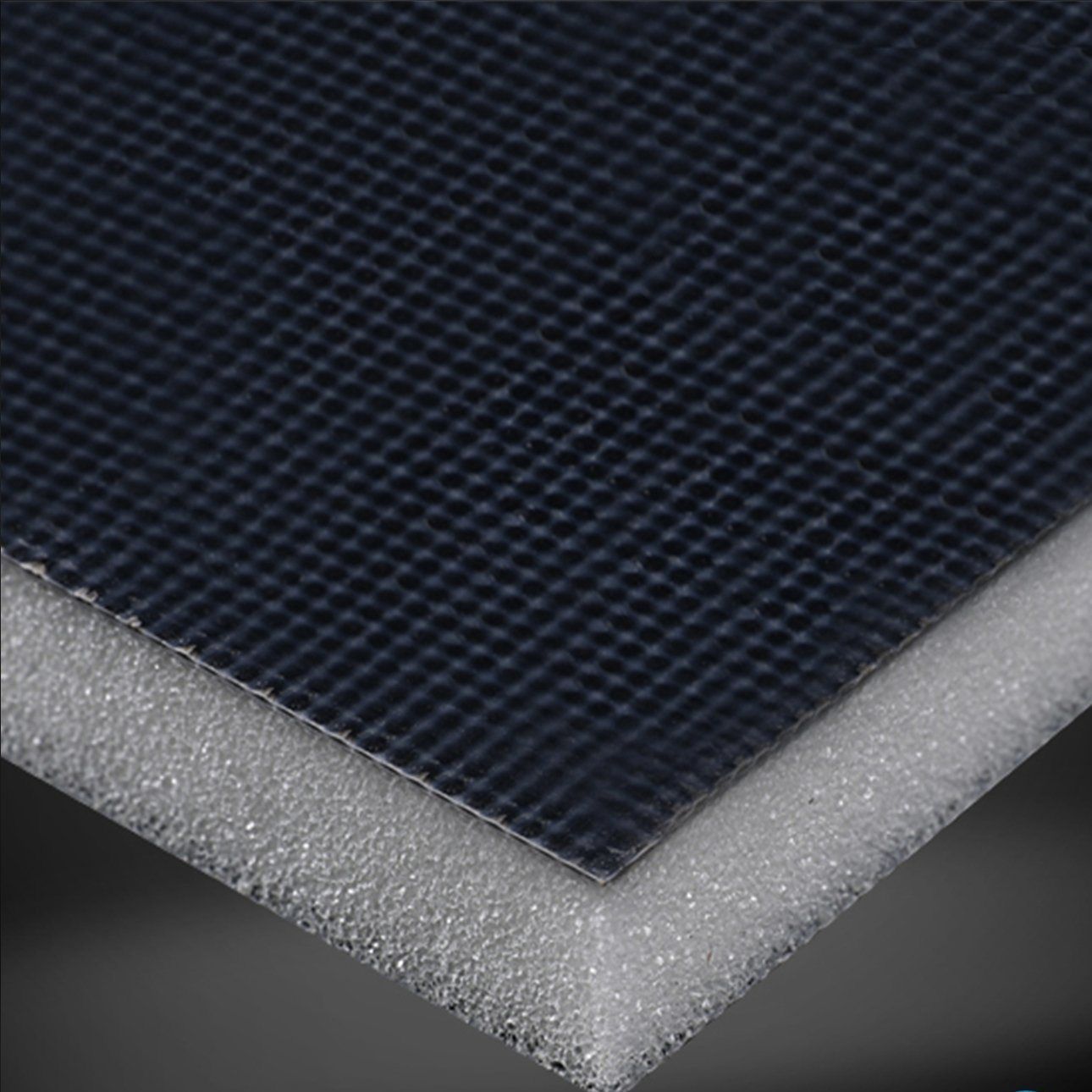
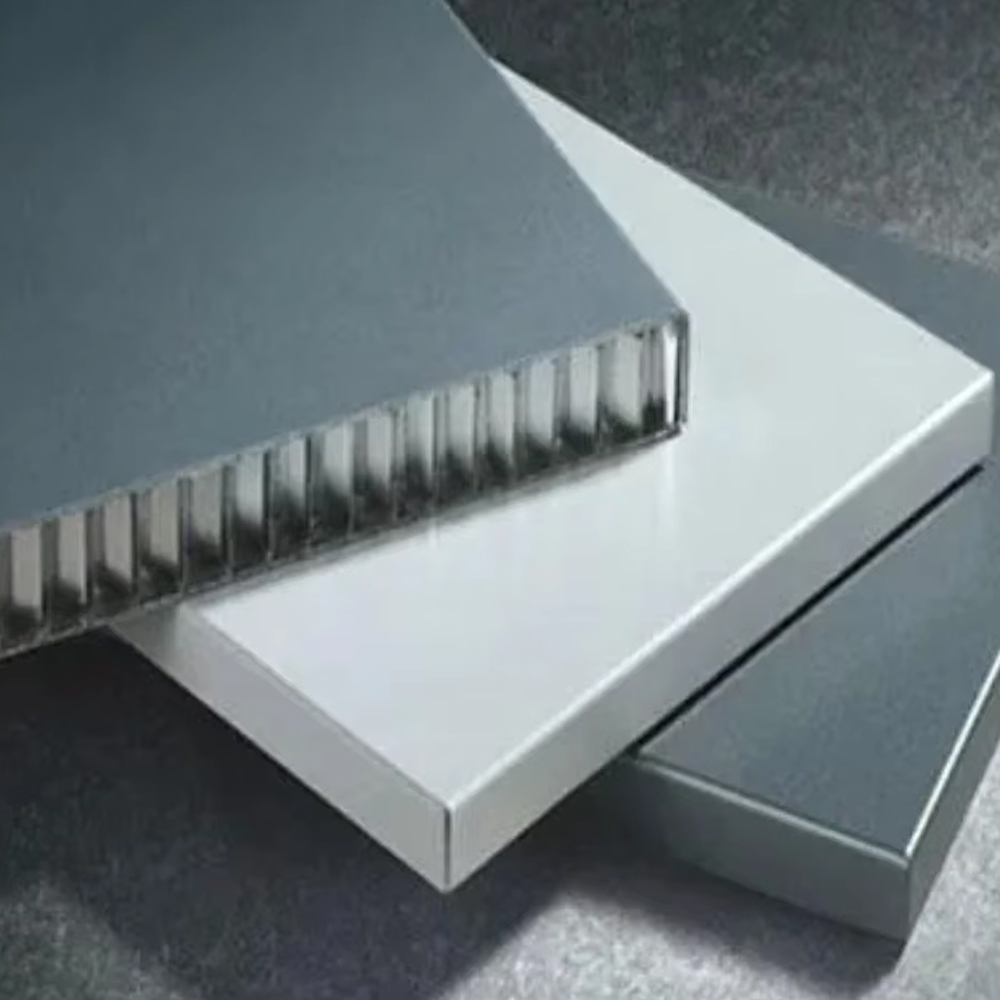
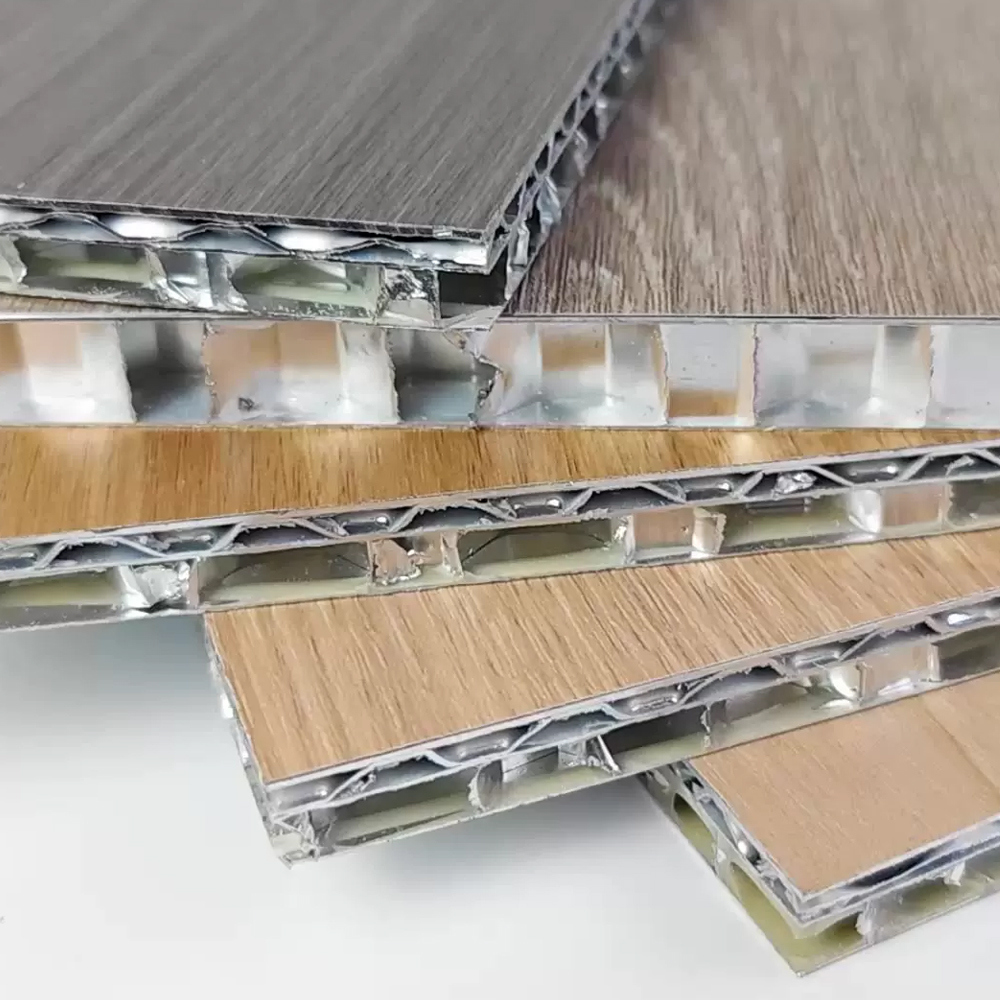
Aluminum honeycomb is a cellular metallic core, usually manufactured from aluminum foil and bonded between two face sheets. Foam sandwich panels use polymeric cores such as PVC, PET, PMI, PU or XPS.
The best choice depends on the required combination of weight, stiffness, compression strength, shear strength, thermal insulation, fire performance, moisture resistance, machining requirements and total project cost.
Data note: The numerical values below are representative engineering ranges for comparison and should not be treated as guaranteed specifications. Actual performance varies according to alloy, density, thickness, cell size, foam formulation, face-sheet material, adhesive system and test standard.
1. Aluminum Honeycomb vs Foam Core: Basic Comparison
The biggest difference is the physical structure of the core.
Aluminum honeycomb contains thin aluminum cell walls arranged into a cellular structure. A large percentage of the core volume is air, which allows the material to achieve very low weight.
Foam cores are continuous cellular polymer materials. Different foam formulations can be engineered for structural strength, thermal insulation, fire resistance or impact absorption.
| Property | Aluminum Honeycomb | PVC Foam | PET Foam | PMI Foam | XPS Foam |
|---|---|---|---|---|---|
| Typical density | 30–160 kg/m³ | 60–250 kg/m³ | 60–250+ kg/m³ | 50–200+ kg/m³ | 25–50 kg/m³ |
| Typical thickness | 5–100+ mm | 5–150 mm | 5–150 mm | 5–100+ mm | 5–150 mm |
| Core type | Aluminum cellular | Polymer foam | Polymer foam | Polymer foam | Polymer foam |
| Structural stiffness | Very high | High | Moderate–high | Very high | Moderate |
| Compression strength | ~0.5–8+ MPa | ~0.5–8+ MPa | ~0.5–10+ MPa | ~1–15+ MPa | ~0.2–1.0 MPa |
| Thermal insulation | Low | Good | Good | Good | Excellent |
| Water resistance | Good with proper sealing | Good | Good | Good | Excellent |
| Machinability | Good | Excellent | Excellent | Excellent | Excellent |
| Fire behavior | Non-combustible core | Formulation-dependent | Formulation-dependent | Formulation-dependent | Formulation-dependent |
The table shows why there is no universal “best” core. Each material occupies a different performance range.
2. Weight: Where Aluminum Honeycomb Has a Major Advantage
Weight reduction is one of the main reasons engineers use honeycomb structures.
A lightweight aluminum honeycomb core can have a density of approximately 30–60 kg/m³, while higher-density structural grades can reach 100–160 kg/m³ or more.
For comparison, structural PVC and PET foam commonly fall within approximately 60–250 kg/m³.
Consider a 1 m² panel using a 20 mm core:
| Core Material | Density | Core Thickness | Approx. Core Weight |
|---|---|---|---|
| Aluminum Honeycomb | 50 kg/m³ | 20 mm | 1.0 kg/m² |
| Aluminum Honeycomb | 80 kg/m³ | 20 mm | 1.6 kg/m² |
| PVC Foam | 80 kg/m³ | 20 mm | 1.6 kg/m² |
| PVC Foam | 100 kg/m³ | 20 mm | 2.0 kg/m² |
| PET Foam | 100 kg/m³ | 20 mm | 2.0 kg/m² |
| PET Foam | 150 kg/m³ | 20 mm | 3.0 kg/m² |
| XPS Foam | 35 kg/m³ | 20 mm | 0.7 kg/m² |
These are core-only weights. Face sheets, adhesive, coatings, edge reinforcements and inserts must be added when calculating the actual panel weight.
This distinction is important for procurement.
A panel with a lightweight core does not automatically become the lightest finished panel.
3. Strength-to-Weight Performance
For structural applications, engineers normally evaluate more than density.
Important mechanical parameters include:
- Compression strength
- Shear strength
- Shear modulus
- Tensile strength
- Flexural strength
- Fatigue resistance
- Impact resistance
- Local load capacity
Typical compression-strength ranges illustrate the differences:
| Material | Density Range | Approx. Compression Strength |
|---|---|---|
| Low-density Aluminum Honeycomb | 30–60 kg/m³ | 0.5–2 MPa |
| Medium-density Aluminum Honeycomb | 60–100 kg/m³ | 1–4 MPa |
| High-density Aluminum Honeycomb | 100–160+ kg/m³ | 2–8+ MPa |
| PVC Foam | 60–100 kg/m³ | 0.5–3 MPa |
| PVC Foam | 100–200 kg/m³ | 1–6 MPa |
| High-density PVC Foam | 200–250+ kg/m³ | 4–8+ MPa |
| PET Foam | 100–200 kg/m³ | 1–7 MPa |
| PMI Foam | 80–200 kg/m³ | 2–15+ MPa |
| XPS Foam | 25–50 kg/m³ | 0.2–1.0 MPa |
These values are representative ranges rather than specifications for a particular manufacturer’s product.
For a structural sandwich panel, the core should be selected according to the required load rather than simply choosing the lowest-density material.
4. Bending Stiffness
Sandwich construction is particularly effective because the core separates the two face sheets.
The face sheets carry most of the tensile and compressive bending stresses, while the core transfers shear forces between them.
This means that increasing core thickness can significantly improve panel stiffness without adding a large amount of weight.
For example, a designer might compare:
| Panel Configuration | Core Thickness | Typical Structural Objective |
|---|---|---|
| Thin sandwich | 10 mm | Lightweight interior panels |
| Medium sandwich | 20 mm | Wall and ceiling panels |
| Structural sandwich | 25–40 mm | Flooring and transportation |
| Heavy structural sandwich | 50–100 mm | Marine and large structural panels |
The actual stiffness depends on:
- Face-sheet material
- Face-sheet thickness
- Core density
- Core shear modulus
- Core thickness
- Bonding quality
- Panel dimensions
- Edge conditions
Therefore, two panels with identical dimensions can have very different structural performance.
5. Thermal Insulation: Foam Has the Advantage
If the sandwich panel must provide thermal insulation, foam cores usually have a clear advantage over aluminum honeycomb.
Typical thermal conductivity ranges are:
| Material | Approx. Thermal Conductivity |
|---|---|
| Aluminum | 160–235 W/m·K |
| PVC Foam | 0.03–0.06 W/m·K |
| PET Foam | 0.035–0.06 W/m·K |
| XPS Foam | 0.025–0.035 W/m·K |
| PU Foam | 0.020–0.030 W/m·K |
| PMI Foam | ~0.03–0.05 W/m·K |
Actual thermal performance of a honeycomb panel is more complicated than the conductivity of solid aluminum because the core contains substantial air volume.
Nevertheless, foam cores are generally the preferred solution when the main requirement is thermal insulation.
This makes foam sandwich panels attractive for:
- Building envelopes
- Cold-storage systems
- Refrigerated vehicles
- HVAC equipment
- Insulated wall panels
- Marine cabins
- RV panels
- Prefabricated buildings
6. Fire Performance
Fire performance is an important factor when comparing Aluminum Honeycomb versus Foam Sandwich Panels.
The aluminum core itself is non-combustible. However, the finished sandwich panel still contains adhesive, coatings and face-sheet materials.
Foam cores behave differently.
Some structural foams can be manufactured with improved flame-retardant characteristics, but the exact fire performance depends on the formulation and the complete panel construction.
| Factor | Aluminum Honeycomb | Foam Core |
|---|---|---|
| Core combustibility | Non-combustible aluminum | Material-dependent |
| Flame resistance | Excellent core performance | Formulation-dependent |
| Smoke performance | Primarily dependent on other panel components | Formulation-dependent |
| High-temperature stability | Generally strong | Material-dependent |
| Fire certification | Must test finished panel | Must test finished panel |
For architectural, marine, railway or public-building projects, buyers should request actual fire-test reports and classifications, rather than relying only on terms such as “fireproof” or “flame retardant.”
7. Moisture and Water Resistance
Both technologies can be suitable for wet environments, but the design details are important.
Aluminum does not absorb water, but honeycomb cells can become vulnerable if water enters through:
- Damaged skins
- Open edges
- Poorly sealed joints
- Improper drilling
- Failed adhesive bonds
Foam cores such as PVC, PET and XPS generally provide good moisture resistance, particularly when closed-cell structures are used.
| Property | Aluminum Honeycomb | PVC Foam | PET Foam | XPS Foam |
|---|---|---|---|---|
| Water absorption | Very low material absorption | Low | Low | Very low |
| Closed-cell structure | No | Yes | Generally yes | Yes |
| Marine suitability | Excellent with proper design | Excellent | Good–excellent | Good |
| Edge sealing importance | Very high | High | High | High |
| Corrosion concern | Yes, depending on environment | No | No | No |
For marine applications, edge sealing and adhesive selection can be just as important as the core itself.
8. Impact Resistance
Impact performance depends heavily on panel construction.
Aluminum honeycomb can absorb impact energy through progressive crushing of its cells.
Foam cores absorb impact through cellular deformation and crushing.
Typical applications include:
| Application | Aluminum Honeycomb | Foam Sandwich |
|---|---|---|
| Aircraft interior | Excellent | Good |
| Ship interior | Excellent | Excellent |
| Yacht panels | Excellent | Excellent |
| Truck body | Excellent | Excellent |
| RV panels | Good | Excellent |
| Wind turbine blades | Good | Excellent |
| Protective structures | Excellent | Excellent |
| Architectural panels | Excellent | Good |
For impact-sensitive applications, buyers should request impact test data, not simply compression-strength data.
9. Machining and Fabrication
Manufacturing processes can strongly influence the total project cost.
Foam cores are generally easy to:
- CNC cut
- Saw
- Route
- Drill
- Shape
- Contour
- Bond
- Process into complex geometries
Aluminum honeycomb is also machinable, but it requires more attention around edges and penetrations.
| Manufacturing Requirement | Aluminum Honeycomb | Foam Core |
|---|---|---|
| CNC cutting | Good | Excellent |
| Drilling | Good | Excellent |
| Complex contouring | Good | Excellent |
| Edge treatment | More demanding | Easier |
| Insert installation | Requires reinforcement | Relatively easy |
| Large cutouts | Requires careful design | Generally easier |
| Bonding | Excellent | Excellent |
For highly customized composite components, foam cores can therefore provide manufacturing advantages.
10. Cost Comparison
A procurement team should not compare materials only according to the price per kilogram.
The total panel cost can include:
| Cost Component | Aluminum Honeycomb | Foam Sandwich |
|---|---|---|
| Core material | Medium–high | Low–high |
| Face sheets | Application-dependent | Application-dependent |
| Adhesive | Required | Required |
| CNC machining | Medium | Low–medium |
| Edge treatment | Higher | Lower |
| Inserts | Often required | Often required |
| Thermal insulation | Additional system may be required | Integrated through foam core |
| Installation | Application-dependent | Application-dependent |
| Maintenance | Generally low | Generally low |
For some applications, a higher-priced core can reduce the amount of other material required.
For other applications, a lower-cost foam core may provide enough performance while also eliminating additional insulation components.
Therefore, procurement decisions should focus on total panel cost and required performance, rather than core price alone.
11. Application-Based Material Selection
Different industries prioritize different properties.
Marine and Yacht Construction
Both aluminum honeycomb and structural foam are widely applicable.
Foam may be preferred when:
- Complex shapes are required
- Weight reduction is important
- Composite manufacturing is used
- Moisture resistance is required
- Thermal insulation is useful
Aluminum honeycomb can be attractive for:
- Interior furniture
- Doors
- Flooring
- Ceilings
- Lightweight partitions
- High-stiffness panels
Transportation
For trucks, trailers, RVs and rail vehicles, the selection often depends on the required combination of weight, impact resistance, thermal performance and manufacturing efficiency.
Architectural Panels
Aluminum honeycomb is particularly attractive for:
- Exterior cladding
- Curtain-wall components
- Interior wall panels
- Ceiling systems
- Decorative panels
- Large-format lightweight panels
Wind Energy
Structural foam cores are widely used in composite structures because they can be shaped into complex aerodynamic components and provide good compatibility with resin-based composite manufacturing.
12. Procurement Comparison Table
For purchasing managers, the following simplified matrix can help with initial screening:
| Selection Factor | Aluminum Honeycomb | Foam Sandwich |
|---|---|---|
| Lightweight structure | ★★★★★ | ★★★★ |
| Structural stiffness | ★★★★★ | ★★★★ |
| Compression performance | ★★★★–★★★★★ | ★★★–★★★★★ |
| Thermal insulation | ★★ | ★★★★★ |
| Moisture resistance | ★★★★ | ★★★★–★★★★★ |
| Fire performance | ★★★★★ | ★★–★★★★ |
| Complex machining | ★★★ | ★★★★★ |
| Impact absorption | ★★★★ | ★★★★ |
| Architectural applications | ★★★★★ | ★★★ |
| Marine applications | ★★★★★ | ★★★★★ |
| Wind-energy composites | ★★★ | ★★★★★ |
| Insulated panels | ★★ | ★★★★★ |
| High-temperature applications | ★★★★★ | ★★–★★★★ |
| Manufacturing flexibility | ★★★★ | ★★★★★ |
The stars are intended as a general screening tool, not a substitute for engineering test data.
13. What Should Buyers Ask the Manufacturer?
When purchasing either aluminum honeycomb or foam sandwich panels, buyers should request a technical datasheet covering at least the following:
| Technical Parameter | Why It Matters |
|---|---|
| Core density | Determines weight and influences mechanical performance |
| Core thickness | Strongly affects panel stiffness |
| Compression strength | Important for concentrated loads |
| Shear strength | Critical for sandwich-panel structural performance |
| Shear modulus | Important for deflection calculations |
| Water absorption | Important for outdoor and marine applications |
| Thermal conductivity | Important for insulation requirements |
| Fire classification | Required for regulated applications |
| Operating temperature | Determines service suitability |
| Dimensional tolerance | Important for panel assembly |
| Adhesive type | Influences durability |
| Face-sheet material | Determines much of the final structural performance |
| Test standard | Allows reliable supplier-to-supplier comparison |
This information makes supplier evaluation much more objective.
14. Aluminum Honeycomb or Foam: Which One Should You Choose?
There is no single material that is superior in every application.
Choose Aluminum Honeycomb when the priority is:
- Maximum lightweight structural efficiency
- High panel stiffness
- Non-combustible metallic core
- Large-format architectural panels
- Lightweight interior structures
- Transportation structures
- High dimensional stability
Choose Foam Core when the priority is:
- Thermal insulation
- Complex composite shapes
- Easy CNC machining
- Marine composite construction
- Wind-turbine components
- Impact absorption
- Corrosion-free core material
- Integrated structural and insulation performance
Within the foam category, the next decision should be made between PVC, PET, PMI, PU, XPS and other foam materials according to the required mechanical and environmental performance.
Conclusion
The comparison of Aluminum Honeycomb versus Foam Sandwich Panels should not be reduced to a simple question of which material is stronger or cheaper.
Aluminum honeycomb offers excellent stiffness-to-weight performance, dimensional stability and non-combustible metallic-core characteristics. It is particularly suitable for lightweight structural and architectural applications.
Foam sandwich panels provide greater material flexibility. Depending on the foam type, they can offer good structural performance, excellent thermal insulation, easy machining, moisture resistance and excellent compatibility with composite manufacturing processes.
For professional procurement, the best selection process is to compare the complete panel system using measurable parameters such as:
Density → Thickness → Compression Strength → Shear Strength → Thermal Conductivity → Water Absorption → Fire Performance → Weight → Manufacturing Cost → Total Project Cost.
The most suitable material is ultimately the one that meets the project’s required performance while providing the best combination of weight, durability, manufacturability and total cost.
