
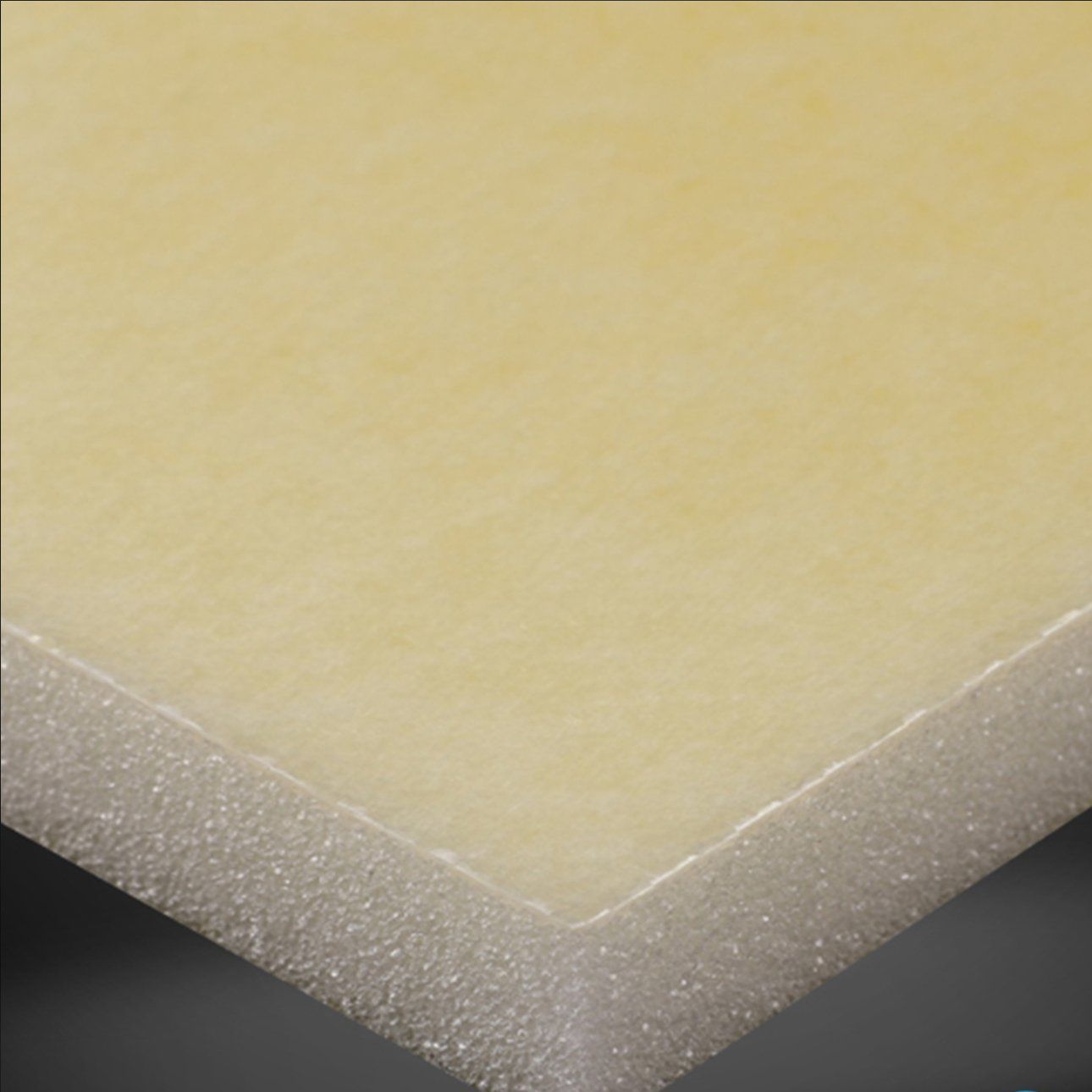
A well-prepared RFQ is one of the most important tools for successfully sourcing composite core materials from China. Many procurement problems occur because buyers provide only a product name and thickness, leaving suppliers to make assumptions about density, performance, application, processing method, and certification.
A professional RFQ should provide enough technical information for multiple suppliers to quote the same specification. This makes price and technical comparison much more meaningful.
At minimum, the RFQ should specify the material type, density, thickness, dimensions, tolerances, mechanical requirements, application, manufacturing process, environmental conditions, certifications, annual quantity, packaging, and delivery requirements.
Recommended RFQ Specification
| RFQ Item | Example Requirement |
| Material | PET Foam Core |
| Density | 100 kg/m³ ± specified tolerance |
| Thickness | 20 mm |
| Thickness tolerance | ± specified value |
| Sheet size | Custom or standard dimensions |
| Compressive strength | Minimum required value |
| Shear strength | Minimum required value |
| Shear modulus | Minimum required value |
| Water absorption | Maximum required value |
| Fire performance | Required standard/classification |
| Manufacturing process | Vacuum infusion |
| Resin system | Epoxy |
| Surface treatment | Perforated/grooved/standard |
| Annual volume | Estimated yearly demand |
| Sample | Required before mass production |
| Certification | Application-specific |
| Packaging | Export packaging |
| Lead time | Required delivery window |
For customized composite core materials, buyers should also provide CAD drawings or technical drawings when possible. These drawings should identify dimensions, machining areas, grooves, holes, contours, tolerances, and assembly requirements.
Another important element is quality acceptance criteria. The RFQ should define how density, thickness, dimensions, mechanical properties, and appearance will be inspected.
For long-term projects, procurement teams should ask suppliers to provide information about production capacity and quality-control systems. A supplier may be able to produce a small sample order but lack the capacity to support a large annual contract.
Buyers should also request information about minimum order quantities, standard lead times, raw-material sourcing, batch traceability, export packaging, and after-sales technical support.
When comparing Chinese suppliers, price should not be the only evaluation criterion. A practical supplier scorecard can include:
- Technical compliance
- Mechanical performance
- Quality consistency
- Manufacturing capacity
- Certification
- Customization capability
- Price
- Lead time
- Packaging
- Export experience
- Technical support
- Long-term supply stability
Sample approval is also highly recommended. The approved sample should be linked to the final purchase specification so that mass-production material can be compared against the approved standard.
For high-volume procurement, buyers should consider a quality agreement defining inspection procedures, acceptable tolerances, non-conformance handling, replacement obligations, and change-control procedures.
The objective of sourcing composite core materials from China should therefore not simply be obtaining the lowest quotation. The real objective is to establish a stable, technically qualified, cost-effective, and traceable supply chain.
A strong Chinese supplier should be able to provide not only competitive pricing, but also consistent manufacturing, engineering support, customization, documentation, quality control, and scalable production capacity.
