
When engineers and procurement teams select materials for marine vessels, RVs, trucks, buses, rail vehicles and other transportation structures, reducing weight is only one part of the decision. The panel must also withstand vibration, impact, moisture, temperature changes, repeated loading and long-term service conditions.
This makes Aluminum Honeycomb versus Foam Sandwich Panels an important material-selection topic for marine and transportation projects.
Both technologies can produce lightweight sandwich structures, but their performance characteristics are different. Aluminum honeycomb provides excellent stiffness-to-weight performance, while structural foam cores such as PVC, PET and PMI offer advantages in composite manufacturing, impact absorption and complex-shaped structures.
This article compares the two approaches from the perspective of weight, mechanical performance, moisture resistance, fatigue, impact, thermal insulation, manufacturing and procurement.
Data note: The values below are representative industry ranges for preliminary comparison. Actual performance depends on core density, thickness, alloy, cell size, resin system, face sheets, adhesive and manufacturing process.
1. Why Marine and Transportation Applications Are Challenging
Marine and transportation panels are exposed to more demanding conditions than many indoor applications.
A typical panel may experience:
- Continuous vibration
- Repeated bending
- Impact loading
- High humidity
- Saltwater exposure
- Temperature changes
- UV exposure
- Mechanical fastening
- Localized loads
- Long service periods
Weight reduction is particularly valuable because every kilogram removed from a vehicle or vessel can contribute to improved payload capacity and energy efficiency.
However, excessive weight reduction can compromise mechanical performance.
Therefore, the objective is not simply to select the lightest core, but to find the best combination of:
Low weight + sufficient strength + fatigue resistance + environmental durability + manufacturing efficiency.
2. Aluminum Honeycomb for Marine and Transportation Panels
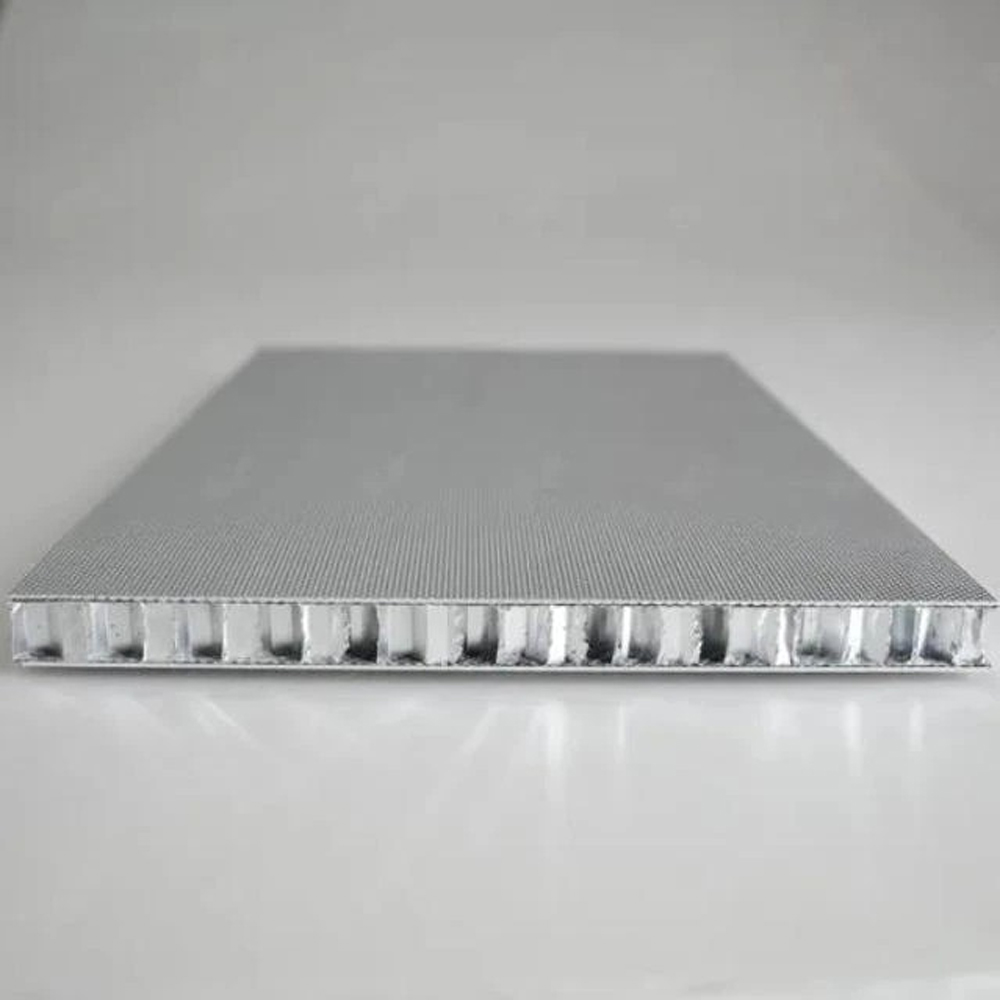
Aluminum honeycomb consists of thin aluminum cell walls arranged in a hexagonal cellular structure.
The result is a core containing a large volume of air while maintaining a relatively rigid structure.
Typical aluminum honeycomb densities include approximately:
| Aluminum Honeycomb Density | Typical Application |
|---|---|
| 30–50 kg/m³ | Lightweight interior panels |
| 50–80 kg/m³ | General transportation panels |
| 80–120 kg/m³ | Higher-strength structural panels |
| 120–160+ kg/m³ | High-load applications |
Aluminum honeycomb is particularly attractive when the primary objective is to achieve high rigidity with relatively low mass.
Common applications include:
- Ship cabin partitions
- Marine ceilings
- Lightweight doors
- RV interior panels
- Truck body components
- Railway interiors
- Bus partitions
- Transportation flooring
3. Foam Sandwich Panels for Marine and Transportation
Foam sandwich panels use polymeric cores such as:
- PVC Foam
- PET Foam
- PMI Foam
- PU Foam
- XPS Foam
However, not all foam materials are appropriate for structural transportation applications.
For structural composite panels, PVC, PET and PMI are generally more relevant than conventional insulation foams.
Representative density ranges are:
| Foam Core | Typical Density |
|---|---|
| PVC Foam | 60–250+ kg/m³ |
| PET Foam | 60–250+ kg/m³ |
| PMI Foam | 50–200+ kg/m³ |
| PU Foam | 30–200+ kg/m³ |
| XPS Foam | 25–50 kg/m³ |
Higher-density structural foam normally provides better mechanical performance but increases material weight and cost.
4. Weight Comparison
Weight is one of the strongest reasons for using sandwich construction.
Consider a 20 mm core in a 1 m² panel:
| Core Material | Density | Approx. Core Weight |
|---|---|---|
| Aluminum Honeycomb | 40 kg/m³ | 0.8 kg/m² |
| Aluminum Honeycomb | 60 kg/m³ | 1.2 kg/m² |
| Aluminum Honeycomb | 80 kg/m³ | 1.6 kg/m² |
| PVC Foam | 80 kg/m³ | 1.6 kg/m² |
| PET Foam | 100 kg/m³ | 2.0 kg/m² |
| PET Foam | 150 kg/m³ | 3.0 kg/m² |
| PMI Foam | 100 kg/m³ | 2.0 kg/m² |
| XPS Foam | 35 kg/m³ | 0.7 kg/m² |
These numbers represent the core only.
Finished-panel weight will also include:
- Face sheets
- Adhesive
- Coatings
- Reinforcements
- Inserts
- Edge treatments
For large transportation projects, the difference in finished-panel weight can become commercially significant.
5. Compression Strength
Transportation panels may experience concentrated loads from passengers, equipment, furniture, seats or mounting systems.
Representative compression-strength ranges are:
| Core | Approx. Compression Strength |
|---|---|
| Aluminum Honeycomb, 40–60 kg/m³ | 0.5–2 MPa |
| Aluminum Honeycomb, 60–100 kg/m³ | 1–4 MPa |
| Aluminum Honeycomb, 100–160+ kg/m³ | 2–8+ MPa |
| PVC Foam | 0.5–8+ MPa |
| PET Foam | 1–7+ MPa |
| PMI Foam | 2–15+ MPa |
| XPS Foam | 0.2–1.0 MPa |
This demonstrates why density alone should not be used to select a core.
A high-density foam can outperform a low-density honeycomb in a particular compression requirement.
6. Impact Resistance
Impact resistance is especially important for transportation equipment.
Examples include:
- Cargo handling
- Passenger movement
- Road vibration
- Equipment impact
- Marine service
- Accidental collision
Aluminum honeycomb absorbs energy through cellular deformation and crushing.
Foam cores absorb energy through cellular compression.
PET and certain PVC grades can provide very good impact performance.
A preliminary comparison is:
| Core | Impact Performance |
|---|---|
| Aluminum Honeycomb | Very good |
| PVC Foam | Very good |
| PET Foam | Excellent |
| PMI Foam | Excellent |
| XPS Foam | Moderate |
For critical applications, the complete panel should be tested rather than relying only on core datasheets.
7. Moisture and Marine Environment
Marine environments create special challenges because of:
- Saltwater
- High humidity
- Condensation
- Temperature cycling
- Water penetration
Aluminum honeycomb itself does not absorb water like foam, but the honeycomb structure must be properly protected from water ingress.
Important design details include:
- Sealed edges
- Waterproof skins
- Proper adhesive selection
- Corrosion protection
- Galvanic isolation
Foam cores such as PVC and PET generally provide excellent moisture resistance.
| Environmental Factor | Aluminum Honeycomb | PVC Foam | PET Foam |
|---|---|---|---|
| Water absorption | Very low | Low | Low |
| Saltwater resistance | Good with protection | Excellent | Excellent |
| Corrosion risk | Requires attention | No metallic corrosion | No metallic corrosion |
| Edge sealing importance | Very high | High | High |
For marine composite structures, PVC and PET foam can therefore be highly attractive.
8. Fatigue Performance
Marine and transportation structures experience repeated loading.
A vehicle panel may experience thousands or millions of vibration cycles during its service life.
Similarly, a marine structure can experience continuous cyclic loads caused by:
- Waves
- Engine vibration
- Propeller vibration
- Wind
- Structural movement
Fatigue performance should therefore be evaluated through:
- Shear fatigue
- Compression fatigue
- Flexural fatigue
- Bond fatigue
- Environmental aging
Aluminum honeycomb can provide excellent fatigue performance when properly designed and bonded.
Structural foams such as PVC, PET and PMI can also provide excellent fatigue performance, especially when correctly matched to the resin and laminate system.
The adhesive interface is often just as important as the core itself.
9. Thermal Insulation
One major advantage of foam cores is thermal insulation.
Representative thermal conductivity values are:
| Core Material | Approx. Thermal Conductivity |
|---|---|
| Aluminum Honeycomb | High compared with structural foams |
| PVC Foam | 0.03–0.06 W/m·K |
| PET Foam | 0.035–0.06 W/m·K |
| PMI Foam | ~0.03–0.05 W/m·K |
| XPS Foam | 0.025–0.035 W/m·K |
| PU Foam | 0.020–0.030 W/m·K |
This can be very important for:
- Refrigerated trucks
- Cold-chain transportation
- RVs
- Passenger cabins
- Marine accommodation
- HVAC equipment
If thermal insulation is a major design requirement, foam may provide greater overall system value.
10. Manufacturing and Machining
Manufacturing requirements can strongly influence the choice between aluminum honeycomb and foam.
Foam cores are generally easy to:
- Cut
- Route
- Drill
- Shape
- Contour
- CNC machine
This makes them suitable for curved marine hulls and complex composite components.
Aluminum honeycomb is highly suitable for large flat panels but can require additional attention around:
- Edges
- Inserts
- Cutouts
- Fasteners
- Local reinforcement
| Manufacturing Factor | Aluminum Honeycomb | Foam Core |
|---|---|---|
| Flat panels | Excellent | Excellent |
| Complex shapes | Good | Excellent |
| CNC machining | Good | Excellent |
| Edge machining | Moderate | Easy |
| Inserts | Requires planning | Easy–moderate |
| Composite infusion | Application-dependent | Excellent |
For highly customized marine structures, foam often provides greater flexibility.
11. Fire Performance
Fire requirements are particularly important for:
- Ships
- Railway vehicles
- Buses
- Public transportation
- Passenger cabins
Aluminum honeycomb has a non-combustible metallic core.
Foam cores require fire-retardant formulations and system-level testing.
| Fire Property | Aluminum Honeycomb | Structural Foam |
|---|---|---|
| Core combustibility | Non-combustible | Grade-dependent |
| Fire resistance | Excellent core characteristic | Formulation-dependent |
| Smoke behavior | System-dependent | System-dependent |
| Certification | Required for finished panel | Required for finished panel |
The finished panel’s fire classification depends on the complete construction.
12. Procurement Considerations
For procurement teams, material selection should include more than mechanical data.
Suppliers should be evaluated according to:
- Technical capability
- Production capacity
- Quality consistency
- Certifications
- Test reports
- Customization capability
- Lead time
- Packaging
- Export experience
- After-sales technical support
A suitable supplier should be able to provide:
- Material datasheet
- Density data
- Compression test results
- Shear test results
- Thermal data where applicable
- Fire-test reports
- Sample material
- Recommended bonding parameters
- Quality inspection documentation
For large marine and transportation projects, sample validation should be completed before mass production.
13. Which Material Should Buyers Choose?
Choose Aluminum Honeycomb when:
- Very high stiffness-to-weight performance is required.
- Large flat panels are needed.
- Dimensional stability is important.
- Non-combustible core performance is required.
- Weight reduction is a major objective.
- Architectural or transportation interior panels are being manufactured.
Choose PVC Foam when:
- Marine composite manufacturing is involved.
- Complex shapes are required.
- Good mechanical performance and impact resistance are needed.
- Moisture resistance is important.
- Easy machining is valuable.
Choose PET Foam when:
- Impact resistance is important.
- Lightweight composite construction is required.
- Sustainability is a consideration.
- Large marine or transportation components are being manufactured.
Choose PMI Foam when:
- Very high structural performance is required.
- High-temperature performance is important.
- Advanced transportation or aerospace applications are involved.
Choose XPS or PU Foam when:
- Thermal insulation is the primary requirement.
- Structural loads are relatively moderate.
- Cost-effective insulated construction is required.
