
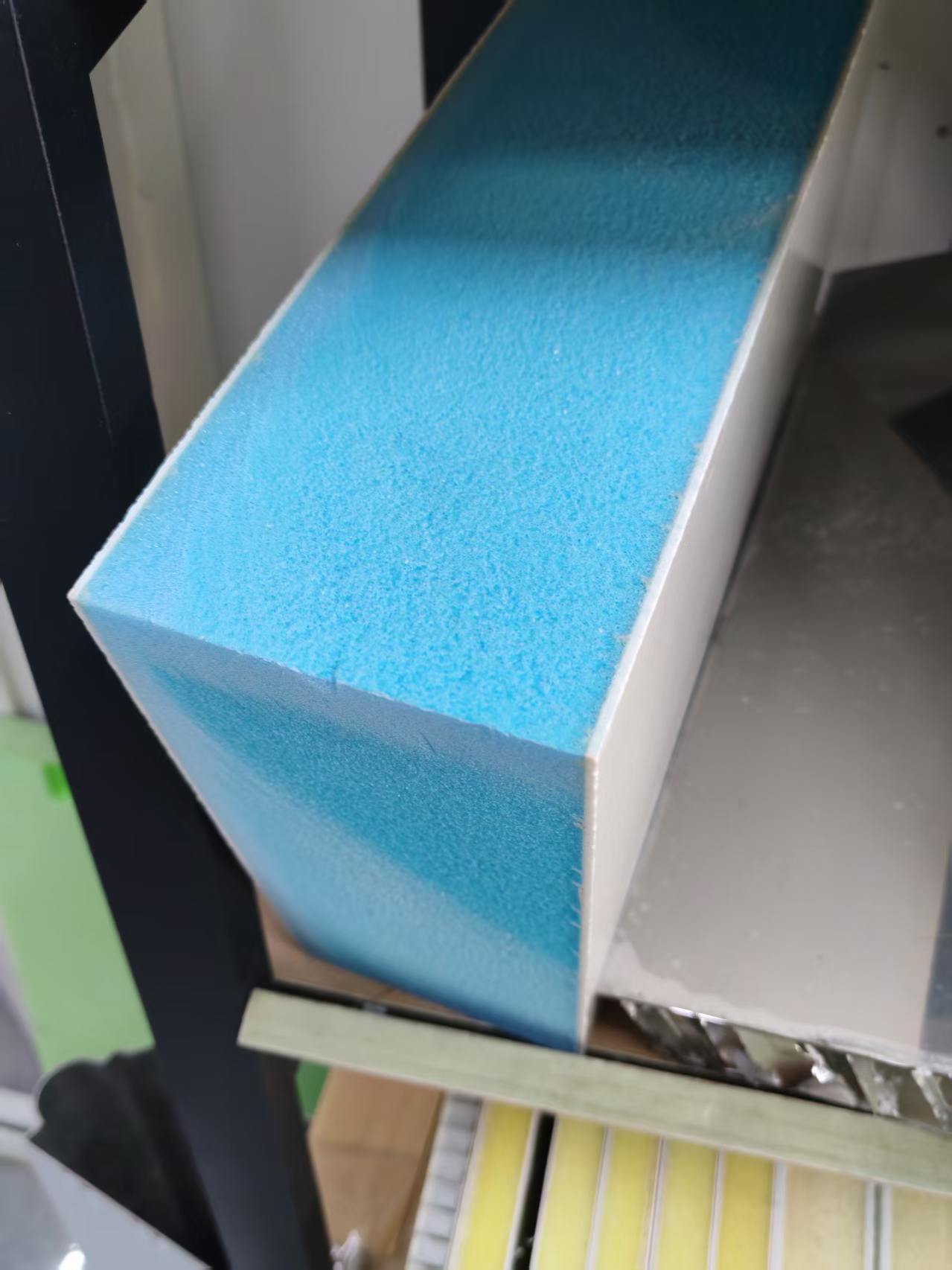
The global demand for insulated sandwich panels continues to grow as industries seek lightweight, energy-efficient, and cost-effective construction solutions. From prefabricated buildings and cold storage facilities to industrial warehouses and modular structures, sandwich panels have become an essential component of modern construction.
At the heart of these panels lies the core material, which directly influences thermal insulation, structural performance, durability, and overall project cost. Among various core options, XPS Foam Core (Extruded Polystyrene Foam Core) has emerged as one of the most practical and economical choices for manufacturers and contractors.
For companies purchasing large volumes of core materials, understanding the relationship between performance and cost is critical. This article provides a detailed analysis of the advantages, limitations, and economic value of bulk XPS Foam Core for sandwich panel production.
Why XPS Foam Core Is Widely Used in Sandwich Panels
XPS Foam Core is manufactured through a continuous extrusion process that creates a uniform closed-cell structure. This structure provides an excellent combination of insulation performance, compressive strength, and moisture resistance.
Typical sandwich panel applications include:
- Prefabricated buildings
- Commercial construction
- Industrial workshops
- Cold storage facilities
- Mobile houses
- Modular buildings
- Transportation body panels
- Cleanroom systems
Compared with traditional insulation materials, XPS Foam Core offers a balanced solution between performance and affordability.
Key Performance Characteristics
Thermal Insulation Performance
One of the primary reasons manufacturers choose XPS Foam Core is its excellent thermal insulation capability.
Typical Thermal Properties
| Property | Typical Value |
|---|---|
| Thermal Conductivity | 0.028–0.034 W/m·K |
| Thermal Resistance | High |
| Operating Temperature | -50°C to +75°C |
| Water Absorption | ≤1.0% |
Low thermal conductivity helps reduce heat transfer through walls and roofs, resulting in lower heating and cooling costs for building owners.
For sandwich panel manufacturers, this performance creates a strong selling point in energy-efficient construction markets.
Structural Strength Analysis
Unlike some lightweight insulation materials, XPS Foam Core provides excellent compressive strength while maintaining a relatively low density.
Typical Mechanical Properties
| Property | Typical Range |
|---|---|
| Density | 30–45 kg/m³ |
| Compressive Strength | 250–700 kPa |
| Flexural Strength | High |
| Dimensional Stability | Excellent |
These properties make XPS particularly suitable for:
- Large-span wall panels
- Roofing systems
- Industrial buildings
- Load-bearing sandwich structures
The material’s structural stability also helps maintain panel flatness during transportation and installation.
Moisture Resistance and Durability
Moisture absorption is one of the most important factors affecting long-term insulation performance.
The closed-cell structure of XPS Foam Core significantly limits water penetration compared with many alternative insulation materials.
Advantages Include
- Stable thermal performance
- Reduced risk of mold growth
- Improved freeze-thaw resistance
- Longer service life
- Lower maintenance costs
These characteristics make XPS sandwich panels particularly attractive for humid environments and cold storage applications.
Comparison with Alternative Core Materials
Performance Comparison
| Property | XPS Foam Core | EPS Foam Core | PU Foam Core |
|---|---|---|---|
| Thermal Conductivity | Excellent | Good | Outstanding |
| Water Resistance | Excellent | Moderate | Good |
| Compressive Strength | High | Moderate | Medium |
| Dimensional Stability | Excellent | Good | Good |
| Cost | Medium | Low | High |
| Service Life | 30–50 Years | 20–40 Years | 25–40 Years |
While PU Foam offers slightly better insulation performance, its significantly higher cost often limits its use to specialized applications. EPS is less expensive but generally provides lower moisture resistance and compressive strength.
For many sandwich panel manufacturers, XPS represents the optimal balance between performance and cost.
Cost Analysis of Bulk Procurement
When evaluating XPS Foam Core, buyers should consider total lifecycle costs rather than material price alone.
Direct Cost Advantages
Bulk purchasing provides:
- Lower unit pricing
- Reduced transportation costs
- Stable inventory planning
- Improved supply chain efficiency
Large-volume procurement agreements often result in substantial savings compared with smaller orders.
Manufacturing Efficiency Benefits
XPS Foam Core contributes to lower production costs through:
Consistent Material Quality
Uniform density and thickness reduce:
- Material waste
- Production defects
- Rework rates
Easy Processing
XPS can be:
- Cut precisely
- Laminated efficiently
- Bonded to various facings
This improves production speed and reduces labor requirements.
Lower Reject Rates
Stable physical properties help maintain consistent sandwich panel quality, reducing costly product failures.
Long-Term Economic Value
The true economic advantage of XPS Foam Core becomes evident over the lifespan of the building.
Energy Savings
Improved insulation performance reduces:
- Heating expenses
- Cooling costs
- Energy consumption
Reduced Maintenance
Because XPS resists moisture and retains its insulation properties over time, building owners typically experience lower maintenance costs.
Extended Service Life
Long-term durability contributes to a favorable return on investment for developers and property owners.
Ideal Applications for Bulk XPS Foam Core
Prefabricated Construction
Growing demand for modular and off-site construction continues to drive XPS consumption due to its lightweight and insulating properties.
Industrial Buildings
Factories and warehouses increasingly require insulated building envelopes to improve energy efficiency.
Cold Storage Facilities
The food and pharmaceutical industries depend on reliable insulation systems to minimize refrigeration costs.
Commercial Buildings
Retail centers, office buildings, and public facilities utilize XPS sandwich panels to meet modern energy-efficiency standards.
What to Look for in a Bulk XPS Foam Core Supplier
When sourcing large quantities of XPS Foam Core, buyers should evaluate:
Product Quality
- Consistent density
- Accurate dimensions
- Reliable thermal performance
Manufacturing Capacity
A capable supplier should offer:
- Large-scale production
- Stable lead times
- Long-term supply security
Certifications
Look for compliance with:
- ISO 9001
- ISO 14001
- CE Certification
- EN 13164 Standards
- SGS Testing Reports
Customization
Leading manufacturers provide:
- Custom thicknesses
- Density options
- Fire-retardant grades
- OEM services
Market Outlook
The sandwich panel industry is expected to experience continued growth due to increasing demand for:
- Sustainable construction
- Energy-efficient buildings
- Modular housing
- Industrial insulation systems
As governments implement stricter energy regulations, demand for high-performance insulation materials such as XPS Foam Core is likely to increase further.
Manufacturers that secure reliable bulk supplies of quality XPS Foam Core will be better positioned to meet market demand while maintaining competitive production costs.
Conclusion
Bulk XPS Foam Core offers a compelling combination of performance, durability, and economic value for sandwich panel manufacturers. Its excellent thermal insulation, high compressive strength, low water absorption, and long service life make it one of the most practical core materials available in today’s construction market.
From a cost perspective, XPS Foam Core provides significant advantages through lower lifecycle expenses, improved manufacturing efficiency, and reduced energy consumption. For companies seeking a balance between technical performance and commercial competitiveness, bulk procurement of XPS Foam Core remains a strategic investment that supports both profitability and sustainable building objectives.
