
Introduction
Fiber Reinforced Plastic (FRP) sandwich panels have become an essential structural solution in industries such as construction, marine engineering, transportation, wind energy, and aerospace. Their unique combination of lightweight properties, high strength-to-weight ratio, corrosion resistance, and excellent thermal insulation performance makes them increasingly popular in modern engineering applications.
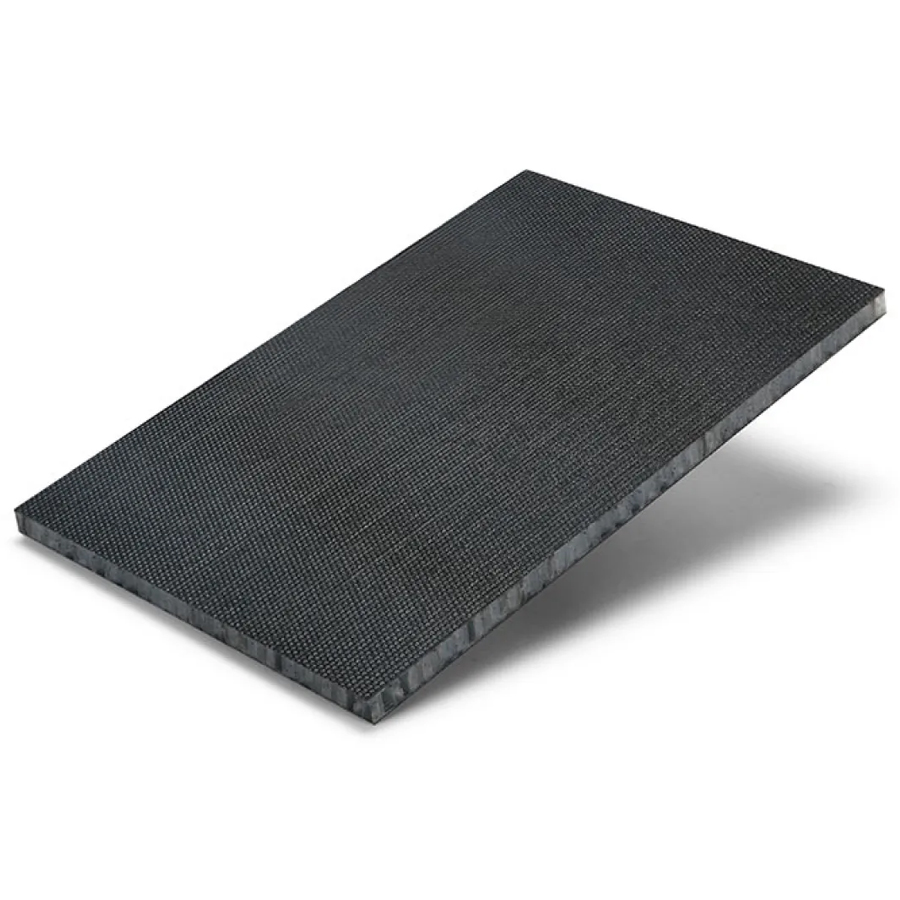
A typical FRP sandwich panel consists of three main components: FRP face sheets, a lightweight core material, and an adhesive layer that bonds the two together. While significant attention is often given to the mechanical properties of the FRP skins and core materials, the interface between these components plays an equally critical role in determining the overall structural performance of the sandwich panel.
Interface mechanics focuses on understanding how loads are transferred between the face sheets and the core, how bonding performance influences structural integrity, and how interface failure mechanisms develop under various service conditions.
The Importance of Interface Bonding in FRP Sandwich Panels
The interface serves as the load transfer pathway between the FRP face sheets and the lightweight core material. During bending, compression, shear, and impact loading, stresses must be efficiently transmitted across the bonded interface.
A strong interface provides:
- Improved structural stiffness
- Higher flexural strength
- Better fatigue resistance
- Enhanced impact performance
- Longer service life
Conversely, weak bonding can result in premature failure, even when both the face sheets and core materials possess excellent individual mechanical properties.
Common core materials used in FRP sandwich panels include:
- XPS Foam Core
- PVC Foam Core
- PET Foam Core
- PU Foam Core
- PMI Foam Core
- PP Honeycomb Core
- Aluminum Honeycomb Core
Each core material exhibits different surface characteristics, density distributions, and bonding behaviors, making interface design a crucial aspect of sandwich panel engineering.
Load Transfer Mechanisms at the Interface
When external loads are applied to an FRP sandwich panel, the face sheets primarily carry tensile and compressive stresses, while the core absorbs shear forces and stabilizes the structure against buckling.
The adhesive interface must transfer:
Shear Stress
Shear stress is the dominant loading condition at the interface. During bending, significant interfacial shear stresses develop between the face sheets and the core material.
Poor shear transfer can lead to:
- Delamination
- Core shear failure
- Loss of structural stiffness
Peel Stress
Peel stresses occur when tensile forces attempt to separate the face sheet from the core. These stresses are especially critical near panel edges, joints, and concentrated loading points.
Mixed-Mode Loading
In practical applications, interfaces often experience a combination of shear and peel stresses simultaneously. Understanding mixed-mode fracture behavior is therefore essential for designing reliable sandwich structures.
Common Interface Failure Modes
Interface failure is one of the most frequently observed damage mechanisms in sandwich composites.
Adhesive Failure
Adhesive failure occurs when separation takes place directly between the adhesive and one of the bonded surfaces.
Causes include:
- Poor surface preparation
- Incompatible adhesive selection
- Contamination during manufacturing
- Insufficient curing
This failure mode typically indicates inadequate bonding quality.
Cohesive Failure
Cohesive failure occurs within the adhesive layer itself rather than at the interface.
In many cases, cohesive failure is considered preferable because it suggests that the bond between the adhesive and substrate is stronger than the adhesive’s internal strength.
Core Failure
Some low-density foam cores may fail before the adhesive bond reaches its strength limit.
Examples include:
- Foam tearing
- Cell wall collapse
- Local crushing
Core failure is commonly observed in lightweight XPS and low-density PVC foam systems.
Delamination
Delamination refers to the progressive separation of bonded layers under repeated loading or environmental exposure.
It is particularly dangerous because it may remain undetected while significantly reducing structural performance.
Surface Treatment Technologies for Improved Bonding
Surface preparation is one of the most effective methods for enhancing interface strength.
Mechanical Surface Roughening
Mechanical abrasion increases surface roughness and creates additional bonding area.
Common methods include:
- Sanding
- Grinding
- Abrasive blasting
These techniques improve mechanical interlocking between the adhesive and substrate.
Chemical Treatment
Chemical treatments modify the surface chemistry of the core or FRP laminate.
Examples include:
- Solvent cleaning
- Acid etching
- Silane coupling agents
These methods improve adhesive wettability and chemical bonding.
Plasma Treatment
Plasma treatment is increasingly used in advanced composite manufacturing.
Benefits include:
- Increased surface energy
- Enhanced adhesive spreading
- Improved bond durability
Research has shown that plasma-treated foam cores often exhibit significantly higher interfacial shear strength compared with untreated materials.
Adhesive Selection and Interface Performance
The adhesive layer acts as the bridge between the FRP skins and the core.
Several adhesive systems are commonly used:
Epoxy Adhesives
Advantages:
- High strength
- Excellent fatigue resistance
- Superior environmental durability
Applications:
- Marine structures
- Wind turbine blades
- Aerospace sandwich panels
Polyurethane Adhesives
Advantages:
- Good flexibility
- Excellent impact resistance
- Strong bonding to foam materials
Applications:
- Building panels
- Transportation structures
Acrylic Adhesives
Advantages:
- Fast curing
- High toughness
- Good bonding performance
Applications:
- Industrial composite assemblies
The choice of adhesive significantly influences long-term interface reliability and overall panel performance.
Environmental Effects on Interface Durability
In real-world applications, sandwich panels are exposed to various environmental conditions that can degrade interface performance over time.
Moisture Absorption
Water ingress can cause:
- Adhesive plasticization
- Reduced bond strength
- Interface swelling
Marine structures are particularly vulnerable to moisture-induced degradation.
Thermal Cycling
Repeated temperature fluctuations generate differential expansion between the FRP skins and the core material.
Potential consequences include:
- Residual stresses
- Microcrack formation
- Progressive debonding
Ultraviolet Exposure
Long-term UV radiation may deteriorate exposed resin systems and reduce interface durability, especially in outdoor construction applications.
Testing Methods for Interface Characterization
Researchers employ several testing techniques to evaluate interface behavior.
Flatwise Tensile Test
Measures the tensile bond strength between the face sheet and core.
Climbing Drum Peel Test
Evaluates peel resistance and adhesion quality.
Short Beam Shear Test
Determines interlaminar shear strength.
Double Cantilever Beam (DCB) Test
Used to study fracture toughness and crack propagation behavior.
End Notched Flexure (ENF) Test
Measures mode-II shear fracture toughness.
These tests provide valuable data for material development and structural design optimization.
Numerical Modeling and Simulation of Interface Behavior
Advanced numerical methods are increasingly used to predict interface performance.
Finite Element Analysis (FEA)
FEA helps engineers analyze:
- Stress distribution
- Failure initiation
- Structural deformation
Cohesive Zone Modeling (CZM)
CZM has become one of the most widely adopted approaches for simulating interface debonding.
Advantages include:
- Accurate crack growth prediction
- Delamination simulation
- Improved design optimization
Multi-Scale Modeling
Researchers are developing multi-scale models that link:
- Fiber level behavior
- Laminate performance
- Full sandwich panel response
This approach provides deeper insight into complex failure mechanisms.
Future Research Trends
The next generation of FRP sandwich panel research is expected to focus on:
- Smart adhesive systems with self-healing capabilities
- Nano-modified interfaces using graphene and carbon nanotubes
- AI-assisted interface design optimization
- Digital twin technology for structural health monitoring
- Sustainable and recyclable bonding materials
- Advanced hybrid foam and honeycomb core structures
As industries continue to demand lighter, stronger, and more durable composite structures, interface engineering will remain a key factor in achieving superior sandwich panel performance.
Conclusion
The interface between FRP face sheets and core materials is the foundation of structural integrity in sandwich panels. Effective load transfer, strong adhesion, and long-term durability are essential for maximizing performance in construction, marine, transportation, and industrial applications.
By optimizing surface treatments, selecting suitable adhesives, understanding failure mechanisms, and utilizing advanced testing and simulation technologies, manufacturers can significantly improve the reliability and lifespan of FRP sandwich panels. As composite technology continues to evolve, interface mechanics will play an increasingly important role in the development of next-generation lightweight structural materials.
