
Introduction
Fiber Reinforced Plastic (FRP) sandwich panels have become one of the most important lightweight structural materials in modern engineering. Their combination of high stiffness, excellent strength-to-weight ratio, corrosion resistance, thermal insulation properties, and design flexibility makes them widely used in construction, transportation, marine engineering, renewable energy, aerospace, and industrial applications.
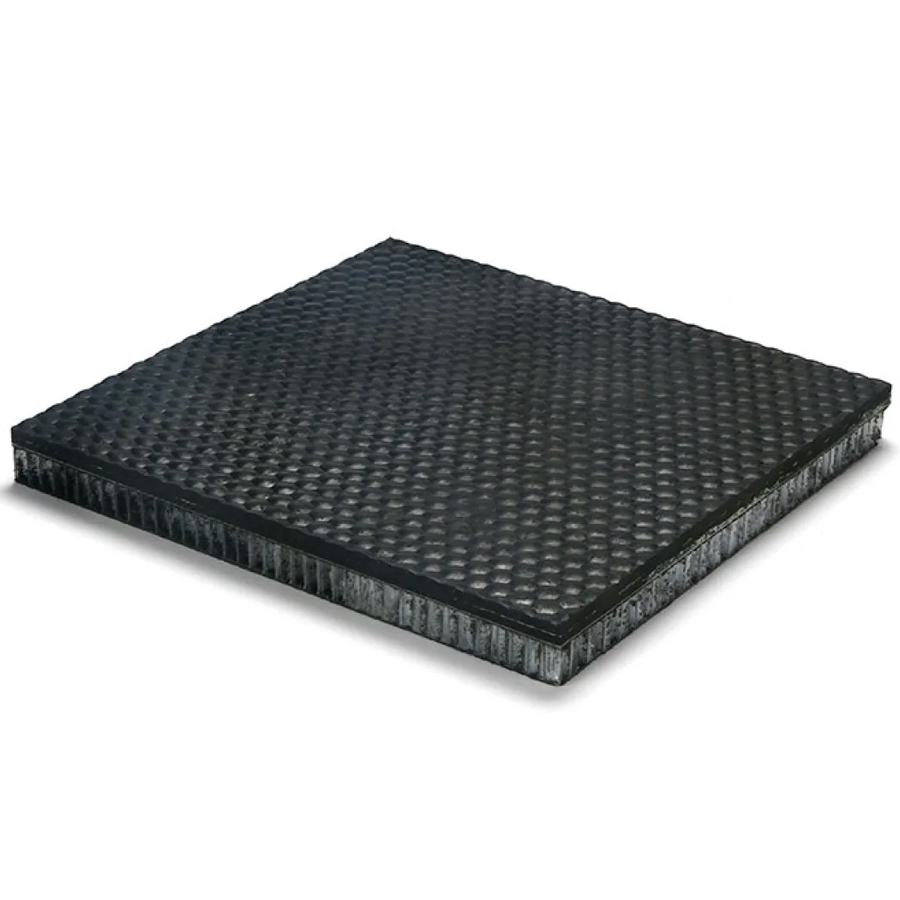
A typical FRP sandwich panel consists of two thin but strong FRP face sheets bonded to a lightweight core material such as PVC foam, PET foam, XPS foam, PMI foam, PU foam, or honeycomb cores. The face sheets primarily resist tensile and compressive loads, while the core stabilizes the structure, transfers shear forces, and increases the moment of inertia. This configuration allows sandwich panels to achieve exceptional structural efficiency while minimizing weight.
However, despite their superior performance, FRP sandwich panels are susceptible to various mechanical failure modes under static, dynamic, fatigue, and environmental loading conditions. Understanding the structural mechanics and failure mechanisms of these composite systems is essential for engineers, designers, and manufacturers seeking to optimize performance, improve durability, and ensure structural safety.
Fundamental Structural Behavior of FRP Sandwich Panels
The mechanical behavior of FRP sandwich panels differs significantly from that of conventional solid materials.
When a sandwich panel is subjected to bending loads, the face sheets carry most of the normal stresses generated by tension and compression. The upper face sheet experiences compression, while the lower face sheet experiences tension. Meanwhile, the core material carries the majority of the transverse shear forces and maintains the separation between the face sheets.
The structural efficiency of a sandwich panel is primarily derived from this separation distance. By increasing the distance between the two face sheets without significantly increasing weight, the panel’s bending stiffness increases dramatically.
The bending stiffness of a sandwich structure can be several times greater than that of a solid laminate with the same weight, making sandwich panels highly attractive for lightweight structural applications.
Flexural Behavior and Bending Performance
Flexural performance is one of the most critical design considerations for FRP sandwich panels.
Under bending loads, the face sheets resist tensile and compressive stresses, while the core transfers shear forces between the skins. The overall bending stiffness depends on several factors:
- Face sheet thickness
- Face sheet elastic modulus
- Core thickness
- Core shear modulus
- Bonding quality between layers
Increasing core thickness generally provides a significant improvement in stiffness without substantially increasing weight. This principle explains why sandwich panels are commonly used in applications requiring large spans and lightweight structures.
However, increasing core thickness may also introduce additional stability challenges, including local buckling and face wrinkling, particularly when low-density cores are used.
Design optimization requires balancing stiffness, strength, weight, and failure resistance.
Core Shear Failure
Core shear failure is one of the most common failure modes in sandwich structures.
As external loads increase, the core material experiences growing shear stresses. If these stresses exceed the shear strength of the core, internal cracking and shear deformation may occur.
Core shear failure is particularly common in:
- Low-density foam cores
- Lightweight honeycomb structures
- Panels subjected to concentrated loads
- Long-span sandwich systems
Symptoms of core shear failure include:
- Significant panel deflection
- Reduction in stiffness
- Localized cracking within the core
- Progressive structural degradation
The likelihood of core shear failure depends on the shear modulus and shear strength of the selected core material. High-performance cores such as PMI foam typically exhibit superior shear resistance compared with lower-density alternatives.
Face Sheet Yielding and Fracture
The face sheets of an FRP sandwich panel carry the majority of the bending stresses.
Under excessive loading, tensile stresses may exceed the strength of the composite laminate, resulting in fiber breakage and matrix cracking. Similarly, compressive stresses can cause local instability and fiber micro-buckling.
Common face sheet failure mechanisms include:
Fiber Fracture
Fiber fracture occurs when the reinforcement fibers reach their ultimate tensile strength.
This failure mode is often sudden and catastrophic because fibers provide most of the load-carrying capacity of the composite laminate.
Matrix Cracking
Matrix cracking typically initiates before fiber failure.
It may occur due to:
- Tensile loading
- Thermal stresses
- Fatigue damage
- Impact loading
Although matrix cracking does not immediately cause structural collapse, it can significantly reduce durability and facilitate moisture penetration.
Compression Failure
Under compressive loading, FRP laminates may experience:
- Fiber kinking
- Micro-buckling
- Resin crushing
These mechanisms often trigger more extensive structural failures.
Face Wrinkling Failure
Face wrinkling is a local instability phenomenon that occurs when the compressed face sheet loses stability and buckles into the core material.
This failure mode is highly dependent on:
- Core stiffness
- Core density
- Face sheet thickness
- Elastic modulus of the skin
Low-density foam cores provide less support to the compressed skin, increasing the risk of wrinkling.
Face wrinkling often appears as periodic wave-like deformations on the panel surface and can significantly reduce load-carrying capacity.
Since this failure mechanism may occur before the face sheet reaches its material strength limit, it is considered a critical design constraint in lightweight sandwich structures.
Debonding and Delamination
The bond between the face sheets and the core is essential for maintaining structural integrity.
When the adhesive interface fails, load transfer becomes inefficient, leading to local stress concentrations and rapid stiffness reduction.
Debonding
Debonding occurs when separation develops between the face sheet and the core material.
Common causes include:
- Manufacturing defects
- Poor adhesive selection
- Impact damage
- Fatigue loading
- Environmental degradation
Delamination
Delamination refers to the separation of layers within the composite laminate itself.
Unlike debonding, which occurs at the skin-core interface, delamination occurs between individual composite plies.
Both failure modes can propagate under repeated loading and significantly reduce structural performance.
Indentation and Local Crushing
Sandwich panels frequently encounter localized loading conditions during service.
Examples include:
- Foot traffic on decks
- Equipment mounting points
- Vehicle wheel loads
- Impact from dropped tools
Under concentrated loads, the core material may experience localized crushing.
Indentation failure is characterized by:
- Permanent deformation
- Core collapse
- Skin deformation
- Reduced load distribution capability
Low-density foam cores are particularly susceptible to indentation damage.
To improve resistance, engineers often increase local core density or incorporate reinforcement inserts in highly loaded regions.
Fatigue Failure Under Cyclic Loading
Many FRP sandwich structures operate under repeated loading conditions throughout their service life.
Examples include:
- Wind turbine blades
- Marine vessels
- Railway vehicles
- Aircraft structures
Fatigue damage develops gradually through repeated stress cycles.
Typical fatigue-related failures include:
- Interface degradation
- Matrix cracking
- Core cracking
- Delamination growth
- Progressive stiffness reduction
Unlike static failure, fatigue damage may remain undetected for long periods before suddenly reaching a critical condition.
Consequently, fatigue analysis has become a major area of research for advanced sandwich structures.
Impact-Induced Damage
Impact events represent one of the most challenging loading conditions for sandwich panels.
Impacts can be classified as:
- Low-velocity impacts
- High-velocity impacts
- Repeated impacts
Common impact damage mechanisms include:
- Surface cracking
- Fiber breakage
- Core crushing
- Delamination
- Debonding
One of the greatest concerns is barely visible impact damage (BVID), where internal structural damage exists despite minimal surface indications.
This hidden damage can significantly reduce residual strength and compromise long-term reliability.
Numerical Modeling and Failure Prediction
Modern engineering increasingly relies on computational tools to predict sandwich panel performance.
Finite Element Analysis (FEA) enables engineers to simulate:
- Stress distribution
- Structural deformation
- Buckling behavior
- Damage progression
Advanced modeling techniques such as Cohesive Zone Models (CZM) allow accurate prediction of debonding and crack propagation.
Progressive damage models are also being used to simulate complex failure sequences involving:
- Fiber failure
- Matrix cracking
- Core crushing
- Delamination growth
These technologies reduce development costs and improve design efficiency.
Future Development Trends
Research on sandwich panel structural mechanics continues to evolve toward higher performance and greater reliability.
Emerging research directions include:
- Hybrid foam-honeycomb core structures
- Multi-functional sandwich panels
- Smart structural health monitoring systems
- Self-healing composite materials
- Artificial intelligence-based failure prediction
- Ultra-lightweight high-strength core materials
- Digital twin technology for structural assessment
These innovations are expected to enhance structural safety, extend service life, and reduce maintenance costs across multiple industries.
Conclusion
The exceptional performance of FRP sandwich panels stems from the synergistic interaction between high-strength composite face sheets and lightweight core materials. However, their structural behavior is governed by a complex combination of bending mechanics, shear transfer, stability phenomena, and interface interactions.
Failure modes such as core shear failure, face wrinkling, debonding, delamination, indentation, fatigue damage, and impact-induced degradation must be carefully considered during design and manufacturing. A thorough understanding of structural mechanics and failure mechanisms enables engineers to optimize sandwich panel performance while ensuring safety and long-term durability.
As advanced materials, numerical simulation techniques, and intelligent monitoring systems continue to develop, FRP sandwich panels will play an increasingly important role in lightweight structural engineering, providing efficient solutions for the next generation of sustainable construction and transportation systems.
