
Introduction
The demand for lightweight, high-strength, and energy-efficient structures has driven the rapid development of Fiber Reinforced Plastic (FRP) sandwich panels across industries such as construction, transportation, marine engineering, aerospace, and renewable energy. A typical FRP sandwich panel consists of two thin yet strong composite face sheets bonded to a lightweight core material. While the face sheets provide tensile and compressive strength, the core is responsible for maintaining structural separation, transferring shear loads, improving stiffness, and preventing buckling.
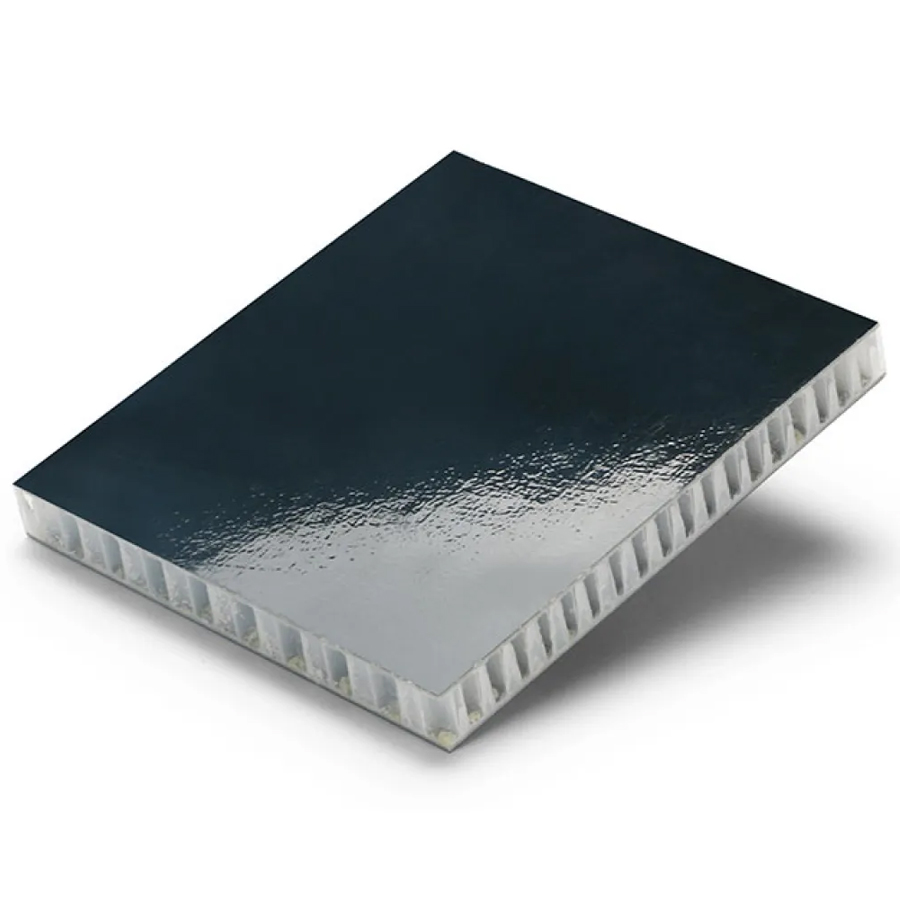
Among the three primary components of a sandwich structure—face sheets, core material, and adhesive interface—the core often has the greatest influence on the overall weight, stiffness, energy absorption capability, and cost of the panel. Consequently, core material engineering has become one of the most important research areas in composite structures.
Modern lightweight design focuses not only on reducing weight but also on maximizing structural efficiency, durability, sustainability, and manufacturability. Through advanced core material development, optimized density distribution, and innovative cellular architectures, engineers can significantly improve the performance of FRP sandwich panels while minimizing material consumption.
This article explores the role of core materials, optimization strategies, lightweight design principles, and emerging research trends in FRP sandwich panel engineering.
The Role of Core Materials in Sandwich Structures
The core material serves several critical functions within a sandwich panel.
First, it separates the face sheets, increasing the moment of inertia and significantly enhancing bending stiffness without substantially increasing weight. Since bending stiffness increases approximately with the square of the distance between face sheets, even lightweight cores can dramatically improve structural performance.
Second, the core transfers shear forces between the face sheets. During bending, the upper skin experiences compression while the lower skin experiences tension. The core ensures effective load transfer between these layers and prevents excessive deformation.
Third, the core stabilizes the face sheets against local buckling and wrinkling. Without adequate core support, thin FRP skins may lose stability under compressive loads.
Finally, the core contributes to thermal insulation, acoustic damping, vibration reduction, and impact energy absorption, depending on the application requirements.
As a result, core material selection directly influences both structural and functional performance.
Common Core Materials Used in FRP Sandwich Panels
PVC Foam Core
Polyvinyl Chloride (PVC) foam is one of the most widely used core materials in composite sandwich structures.
Key advantages include:
- Excellent strength-to-weight ratio
- Good fatigue resistance
- Low water absorption
- High dimensional stability
- Compatibility with vacuum infusion processes
PVC foam cores are commonly used in:
- Marine structures
- Wind turbine blades
- Transportation panels
- Industrial composite components
Density ranges typically vary from 40 kg/m³ to 250 kg/m³ depending on structural requirements.
PET Foam Core
Polyethylene Terephthalate (PET) foam has gained significant popularity due to its sustainability and recyclability.
Benefits include:
- Environmentally friendly production
- High temperature resistance
- Excellent impact performance
- Cost competitiveness
- Good fatigue durability
PET foam is increasingly replacing traditional PVC foam in wind energy and transportation applications.
XPS Foam Core
Extruded Polystyrene (XPS) foam is widely used in building and insulation applications.
Advantages include:
- Low density
- Excellent thermal insulation
- Closed-cell structure
- Moisture resistance
- Cost effectiveness
XPS foam cores are frequently used in:
- FRP insulation panels
- Prefabricated buildings
- Refrigerated truck bodies
- Cold storage facilities
However, their structural performance is generally lower than that of engineering-grade PVC or PET foams.
PMI Foam Core
Polymethacrylimide (PMI) foam is considered a high-performance structural core material.
Characteristics include:
- Extremely high specific stiffness
- Superior compressive strength
- Excellent fatigue performance
- High temperature resistance
PMI foam is widely utilized in:
- Aerospace structures
- High-performance sports equipment
- Advanced transportation systems
Although highly effective, PMI foam remains relatively expensive compared to other foam core options.
Honeycomb Core Materials
Honeycomb structures provide some of the highest stiffness-to-weight ratios available.
Common materials include:
- Aluminum honeycomb
- Aramid honeycomb
- Polypropylene (PP) honeycomb
Benefits include:
- Ultra-lightweight construction
- Exceptional bending stiffness
- Excellent energy absorption
- High dimensional stability
Honeycomb cores are widely used in aerospace, rail transportation, ship interiors, and architectural panels.
Lightweight Design Principles
The primary objective of lightweight engineering is to achieve maximum structural performance with minimum material usage.
Several key principles guide modern lightweight design.
Maximizing Specific Properties
Instead of focusing solely on absolute strength, engineers evaluate:
- Specific strength (strength divided by density)
- Specific stiffness (stiffness divided by density)
Materials with high specific properties provide greater structural efficiency.
Increasing Core Thickness
One of the most effective ways to increase sandwich panel stiffness is to increase core thickness rather than face sheet thickness.
For example:
- Doubling core thickness may significantly increase bending stiffness while adding only a small amount of weight.
- Increasing skin thickness often results in a larger weight penalty.
This principle forms the basis of most sandwich structure designs.
Material Distribution Optimization
Not all regions of a structure experience the same loading conditions.
Therefore, engineers increasingly use:
- Variable-density cores
- Reinforced inserts
- Localized strengthening zones
These approaches reduce unnecessary weight while maintaining structural integrity.
Density Optimization of Foam Cores
Density is one of the most important parameters influencing core performance.
Low-Density Cores
Advantages:
- Lower weight
- Better thermal insulation
- Reduced material cost
Disadvantages:
- Lower compressive strength
- Reduced shear resistance
- Higher susceptibility to damage
High-Density Cores
Advantages:
- Improved structural performance
- Better fatigue resistance
- Higher impact tolerance
Disadvantages:
- Increased weight
- Higher manufacturing cost
The challenge lies in finding the optimal balance between weight reduction and mechanical performance.
Functionally Graded Core Structures
One of the most promising research directions is the development of functionally graded cores.
In these systems, density changes gradually throughout the core thickness.
For example:
- High-density layers near the face sheets
- Low-density material in the center region
Benefits include:
- Improved load distribution
- Enhanced buckling resistance
- Better impact performance
- Reduced overall weight
Functionally graded cores mimic natural structures such as bones and plant stems, which achieve remarkable strength with minimal material usage.
Bio-Inspired and Cellular Core Designs
Nature provides valuable inspiration for lightweight structural design.
Researchers are developing innovative cellular architectures based on:
- Honeycomb structures
- Bamboo microstructures
- Bird bones
- Coral formations
Advanced designs include:
Auxetic Structures
Auxetic materials exhibit a negative Poisson’s ratio, meaning they expand laterally when stretched.
Advantages include:
- Enhanced energy absorption
- Improved indentation resistance
- Better impact tolerance
Lattice Structures
Additive manufacturing technologies enable the creation of complex lattice cores with highly optimized geometries.
These structures offer:
- Exceptional lightweight characteristics
- Tunable mechanical properties
- Efficient load transfer pathways
Impact and Energy Absorption Optimization
Many applications require sandwich panels to withstand accidental impacts.
Core materials play a critical role in energy absorption.
Important design considerations include:
- Cell size
- Cell geometry
- Density distribution
- Material ductility
Optimized cores can absorb significant amounts of impact energy while preventing catastrophic failure.
This capability is particularly important in:
- Automotive crash structures
- Railway vehicles
- Marine applications
- Protective infrastructure
Computational Design and Optimization
Modern core engineering increasingly relies on advanced computational tools.
Finite Element Analysis (FEA)
FEA enables engineers to evaluate:
- Stress distribution
- Deformation behavior
- Failure initiation
- Structural efficiency
Topology Optimization
Topology optimization automatically identifies the most efficient material distribution within a structure.
Benefits include:
- Weight reduction
- Increased stiffness
- Improved structural efficiency
Artificial Intelligence and Machine Learning
AI-based optimization algorithms can rapidly evaluate thousands of design configurations.
These technologies help engineers develop next-generation lightweight core structures with unprecedented performance levels.
Sustainability and Future Trends
Sustainability has become a major focus in composite material development.
Emerging trends include:
- Recyclable PET foam cores
- Bio-based foam materials
- Recycled polymer honeycomb structures
- Low-carbon manufacturing processes
- Circular economy design principles
Researchers are also exploring:
- Smart cores with embedded sensors
- Self-healing cellular structures
- Multi-functional cores combining structural and thermal properties
- 3D-printed customized core architectures
These innovations will further improve the performance, sustainability, and cost-effectiveness of future sandwich panel systems.
Conclusion
Core material engineering is the foundation of lightweight sandwich structure design. The selection and optimization of foam and honeycomb cores directly determine the stiffness, strength, impact resistance, fatigue performance, thermal insulation, and overall efficiency of FRP sandwich panels.
Through advances in material science, density optimization, bio-inspired architectures, functionally graded structures, and computational design methods, engineers can achieve remarkable improvements in structural performance while minimizing weight. As industries continue to demand stronger, lighter, and more sustainable materials, core material engineering will remain at the forefront of innovation in FRP sandwich panel technology.
The future of sandwich structures lies not only in stronger face sheets but also in smarter, lighter, and more efficient core materials capable of delivering exceptional performance across a wide range of engineering applications.
