
Introduction
Fiber Reinforced Plastic (FRP) sandwich panels have become a key structural material in modern industries due to their excellent strength-to-weight ratio, corrosion resistance, thermal insulation performance, and design flexibility. These advanced composite structures are widely used in construction, marine engineering, transportation, renewable energy, aerospace, and industrial applications.
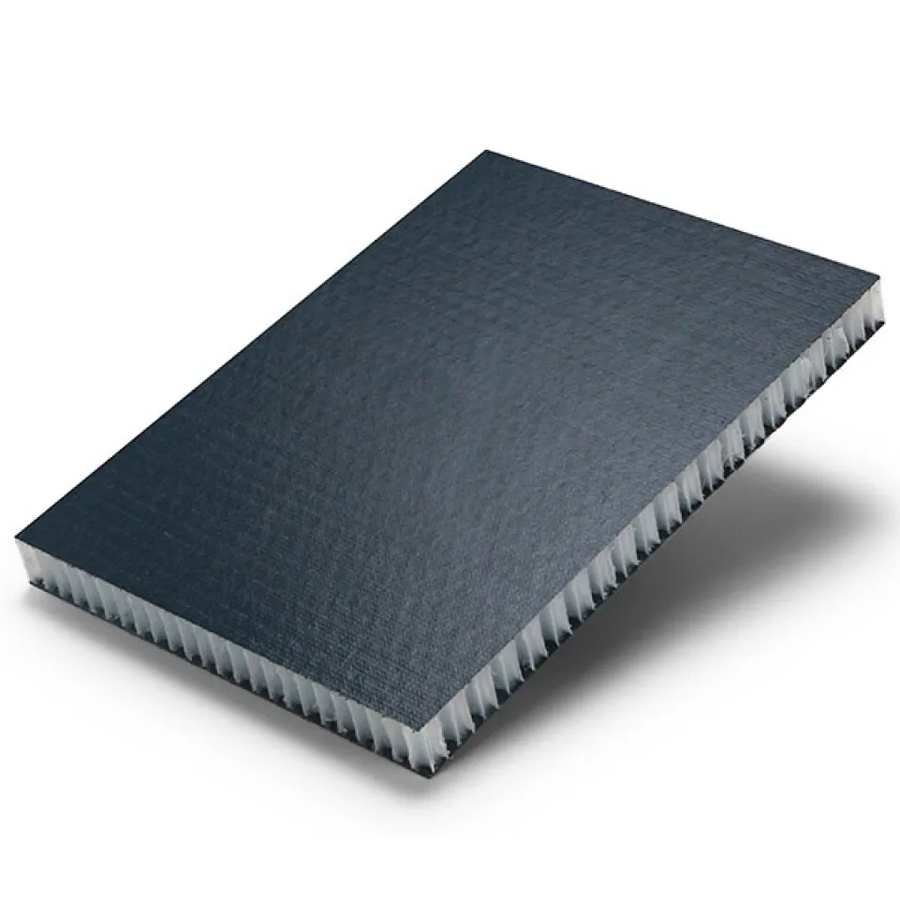
An FRP sandwich panel typically consists of two composite face sheets bonded to a lightweight core material such as PVC foam, PET foam, XPS foam, PMI foam, PU foam, or honeycomb cores. While material selection plays a crucial role in determining panel performance, manufacturing technology is equally important. Even the highest-quality raw materials cannot deliver optimal performance if the production process is poorly controlled.
As global demand for lightweight composite structures continues to increase, manufacturers are investing heavily in automated production systems, advanced molding technologies, digital quality control, and high-efficiency processing methods. Modern manufacturing techniques not only improve product quality and consistency but also reduce production costs and support large-scale industrialization.
This article examines the major manufacturing processes, industrial production technologies, quality control methods, and future trends shaping the FRP sandwich panel industry.
The Importance of Manufacturing Technology in FRP Sandwich Panels
The manufacturing process directly influences several critical properties of sandwich panels:
- Mechanical strength
- Bonding performance
- Surface quality
- Dimensional accuracy
- Fatigue durability
- Water resistance
- Fire performance
- Production efficiency
Poor manufacturing practices can lead to defects such as:
- Voids and air pockets
- Resin-rich zones
- Dry fiber areas
- Weak skin-core bonding
- Core crushing
- Delamination
Therefore, process control is essential for achieving reliable and repeatable product performance.
Key Components of FRP Sandwich Panel Production
Before discussing manufacturing methods, it is important to understand the three primary components involved in production.
FRP Face Sheets
Face sheets are typically produced using:
- Glass Fiber Reinforced Polymer (GFRP)
- Carbon Fiber Reinforced Polymer (CFRP)
- Basalt Fiber Reinforced Polymer (BFRP)
The face sheets provide:
- Tensile strength
- Compressive strength
- Surface protection
- Structural stiffness
The manufacturing process must ensure complete fiber impregnation and proper laminate consolidation.
Core Materials
Common core materials include:
- PVC Foam Core
- PET Foam Core
- XPS Foam Core
- PMI Foam Core
- PU Foam Core
- PP Honeycomb Core
- Aluminum Honeycomb Core
Each material requires specific handling procedures and bonding methods.
Adhesive Systems
The adhesive layer is responsible for transferring loads between the skins and the core.
Common adhesive systems include:
- Epoxy adhesives
- Polyurethane adhesives
- Acrylic adhesives
- Structural film adhesives
Proper adhesive selection and curing control are critical for long-term structural performance.
Hand Lay-Up Process
Hand lay-up is one of the oldest and most widely used FRP manufacturing techniques.
Process Description
The procedure generally involves:
- Mold preparation
- Release agent application
- Fiber placement
- Resin application
- Core placement
- Additional laminate lay-up
- Curing
Advantages
- Low equipment investment
- Suitable for large components
- Flexible production
Limitations
- Labor-intensive
- Quality variations
- Lower production efficiency
Hand lay-up remains common in custom marine structures and low-volume production applications.
Vacuum Bagging Technology
Vacuum bagging is an improved version of hand lay-up that enhances laminate quality.
Working Principle
A vacuum bag is sealed over the laminate assembly. Air is removed using a vacuum pump, generating pressure that consolidates the composite layers.
Benefits include:
- Reduced void content
- Improved fiber wet-out
- Better bonding quality
- Higher mechanical performance
Vacuum bagging is often used for medium-sized structural sandwich panels.
Vacuum Infusion Process (VIP)
Vacuum infusion has become one of the most important manufacturing methods for high-performance FRP sandwich panels.
Process Overview
The dry reinforcement and core materials are placed inside a vacuum-sealed mold.
Vacuum pressure draws resin through the reinforcement layers until complete impregnation is achieved.
Advantages
- Excellent fiber-to-resin ratio
- Reduced emissions
- Superior laminate quality
- Lower void content
- Consistent mechanical properties
Applications
Vacuum infusion is widely used in:
- Wind turbine blades
- Marine structures
- Transportation panels
- Architectural sandwich panels
Many modern FRP sandwich panel manufacturers rely heavily on vacuum infusion technology for large-scale production.
Resin Transfer Molding (RTM)
RTM is a closed-mold manufacturing process designed for high-quality composite production.
Process Description
The reinforcement and core materials are placed inside a rigid mold.
Resin is then injected under pressure into the closed cavity.
Benefits
- Excellent dimensional accuracy
- Smooth surface finish
- High production consistency
- Reduced labor requirements
Challenges
- Higher tooling costs
- More complex equipment
RTM is commonly used for automotive and transportation applications where precision is critical.
Compression Molding
Compression molding is increasingly used for high-volume sandwich panel production.
Manufacturing Steps
- Place materials into mold
- Apply pressure
- Apply heat
- Cure the composite
- Remove finished panel
Advantages
- Fast production cycles
- Excellent repeatability
- Suitable for automation
This process is particularly effective for thermoplastic composite sandwich structures.
Continuous Lamination Production Lines
Continuous production technology has transformed industrial sandwich panel manufacturing.
Process Principle
Materials continuously move through a production line where:
- Face sheets are formed
- Adhesive is applied
- Core materials are positioned
- Pressure is applied
- Curing occurs
- Panels are cut to length
Benefits
- High production capacity
- Consistent quality
- Reduced labor costs
- Improved efficiency
Continuous lamination systems are widely used for:
- Building insulation panels
- Refrigerated truck panels
- Architectural cladding systems
Adhesive Bonding and Curing Technology
The adhesive layer is one of the most critical components in sandwich panel manufacturing.
Factors Affecting Bond Quality
Surface Preparation
Common treatments include:
- Sanding
- Plasma treatment
- Solvent cleaning
- Corona treatment
Adhesive Thickness
Excessive adhesive thickness may increase weight and create stress concentrations.
Insufficient adhesive may result in poor bonding.
Curing Parameters
Key variables include:
- Temperature
- Pressure
- Time
- Humidity
Precise curing control is essential for maximizing interface strength.
Quality Control and Inspection Technologies
Industrial-scale production requires rigorous quality assurance procedures.
Raw Material Inspection
Manufacturers typically verify:
- Fiber quality
- Resin viscosity
- Core density
- Moisture content
In-Process Monitoring
Critical parameters include:
- Vacuum pressure
- Resin flow
- Cure temperature
- Production speed
Finished Product Testing
Typical evaluations include:
Mechanical Testing
- Flexural strength
- Shear strength
- Compressive strength
- Peel strength
Physical Testing
- Density
- Thickness tolerance
- Water absorption
- Thermal conductivity
Non-Destructive Testing (NDT)
Advanced NDT methods include:
- Ultrasonic inspection
- Infrared thermography
- X-ray scanning
- Acoustic emission monitoring
These technologies help identify hidden defects before products reach customers.
Automation and Smart Manufacturing
Industry 4.0 is transforming composite manufacturing.
Modern factories increasingly incorporate:
- Robotic material handling
- Automated resin dispensing
- Digital production management systems
- Machine vision inspection
- Real-time process monitoring
Benefits include:
- Improved consistency
- Reduced labor costs
- Higher productivity
- Better traceability
Smart factories can continuously collect production data and optimize manufacturing performance.
Sustainability in FRP Panel Manufacturing
Environmental concerns are driving innovation throughout the composite industry.
Key developments include:
- Recyclable thermoplastic composites
- Bio-based resin systems
- Low-emission manufacturing processes
- Renewable energy integration
- Waste reduction technologies
Manufacturers are increasingly adopting sustainable production strategies to meet global environmental requirements.
Future Trends in FRP Sandwich Panel Manufacturing
Several emerging technologies are expected to shape the next generation of manufacturing systems:
Automated Fiber Placement (AFP)
Allows precise placement of reinforcement fibers for optimized structural performance.
Additive Manufacturing
3D printing technologies may enable customized core structures and complex geometries.
Digital Twin Technology
Virtual production models can simulate manufacturing processes and predict defects before production begins.
Artificial Intelligence
AI systems can optimize:
- Process parameters
- Quality control
- Predictive maintenance
- Production scheduling
Smart Composite Manufacturing
Future sandwich panels may incorporate embedded sensors that enable real-time structural health monitoring throughout their service life.
Conclusion
Manufacturing technology is a fundamental factor in determining the performance, reliability, and cost-effectiveness of FRP sandwich panels. From traditional hand lay-up methods to highly automated continuous production lines, each manufacturing process offers unique advantages and challenges depending on application requirements.
Advanced technologies such as vacuum infusion, RTM, automated lamination, digital quality control, and smart manufacturing systems are enabling the production of stronger, lighter, and more durable sandwich structures at industrial scale. As the demand for lightweight composite materials continues to grow across construction, transportation, marine, and renewable energy sectors, manufacturing innovation will remain a key driver of industry development.
Companies that invest in advanced processing technologies, automation, quality management systems, and sustainable manufacturing practices will be best positioned to meet the evolving needs of global composite material markets and deliver high-performance FRP sandwich panel solutions for future engineering applications.
