
Introduction
Foam core materials play a critical role in modern construction, transportation, and composite engineering. They are widely used as insulation layers, sandwich panel cores, and structural reinforcement materials due to their lightweight nature, thermal performance, and mechanical efficiency. Among the most commonly specified foam boards are XPS, PET, PVC, PU, and PMI.
Although these materials are often grouped under the general term foam board, their material chemistry, mechanical behavior, thermal resistance, fire performance, processing compatibility, and cost structure differ significantly. Selecting the wrong foam core can result in premature failure, processing issues, or non-compliance with regulatory standards.
This article provides a technical comparison of XPS, PET, PVC, PU, and PMI foam boards to support informed material selection for engineering and architectural projects.
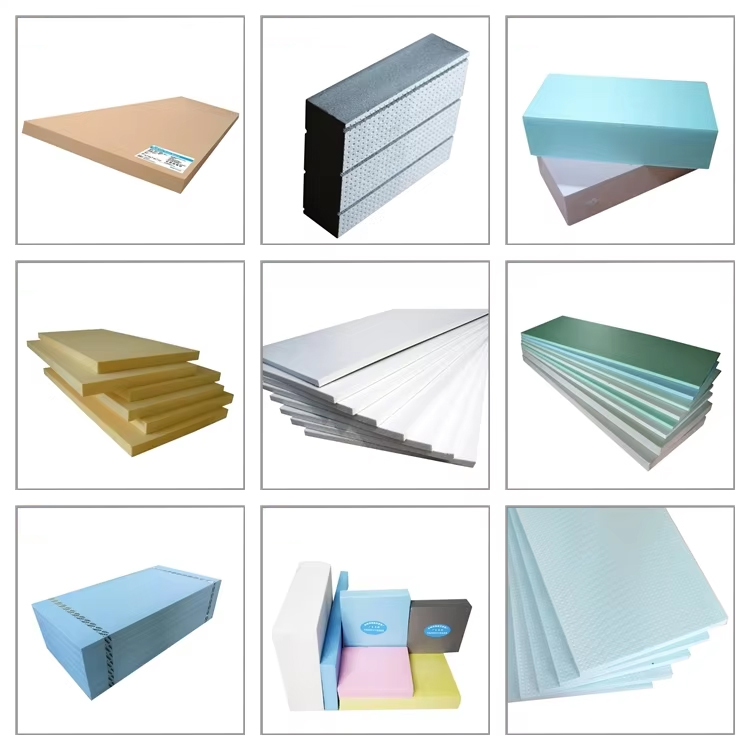
Material Overview
XPS (Extruded Polystyrene Foam Board)
XPS is a closed-cell foam produced through an extrusion process, resulting in uniform cell structure and excellent thermal insulation properties. It is primarily used as a non-structural insulation material.
Key characteristics:
- Very low water absorption
- Stable thermal insulation performance
- Limited mechanical strength
- Low continuous service temperature
XPS is not designed to carry structural loads and should not be used in high-temperature composite processes.
PET (Polyethylene Terephthalate Foam Board)
PET foam is a thermoplastic structural foam increasingly used in composite sandwich panels. It offers a balance between mechanical performance, temperature resistance, and sustainability.
Key characteristics:
- Good compressive and shear strength
- Higher temperature resistance than XPS and PU
- Excellent fatigue resistance
- Recyclable and environmentally favorable
PET foam is commonly used in wind energy, transportation interiors, and lightweight composite panels.
PVC (Polyvinyl Chloride Structural Foam Board)
PVC foam is a well-established structural core material with a broad density range and excellent compatibility with composite manufacturing processes.
Key characteristics:
- High shear and compressive strength
- Good fire performance with self-extinguishing behavior
- Compatible with vacuum infusion, RTM, and hand lay-up
- Long-term dimensional stability
PVC foam is widely used in marine, wind turbine blades, RV panels, and industrial sandwich structures.
PU (Polyurethane Foam Board)
PU foam is a thermoset material known for its excellent insulation efficiency and manufacturing flexibility. It can be produced as rigid or semi-rigid foam.
Key characteristics:
- Very low thermal conductivity
- Good adhesion to metal facings
- Moderate mechanical strength
- Limited recyclability
PU foam is most commonly used in insulated metal panels, cold storage facilities, and HVAC-related applications, rather than high-load structural components.
PMI (Polymethacrylimide High-Performance Foam Board)
PMI foam represents the high-performance segment of structural foam cores. It is designed for extreme strength-to-weight efficiency and high-temperature resistance.
Key characteristics:
- Exceptional compressive and shear strength
- Continuous service temperatures up to 180–220°C
- Extremely low creep and water absorption
- Suitable for aerospace-grade composites
PMI foam is typically used in aerospace, UAVs, motorsports, and advanced carbon fiber structures, where performance outweighs cost considerations.
Mechanical Performance Comparison
From a structural perspective, foam boards can be divided into insulation-grade and structural-grade materials:
- XPS and PU: Primarily insulation-focused, limited load-bearing capacity
- PET and PVC: Medium to high structural performance suitable for sandwich panels
- PMI: Ultra-high structural performance for critical lightweight designs
PMI foam offers the highest strength-to-density ratio, followed by PVC and PET. XPS should not be used where shear transfer or structural rigidity is required.
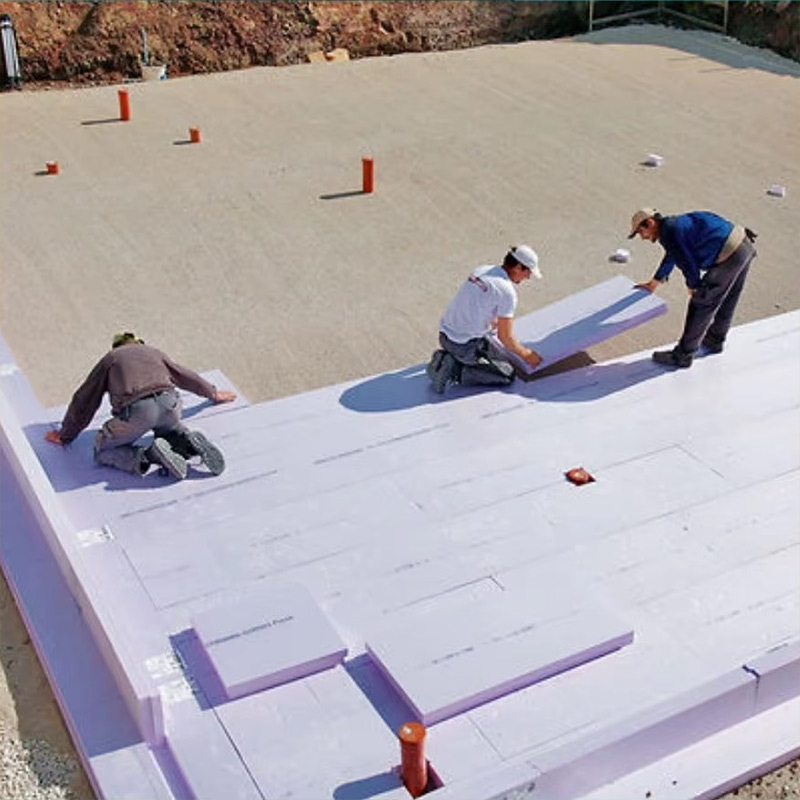
Thermal Resistance and Processing Compatibility
Temperature resistance directly affects compatibility with composite manufacturing processes:
- XPS: Limited to low-temperature bonding and cold lamination
- PU: Suitable for controlled molding but sensitive to high exotherm
- PET and PVC: Compatible with vacuum infusion and resin transfer molding
- PMI: Fully compatible with high-temperature prepreg and autoclave curing
For carbon fiber or high-temperature resin systems, PMI is often the only viable foam core option.
Fire Performance and Safety Considerations
Fire behavior is a critical requirement in construction, transportation, and marine industries:
- PVC foam exhibits inherent self-extinguishing behavior and can achieve high fire ratings
- PET foam offers low smoke generation when properly modified
- PU and XPS require flame-retardant formulations and may soften or melt under fire exposure
- PMI foam meets stringent aerospace fire, smoke, and toxicity standards
Material selection must align with applicable fire regulations such as EN 13501, ASTM E84, or IMO standards.
Cost and Application Positioning
From a cost-performance perspective:
- XPS is the most economical solution for insulation-only applications
- PU offers strong insulation efficiency at moderate cost
- PET and PVC balance structural capability with cost control
- PMI represents a premium solution for weight-critical and high-performance structures
Application-Based Selection Guide
- Building insulation and tile backer boards: XPS, PU
- Wind energy and transportation composites: PET, PVC
- Marine structures and RV panels: PVC
- Cold storage and insulated metal panels: PU
- Aerospace and advanced composites: PMI
Conclusion
XPS, PET, PVC, PU, and PMI foam boards are not interchangeable materials. Each serves a distinct role defined by its mechanical strength, thermal resistance, fire performance, processing compatibility, and cost.
A clear understanding of these differences is essential for engineers, designers, and procurement professionals seeking to optimize performance, safety, and lifecycle cost in foam-core-based systems.
Selecting the right foam board is not only a material decision—it is a system-level engineering choice.
