
High-Temperature Structural Foam Core for Advanced Sandwich Composite Applications
1. Overview of PMI Foam Core
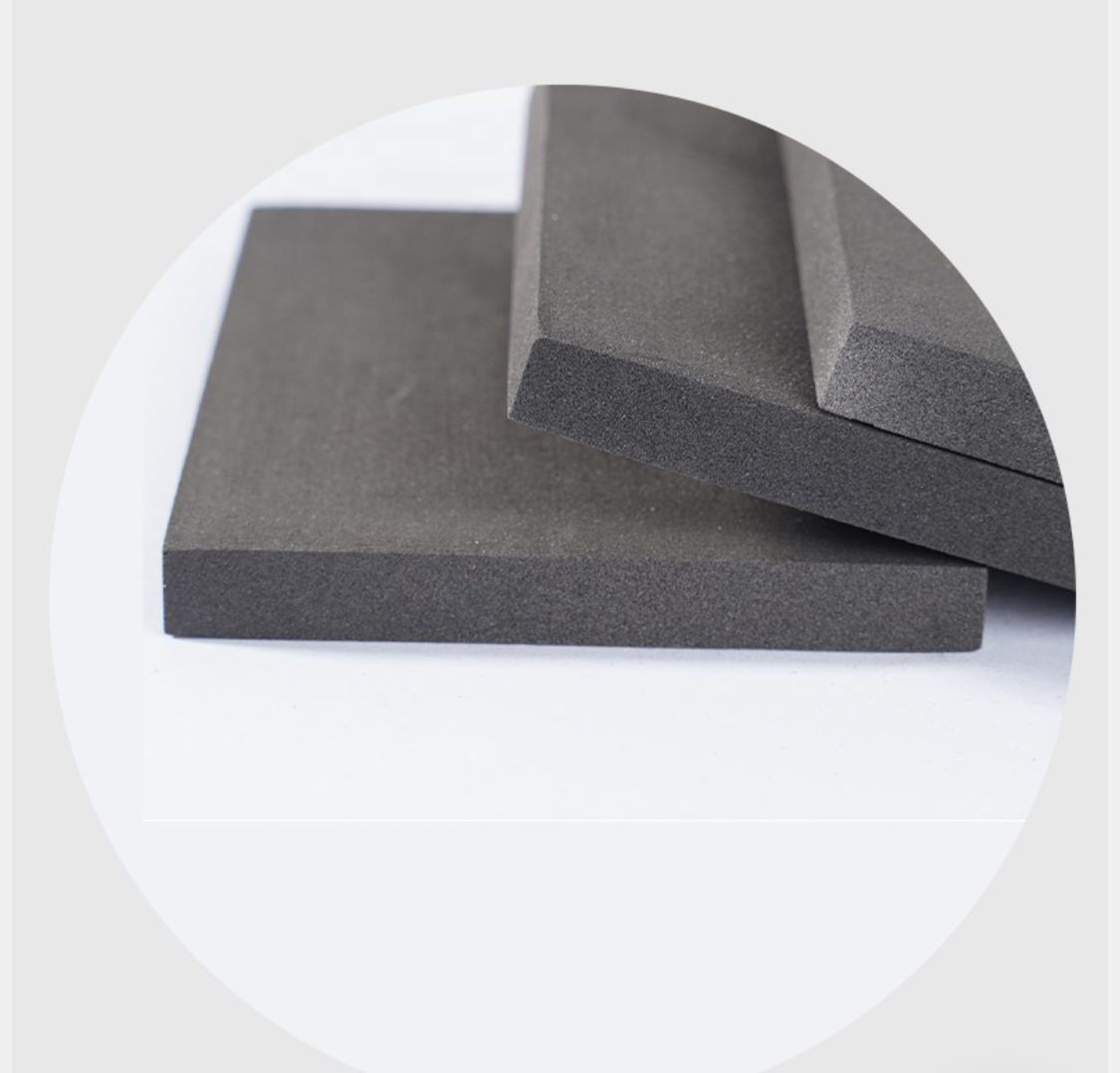
PMI Foam Core (Polymethacrylimide structural foam) is a high-performance, closed-cell, thermoset foam core material specifically developed for lightweight, high-strength, and high-temperature sandwich composite structures. It is widely recognized as one of the most advanced structural foam cores available today and is extensively used in aerospace, defense, wind energy, high-performance transportation, and advanced industrial composites.
Unlike conventional thermoplastic foam cores such as XPS, PET, or PVC, PMI Foam Core offers exceptional specific mechanical properties, superior thermal resistance, and long-term dimensional stability. These characteristics make PMI the material of choice for applications where structural reliability, safety margins, and performance consistency are critical.
2. Material Structure and Fundamental Characteristics
PMI Foam Core is a thermoset polymer foam with a uniform, closed-cell microstructure. Once cured, its molecular network forms a rigid three-dimensional structure that remains stable under elevated temperatures and sustained mechanical loads.
Key material characteristics include:
- Closed-cell structure with extremely low water absorption
- Isotropic mechanical properties for predictable structural behavior
- Broad density range, typically from 30 kg/m³ to over 200 kg/m³
- Continuous service temperature of 180–220°C, with high-grade variants reaching up to 250°C
This combination of properties allows PMI Foam Core to perform reliably in demanding engineering environments where other foam cores experience softening, creep, or structural degradation.
3. Density Range and Structural Design Flexibility
One of the defining advantages of PMI Foam Core is its wide density spectrum, which provides designers with exceptional flexibility in structural optimization.
Lower-density grades enable extreme weight reduction while maintaining adequate stiffness, whereas higher-density grades deliver outstanding compressive and shear performance for heavily loaded sandwich panels. Across this range, PMI consistently exhibits a high strength-to-weight and stiffness-to-weight ratio, enabling thinner face skins, reduced reinforcement, and overall system-level weight savings.
From an engineering standpoint, PMI Foam Core supports efficient load transfer between composite skins, maximizing the structural efficiency of sandwich constructions.
4. Mechanical Performance Advantages
Compared with XPS, PET, and PVC foam cores, PMI Foam Core demonstrates significantly superior mechanical performance at equivalent densities.
Typical engineering advantages include:
- Very high compressive strength and compressive modulus
- Exceptional shear strength and shear modulus
- Outstanding fatigue resistance under cyclic loading
- Extremely low long-term creep under sustained stress
These properties are particularly important in applications subjected to dynamic loads, vibration, or long service lifetimes. PMI’s resistance to mechanical degradation ensures that sandwich structures retain their original performance characteristics throughout their operational life.
In contrast, conventional thermoplastic foams may exhibit progressive deformation or stiffness loss over time, especially at elevated temperatures.
5. High-Temperature Resistance and Process Compatibility
Thermal performance is one of the most critical differentiators between PMI Foam Core and other foam materials.
PMI Foam Core maintains mechanical integrity at temperatures that exceed the processing limits of XPS, PET, and PVC foams. This makes PMI fully compatible with high-temperature composite manufacturing processes, including:
- Prepreg lay-up with elevated cure cycles
- Autoclave processing
- High-temperature oven curing
- Resin Transfer Molding (RTM) and Vacuum-Assisted RTM (VARTM)
Because PMI does not soften or collapse during curing, it preserves core geometry and skin adhesion, resulting in high-quality sandwich laminates with consistent thickness and mechanical properties.
This thermal stability is essential in aerospace and advanced industrial composites, where curing temperatures frequently exceed 120°C and may approach or surpass 180°C.
6. Fire Performance and Safety Compliance
Safety and fire behavior are critical considerations in transportation and aerospace applications. PMI Foam Core offers excellent fire performance, meeting stringent regulatory requirements in many high-end sectors.
Key safety attributes include:
- Compliance with FAR / CS 25.853 fire, smoke, and toxicity standards
- Low heat release and low smoke density
- Minimal toxic gas emission during combustion
These characteristics distinguish PMI Foam Core from many conventional foam cores, which may exhibit high smoke density or release harmful gases when exposed to fire. As a result, PMI is particularly suitable for aircraft interiors, structural components, and other safety-critical assemblies.
7. Environmental Stability and Durability
PMI Foam Core is engineered for long-term durability under harsh environmental conditions. Its closed-cell structure and thermoset chemistry contribute to excellent resistance against:
- Moisture ingress and hydrothermal aging
- Freeze–thaw cycling
- Aviation fuels, hydraulic fluids, lubricants, and common resin systems
The material’s low water absorption and dimensional stability ensure consistent performance in humid, marine, or temperature-variable environments. This durability makes PMI an ideal solution for structures where maintenance access is limited and long service intervals are required.
8. Processing, Machinability, and Customization
From a manufacturing perspective, PMI Foam Core offers excellent processability. It can be easily machined using standard CNC equipment to produce complex geometries, contours, and tight tolerances.
Additional processing options include:
- Grooved or scored surfaces to improve resin flow
- Perforated cores for enhanced infusion performance
- Custom thicknesses, shapes, and density zoning
PMI Foam Core is fully compatible with carbon fiber, glass fiber, and aramid fiber composites, enabling integration into a wide range of advanced structural systems.
9. Typical Applications
Due to its unique combination of lightweight efficiency, thermal resistance, and mechanical performance, PMI Foam Core is used in some of the most demanding engineering applications worldwide.
Typical application areas include:
- Aerospace and Defense: wings, control surfaces, radomes, interior sandwich panels
- Unmanned Aerial Systems (UAS): wings, fuselage structures, high-temperature composite parts
- Wind Energy: high-performance blade components and reinforced sandwich sections
- High-Performance Transportation: motorsport monocoques, lightweight structural panels
- Advanced Industrial Equipment: high-temperature composite panels and load-bearing assemblies
In these applications, PMI Foam Core is not merely a filler material, but a critical structural element that directly influences performance, safety, and service life.
10. Engineering Positioning Versus Other Foam Cores
From an engineering selection perspective, foam cores can be broadly positioned as follows:
- PMI Foam Core: aerospace-grade solution for extreme performance, high temperature, and maximum structural efficiency
- XPS Foam: non-structural insulation material for construction and decoration
- PET Foam Core: balanced solution for industrial composites and wind energy
- PVC Foam Core: proven, general-purpose structural foam for medium-load applications
While PMI Foam Core represents a higher initial material investment, its structural efficiency, safety compliance, and long-term reliability often result in lower system-level costs for high-performance projects.
11. Conclusion
PMI Foam Core represents the upper performance benchmark in the structural foam core category. When applications demand the highest levels of lightweight design, mechanical strength, thermal resistance, and safety compliance, PMI is the most reliable and technically sound choice.
By enabling lighter structures, higher operating temperatures, and longer service lifetimes, PMI Foam Core empowers engineers to push the boundaries of composite design while maintaining confidence in structural integrity and performance consistency.
For advanced sandwich composite solutions where compromise is not an option, PMI Foam Core delivers unmatched engineering value.
