
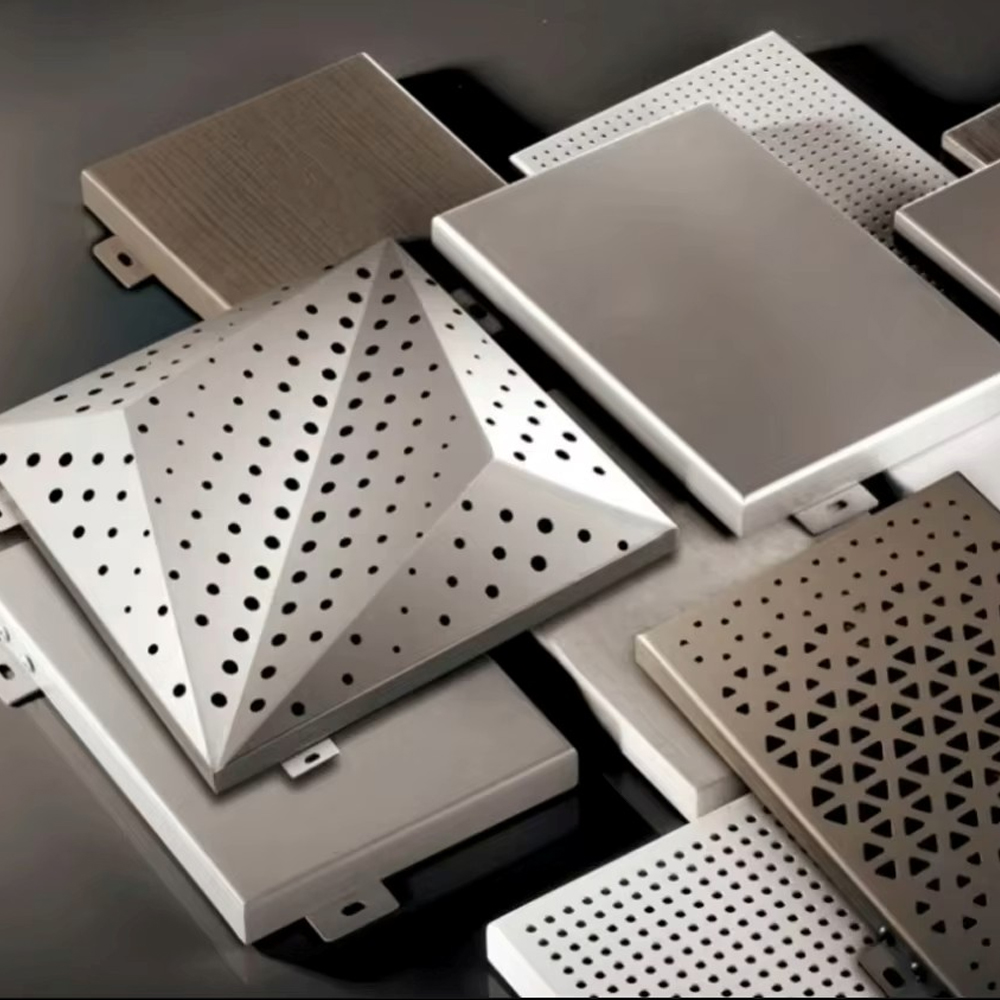
Building facades play an important role in architectural appearance, weather protection, energy performance, and long-term property value. As modern architecture continues to favor lightweight and flexible construction materials, the Exterior Aluminum Composite Panel has become a practical solution for both commercial and residential building facades. Its combination of aluminum surfaces, lightweight core construction, design flexibility, and efficient fabrication makes it suitable for a wide range of exterior wall applications.
From office buildings and shopping centers to villas, apartments, hotels, and residential developments, aluminum composite panels can help architects create clean, contemporary facade designs while providing contractors with a material that is relatively easy to process and install.
What Is an Exterior Aluminum Composite Panel?
An Exterior Aluminum Composite Panel is a multilayer panel designed for architectural cladding and exterior wall applications. It generally consists of two aluminum sheets bonded to a lightweight core. The front aluminum surface is normally finished with a protective coating that provides the desired color, texture, or decorative effect.
The basic structure typically includes an aluminum top skin, core material, aluminum back skin, and surface coating. Depending on the project, manufacturers can offer different panel thicknesses, aluminum skin thicknesses, core compositions, colors, and surface finishes.
For exterior applications, panel selection should consider the building location, facade height, wind conditions, fire requirements, expected service environment, and local construction regulations.
Why Use Exterior Aluminum Composite Panel for Building Facades?
One of the key advantages of aluminum composite panels is their favorable balance between weight and rigidity. Compared with many traditional facade materials, composite panels can provide a relatively lightweight cladding solution while maintaining a flat architectural surface.
This lightweight characteristic can simplify transportation, handling, fabrication, and installation. It is particularly useful for large commercial projects where construction efficiency is an important consideration.
Another advantage is architectural flexibility. Aluminum composite panels can be manufactured in a broad range of colors and finishes. Designers can select solid colors, metallic effects, wood-look finishes, stone-look patterns, and customized surface treatments to match different architectural concepts.
The panels can also be cut, routed, folded, and fabricated into different configurations, making them suitable for corners, columns, entrances, window surrounds, canopies, and decorative facade elements.
Applications in Commercial Buildings
Commercial architecture is one of the major application areas for Exterior Aluminum Composite Panel systems.
Office buildings can use aluminum composite panels to create professional and contemporary exterior elevations. Different colors can be combined to emphasize entrances, floors, vertical lines, or specific architectural elements.
Shopping malls and retail stores often require strong visual identity. Aluminum composite panels allow designers to coordinate facade colors with corporate branding while creating customized shapes and patterns.
Hotels can also use composite panels around entrances, balconies, podium areas, and decorative facade sections. Wood-look and metallic finishes can create different architectural atmospheres without requiring heavy natural materials across the entire facade.
Other applications include restaurants, supermarkets, schools, hospitals, transportation buildings, and mixed-use commercial developments.
Applications in Residential Buildings
Residential projects can also benefit from the flexibility of aluminum composite facade materials.
For villas and private residences, panels can be used as complete exterior wall cladding or as accent materials combined with glass, stone, brick, concrete, and other architectural finishes.
In apartment buildings, aluminum composite panels can be applied to balconies, entrance areas, exterior columns, parapets, and selected facade sections. Their ability to provide consistent colors and clean panel lines can contribute to a modern residential appearance.
For building renovation, aluminum composite panels can offer an option for updating outdated facades. A new cladding system may significantly change the visual appearance of an existing building while providing opportunities to reorganize facade elements.
Design Options for Exterior Facades
Modern facade design increasingly focuses on material combinations and geometric forms. Exterior Aluminum Composite Panel products can support many of these design concepts.
Solid Color Facades
Simple colors such as white, gray, black, silver, and other customized shades can create a clean and minimalist appearance.
Metallic Finishes
Metallic finishes can provide a high-tech appearance and are often suitable for offices, commercial buildings, transportation facilities, and contemporary architectural projects.
Wood-Look Finishes
Wood-effect surfaces can introduce a warmer appearance to residential buildings, hotels, restaurants, and entrance areas.
Stone-Look Finishes
Stone-effect panels can be used where architects want a natural-material appearance combined with the fabrication flexibility of composite panels.
By combining different finishes and panel orientations, designers can create visually distinctive facades without changing the basic cladding system.
Performance Considerations
For exterior building applications, appearance is only one part of material selection. The panel must also be appropriate for outdoor environmental conditions.
Important factors include weather resistance, coating durability, corrosion resistance, impact resistance, fire performance, dimensional stability, and mechanical requirements.
The surface coating should be selected according to the expected environment. Buildings exposed to strong sunlight, humidity, coastal air, or industrial pollutants may require an appropriate architectural coating system.
Fire performance is another important consideration. Different core materials have different characteristics, so project specifications should clearly define the required fire classification. For high-rise buildings and public facilities, the complete facade assembly should be evaluated according to applicable building codes and project requirements.
Installation of Exterior Aluminum Composite Panel
Proper installation is essential for achieving a durable and visually consistent facade.
Depending on the architectural design, panels may be installed using fabricated cassette systems, mechanical fixing methods, or other engineered cladding systems. The supporting framework must be accurately aligned before panel installation.
Contractors should pay particular attention to panel joints, corners, window interfaces, expansion requirements, drainage, and waterproofing details.
For complex projects, fabrication and fixing drawings should be reviewed before production. Accurate detailing can reduce installation errors and ensure that panels fit correctly around doors, windows, corners, and other building elements.
Choosing the Right Panel for Your Project
When selecting an Exterior Aluminum Composite Panel, architects, contractors, and building material buyers should evaluate the complete project requirements.
Consider the following:
- Building type and facade design
- Panel thickness and aluminum skin thickness
- Core material and fire requirements
- Surface coating and finish
- Local weather conditions
- Wind-load requirements
- Panel dimensions and fabrication
- Installation system
- Maintenance requirements
- Applicable building codes and standards
The lowest initial material price does not always represent the most economical solution. A suitable panel specification can help reduce fabrication problems, installation difficulties, maintenance costs, and potential replacement requirements over the building’s service life.
Conclusion
The Exterior Aluminum Composite Panel is a versatile architectural material for commercial and residential building facades. Its lightweight composite construction, broad range of finishes, fabrication flexibility, and suitability for different architectural styles make it useful for new construction as well as facade renovation.
For commercial buildings, it can provide a clean and recognizable architectural identity. For residential projects, it offers flexible options for modern exterior wall design, entrance features, balconies, and decorative elements.
Successful application depends on selecting the appropriate panel structure, surface finish, fire performance, and installation system for the specific building. Architects and contractors should evaluate the panel together with the supporting structure, fixing details, joints, waterproofing, and applicable regulations.
With proper material selection, engineering, fabrication, and installation, Exterior Aluminum Composite Panel systems can provide an effective solution for contemporary building facade projects while giving architects considerable freedom to develop distinctive and functional exterior designs.
