
Choosing the right composite panel material is one of the most important decisions for engineers, purchasing managers, and project owners.
Today, industries are increasingly looking for materials that provide:
- High strength
- Lightweight structure
- Long service life
- Corrosion resistance
- Easy installation
- Cost efficiency
Traditional materials such as solid metal sheets, plywood, and solid FRP panels are gradually being replaced by advanced sandwich structures.
Among these solutions, Fiberglass Honeycomb Panel has become a popular choice because of its excellent strength-to-weight ratio and durability.
However, many buyers still have questions:
- Is Fiberglass Honeycomb Panel better than aluminum honeycomb panels?
- How does it compare with foam sandwich panels?
- Is it more cost-effective than solid FRP panels?
- Which material is suitable for my application?
This article provides a detailed comparison to help global buyers make better procurement decisions.
1. What Is a Fiberglass Honeycomb Panel?
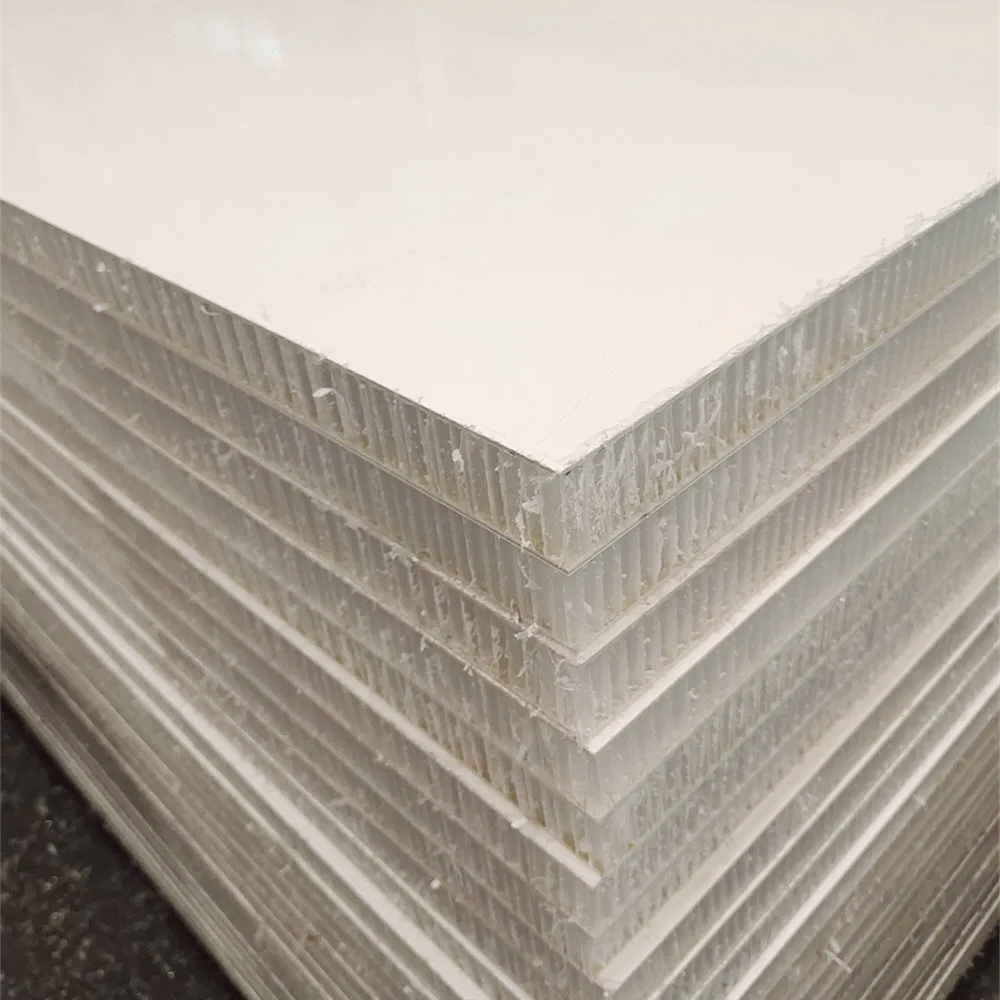
A Fiberglass Honeycomb Panel is a lightweight composite sandwich panel consisting of three main layers:
- Fiberglass reinforced polymer (FRP) skin
- Honeycomb core
- Fiberglass reinforced polymer (FRP) skin
The honeycomb core creates a lightweight structure while maintaining excellent mechanical performance.
The working principle is similar to an I-beam structure:
- The outer skins provide tensile and compressive strength
- The honeycomb core provides thickness and shear resistance
This combination creates a panel with:
- High stiffness
- Low weight
- Excellent structural efficiency
2. Fiberglass Honeycomb Panel vs Aluminum Honeycomb Panel
Aluminum Honeycomb Panel is another widely used lightweight composite material.
Both materials provide excellent strength-to-weight ratios, but they have different advantages.
Weight Performance
Fiberglass Honeycomb Panel:
Advantages:
- Lightweight
- Flexible design options
- Suitable for applications requiring corrosion resistance
Aluminum Honeycomb Panel:
Advantages:
- Extremely high stiffness
- Excellent mechanical strength
For aerospace and high-end structural applications, aluminum honeycomb is often selected.
For marine, transportation, and corrosion-sensitive environments, Fiberglass Honeycomb Panel can provide better practical value.
Corrosion Resistance
This is one of the biggest differences.
Fiberglass Honeycomb Panel:
Excellent resistance against:
- Saltwater
- Moisture
- Chemicals
- Humidity
This makes it ideal for:
- Boats
- Yachts
- Marine interiors
- Coastal applications
Aluminum Honeycomb Panel:
Although aluminum provides good corrosion resistance, long-term exposure to saltwater environments requires additional protection.
Cost Comparison
Generally:
- Aluminum honeycomb panels have higher material costs
- Fiberglass honeycomb panels provide better cost-performance balance
For large-scale commercial projects, Fiberglass Honeycomb Panels often offer better economic advantages.
3. Fiberglass Honeycomb Panel vs Foam Sandwich Panel
Foam sandwich panels are another common lightweight composite solution.
Typical foam cores include:
- PVC foam
- PET foam
- PU foam
- XPS foam
Both materials are widely used in composite structures.
Structural Strength
Fiberglass Honeycomb Panel:
Provides:
- High stiffness
- Excellent bending performance
- Superior load distribution
The honeycomb structure efficiently transfers forces across the panel.
Foam Sandwich Panel:
Advantages:
- Good insulation performance
- Good impact absorption
- Easier processing
For structural applications requiring high stiffness, honeycomb panels often provide better performance.
Thermal Insulation
Foam sandwich panels generally have advantages in:
- Thermal insulation
- Sound absorption
Applications include:
- Building insulation panels
- Refrigerated vehicles
- Temperature-controlled environments
Fiberglass Honeycomb Panels focus more on:
- Structural strength
- Lightweight construction
- Durability
Application Comparison
| Application | Recommended Material |
|---|---|
| Marine interior panels | Fiberglass Honeycomb Panel |
| Yacht structures | Fiberglass Honeycomb Panel |
| RV body panels | Fiberglass Honeycomb Panel |
| Building insulation | Foam Sandwich Panel |
| Cold storage panels | Foam Sandwich Panel |
| Lightweight industrial structures | Fiberglass Honeycomb Panel |
4. Fiberglass Honeycomb Panel vs Solid FRP Panel
Solid FRP panels have been used for many years due to their corrosion resistance.
However, they have limitations.
Weight Difference
Solid FRP panels use a thick fiberglass structure.
Advantages:
- Strong surface protection
Disadvantages:
- Higher weight
- More material consumption
Fiberglass Honeycomb Panels achieve similar or better structural performance with significantly lower weight.
Structural Efficiency
A solid panel increases thickness by adding more material.
A honeycomb panel increases thickness by adding a lightweight core.
This creates:
- Higher stiffness
- Lower weight
- Better efficiency
For transportation industries, weight reduction is a major advantage.
5. Key Factors When Choosing Between Composite Panels
When selecting the right material, buyers should evaluate:
1. Application Environment
Consider:
- Indoor or outdoor use
- Moisture exposure
- Chemical exposure
- Temperature conditions
2. Mechanical Requirements
Evaluate:
- Load capacity
- Impact resistance
- Bending strength
3. Weight Requirements
Important for:
- Vehicles
- Marine applications
- Mobile structures
4. Budget Requirements
Consider:
- Initial material cost
- Installation cost
- Maintenance cost
5. Supplier Capability
A reliable manufacturer should provide:
- Technical support
- Custom solutions
- Stable quality
6. Why More Industries Choose Fiberglass Honeycomb Panels
The growing popularity of Fiberglass Honeycomb Panels is driven by several advantages.
Lightweight Design
Reducing structural weight helps:
- Improve energy efficiency
- Reduce transportation costs
- Increase payload capacity
Excellent Durability
Fiberglass surfaces provide:
- Moisture resistance
- Corrosion resistance
- Long service life
Customization Flexibility
Manufacturers can customize:
- Thickness
- Dimensions
- Core structure
- Surface finish
High Performance-to-Cost Ratio
Fiberglass Honeycomb Panels provide excellent balance between:
- Performance
- Weight
- Cost
Why Choose Foshan Onebond Building Materials Co., Ltd.
Foshan Onebond Building Materials Co., Ltd. specializes in lightweight composite materials and customized sandwich panel solutions.
We help global customers select the right composite structure based on their application requirements.
Our Fiberglass Honeycomb Panel solutions offer:
Professional Engineering Support
Our team assists customers with:
- Material selection
- Structural recommendations
- Application optimization
Customized Production
Available options include:
- Different thicknesses
- Customized dimensions
- Various surface finishes
- Special reinforcement designs
Reliable Manufacturing
With professional production equipment and strict quality management, Onebond provides stable composite panel solutions for international markets.
Frequently Asked Questions
Q1: Is Fiberglass Honeycomb Panel stronger than foam sandwich panels?
For structural applications requiring high stiffness and strength-to-weight performance, Fiberglass Honeycomb Panels usually provide better mechanical performance.
Q2: Which is better for marine applications, aluminum honeycomb or fiberglass honeycomb?
For marine environments, Fiberglass Honeycomb Panels are often preferred because of their excellent moisture and corrosion resistance.
Q3: Can Fiberglass Honeycomb Panels be customized?
Yes. Professional manufacturers can customize thickness, size, core structure, and surface materials according to project requirements.
Choose the Right Composite Panel Solution for Your Project
Selecting the correct composite panel requires balancing:
- Performance
- Weight
- Cost
- Application requirements
Foshan Onebond Building Materials Co., Ltd. provides professional Fiberglass Honeycomb Panel solutions for global customers seeking lightweight, durable, and cost-effective composite materials.
Contact Onebond today to receive:
✔ Product specifications
✔ Technical recommendation
✔ Customized quotation
✔ Sample testing support
Build stronger and lighter composite structures with Onebond Fiberglass Honeycomb Panels.
